
Variable Grass Mouse
Akodon varius
Red List assessment
Data Deficienton the IUCN Red List
- EXExtinct
- EWExtinct in the Wild
- CRCritically Endangered
- ENEndangered
- VUVulnerable
- NTNear Threatened
- LCLeast Concern
Data Deficient has no position on the scale above — it records the absence of an assessment, not a degree of risk.
The Variable Grass Mouse is recorded in 2 countries across South America. The IUCN Red List records the Variable Grass Mouse as Data Deficient. Total population size is unknown.
- Family
- Cricetidae
- Order
- Rodentia
- Genus
- Akodon
- Countries recorded
- 2
- Continents
- South America
- Red List category
- Data Deficient
- Data updated
- August 9, 2026
What is the Variable Grass Mouse?
Akodon varius is a small South American rodent belonging to the highly diverse genus Akodon (grass mice), part of the subfamily Sigmodontinae. It inhabits montane grasslands, shrublands, and ecotonal zones along the Andean foothills and valleys of Bolivia. The species is remarkable for its phenotypic variability—reflected in its name 'varius'—which has made taxonomic delineation historically challenging. Like other akodons, it plays an important ecological role as a small omnivore and prey item within Andean ecosystems.
Where does the Variable Grass Mouse live?
Bolivia, primarily in the Andean slopes and inter-Andean valleys, possibly extending marginally into adjacent regions of Argentina
The species is known from Bolivia, with records concentrated in the central and eastern Andean departments such as Cochabamba, Santa Cruz, and Chuquisaca. Its exact range boundaries remain poorly defined due to limited sampling and taxonomic ambiguity.
Altitude and depth
Estimated to occur primarily between 1,500 and 4,000 meters above sea level, consistent with mid-montane to puna zones in the Bolivian Andes.
Seasonal movements
No documented seasonal migrations or hibernation. Activity patterns are likely relatively stable year-round, with possible shifts in microhabitat use during the dry versus wet season in the Andes.
Habitat of the Variable Grass Mouse
The Variable Grass Mouse is primarily associated with montane grasslands (puna and páramo-like formations), Andean shrublands, and transitional zones between dry inter-Andean valleys and humid Yungas slopes. It is likely to exploit disturbed grasslands and agricultural margins as well, as is common for the genus.
Adaptations to its environment
As a montane Akodon, this species likely possesses adaptations to hypoxic high-altitude conditions including elevated hemoglobin oxygen affinity. Dense underfur provides thermoregulation at cold Andean temperatures, and its omnivorous diet allows flexibility during seasonal food scarcity.
Conservation status and numbers
Listed as Data Deficient (DD) by the IUCN Red List, meaning there is insufficient information to assess its risk of extinction. The lack of robust population data, uncertain range boundaries, and limited field surveys prevent a more precise evaluation.
Estimated population
Total population size is unknown. Population trend is unquantified due to Data Deficient status; local densities are likely naturally low given the species' restricted and patchy distribution.
What threatens the Variable Grass Mouse?
Primary threats likely include Andean habitat degradation through overgrazing by livestock, agricultural expansion, burning of grasslands, and possibly climate-driven shifts in vegetation zones. Fragmentation of montane habitats isolating small populations is also a concern.
Diseases and parasites
Members of the genus Akodon are known reservoirs or hosts for hantaviruses and various ectoparasites (fleas, ticks, mites) and endoparasites (helminths, protozoans); specific documented parasites for A. varius are unknown due to limited study.
What is being done to protect it?
No species-specific conservation programs are known. The species may benefit incidentally from protected areas within Bolivia such as Amboró National Park or Tunari National Park if these overlap with its range. Bolivia is signatory to the Convention on Biological Diversity.
Recommended actions
Priority actions include targeted field surveys to delineate the species' range, population density assessments, molecular studies to clarify taxonomic boundaries, and evaluation of habitat condition within the known range. Inclusion in Bolivian national biodiversity monitoring programs is recommended.
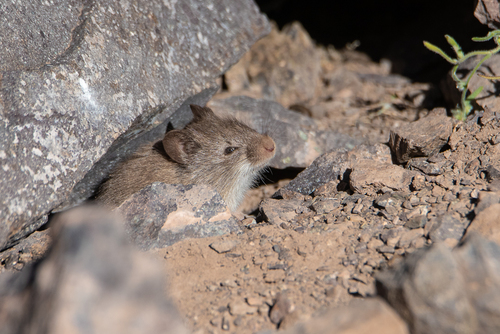
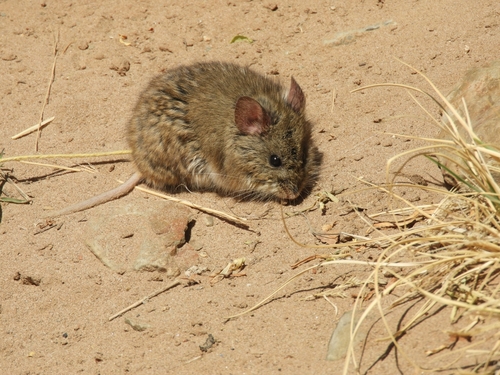
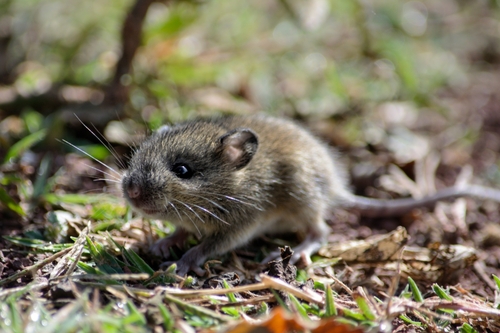
What the Variable Grass Mouse looks like
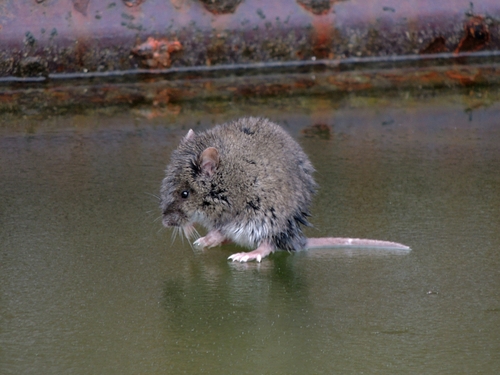
Dorsal pelage is typically brownish to grayish-brown, often with a darker mid-dorsal stripe, while the ventral surface is paler gray or buffy-white. The coat is dense and relatively soft. The tail is unicolored or bicolored, sparsely haired, and shorter than the body.
Size
Body length approximately 80–130 mm (head and body); tail length roughly 60–100 mm. Overall size is typical for mid-sized Akodon grass mice.
Weight
Estimated 15–40 g body weight, consistent with comparable Akodon species; no specific data on sexual weight dimorphism available for this species.
Distinctive features
Distinguished from closely related Bolivian Akodon species (e.g., A. boliviensis) by subtle differences in cranial morphology, tooth proportions, and pelage coloration; the 'variable' phenotype means external characters alone are often insufficient for reliable field identification without molecular or karyotypic data.
Differences between males and females
Sexual dimorphism is minimal or absent in external morphology, as is typical for the genus Akodon, though males may be marginally larger on average.
Behaviour and diet of the Variable Grass Mouse
Likely solitary or loosely aggregated outside of the breeding season, consistent with the general Akodon behavioral pattern. Brief social interactions occur during mating and maternal care.
When it is active
Primarily nocturnal to crepuscular, foraging most actively during twilight and nighttime hours to reduce predation risk. Daytime activity is minimal except possibly during overcast conditions.
Diet
Omnivorous, feeding on seeds, green plant material, roots, arthropods, and small invertebrates. The dietary composition shifts seasonally depending on resource availability, with insects more prominent during the wet season.
How it feeds and hunts
Forages primarily on or near the ground, using olfaction and tactile whiskers to locate seeds and invertebrates beneath leaf litter, grass clumps, and soil surfaces. No specialized hunting technique; opportunistic in prey capture.
Communication
Communication likely involves ultrasonic vocalizations during mother-offspring interactions and mating encounters, scent marking via urinary and glandular secretions to establish territories, and vibrissae-mediated tactile signals.
Interactions with other species
Serves as prey for Andean raptors (e.g., Buteo spp., owls), snakes, and small carnivorous mammals (e.g., Andean weasels). Competes with other small rodents (akodons, phyllotines) for seeds and invertebrates. May facilitate seed dispersal as a secondary seed predator.
Role in its ecosystem
Occupies a mid-level role in Andean food webs as an omnivore and important prey item, contributing to energy flow between primary producers, invertebrates, and higher-level predators. May assist in nutrient cycling through burrowing and food caching behavior.
Reproduction and lifecycle
Breeding is likely seasonal and correlated with the Andean rainy season (October–March) when food resources peak. Gestation in Akodon species typically lasts approximately 20–23 days; litter sizes range from 2 to 6 pups.
Raising the young
Maternal care is primary, as in most muroid rodents. The female nurses young in a grass-lined nest; pups are altricial at birth and are weaned at approximately 2–3 weeks of age.
Maturity and lifespan
Sexual maturity is likely reached at 6–8 weeks of age, as typical for Akodon. Lifespan in the wild is estimated at 1–2 years; captive individuals of related species may live up to 3–4 years.
Taxonomy and naming of the Variable Grass Mouse
Classification
Mammalia > Rodentia > Cricetidae > Akodon > Akodon varius
Subspecies
No formally recognized subspecies are currently validated, though geographic variation in morphology across its fragmented range has been noted and may warrant future investigation.
Scientific synonyms
Originally described by Oldfield Thomas in 1900; some early revisions placed Bolivian Akodon specimens under broader synonymous groupings, but A. varius is currently treated as a distinct species.
What research says
Recent studies
No landmark recent studies specifically on A. varius are known; it remains one of the least-studied members of the genus. Broader Akodon phylogenomic studies using mitochondrial and nuclear markers have helped clarify generic boundaries and may eventually resolve the taxonomic status of this species.
Genome and DNA
Chromosome number has not been definitively published for A. varius. The genus Akodon is notable for extraordinary karyotypic diversity and the occurrence of sex-chromosome polymorphism (XY females) in several species, which may be relevant to A. varius.
Compared with similar species
Closely related to Akodon boliviensis and A. subfuscus, which share overlapping Bolivian and Peruvian Andean ranges. Distinguished by morphological and genetic characters; the species complex around A. varius highlights the broader challenge of species delimitation within this hyperdiverse genus.
The Variable Grass Mouse and people
The genus Akodon contains over 40 recognized species, making it one of the most speciose mammal genera on Earth, and new species are still being described. Several Akodon species are famous among geneticists for having XY sex chromosomes in phenotypically normal females—a remarkable exception to standard mammalian sex determination. The name 'varius' (Latin for 'variable' or 'diverse') directly references this species' strikingly inconsistent morphology across its range.
Where and how to see it
Best observed during nighttime surveys in montane grasslands and shrubland ecotones in central Bolivia, using live traps (Sherman traps) baited with seeds and oats. The departments of Cochabamba and Chuquisaca, in transitional zones between dry valleys and humid slopes at 2,000–3,500 m, represent promising search areas.
Risks to humans
As a potential reservoir host for hantavirus (as suspected for other Bolivian Akodon species), handling wild individuals without appropriate protective equipment carries a low but non-negligible zoonotic disease risk. No venomous or highly aggressive traits; bites from captured individuals are possible but minor.
Human uses
No known commercial, medicinal, or agricultural use. Occasionally captured incidentally in traps set for agricultural pest control. Of scientific interest for studies on Andean biodiversity, zoonotic disease ecology, and rodent karyotype evolution.
Myths and legends
No specific myths or legends are known to be associated with this species among Andean cultures; small rodents in general are sometimes considered nuisance pests or omens in Andean rural communities, but no documented cultural significance specific to A. varius exists.
Countries where the Variable Grass Mouse is recorded
The 2 countries named in the range description of its IUCN Red List assessment.
Questions about the Variable Grass Mouse
Where does the Variable Grass Mouse live?
The Variable Grass Mouse is recorded in Argentina and Bolivia across South America. These countries come from the range description of its IUCN Red List assessment, and they are what place the species on the interactive map.
Is the Variable Grass Mouse endangered?
The IUCN Red List assesses the Variable Grass Mouse as Data Deficient. There is not enough information to judge the risk of extinction, usually because the species is rarely seen or has never been surveyed. It is not a reassuring category: several species were Data Deficient right up to the point they were found to be Critically Endangered.
How many are left in the wild?
Total population size is unknown. This figure comes from the species assessment on the IUCN Red List; population estimates for wild mammals are ranges, not counts, and are revised at each assessment.
What habitat does the Variable Grass Mouse live in?
The Variable Grass Mouse is primarily associated with montane grasslands (puna and páramo-like formations), Andean shrublands, and transitional zones between dry inter-Andean valleys and humid Yungas slopes.
What is the scientific name of the Variable Grass Mouse?
The Variable Grass Mouse is Akodon varius, in the family Cricetidae, order Rodentia.
Other species in the genus Akodon

Other species in the family Cricetidae
Sources
Conservation status, range description and population estimate come from the IUCN Red List assessment for Akodon varius. Countries are derived from that range description, not from a mapped country list. Last refreshed on .
The distribution map is drawn from the IUCN Red List spatial data compiled in 2018. IUCN SSC Small Mammal Specialist Group