
Thomas's Rock Rat
Aethomys thomasi
Red List assessment
Least Concernon the IUCN Red List
- EXExtinct
- EWExtinct in the Wild
- CRCritically Endangered
- ENEndangered
- VUVulnerable
- NTNear Threatened
- LCLeast Concern
The Thomas's Rock Rat is recorded in 3 countries across Africa. The IUCN Red List assesses the Thomas's Rock Rat as Least Concern. No quantitative population estimate is available.
- Family
- Muridae
- Order
- Rodentia
- Genus
- Aethomys
- Countries recorded
- 3
- Continents
- Africa
- Red List category
- Least Concern
- Data updated
- August 9, 2026
What is the Thomas's Rock Rat?
Thomas's Rock Rat is a medium-sized murid rodent endemic to Angola, named in honor of the renowned British zoologist Oldfield Thomas of the Natural History Museum, London. Like other members of the genus Aethomys, it is closely associated with rocky outcrops, kopjes, and rocky escarpments within savanna woodland landscapes. It is one of the lesser-known African rock rats, distinguished by its relatively restricted range within Angola. Its association with specific rocky microhabitats makes it an ecologically specialized species within the diverse African rodent fauna.
Where does the Thomas's Rock Rat live?
Primarily Angola; possibly extending into adjacent border regions of the Democratic Republic of Congo and Zambia.
Endemic or near-endemic to Angola in south-central Africa. Its range is centered on the Angolan plateau and surrounding rocky terrain. Possibly present in extreme western DRC or northwestern Zambia, but confirmed records are largely Angolan.
Altitude and depth
Primarily found at mid-elevations on the Angolan plateau, roughly 1,000–1,800 m above sea level, consistent with the rocky highland terrain of its range.
Seasonal movements
No known seasonal migration. Activity patterns may shift subtly between wet and dry seasons in response to food availability and temperature, but the species is considered a year-round resident of its rocky habitat.
Habitat of the Thomas's Rock Rat
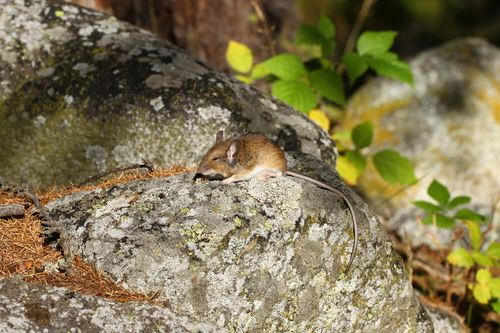
Rocky outcrops (kopjes), granite inselbergs, and rocky escarpments embedded within miombo woodland and savanna habitats. It shelters in crevices and under boulders, which provide protection from predators and thermal refugia. Adjacent grassland and shrubby vegetation likely serve as foraging grounds.
Adaptations to its environment
Well adapted to rocky substrates, with agile locomotion suited to navigating crevices and boulder fields. Its coloration provides camouflage against rocky surfaces. Like other Aethomys, it likely has relatively large eyes adapted to low-light foraging conditions. Sheltering in rock crevices provides effective thermoregulation in the seasonally variable Angolan climate.
Conservation status and numbers
Least Concern (LC) on the IUCN Red List. The species is assessed as LC because it is not considered to face any major threats leading to rapid population decline, and it is presumed to maintain an adequate range and population size within Angola.
Estimated population
No quantitative population estimate is available. The population trend is presumed stable, as no major declines have been detected, though formal surveys are lacking.
What threatens the Thomas's Rock Rat?
Habitat degradation resulting from agricultural expansion, charcoal production, and bush fires in Angolan savanna-woodland. Ongoing political and economic development pressures in Angola may increase habitat disturbance in previously inaccessible areas. Climate variability could affect food resources over time.
Diseases and parasites
No species-specific disease or parasite data are documented. Like other African murids, it is likely host to ectoparasites (fleas, mites, ticks) and endoparasites (helminths, protozoans). African murids broadly can be reservoir hosts for various zoonotic pathogens.
What is being done to protect it?
Parts of its range may fall within Angolan protected areas such as Bicuar National Park or Cameia National Park, although specific management actions targeting this species are not documented. Angola's broader biodiversity conservation framework provides some incidental protection.
Recommended actions
Dedicated field surveys are needed to clarify the full extent of the species' distribution and population status. Monitoring of habitat quality within rocky outcrops is recommended. Inclusion of rocky microhabitat protection in land-use planning in Angola would benefit this and many co-occurring species.
What the Thomas's Rock Rat looks like
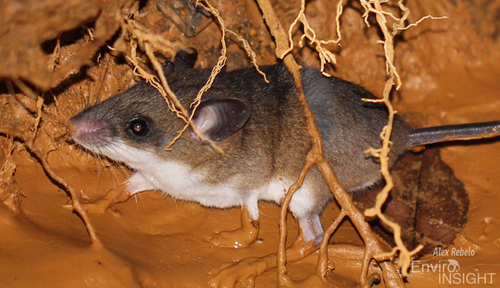
Dorsal fur is medium to dark brownish or greyish-brown, often with a slightly rufous tinge; the ventral surface is paler grey-white to buff. The tail is relatively long and lightly scaled. Ears are moderately large and rounded. The overall build is robust compared to smaller murid species.
Size
Body length approximately 120–165 mm (head-body); tail length roughly equal to or slightly longer than body length, approximately 130–175 mm. Total length around 250–340 mm.
Weight
Estimated 50–100 g, consistent with other mid-sized Aethomys species. No confirmed sex-specific weight data are available for this species.
Distinctive features
Compared to the widespread Aethomys namaquensis (Namaqua Rock Rat), A. thomasi has a more restricted Angolan distribution and may differ subtly in pelage coloration and cranial dimensions. Differentiation from sympatric murid rodents relies primarily on cranial morphology and geographic range.
Differences between males and females
Sexual dimorphism is believed to be minimal, as is typical for the genus Aethomys, with males and females being similar in size and coloration.
Behaviour and diet of the Thomas's Rock Rat
Likely semi-social, forming small family groups or loose aggregations around rocky shelters as observed in related species. Rock rats often share crevices communally. Territorial behavior may occur around prime rocky refuge sites.
When it is active
Primarily nocturnal, with peak foraging activity occurring after dusk. It likely retreats to rocky crevices during daylight hours. Some crepuscular activity may occur, particularly around dusk and dawn.
Diet
Omnivorous, with a diet primarily consisting of seeds, plant material, roots, and invertebrates. Like other Aethomys species, it likely opportunistically consumes insects, small arthropods, and other available food items. Seeds of grasses and woody plants are probably dietary staples.
How it feeds and hunts
Forages actively on and around rocky substrates and adjacent ground vegetation, using its sensitive vibrissae and olfaction to locate food in low-light conditions. Not a predator in the strict sense; foraging is mainly exploratory searching for plant material and invertebrates.
Communication
Communicates via ultrasonic vocalizations, olfactory cues through urine and glandular secretions used for territory marking, and possibly tactile interactions during social contact. Audible squeaks may be produced in alarm or during agonistic encounters.
Interactions with other species
Likely preyed upon by small to medium-sized raptors (e.g., barn owls, hawk-eagles), snakes (e.g., rock pythons, night adders), and mammalian predators (e.g., genets, mongooses). May compete with other small rodents and rock hyraxes for shelter sites and food resources.
Role in its ecosystem
Functions as a seed disperser and potential prey item, contributing to nutrient cycling and energy transfer within savanna ecosystems. Its burrowing and nesting activity in rocky substrates may contribute to soil aeration.
Reproduction and lifecycle
Reproductive biology is poorly documented for this species. Based on related Aethomys, breeding likely occurs seasonally, possibly tied to the onset of the Angolan wet season (October–April). Gestation is estimated at approximately 23–28 days, and litter size is likely 2–5 pups, consistent with congeners.
Raising the young
Young are born altricial (helpless) and are nursed by the female in a nest within rock crevices. Weaning probably occurs at 3–4 weeks of age. Paternal involvement is uncertain but likely limited, as is typical for murid rodents.
Maturity and lifespan
Sexual maturity is likely reached at 6–10 weeks of age, as in related Aethomys species. Wild lifespan is probably 1–3 years; captive individuals of similar species may survive up to 4–5 years under optimal conditions.
Taxonomy and naming of the Thomas's Rock Rat
Classification
Mammalia > Rodentia > Muridae > Aethomys > Aethomys thomasi
Scientific synonyms
Originally described as Mus thomasi De Winton, 1897. Also placed under the genera Rattus and Praomys in older taxonomic arrangements before consolidation within Aethomys.
What research says
Recent studies
No notable recent species-specific scientific studies have been published on Aethomys thomasi. It remains one of the more data-deficient members of its genus, with most knowledge inferred from congeners.
Genome and DNA
Specific chromosomal or genomic data for A. thomasi are not well documented. Related Aethomys species typically have diploid chromosome numbers around 2n=44–56; the exact karyotype of A. thomasi has not been formally published to my knowledge.
Compared with similar species
Aethomys thomasi belongs to a genus of approximately 8–9 species of sub-Saharan African rock rats. It is most closely related to other southern and central African Aethomys. The Namaqua Rock Rat (A. namaquensis) is the best-studied congener and likely shares many ecological and behavioral traits. Thomas's Rock Rat is distinguished primarily by its restricted Angolan distribution and specific morphological characters.
The Thomas's Rock Rat and people
Thomas's Rock Rat is named after Oldfield Thomas, who described hundreds of new mammal species from museum specimens between the 1880s and 1920s — making him one of the most prolific mammalogists in history. Like other rock rats, it likely exploits the unique thermal stability of rock crevices to avoid extreme temperatures, effectively using geology as a natural climate control system. Despite being classified as Least Concern, it remains so poorly studied that much of what scientists 'know' about it is actually inferred from its better-documented relatives.
Where and how to see it
Best observed at rocky outcrops and granite inselbergs within Angola's central plateau region, particularly during the early dry season (May–July) when vegetation is lower and animals are more active around dusk. Using a red-light headlamp near rocky outcrops after sunset maximizes chances of detection without disturbing the animal. Access to much of Angola's interior remains logistically challenging, and the species is rarely a target of wildlife tourism.
Risks to humans
No notable risk to humans. Like all wild rodents, it may harbor ectoparasites or zoonotic pathogens, so handling without protection is inadvisable. Bites are possible if the animal is cornered.
Countries where the Thomas's Rock Rat is recorded
The 3 countries named in the range description of its IUCN Red List assessment.
Questions about the Thomas's Rock Rat
Where does the Thomas's Rock Rat live?
The Thomas's Rock Rat is recorded in Angola, Democratic Republic of the Congo and Zambia across Africa. These countries come from the range description of its IUCN Red List assessment, and they are what place the species on the interactive map.
Is the Thomas's Rock Rat endangered?
The IUCN Red List assesses the Thomas's Rock Rat as Least Concern. The species is widespread and abundant enough not to qualify for any threatened category. It does not mean the species is safe forever, only that nothing in the current data raises an alarm.
How many are left in the wild?
No quantitative population estimate is available. This figure comes from the species assessment on the IUCN Red List; population estimates for wild mammals are ranges, not counts, and are revised at each assessment.
What habitat does the Thomas's Rock Rat live in?
Rocky outcrops (kopjes), granite inselbergs, and rocky escarpments embedded within miombo woodland and savanna habitats.
What is the scientific name of the Thomas's Rock Rat?
The Thomas's Rock Rat is Aethomys thomasi, in the family Muridae, order Rodentia.
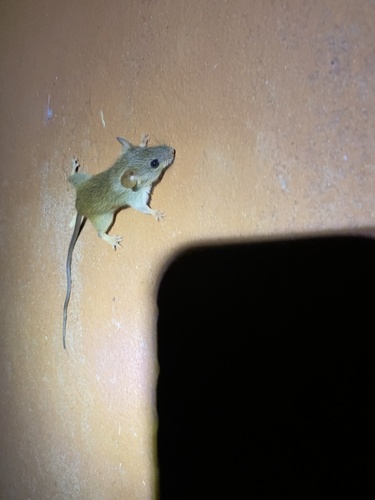
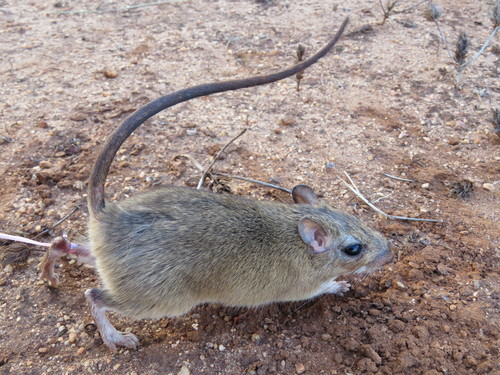
Other species in the genus Aethomys
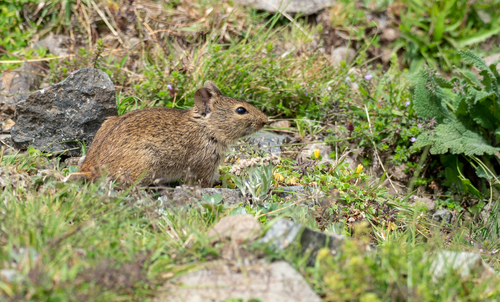
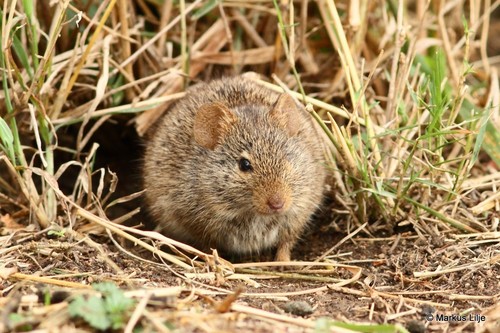
Other species in the family Muridae
Sources
Conservation status, range description and population estimate come from the IUCN Red List assessment for Aethomys thomasi. Countries are derived from that range description, not from a mapped country list. Last refreshed on .
The distribution map is drawn from the IUCN Red List spatial data compiled in 2008. IUCN (International Union for Conservation of Nature)