
Sonoma Tree Vole
Arborimus pomo
Red List assessment
Near Threatenedon the IUCN Red List
- EXExtinct
- EWExtinct in the Wild
- CRCritically Endangered
- ENEndangered
- VUVulnerable
- NTNear Threatened
- LCLeast Concern
The Sonoma Tree Vole is recorded in one country, United States across North America. The IUCN Red List assesses the Sonoma Tree Vole as Near Threatened. No precise global population estimate is available.
- Family
- Cricetidae
- Order
- Rodentia
- Genus
- Arborimus
- Countries recorded
- 1
- Continents
- North America
- Red List category
- Near Threatened
- Data updated
- August 9, 2026
What is the Sonoma Tree Vole?
The Sonoma Tree Vole is a small, highly arboreal rodent endemic to a narrow strip of coastal coniferous forest in northwestern California. It spends virtually its entire life cycle in the canopy of Douglas fir trees, rarely descending to the ground. It is one of the most specialized mammals in North America, relying almost exclusively on Douglas fir needles for food. Its restricted range and dependence on old-growth and mature second-growth forest make it a sensitive indicator of forest ecosystem health.
Where does the Sonoma Tree Vole live?
Coastal northwestern California, USA (primarily Sonoma, Mendocino, and Humboldt counties)
Endemic to the Pacific Coast of northern California, USA. The range is restricted primarily to Humboldt, Mendocino, and Sonoma counties, with some records from Trinity and Del Norte counties. The total range is among the smallest of any North American mammal.
Altitude and depth
Typically from near sea level up to approximately 900 m elevation, following the distribution of coastal Douglas fir forest.
Seasonal movements
Non-migratory and does not hibernate. Activity may be somewhat reduced during harsh winter weather, but the species remains active year-round in the forest canopy.
Habitat of the Sonoma Tree Vole
Mature and old-growth coastal coniferous forests dominated by Douglas fir (Pseudotsuga menziesii), occasionally extending into mixed forests with Sitka spruce and redwood. The species is strongly tied to structurally complex forests with large trees that provide both food and nesting sites in the upper canopy.
Adaptations to its environment
Highly adapted to arboreal life, with strong claws and agile limbs for climbing. Its digestive system can tolerate the terpenes and resins in Douglas fir needles that are toxic to most mammals. It behaviorally strips and discards the resin ducts from needles before consuming the leaf tissue, minimizing resin intake. Nest construction from accumulated resin-duct debris provides insulation and camouflage.
Conservation status and numbers
Near Threatened (NT) on the IUCN Red List. The species qualifies due to its extremely restricted range (estimated extent of occurrence well under 20,000 km²), ongoing habitat loss from logging, and fragmentation of old-growth forests. It does not currently meet thresholds for Vulnerable but is considered at risk of upward reclassification if habitat loss continues.
Estimated population
No precise global population estimate is available. The population is considered small and declining due to continuous reduction in suitable old-growth habitat across its limited range.
What threatens the Sonoma Tree Vole?
The primary threat is the logging and conversion of old-growth and mature second-growth coniferous forest, which eliminates both foraging habitat and suitable large-diameter nesting trees. Habitat fragmentation isolates populations and impedes dispersal. Climate change poses an emerging threat through altered precipitation regimes, increased wildfire frequency, and potential shifts in Douglas fir distribution.
Diseases and parasites
Limited specific data available. Like other small rodents, it is likely subject to ectoparasites (mites, fleas, ticks) and endoparasites (nematodes, cestodes). No major epizootics have been documented in this species.
What is being done to protect it?
The species benefits from habitat protections associated with the Northern Spotted Owl (Strix occidentalis caurina) conservation plans under the US Endangered Species Act, which protect critical old-growth forest in the Pacific Northwest. It is also afforded some protection under California state regulations on timber harvest in sensitive habitats. The species is listed as a Species of Special Concern by the California Department of Fish and Wildlife.
Recommended actions
Priority actions include the legal protection and active management of remaining old-growth and mature second-growth Douglas fir stands within the species' range. Reforestation and forest restoration efforts should prioritize structural complexity and the retention of large trees. Population surveys and genetic studies are needed to assess fragmentation effects and guide connectivity conservation.
What the Sonoma Tree Vole looks like
Fur on the dorsal surface is reddish-brown to chestnut in color, while the ventral surface is pale gray or whitish. The tail is bicolored and moderately long. Eyes are small and beady, ears are relatively small and partially hidden in the fur, typical of voles.
Size
Body length (head and body): approximately 90–115 mm; tail length: 50–75 mm. The tail is notably longer relative to body size than in many other voles.
Weight
Typically 20–40 grams; no pronounced weight difference between sexes has been documented.
Distinctive features
Distinguished from the closely related Red Tree Vole (Arborimus longicaudus) primarily by its more restricted range south of the Klamath River and subtle cranial morphology differences. It is more reddish in dorsal coloration than the White-footed Vole (Arborimus albipes), which also has distinctly white feet. Its arboreal lifestyle and resin-duct-stripping behavior set it apart from all ground-dwelling vole species in the region.
Differences between males and females
Sexual dimorphism is minimal; males and females are similar in size and coloration.
Behaviour and diet of the Sonoma Tree Vole
Primarily solitary. Individuals maintain separate territories centered on their nest trees. Social interactions outside of brief mating encounters are limited and may involve aggressive encounters between neighboring individuals.
When it is active
Predominantly nocturnal, with peak activity occurring after dark. Some crepuscular activity has been observed. The species rarely ventures to the ground and conducts most foraging and movement within the tree canopy.
Diet
Highly specialized herbivore feeding almost exclusively on the needles of Douglas fir (Pseudotsuga menziesii). Occasionally consumes needles from other conifers such as grand fir (Abies grandis) when available. Water requirements are largely met through moisture in the needles.
How it feeds and hunts
Not applicable; the species is a strict herbivore. Foraging involves clipping needles from nearby branches and processing them in or near the nest by stripping and discarding the resin ducts before ingesting the needle tissue.
Communication
Like other voles, likely uses ultrasonic vocalizations for mother-offspring communication and audible squeaks during aggressive encounters. Scent marking via glands on the flanks and feet is presumed to play a role in territory demarcation, as in related species.
Interactions with other species
A significant prey item for the Northern Spotted Owl (Strix occidentalis caurina), making it an important link in the old-growth forest food web. Also preyed upon by Pacific martens (Martes caurina), long-tailed weasels (Neogale frenata), and large arboreal snakes. No known mutualistic or symbiotic relationships with other species have been documented.
Role in its ecosystem
Functions primarily as a herbivore and prey species within old-growth coniferous forest ecosystems. Its dependence on and co-evolution with Douglas fir ties its ecological role tightly to the structural integrity of these forests. Its resin-duct-stripping behavior may marginally affect needle litter composition on the forest floor.
Reproduction and lifecycle
Breeding can occur throughout much of the year but is most frequent in spring and summer. Gestation lasts approximately 28 days. Litter sizes typically range from 1 to 4 young, with 2–3 being most common. Multiple litters per year are possible under favorable conditions.
Raising the young
The female provides all parental care. Young are born altricial (helpless, hairless, and with closed eyes) and are nursed in the nest for several weeks. Weaning occurs at approximately 3–4 weeks, after which juveniles begin to forage independently and eventually disperse to establish their own territories.
Maturity and lifespan
Sexual maturity is likely reached at approximately 2–3 months of age, consistent with related tree vole species. Lifespan in the wild is estimated at 1–2 years; no captive longevity data are available.
Taxonomy and naming of the Sonoma Tree Vole
Classification
Mammalia > Rodentia > Cricetidae > Arborimus > Arborimus pomo
Scientific synonyms
Phenacomys pomo Merriam, 1901 (original description); previously placed in the genus Phenacomys before being reclassified into Arborimus by Johnson & George, 1991.
What research says
Recent studies
Recent studies have focused on the species' dependence on old-growth forest structure and its potential role as a habitat quality indicator. Genetic work on the genus Arborimus has clarified phylogenetic relationships among the three species. Surveys using arboreal camera traps and nest searches have helped refine distribution knowledge in Humboldt and Mendocino counties.
Genome and DNA
Detailed genomic data for Arborimus pomo specifically are limited. The genus Arborimus has been subject to phylogenetic studies confirming its placement within the tribe Arvicolini (Cricetidae). Karyotypic data are not well established in the literature for this species.
Compared with similar species
Most closely related to the Red Tree Vole (Arborimus longicaudus) of Oregon, from which it was separated as a distinct species based on range, morphology, and genetic evidence. Both share the remarkable arboreal lifestyle and dietary specialization on conifer needles. The White-footed Vole (Arborimus albipes), the third member of the genus, is less strictly arboreal and has a broader diet. All three species are far more specialized arboreally than the ground-dwelling heather voles of the genus Phenacomys.
The Sonoma Tree Vole and people
The Sonoma Tree Vole constructs elaborate nests from the discarded resin ducts of Douglas fir needles, and these nests can be used and added to by successive generations, growing to become substantial structures visible in the branches. Despite being a rodent, it almost never touches the ground, living its entire life in the tree canopy like a miniature arboreal specialist. Its ability to subsist on a diet of conifer needles — a food source toxic to most mammals — is considered one of the most extreme dietary specializations among North American rodents.
Where and how to see it
Best observed in mature and old-growth Douglas fir forests of Humboldt and Mendocino counties in northwestern California, such as those found in Humboldt Redwoods State Park and surrounding national forest lands. Night surveys with a red-light headlamp offer the best chance of spotting active individuals in the canopy. Searching for characteristic resin-duct middens on the forest floor below large Douglas firs can help locate active nest trees.
Risks to humans
No notable risk to humans. The species is small, shy, and not known to carry diseases of significant human health concern. It rarely comes into contact with humans given its arboreal, remote-forest lifestyle.
Countries where the Sonoma Tree Vole is recorded
The 1 countries named in the range description of its IUCN Red List assessment.
Questions about the Sonoma Tree Vole
Where does the Sonoma Tree Vole live?
The Sonoma Tree Vole is recorded in United States across North America. These countries come from the range description of its IUCN Red List assessment, and they are what place the species on the interactive map.
Is the Sonoma Tree Vole endangered?
The IUCN Red List assesses the Sonoma Tree Vole as Near Threatened. The species does not qualify as threatened today, but it is close to the thresholds and likely to cross them soon. It is the category that most often changes at the next assessment.
How many are left in the wild?
No precise global population estimate is available. This figure comes from the species assessment on the IUCN Red List; population estimates for wild mammals are ranges, not counts, and are revised at each assessment.
What habitat does the Sonoma Tree Vole live in?
Mature and old-growth coastal coniferous forests dominated by Douglas fir (Pseudotsuga menziesii), occasionally extending into mixed forests with Sitka spruce and redwood.
What is the scientific name of the Sonoma Tree Vole?
The Sonoma Tree Vole is Arborimus pomo, in the family Cricetidae, order Rodentia.
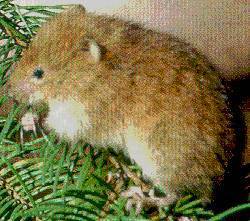
Other species in the genus Arborimus
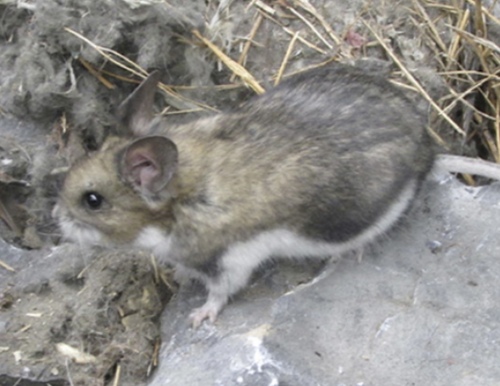
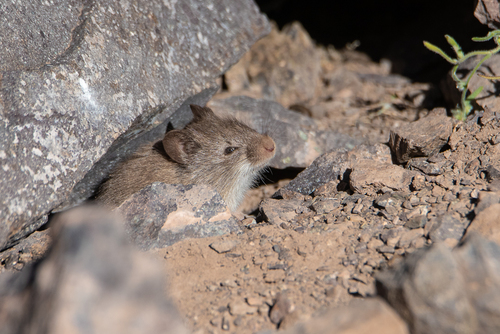
Other species in the family Cricetidae
Species that share its range
Sources
Conservation status, range description and population estimate come from the IUCN Red List assessment for Arborimus pomo. Countries are derived from that range description, not from a mapped country list. Last refreshed on .
The distribution map is drawn from the IUCN Red List spatial data compiled in 2017. IUCN SSC Small Mammal Specialist Group