
Soft Grass Mouse
Akodon mollis
Red List assessment
Least Concernon the IUCN Red List
- EXExtinct
- EWExtinct in the Wild
- CRCritically Endangered
- ENEndangered
- VUVulnerable
- NTNear Threatened
- LCLeast Concern
The Soft Grass Mouse is recorded in 2 countries across South America. The IUCN Red List assesses the Soft Grass Mouse as Least Concern. No precise global population estimate is available.
- Family
- Cricetidae
- Order
- Rodentia
- Genus
- Akodon
- Countries recorded
- 2
- Continents
- South America
- Red List category
- Least Concern
- Data updated
- August 9, 2026
What is the Soft Grass Mouse?
Akodon mollis is a small Andean rodent belonging to the highly diverse genus Akodon, one of the most species-rich genera of mammals in South America. It inhabits the montane zones of Ecuador and adjacent northwestern Peru, living in Andean grasslands, humid montane forest edges, and disturbed agricultural margins. Remarkably, it is part of the tribe Akodontini, a radiation of over 90 species that has explosively diversified across South America. Like other grass mice, it plays a crucial role in Andean ecosystems as both a seed consumer and prey for predators.
Where does the Soft Grass Mouse live?
Western Ecuador and northwestern Peru, primarily in Andean highland regions
Endemic to the northern Andes, with its core range in western and central Ecuador (including Pichincha, Cotopaxi, Tungurahua, and adjacent provinces) and extending into extreme northwestern Peru. It is associated with the western slopes and intermontane valleys of the Andes.
Altitude and depth
Typically found between approximately 1,500 and 3,800 meters above sea level, with peak abundance in the 2,000–3,500 m range corresponding to montane forest and sub-páramo zones.
Seasonal movements
No significant seasonal migration is documented. Activity and reproduction may be modulated by the Andean rainy and dry seasons, with higher reproductive activity potentially coinciding with periods of greater food availability during wetter months.
Habitat of the Soft Grass Mouse
Primarily occupies Andean montane grasslands (páramo and sub-páramo), humid montane shrublands, and the ecotone zones between cloud forest and open grassland. It is also found in agricultural margins and degraded habitats near human settlements, demonstrating notable ecological flexibility.
Adaptations to its environment
The species has dense, soft fur (reflected in its name 'mollis', Latin for soft) that provides insulation against the cold temperatures of Andean highlands. Its generalist diet and tolerance of disturbed habitats allow it to persist in fragmented landscapes. Its compact body form helps reduce heat loss in montane environments.
Conservation status and numbers
Listed as Least Concern (LC) on the IUCN Red List, as the species has a sufficiently wide distribution across the Ecuadorian and Peruvian Andes, appears to tolerate habitat modification to a degree, and shows no evidence of a rapid population decline meeting threatened thresholds.
Estimated population
No precise global population estimate is available. The population trend is considered stable overall, though local subpopulations may be declining in areas of intensive agricultural conversion.
What threatens the Soft Grass Mouse?
Primary threats include habitat loss due to agricultural expansion, overgrazing by livestock (particularly in páramo zones), burning of grasslands for pasture management, and urbanization along Andean slopes. Climate change represents a growing long-term threat as it alters the distribution of suitable montane habitats.
Diseases and parasites
Like other Akodon species, it may serve as a reservoir or host for hantaviruses and other zoonotic pathogens, as well as ectoparasites (fleas, mites, ticks) and endoparasites (helminths, protozoans). Specific documented parasites for this species are not well studied.
What is being done to protect it?
The species is present within several protected areas in Ecuador, including Cotopaxi National Park, Sangay National Park, and various biological reserves along the Andes. National wildlife protection laws in Ecuador and Peru provide indirect legal protection.
Recommended actions
Continued monitoring of populations across the range to detect any decline, protection and restoration of páramo and montane forest habitats, reduction of overgrazing pressure, and inclusion of the species in broader Andean small mammal biodiversity surveys.
What the Soft Grass Mouse looks like
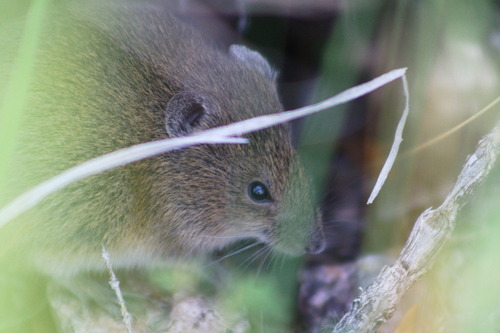
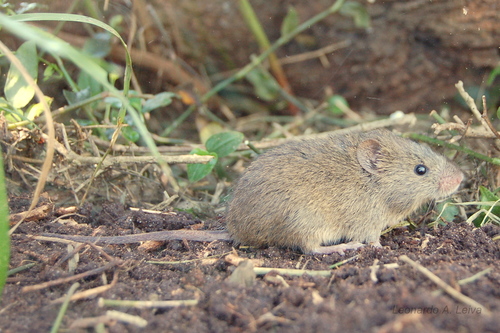
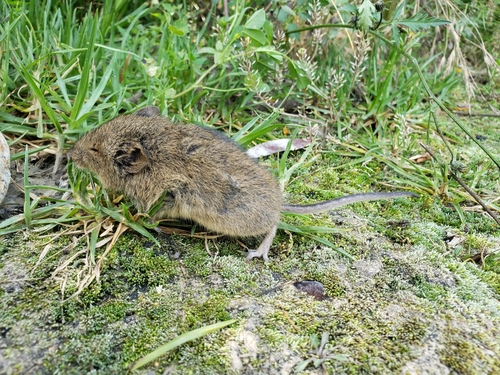
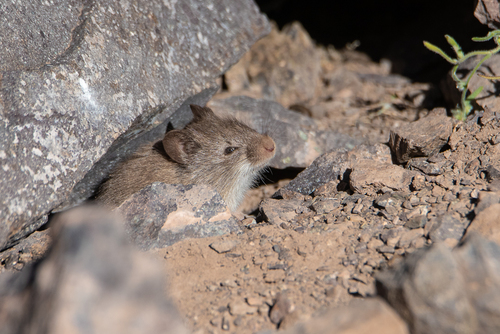
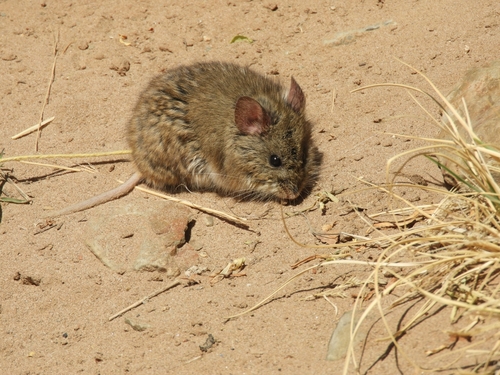
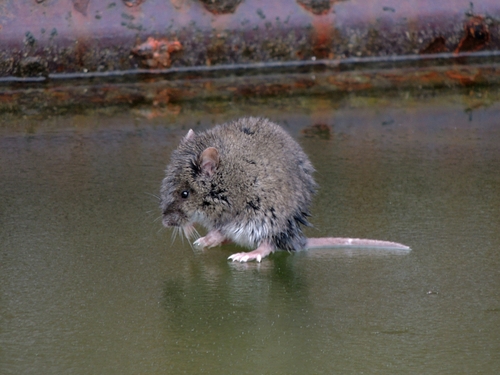
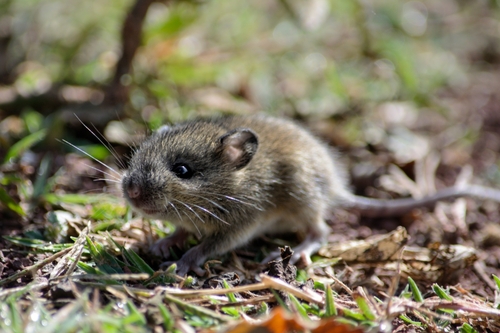
The dorsal pelage is soft (unusually so for an Akodon), brownish to grayish-brown or ochraceous-brown, often with darker mid-dorsal shading. The ventral surface is paler, buffy to whitish-gray. The tail is bicolored, darker above and paler below. Ears are moderately sized and rounded.
Size
Total body length approximately 90–120 mm; tail length 60–90 mm (tail noticeably shorter than body); hindfoot length approximately 18–22 mm.
Weight
Typically weighs between 15 and 35 grams; sexual dimorphism in size is minimal, with males and females of similar mass.
Distinctive features
Distinguished from closely related Andean Akodon species primarily by its notably soft fur texture, specific cranial and dental morphology, and its precise geographic range. Molecular markers and karyotype analysis are often necessary for definitive identification in the field. It tends to be slightly smaller than some sympatric Akodon species.
Differences between males and females
Sexual dimorphism is minimal; males and females are similar in body size and coloration. Males may be very slightly larger on average, as is typical for the genus.
Behaviour and diet of the Soft Grass Mouse
Primarily solitary outside of the breeding season, typical of most Akodon species. Individuals maintain home ranges that may overlap partially with those of conspecifics, particularly in resource-rich areas.
When it is active
Mainly nocturnal and crepuscular, with peak activity occurring after dusk and before dawn. Daytime periods are spent sheltering in burrows or dense grass tussocks.
Diet
Omnivorous, with a diet consisting primarily of seeds, green plant material, roots, and fungal matter, supplemented by invertebrates such as insects, larvae, and earthworms. The relative proportion of animal matter may increase during the dry season when plant resources are scarcer.
How it feeds and hunts
Forages opportunistically along the ground surface and within dense grass tussocks, using its sensitive vibrissae (whiskers) to detect food items. It may excavate soil to access roots and invertebrates.
Communication
Uses ultrasonic vocalizations typical of small rodents for communication between individuals, particularly during mating and mother-pup interactions. Scent marking via urine and glandular secretions is used to delineate territories and signal reproductive status.
Interactions with other species
Predated upon by various Andean raptors (e.g., Barn Owl Tyto alba, Burrowing Owl Athene cunicularia), snakes (e.g., Bothrops species), and small carnivorous mammals (e.g., Mustela species). It competes with other small rodents such as sympatric Akodon species and Microryzomys for food and habitat.
Role in its ecosystem
Functions as an important prey item in Andean food webs, supporting populations of raptors and other predators. As a seed consumer and occasional disperser, it may influence plant community composition in montane grasslands and forest edges.
Reproduction and lifecycle
Breeds throughout much of the year with potential peaks aligned with seasonal rainfall patterns. Gestation lasts approximately 20–23 days, typical for sigmodontine rodents. Litter sizes range from 2 to 6 pups, with an average of around 3–4.
Raising the young
The female is the primary caregiver, nursing and protecting the pups in a grass-lined nest. Young are born altricial (blind, hairless) and develop rapidly, with eyes opening at around 12–14 days. Weaning occurs at approximately 21–28 days of age.
Maturity and lifespan
Sexual maturity is reached at approximately 2–3 months of age, common for small sigmodontine rodents. Lifespan in the wild is typically 1–2 years; individuals may live up to 3 years in controlled captive conditions.
Taxonomy and naming of the Soft Grass Mouse
Classification
Mammalia > Rodentia > Cricetidae (subfamily Sigmodontinae, tribe Akodontini) > Akodon > Akodon mollis
Scientific synonyms
Originally described by Oldfield Thomas in 1900; sometimes previously referenced under broader Akodon groupings before molecular taxonomy clarified species boundaries within the genus.
What research says
Recent studies
Recent phylogenetic studies using mitochondrial and nuclear DNA markers have helped clarify species boundaries within the highly complex Akodon genus, confirming A. mollis as a distinct species. Ongoing surveys continue to refine its precise distributional limits and population structure in Ecuador and Peru.
Genome and DNA
The chromosome number for Akodon mollis has been reported as 2n = 40, consistent with many members of the genus, though karyotypic variation within the genus is notable. The genus Akodon has been an important subject of mammalian phylogeographic studies in South America.
Compared with similar species
Akodon mollis is closely related to other Andean Akodon species such as A. aerosus and A. orophilus. It differs from A. aerosus primarily in cranial morphology and geographic range, and from A. orophilus in its softer pelage and slightly different altitudinal preferences. The entire genus is distinguished from Microtus and other voles by its more pointed snout and distinct molar patterns.
The Soft Grass Mouse and people
The species epithet 'mollis' is Latin for 'soft,' a direct reference to the unusually soft and dense texture of its fur compared to other grass mice in its genus. The genus Akodon contains over 40 recognized species, making it one of the most rapidly evolving mammalian genera on Earth. Despite its small size, this mouse can survive the cold Andean nights at elevations exceeding 3,000 meters, demonstrating the remarkable resilience of Andean small mammals.
Where and how to see it
Best observed at night using red-light headlamps in montane grassland and páramo habitats in Ecuador, particularly around Cotopaxi or Antisana reserves. Sherman live-traps baited with oatmeal or peanut butter placed along grass tussock margins are the standard method used by researchers to detect this species.
Risks to humans
As a potential reservoir host for hantavirus and other rodent-borne pathogens, contact with individuals or their droppings should be avoided. No direct danger (bite risk is minimal as the animal is shy and elusive). Standard hygiene precautions apply when handling any wild rodent.
Countries where the Soft Grass Mouse is recorded
The 2 countries named in the range description of its IUCN Red List assessment.
Questions about the Soft Grass Mouse
Where does the Soft Grass Mouse live?
The Soft Grass Mouse is recorded in Ecuador and Peru across South America. These countries come from the range description of its IUCN Red List assessment, and they are what place the species on the interactive map.
Is the Soft Grass Mouse endangered?
The IUCN Red List assesses the Soft Grass Mouse as Least Concern. The species is widespread and abundant enough not to qualify for any threatened category. It does not mean the species is safe forever, only that nothing in the current data raises an alarm.
How many are left in the wild?
No precise global population estimate is available. This figure comes from the species assessment on the IUCN Red List; population estimates for wild mammals are ranges, not counts, and are revised at each assessment.
What habitat does the Soft Grass Mouse live in?
Primarily occupies Andean montane grasslands (páramo and sub-páramo), humid montane shrublands, and the ecotone zones between cloud forest and open grassland.
What is the scientific name of the Soft Grass Mouse?
The Soft Grass Mouse is Akodon mollis, in the family Cricetidae, order Rodentia.
Other species in the genus Akodon

Other species in the family Cricetidae
Sources
Conservation status, range description and population estimate come from the IUCN Red List assessment for Akodon mollis. Countries are derived from that range description, not from a mapped country list. Last refreshed on .
The distribution map is drawn from the IUCN Red List spatial data compiled in 2008. IUCN (International Union for Conservation of Nature)