
Serra do Mar Grass Mouse
Akodon serrensis
Red List assessment
Least Concernon the IUCN Red List
- EXExtinct
- EWExtinct in the Wild
- CRCritically Endangered
- ENEndangered
- VUVulnerable
- NTNear Threatened
- LCLeast Concern
The Serra do Mar Grass Mouse is recorded in one country, Brazil across South America. The IUCN Red List assesses the Serra do Mar Grass Mouse as Least Concern. No precise global population estimate is available.
- Family
- Cricetidae
- Order
- Rodentia
- Genus
- Akodon
- Countries recorded
- 1
- Continents
- South America
- Red List category
- Least Concern
- Data updated
- August 9, 2026
What is the Serra do Mar Grass Mouse?
Akodon serrensis is a small semi-fossorial rodent belonging to the diverse South American genus Akodon, commonly known as grass mice or field mice. It is endemic to the Atlantic Forest biome of southeastern Brazil, inhabiting montane and highland areas of the Serra do Mar and Serra Geral mountain ranges. Like other members of its genus, it is notable for being a key small-mammal component of one of the world's most biodiverse and threatened ecosystems. Its restricted, montane Atlantic Forest range makes it a bioindicator for the health of these highland forest habitats.
Where does the Serra do Mar Grass Mouse live?
Endemic to the Atlantic Forest of southeastern Brazil, primarily in the states of Paraná, Santa Catarina, and Rio Grande do Sul.
Restricted to southeastern Brazil; confirmed records span the states of Paraná, Santa Catarina, and northern Rio Grande do Sul, chiefly along the Serra do Mar and Serra Geral escarpments. Its range overlaps significantly with Araucaria Forest and upper Atlantic Forest zones.
Altitude and depth
Typically recorded between 600 m and 1,800 m above sea level, with highest densities in cool, humid montane forest zones above 800 m.
Seasonal movements
No evidence of hibernation or significant seasonal migration. Breeding activity may increase during warmer and wetter seasons (austral spring and summer), corresponding to peak food availability.
Habitat of the Serra do Mar Grass Mouse
Primarily occupies dense, humid Atlantic Forest, including mixed Araucaria (Araucaria angustifolia) forests, montane rainforest, and secondary-growth forest edges in highland regions. It also uses grassland-forest ecotones and areas with dense ground-level vegetation cover, including leaf litter and moss mats typical of cool, misty highland environments.
Adaptations to its environment
Possesses robust forelimbs and slightly curved claws suited for digging and moving through dense leaf litter and soil. Its dense, water-repellent fur provides insulation in the cool, humid highland climate. Like other Akodon, it has a relatively generalist diet, allowing it to exploit seasonal fluctuations in food resources.
Conservation status and numbers
Least Concern (LC) on the IUCN Red List. Although its habitat (the Atlantic Forest) is globally threatened, the species has a sufficiently wide range, tolerates some habitat degradation, and does not show evidence of rapid population decline meeting threatened thresholds.
Estimated population
No precise global population estimate is available. Population trend is considered stable or possibly slowly declining due to continuing habitat loss across its range.
What threatens the Serra do Mar Grass Mouse?
Ongoing deforestation and fragmentation of the Atlantic Forest for agriculture, cattle ranching, and urban expansion represent the primary threats. Eucalyptus and pine plantation expansion also degrades native forest habitat. Climate change poses a long-term threat by altering the temperature and humidity regimes of montane zones critical to this species.
Diseases and parasites
Like other Akodon rodents in the Atlantic Forest, it can harbor hantaviruses (potential zoonotic risk), Trypanosoma species, various helminth parasites (cestodes, nematodes), and ectoparasites including fleas, ticks (Ixodidae), and mites. It may serve as a reservoir host for some zoonotic pathogens.
What is being done to protect it?
The species is present within several protected areas across its range, including the Serra do Mar State Park (São Paulo/Paraná), Aparados da Serra National Park (Rio Grande do Sul/Santa Catarina), and various state ecological stations. Brazilian legislation (SNUC system) protects its core habitat areas.
Recommended actions
Priority actions include protecting and expanding remaining highland Atlantic Forest remnants, creating biological corridors between fragmented forest patches, monitoring population trends through standardized live-trapping programs, and restricting conversion of native vegetation in the Serra do Mar and Serra Geral highlands.
What the Serra do Mar Grass Mouse looks like
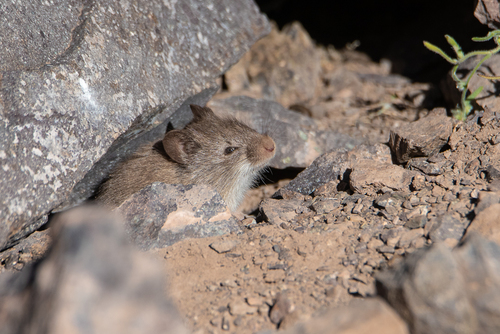
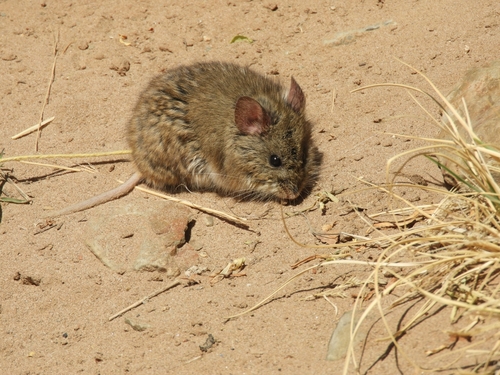
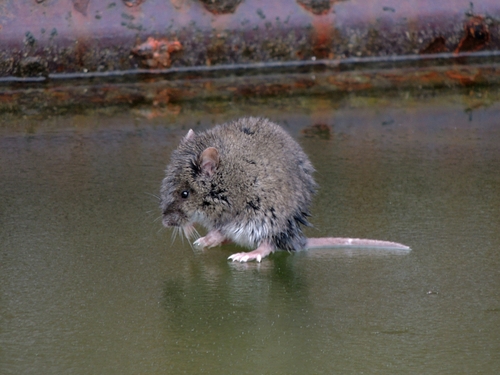
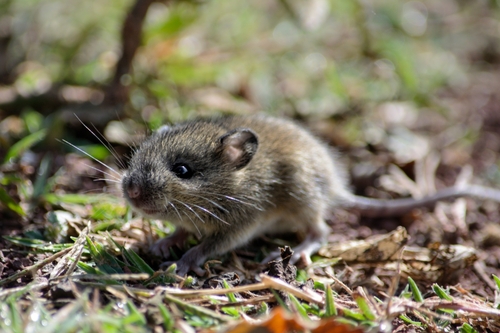
Dorsal fur is dark brownish-grey to olivaceous brown, often with a slightly grizzled appearance due to dark-tipped guard hairs. The ventral surface is paler grey to buffy-white. The tail is bicolored (darker above, paler below), relatively short, and sparsely haired. Eyes and ears are moderate in size.
Size
Head-body length approximately 85–115 mm; tail length approximately 65–90 mm (shorter than or subequal to head-body length). Total length roughly 150–200 mm.
Weight
Typically 18–40 g; adults average around 25–32 g. Slight sexual dimorphism in size may occur, with males tending to be marginally heavier.
Distinctive features
Distinguished from sympatric Akodon species (e.g., Akodon montensis, Akodon azarae) by its darker, more olivaceous dorsal coloration, relatively shorter tail, and cranial morphological features including a broader braincase and specific molar cusp patterns. Molecular markers confirm its distinctness within the Akodon cursor species group.
Differences between males and females
Sexual dimorphism is minimal. Males may be slightly larger and heavier on average than females, but color patterns and external morphology are essentially identical between the sexes.
Behaviour and diet of the Serra do Mar Grass Mouse
Largely solitary outside the breeding season. Individuals maintain overlapping or adjacent home ranges, with some degree of intrasexual territorial behavior, particularly among males. Population densities can be locally high in suitable habitat.
When it is active
Primarily nocturnal and crepuscular. Activity peaks occur shortly after dusk and before dawn. During daylight hours, individuals typically rest in underground burrows, dense vegetation, or beneath logs and leaf litter.
Diet
Omnivorous, with a diet including seeds, plant material (leaves, stems, roots), fungi, invertebrates (insects, larvae, earthworms), and occasionally small vertebrates. Seed consumption likely makes it an incidental seed disperser in the Atlantic Forest.
How it feeds and hunts
Forages opportunistically on the forest floor and in the leaf litter layer, using olfaction to locate food items. Uses its forelimbs to dig for underground invertebrates and roots. No active pursuit hunting is employed; invertebrates are captured by gleaning and digging.
Communication
Communicates via high-frequency vocalizations (including ultrasonic calls used between mother and offspring), scent marking using urine, feces, and specialized glandular secretions, and tactile signals during social interactions.
Interactions with other species
Prey for a range of predators including owls (Tyto alba, Strix huhula), small felids (Leopardus guttulus), snakes (Bothrops jararaca, Philodryas), and mustelids. Competes for resources with sympatric small rodents such as Akodon montensis, Oligoryzomys nigripes, and Brucepattersonius species. May serve as a host for ectoparasites shared across the small-mammal community.
Role in its ecosystem
Functions as a primary and secondary consumer in Atlantic Forest food webs, linking plant matter and invertebrates to mesopredators. As a seed consumer and incidental disperser, it may influence forest regeneration dynamics. It also contributes to soil aeration through burrowing activity.
Reproduction and lifecycle
Breeding occurs mainly during the austral spring and summer (October–March). Gestation is approximately 21–23 days (estimated based on related Akodon species). Litter size ranges from 2 to 6 pups, with an average of around 3–4. Multiple litters per year are possible under favorable conditions.
Raising the young
As in other sigmodontine rodents, the female provides primary parental care. Pups are born altricial (blind, hairless) and are nursed in a nest within a burrow. Weaning occurs at approximately 2–3 weeks of age. Males do not typically participate in direct pup care.
Maturity and lifespan
Sexual maturity is reached at approximately 2–3 months of age. Wild lifespan is typically 1–2 years due to high predation pressure; captive individuals of related species can live up to 3–4 years.
Taxonomy and naming of the Serra do Mar Grass Mouse
Classification
Mammalia > Rodentia > Cricetidae (subfamily Sigmodontinae) > Akodon > Akodon serrensis
Scientific synonyms
Originally described by Oldfield Thomas in 1902. No widely accepted synonyms, though some earlier authors provisionally treated it within broader Akodon species complexes of southeastern Brazil.
What research says
Recent studies
Phylogeographic studies of Atlantic Forest small mammals have highlighted the role of the Serra do Mar and Serra Geral highlands as refugia and diversification centers, with A. serrensis used as a model taxon. Hantavirus surveillance studies in southern Brazil have occasionally detected viral RNA in Akodon populations from Santa Catarina and Paraná.
Genome and DNA
The diploid chromosome number (2n) for Akodon serrensis is reported as 2n = 24, FN = 40, consistent with some members of the Akodon cursor species group. Molecular phylogenetic studies have helped clarify its placement within the genus.
Compared with similar species
Most closely related to other members of the Akodon cursor species group, including Akodon montensis (which overlaps in range and is generally larger with a longer tail) and Akodon paranaensis. Distinguished from Akodon cursor of eastern Brazil by geographic range, slight morphological differences, and molecular divergence. The genus Akodon is one of the most speciose rodent genera in South America, with over 40 recognized species.
The Serra do Mar Grass Mouse and people
The Serra do Mar Grass Mouse belongs to one of the most diverse rodent genera in the Americas — Akodon — which has undergone remarkable speciation across South America's varied landscapes. Despite being tiny and cryptic, individuals can consume their body weight in food within a few days when resources are abundant. Some Akodon species are known to have exceptionally variable sex chromosome systems; females with YX karyotypes occur in certain species of the genus, making sex determination uniquely complex in this group.
Where and how to see it
Best observed using live-trap transects set along forest trails and ecotones in highland Atlantic Forest areas of Santa Catarina and Paraná (e.g., Serra do Mar State Park, Aparados da Serra National Park) during the wet season (October–March). Nocturnal spotlighting surveys along forest edges may occasionally reveal active individuals. Scientific permits are required for trapping in Brazil.
Risks to humans
Potential reservoir of hantavirus and other zoonotic pathogens; direct handling without protection is inadvisable. Bites from trapped individuals can break skin. For the general public with no direct contact, risk is negligible.
Human uses
No significant direct human use. Used as a study subject in ecological, parasitological, and zoonotic disease research within the Atlantic Forest biome.
Countries where the Serra do Mar Grass Mouse is recorded
The 1 countries named in the range description of its IUCN Red List assessment.
Questions about the Serra do Mar Grass Mouse
Where does the Serra do Mar Grass Mouse live?
The Serra do Mar Grass Mouse is recorded in Brazil across South America. These countries come from the range description of its IUCN Red List assessment, and they are what place the species on the interactive map.
Is the Serra do Mar Grass Mouse endangered?
The IUCN Red List assesses the Serra do Mar Grass Mouse as Least Concern. The species is widespread and abundant enough not to qualify for any threatened category. It does not mean the species is safe forever, only that nothing in the current data raises an alarm.
How many are left in the wild?
No precise global population estimate is available. This figure comes from the species assessment on the IUCN Red List; population estimates for wild mammals are ranges, not counts, and are revised at each assessment.
What habitat does the Serra do Mar Grass Mouse live in?
Primarily occupies dense, humid Atlantic Forest, including mixed Araucaria (Araucaria angustifolia) forests, montane rainforest, and secondary-growth forest edges in highland regions.
What is the scientific name of the Serra do Mar Grass Mouse?
The Serra do Mar Grass Mouse is Akodon serrensis, in the family Cricetidae, order Rodentia.
Other species in the genus Akodon

Other species in the family Cricetidae
Sources
Conservation status, range description and population estimate come from the IUCN Red List assessment for Akodon serrensis. Countries are derived from that range description, not from a mapped country list. Last refreshed on .
The distribution map is drawn from the IUCN Red List spatial data compiled in 2008. IUCN (International Union for Conservation of Nature)