
Puno Grass Mouse
Akodon subfuscus
Red List assessment
Least Concernon the IUCN Red List
- EXExtinct
- EWExtinct in the Wild
- CRCritically Endangered
- ENEndangered
- VUVulnerable
- NTNear Threatened
- LCLeast Concern
The Puno Grass Mouse is recorded in 2 countries across South America. The IUCN Red List assesses the Puno Grass Mouse as Least Concern. No precise global population estimate is available.
- Family
- Cricetidae
- Order
- Rodentia
- Genus
- Akodon
- Countries recorded
- 2
- Continents
- South America
- Red List category
- Least Concern
- Data updated
- August 9, 2026
What is the Puno Grass Mouse?
Akodon subfuscus is a small, ground-dwelling sigmodontine rodent endemic to the high-altitude puna grasslands of the southeastern Peruvian Andes, particularly associated with the Puno region near the Titicaca basin. Like other members of the genus Akodon, it is commonly called a 'grass mouse' due to its close association with dense grass and herbaceous vegetation. It is a relatively little-studied species, making it scientifically interesting as a representative of the highly diverse Andean rodent fauna. Its survival at extreme elevations demonstrates remarkable physiological adaptation to cold, hypoxic conditions.
Where does the Puno Grass Mouse live?
Peru (primarily the Puno and Cusco departments in the southeastern Andes), with possible marginal occurrence into adjacent Bolivia
Endemic to Peru; range is centered in the Puno department of southeastern Peru, extending into adjacent portions of the Cusco and possibly Apurímac departments. The distribution corresponds broadly with the Altiplano and surrounding puna zones near and above the Lake Titicaca basin.
Altitude and depth
Typically found between 3,500 and 4,800 meters above sea level, with the core of its range in the 3,800–4,500 m zone of the puna biome.
Seasonal movements
No long-distance migrations recorded; likely remains active year-round. Activity patterns may shift seasonally with the Andean dry (May–October) and wet (November–April) seasons, which influence food availability and vegetation cover.
Habitat of the Puno Grass Mouse
High-altitude puna grasslands (ichu grasslands dominated by Festuca and Stipa), bofedales (high Andean wetlands and cushion bogs), rocky outcrops with grass cover, and shrubby montane grassland ecotones. It prefers dense grass cover that provides both food and shelter from predators.
Adaptations to its environment
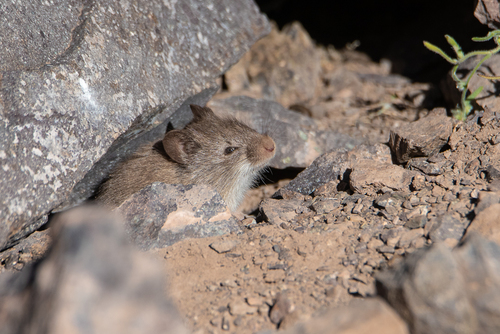
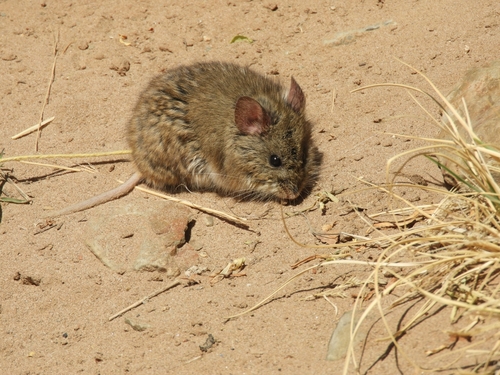
Adapted to cold, hypoxic high-altitude conditions with dense, insulating fur. Like other high-Andean Akodon, it likely has physiological adaptations for efficient oxygen use at low partial pressures. Its cryptic brownish coloration provides camouflage among dried puna grasses, and its compact body reduces heat loss in cold Andean nights.
Conservation status and numbers
Least Concern (LC) on the IUCN Red List. The species is assessed as LC because it is considered to have a sufficiently wide distribution within its range, no confirmed major population declines have been documented, and it occurs in relatively intact puna habitat. However, data on population trends remain limited.
Estimated population
No precise global population estimate is available. The population trend is presumed stable given current LC status, but detailed monitoring data are lacking.
What threatens the Puno Grass Mouse?
Overgrazing by domestic livestock (llamas, alpacas, sheep, cattle) degrades puna grassland habitat. Agricultural expansion and burning of grasslands for pasture renewal are localized threats. Climate change poses a long-term threat through alteration of puna vegetation structure, shrinking glaciers, and changes in precipitation patterns affecting bofedales.
Diseases and parasites
Likely hosts a range of ectoparasites (fleas, mites, ticks) and endoparasites (nematodes, cestodes) typical of high-Andean Akodon. Some Akodon species in Peru are known reservoirs of hantaviruses and other zoonotic agents, though specific data for A. subfuscus are lacking.
What is being done to protect it?
The species occurs within several protected areas in the Puno and Cusco regions of Peru, including the Titicaca National Reserve and the Bahuaja-Sonene National Park buffer zones. Peru's national biodiversity legislation provides general legal protection. No species-specific conservation programs are known.
Recommended actions
Systematic population surveys across the known range to establish baseline density and demographic data. Monitoring of habitat quality in puna grasslands under changing land-use and climate scenarios. Strengthening management of overgrazing in protected and buffer areas. Inclusion in regional small-mammal biodiversity monitoring programs.
What the Puno Grass Mouse looks like
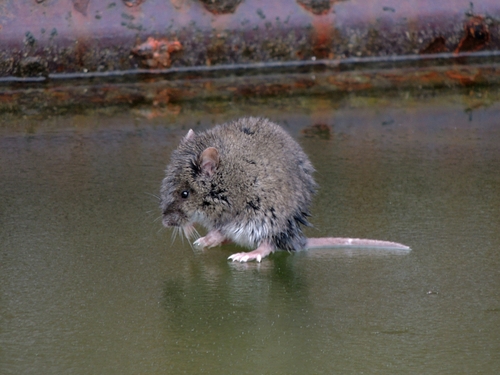
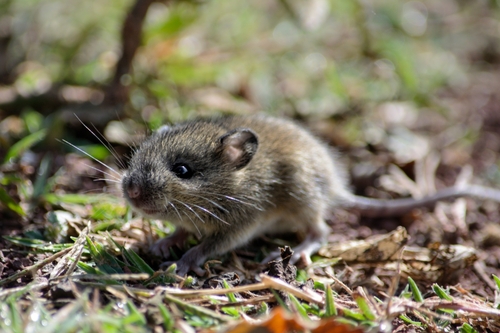
Dorsal fur is dull brownish-gray to ochraceous-brown, often with a fuscous (dark brownish) mid-dorsal suffusion, giving the species its Latin name 'subfuscus' (somewhat dusky). The ventral surface is pale grayish to buffy-white. The ears are relatively small and rounded; the tail is bicolored (darker above, paler below) and moderately haired.
Size
Body length (head-body): approximately 90–115 mm; tail length: 60–85 mm (roughly 70% of body length). Total length typically 150–200 mm.
Weight
Approximately 18–35 g; sexual size dimorphism is minimal, as is typical in Akodon. Males may be slightly heavier on average.
Distinctive features
Distinguished from the closely related Akodon jelskii by generally darker, more fuscous dorsal coloration and subtle cranial morphometric differences, particularly in the shape of the incisive foramina and the proportions of the skull. Compared to Akodon boliviensis, it tends to be smaller and darker.
Differences between males and females
Minimal sexual dimorphism; males and females are similar in size and coloration. Males may average very slightly larger in body mass, consistent with the genus.
Behaviour and diet of the Puno Grass Mouse
Presumed to be largely solitary or loosely associated in small overlapping home ranges, as is typical for Akodon. No documented colonial behavior. Population density can be locally variable depending on habitat quality and season.
When it is active
Primarily nocturnal to crepuscular, with peak activity occurring shortly after dusk and before dawn. Shelters during daylight hours in burrows dug among grass roots, rock crevices, or dense vegetation mats.
Diet
Omnivorous; diet likely consists primarily of seeds, green plant material (grasses, sedges, forbs), roots, and invertebrates (insects, larvae, worms). The balance between plant and animal matter may shift seasonally with availability, with more invertebrates consumed during the wet season.
How it feeds and hunts
Forages actively on the ground, moving through runways in dense grass cover. Uses olfaction to locate seeds and invertebrates. Small invertebrates are likely captured opportunistically during terrestrial foraging.
Communication
Uses high-frequency vocalizations (ultrasonic and audible squeaks) for individual recognition and alarm signaling. Scent marking via urine and specialized glands likely plays a role in territory or home range demarcation. Vibrissae (whiskers) are important for tactile navigation in dense grass.
Interactions with other species
Prey for Andean raptors (Puna hawk, Aplomado falcon), Andean foxes (Lycalopex culpaeus), pampas cats (Leopardus colocolo), and large Andean snakes. Competes with other sympatric small rodents such as Akodon jelskii and Calomys species for seeds and grass cover. May serve as an intermediate host for Andean parasites shared across sympatric rodent communities.
Role in its ecosystem
Functions as a primary consumer in the puna ecosystem, transferring energy from plants and invertebrates to mesopredators and top predators. Contributes to seed dispersal and soil aeration through burrowing activity. As a prey species, plays a significant role in supporting Andean predator populations.
Reproduction and lifecycle
Breeding appears to occur primarily during the austral summer wet season (November–March) when food resources are most abundant, though limited data exist. Gestation estimated at approximately 21–23 days (based on congeners). Litter size likely 2–5 young, with multiple litters per year possible.
Raising the young
As in other Akodon, the female likely bears primary responsibility for nursing and raising young in a grass-lined nest. Young are altricial at birth and weaned at approximately 2–3 weeks. The father's role in parental care is not documented and presumed minimal.
Maturity and lifespan
Sexual maturity likely reached at 6–8 weeks of age, consistent with other Akodon. Wild lifespan estimated at 1–2 years due to high predation pressure; captive individuals of congeners have survived up to 3–4 years.
Taxonomy and naming of the Puno Grass Mouse
Classification
Mammalia > Rodentia > Cricetidae (Sigmodontinae) > Akodon > Akodon subfuscus
Scientific synonyms
Previously considered by some authors as a subspecies or synonym of Akodon jelskii; described by Osgood (1944). Sometimes listed under the broader Akodon boliviensis species group.
What research says
Recent studies
Phylogeographic and molecular systematic studies of the Akodon boliviensis species group (which includes A. subfuscus) have helped clarify species boundaries in the southeastern Peruvian Andes. Morphometric and molecular analyses have confirmed the validity of A. subfuscus as a distinct species rather than a subspecies.
Genome and DNA
The karyotype of A. subfuscus has not been definitively published in widely available literature. Akodon species show notable karyotypic diversity (2n ranges from 10 to 44 across the genus), making chromosomal studies of this species a research priority. No detailed genomic studies are known for this species.
Compared with similar species
Most closely related to Akodon jelskii (Jelski's grass mouse) and Akodon boliviensis (Bolivian grass mouse), with which it shares the high Andean puna habitat. A. subfuscus is distinguished by its darker fuscous coloration relative to A. jelskii, and by geographic range. It resembles Calomys species superficially but is distinguished by its smaller ears and more robust build.
The Puno Grass Mouse and people
The genus name 'Akodon' derives from Greek meaning 'pointed tooth,' referring to the sharp cusps of the molars that are characteristic of these omnivorous mice. Despite living at altitudes exceeding 4,500 m—where oxygen levels are roughly 60% of those at sea level—these mice remain active throughout the harsh Andean winter nights. The puna ecosystem where this species lives is one of the world's highest and most extensive grassland biomes, covering over a million square kilometers across the Andes.
Where and how to see it
Best observed in the puna grasslands around the Lake Titicaca basin in the Puno region of Peru, particularly in areas with intact ichu (Stipa ichu) grass cover. Live-trapping surveys conducted by researchers at night during the wet season (December–February) yield the highest encounter rates. The Reserva Nacional del Titicaca and surrounding altiplano areas are accessible and offer suitable habitat.
Risks to humans
No notable direct risk to humans. As with other wild rodents in the Andes, there is a theoretical risk of zoonotic disease transmission (e.g., hantavirus) through contact with excreta; standard precautions when handling wild rodents are advisable.
Countries where the Puno Grass Mouse is recorded
The 2 countries named in the range description of its IUCN Red List assessment.
Questions about the Puno Grass Mouse
Where does the Puno Grass Mouse live?
The Puno Grass Mouse is recorded in Bolivia and Peru across South America. These countries come from the range description of its IUCN Red List assessment, and they are what place the species on the interactive map.
Is the Puno Grass Mouse endangered?
The IUCN Red List assesses the Puno Grass Mouse as Least Concern. The species is widespread and abundant enough not to qualify for any threatened category. It does not mean the species is safe forever, only that nothing in the current data raises an alarm.
How many are left in the wild?
No precise global population estimate is available. This figure comes from the species assessment on the IUCN Red List; population estimates for wild mammals are ranges, not counts, and are revised at each assessment.
What habitat does the Puno Grass Mouse live in?
High-altitude puna grasslands (ichu grasslands dominated by Festuca and Stipa), bofedales (high Andean wetlands and cushion bogs), rocky outcrops with grass cover, and shrubby montane grassland ecotones.
What is the scientific name of the Puno Grass Mouse?
The Puno Grass Mouse is Akodon subfuscus, in the family Cricetidae, order Rodentia.
Other species in the genus Akodon

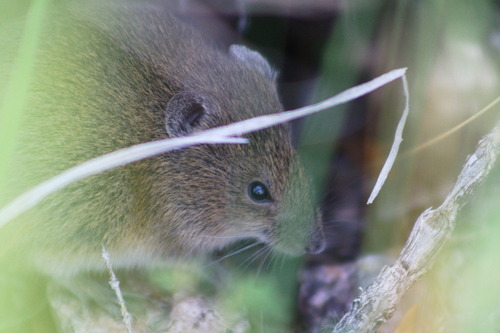
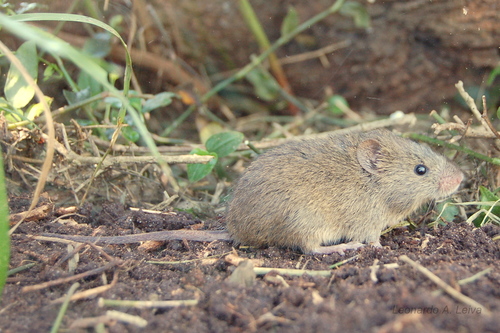
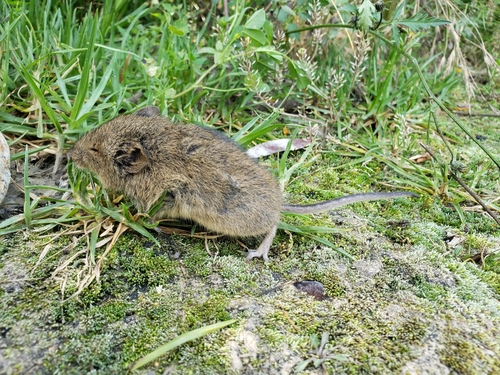
Other species in the family Cricetidae
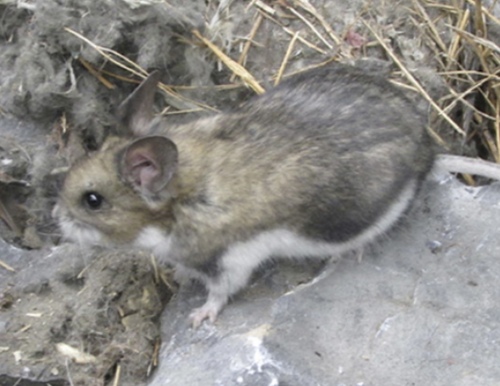
Sources
Conservation status, range description and population estimate come from the IUCN Red List assessment for Akodon subfuscus. Countries are derived from that range description, not from a mapped country list. Last refreshed on .
The distribution map is drawn from the IUCN Red List spatial data compiled in 2016. IUCN (International Union for Conservation of Nature)