
Pale-throated Three-toed Sloth
Bradypus tridactylus
Red List assessment
Least Concernon the IUCN Red List
- EXExtinct
- EWExtinct in the Wild
- CRCritically Endangered
- ENEndangered
- VUVulnerable
- NTNear Threatened
- LCLeast Concern
The Pale-throated Three-toed Sloth is recorded in 5 countries across South America. The IUCN Red List assesses the Pale-throated Three-toed Sloth as Least Concern. No precise global population estimate exists, but the species is considered common within suitable habitat; overall trend is stable to slightly declining due to habitat fragmentation.
- Family
- Bradypodidae
- Order
- Pilosa
- Genus
- Bradypus
- Countries recorded
- 5
- Continents
- South America
- Red List category
- Least Concern
- Data updated
- August 9, 2026
What is the Pale-throated Three-toed Sloth?
The pale-throated three-toed sloth is a slow-moving arboreal mammal native to the tropical rainforests of northern South America. It is known for its extremely low metabolic rate, distinctive pale throat patch, and near-permanent life spent hanging upside down in the forest canopy. This species is remarkable for its symbiotic relationship with algae and moths that live in its fur, giving it a greenish tint that aids camouflage. It is one of the most iconic examples of evolutionary adaptation to an extremely low-energy lifestyle.
Where does the Pale-throated Three-toed Sloth live?
Northern South America, primarily in the Amazon basin and Guiana Shield countries including Brazil, Venezuela, Guyana, Suriname, and French Guiana.
Found across northern South America, including Brazil (north of the Amazon River), Venezuela, Guyana, Suriname, and French Guiana. Its range is largely bounded by major rivers and forest continuity in the Amazon and Guiana Shield regions.
Altitude and depth
Typically found from sea level up to around 1000 meters elevation, mostly in lowland rainforest canopy.
Seasonal movements
No significant migration or hibernation; slight variation in activity may occur with rainfall patterns affecting fruiting and leaf availability.
Habitat of the Pale-throated Three-toed Sloth
Primarily found in lowland tropical rainforest and moist forest canopies, including both primary and secondary forest. It prefers areas with continuous canopy cover to facilitate its arboreal lifestyle and minimize the need to descend to the ground.
Adaptations to its environment
Its long limbs and curved claws allow secure suspension from branches with minimal energy expenditure. A extremely slow metabolism and low body temperature conserve energy given its low-nutrient leaf diet. Symbiotic algae growing in its fur provide camouflage, while specialized gut bacteria help digest tough, fibrous leaves.
Conservation status and numbers
Listed as Least Concern (LC) by the IUCN due to a relatively wide distribution and stable population in intact forest habitat, though localized declines occur from deforestation.
Estimated population
No precise global population estimate exists, but the species is considered common within suitable habitat; overall trend is stable to slightly declining due to habitat fragmentation.
What threatens the Pale-throated Three-toed Sloth?
Habitat loss from deforestation for agriculture, logging, and mining; also threatened by roadkill, illegal pet trade, and hunting in some regions.
Diseases and parasites
Known to host specific moth species and algae in fur, as well as internal parasites such as nematodes; disease prevalence in wild populations is not well studied.
What is being done to protect it?
Protected in several national parks and reserves within its range, including areas in French Guiana and Brazil. Rehabilitation centers exist for injured or orphaned individuals, particularly in areas with high human-wildlife conflict.
Recommended actions
Continued protection of contiguous rainforest habitat, mitigation of roadkill through wildlife crossings, and regulation of the illegal pet trade are recommended priorities.
What the Pale-throated Three-toed Sloth looks like
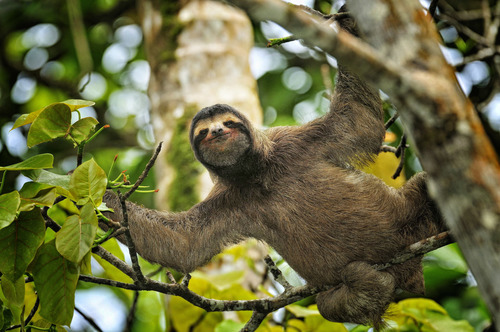
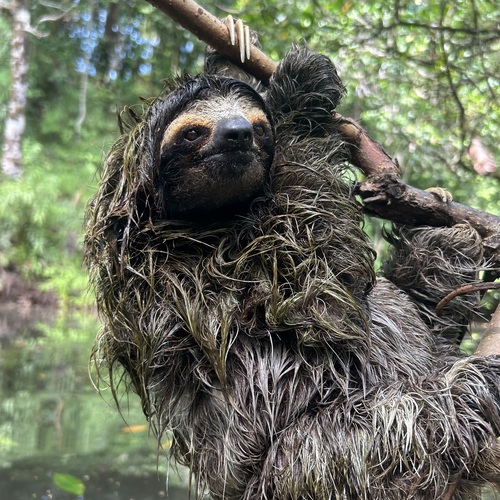
The fur is grayish-brown with a pale yellowish throat patch, and the face often appears expressionless with dark eye patches. Fur often appears greenish due to algal growth, aiding camouflage in the canopy. The body is stocky with a small head, short tail, and long limbs ending in three curved claws.
Size
Body length typically ranges from 45 to 60 cm.
Weight
Adults typically weigh between 2.25 and 4.5 kg.
Distinctive features
Distinguished from other Bradypus species by its pale, unmarked throat and lack of a dark facial mask seen in some relatives like the brown-throated sloth. Its fur pattern and coloration are key identifying features.
Differences between males and females
Minimal sexual dimorphism; males and females are similar in size and appearance, though males may have a slightly less distinct dorsal patch compared to some related species.
Behaviour and diet of the Pale-throated Three-toed Sloth
Largely solitary, with individuals maintaining separate home ranges that may overlap slightly. Social interactions are infrequent and mostly limited to mating encounters.
When it is active
Primarily nocturnal to crepuscular, though some daytime activity occurs; spends the majority of its time resting or moving slowly through the canopy.
Diet
Herbivorous, feeding mainly on leaves, buds, and shoots of canopy trees, particularly from the Cecropia genus. Its diet is low in nutrients, necessitating slow digestion and minimal movement.
Communication
Communication is limited mostly to soft vocalizations between mother and offspring, along with scent marking to signal reproductive status or territory.
Interactions with other species
Natural predators include harpy eagles, jaguars, and ocelots; the species also hosts a unique ecosystem of moths and algae in its fur that benefit from and contribute to its camouflage.
Role in its ecosystem
Plays a role in nutrient cycling within the forest canopy through leaf consumption and by hosting invertebrate and algal symbionts; also contributes to seed dispersal indirectly through digestion of certain plant materials.
Reproduction and lifecycle
Breeding can occur year-round with no strict seasonality. Gestation lasts approximately 6 months, resulting in a single offspring that is born directly in the canopy.
Raising the young
The mother carries and nurses the single offspring for several months, teaching it which leaves to eat and how to navigate the canopy. Weaning typically occurs by around 4-6 months of age.
Maturity and lifespan
Sexual maturity is typically reached around 3-4 years of age. Lifespan in the wild is estimated at 20-30 years, with some individuals in captivity living beyond 30 years.
Taxonomy and naming of the Pale-throated Three-toed Sloth
Classification
Mammalia > Pilosa > Bradypodidae > Bradypus > Bradypus tridactylus
Scientific synonyms
Bradypus cuculliger; Bradypus infuscatus (occasionally cited historically, though taxonomy of Bradypus remains debated)
What research says
Recent studies
Recent research has focused on the sloth's unique gut microbiome enabling leaf digestion and on the ecological role of its fur-dwelling moth and algae communities.
Genome and DNA
Diploid chromosome number is 2n=54; genomic studies have highlighted unique adaptations related to low metabolic rate and muscle physiology.
Compared with similar species
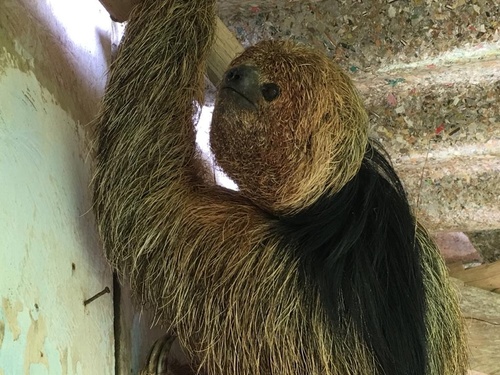
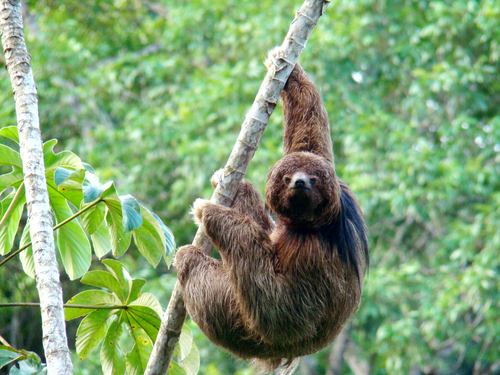
Compared to the brown-throated sloth (Bradypus variegatus), the pale-throated species lacks a dark facial mask and has a more uniformly pale throat. It is generally smaller and has a more restricted range limited to northern South America.
The Pale-throated Three-toed Sloth and people
Sloths descend from the canopy roughly once a week to defecate, a behavior linked to their symbiotic moth population. They can rotate their heads nearly 90 degrees due to extra neck vertebrae, and their fur hosts an entire miniature ecosystem of algae and insects.
Where and how to see it
Best observed in early morning or late evening in undisturbed rainforest canopy areas of French Guiana or northern Brazil; guided eco-tours in reserves increase chances of sighting due to knowledgeable trackers.
Risks to humans
No notable risk to humans; sloths are non-aggressive and pose minimal threat, though their claws can cause minor injury if handled improperly.
Human uses
Occasionally kept in captivity for ecotourism and educational purposes; not typically used for food or traditional medicine, though illegal pet trade remains a minor issue.
Myths and legends
In some indigenous South American cultures, sloths are viewed as symbols of patience and calmness due to their slow movements; they rarely feature prominently in major mythologies but are sometimes associated with laziness in folklore.
Countries where the Pale-throated Three-toed Sloth is recorded
The 5 countries named in the range description of its IUCN Red List assessment.
Questions about the Pale-throated Three-toed Sloth
Where does the Pale-throated Three-toed Sloth live?
The Pale-throated Three-toed Sloth is recorded in Brazil, French Guiana, Guyana, Suriname and Venezuela across South America. These countries come from the range description of its IUCN Red List assessment, and they are what place the species on the interactive map.
Is the Pale-throated Three-toed Sloth endangered?
The IUCN Red List assesses the Pale-throated Three-toed Sloth as Least Concern. The species is widespread and abundant enough not to qualify for any threatened category. It does not mean the species is safe forever, only that nothing in the current data raises an alarm.
How many are left in the wild?
No precise global population estimate exists, but the species is considered common within suitable habitat; overall trend is stable to slightly declining due to habitat fragmentation. This figure comes from the species assessment on the IUCN Red List; population estimates for wild mammals are ranges, not counts, and are revised at each assessment.
What habitat does the Pale-throated Three-toed Sloth live in?
Primarily found in lowland tropical rainforest and moist forest canopies, including both primary and secondary forest.
What is the scientific name of the Pale-throated Three-toed Sloth?
The Pale-throated Three-toed Sloth is Bradypus tridactylus, in the family Bradypodidae, order Pilosa.
Other species in the genus Bradypus
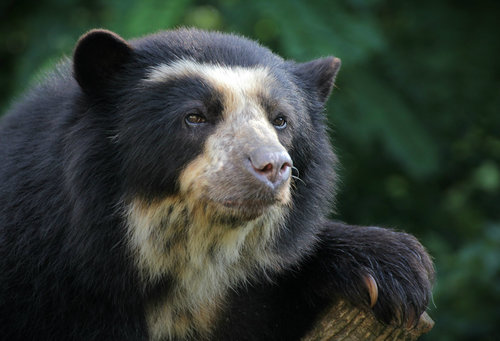
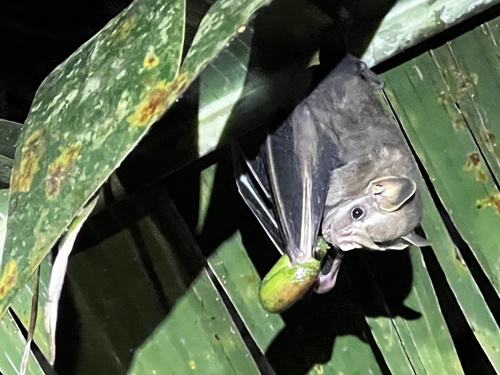
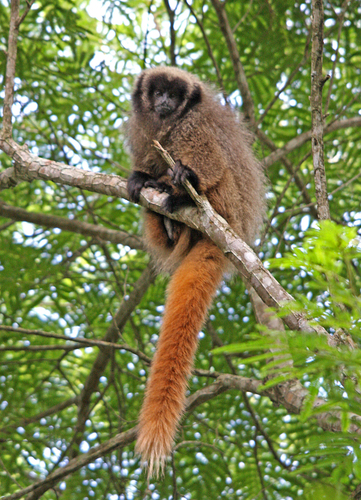
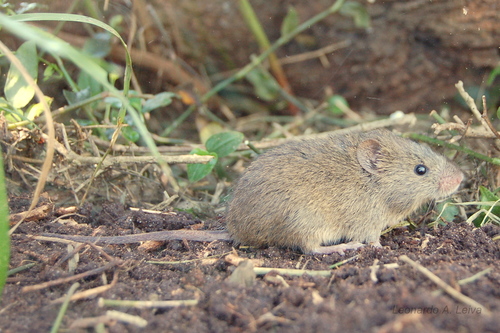
Species that share its range


Sources
Conservation status, range description and population estimate come from the IUCN Red List assessment for Bradypus tridactylus. Countries are derived from that range description, not from a mapped country list. Last refreshed on .
The distribution map is drawn from the IUCN Red List spatial data compiled in 2022. IUCN (International Union for Conservation of Nature)