
Owl's Spiny Rat
Carterodon sulcidens
Red List assessment
Data Deficienton the IUCN Red List
- EXExtinct
- EWExtinct in the Wild
- CRCritically Endangered
- ENEndangered
- VUVulnerable
- NTNear Threatened
- LCLeast Concern
Data Deficient has no position on the scale above — it records the absence of an assessment, not a degree of risk.
The Owl's Spiny Rat is recorded in one country, Brazil across South America. The IUCN Red List records the Owl's Spiny Rat as Data Deficient. No reliable population estimate exists; the species is considered rare or infrequently recorded, with an unknown overall trend.
- Family
- Echimyidae
- Order
- Rodentia
- Genus
- Carterodon
- Countries recorded
- 1
- Continents
- South America
- Red List category
- Data Deficient
- Data updated
- August 9, 2026
What is the Owl's Spiny Rat?
Carterodon sulcidens, commonly called the Owl's Spiny Rat, is a small, semi-fossorial rodent endemic to the Brazilian Cerrado. It is the sole member of its genus, distinguished by deeply grooved incisors that give the species its name (sulcidens = 'grooved teeth'). It is remarkable for its burrowing lifestyle and specialized diet on underground plant parts, an unusual trait among spiny rats. Due to limited study, much of its biology remains poorly documented.
Where does the Owl's Spiny Rat live?
Central Brazil, primarily within the Cerrado biome, including the states of Bahia, Goiás, Minas Gerais, and Tocantins.
Endemic to central Brazil, with confirmed records from the states of Bahia, Goiás, Minas Gerais, and Tocantins, all within the Cerrado biogeographic domain.
Altitude and depth
Typically found at elevations between 300 and 1000 meters within the Cerrado plateau region.
Seasonal movements
No documented migratory behavior; activity may be influenced by the strong wet-dry seasonal cycle of the Cerrado, with increased surface activity during the wetter months.
Habitat of the Owl's Spiny Rat
Inhabits open and wooded Cerrado savanna, including grasslands, scrub, and gallery forest edges with sandy or friable soils suitable for digging burrows. It has also been recorded in disturbed or cultivated areas adjacent to native Cerrado vegetation.
Adaptations to its environment
Possesses robust forelimbs and claws adapted for digging burrows in sandy soils, along with grooved incisors specialized for gnawing roots and tubers. Its spiny fur may offer some protection against predators and abrasive underground substrates.
Conservation status and numbers
Listed as Data Deficient (DD) by the IUCN due to insufficient information on population size, distribution limits, and trends. Its patchy known distribution and low detection rates in surveys hamper accurate assessment.
Estimated population
No reliable population estimate exists; the species is considered rare or infrequently recorded, with an unknown overall trend.
What threatens the Owl's Spiny Rat?
Habitat loss and fragmentation from agricultural expansion (notably soybean and cattle ranching) and conversion of Cerrado savanna are the most likely threats, though direct evidence is limited.
What is being done to protect it?
No species-specific conservation programs are known; it may incidentally benefit from protected areas within the Cerrado, such as national parks and biological reserves in its range.
Recommended actions
Priority actions include targeted field surveys to clarify distribution and abundance, habitat protection within the Cerrado, and genetic studies to better understand population structure.
What the Owl's Spiny Rat looks like
The Owl's Spiny Rat has a robust body covered in coarse, spiny fur, typically brownish to grayish-brown dorsally with paler underparts. Its head is somewhat rounded with small eyes and ears, consistent with a semi-fossorial lifestyle.
Size
Body length approximately 15-20 cm, with a tail of roughly 8-12 cm.
Weight
Estimated body weight ranges from about 100 to 180 grams.
Distinctive features
Distinguished from other echimyid rodents by its uniquely grooved (sulcate) incisors and more robust, digging-adapted limbs, along with its specialized diet of underground plant material.
Behaviour and diet of the Owl's Spiny Rat
Believed to be largely solitary or living in small family groups within burrow systems, though detailed social behavior has not been thoroughly studied.
When it is active
Primarily nocturnal to crepuscular, spending significant time within burrows during the day and emerging to forage at dusk and night.
Diet
Herbivorous, feeding mainly on roots, tubers, and underground plant storage organs, supplemented by seeds and other plant material found near its burrow systems.
Communication
Likely relies on scent marking within burrow systems and possibly soft vocalizations for intraspecific communication, similar to related spiny rats.
Interactions with other species
Potential predators include owls, snakes, and small carnivorous mammals; it may compete with other burrowing rodents for food and burrow space in the Cerrado ecosystem.
Role in its ecosystem
As a burrowing herbivore, it likely contributes to soil aeration and turnover in the Cerrado, and its foraging on roots and tubers may influence local plant community dynamics.
Reproduction and lifecycle
Reproductive biology is poorly documented, but likely follows a pattern similar to other echimyids with moderate litter sizes and gestation periods of around 60 days.
Raising the young
Presumed maternal care typical of rodents, with young remaining in the burrow until weaned, though specific details are unknown.
Maturity and lifespan
Age of sexual maturity and lifespan are undocumented, but likely similar to other small echimyid rodents, reaching maturity within a few months and living 2-4 years in the wild.
Taxonomy and naming of the Owl's Spiny Rat
Classification
Class Mammalia > Order Rodentia > Family Echimyidae > Genus Carterodon > Species Carterodon sulcidens
Scientific synonyms
Historically the genus has been placed in various echimyid subfamilies; no widely recognized junior synonyms exist for the species itself.
What research says
Recent studies
Recent taxonomic and phylogenetic studies have helped clarify its placement within Echimyidae, though ecological and population studies remain scarce.
Compared with similar species
Compared to other spiny rats in the Cerrado such as Trinomys or Clyomys, Carterodon sulcidens is more specialized for digging and root-feeding, with distinctive dental morphology setting it apart.
The Owl's Spiny Rat and people
Its scientific name literally means 'grooved tooth,' referencing its unusual incisor structure. It is the only species in its genus, making it a taxonomically unique representative of Brazilian rodent diversity.
Where and how to see it
Best observed via camera trapping or live-trapping surveys in protected Cerrado reserves in Goiás or Bahia during the cooler, drier months when burrow activity may be more detectable.
Risks to humans
No notable risk to humans.
Countries where the Owl's Spiny Rat is recorded
The 1 countries named in the range description of its IUCN Red List assessment.
Questions about the Owl's Spiny Rat
Where does the Owl's Spiny Rat live?
The Owl's Spiny Rat is recorded in Brazil across South America. These countries come from the range description of its IUCN Red List assessment, and they are what place the species on the interactive map.
Is the Owl's Spiny Rat endangered?
The IUCN Red List assesses the Owl's Spiny Rat as Data Deficient. There is not enough information to judge the risk of extinction, usually because the species is rarely seen or has never been surveyed. It is not a reassuring category: several species were Data Deficient right up to the point they were found to be Critically Endangered.
How many are left in the wild?
No reliable population estimate exists; the species is considered rare or infrequently recorded, with an unknown overall trend. This figure comes from the species assessment on the IUCN Red List; population estimates for wild mammals are ranges, not counts, and are revised at each assessment.
What habitat does the Owl's Spiny Rat live in?
Inhabits open and wooded Cerrado savanna, including grasslands, scrub, and gallery forest edges with sandy or friable soils suitable for digging burrows.
What is the scientific name of the Owl's Spiny Rat?
The Owl's Spiny Rat is Carterodon sulcidens, in the family Echimyidae, order Rodentia.
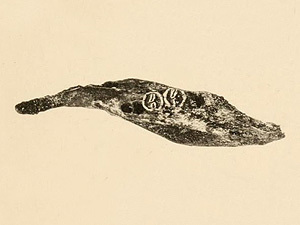
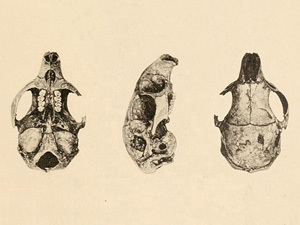
Other species in the family Echimyidae
Species that share its range

Sources
Conservation status, range description and population estimate come from the IUCN Red List assessment for Carterodon sulcidens. Countries are derived from that range description, not from a mapped country list. Last refreshed on .
The distribution map is drawn from the IUCN Red List spatial data compiled in 2008. IUCN (International Union for Conservation of Nature)