
Ocelot
Leopardus pardalis
Red List assessment
Least Concernon the IUCN Red List
- EXExtinct
- EWExtinct in the Wild
- CRCritically Endangered
- ENEndangered
- VUVulnerable
- NTNear Threatened
- LCLeast Concern
The Ocelot is recorded in 13 countries across North America and South America. The IUCN Red List assesses the Ocelot as Least Concern. Estimated global population in the tens of thousands, with a generally stable trend range-wide, though localized populations (e.g., in the U.S.) are critically small and declining.
- Family
- Felidae
- Order
- Carnivora
- Genus
- Leopardus
- Countries recorded
- 13
- Continents
- North America and South America
- Red List category
- Least Concern
- Data updated
- August 9, 2026
What is the Ocelot?
The ocelot is a medium-sized wild cat native to the Americas, recognized for its strikingly beautiful spotted coat resembling a small jaguar. It inhabits dense forests, scrublands, and grasslands from Texas to northern Argentina. Remarkable for its solitary, nocturnal lifestyle and excellent climbing and swimming abilities, it plays a key role as a mesopredator in its ecosystems.
Where does the Ocelot live?
Found throughout Central and South America, southern North America (Mexico, Texas), with populations in the Amazon Basin, Central American forests, and parts of Argentina.
Ranges from southern Texas and Mexico through Central America (Belize, Guatemala, Honduras, Costa Rica, Panama) into South America, including Colombia, Venezuela, Ecuador, Peru, Brazil, Paraguay, and northern Argentina.
Altitude and depth
Sea level up to approximately 3,000 meters in some Andean regions, though most populations occur below 1,200 meters.
Seasonal movements
No true migration or hibernation; breeding can occur year-round in tropical regions but may be more seasonal in northern range edges like Texas, correlating with prey availability.
Habitat of the Ocelot
Tropical and subtropical forests, mangroves, marshlands, savannas, and dense scrublands. Requires dense vegetative cover for hunting and denning, avoiding open areas without cover.
Adaptations to its environment
Excellent night vision and acute hearing aid nocturnal hunting; sharp retractable claws and strong limbs enable climbing and swimming; spotted coat provides camouflage in dappled forest light.
Conservation status and numbers
Least Concern globally, though some regional populations (e.g., Texas) are endangered due to habitat fragmentation. Overall the species remains widespread and adaptable across much of its range.
Estimated population
Estimated global population in the tens of thousands, with a generally stable trend range-wide, though localized populations (e.g., in the U.S.) are critically small and declining.
What threatens the Ocelot?
Habitat loss from deforestation and agricultural expansion, road mortality, historical poaching for fur trade, and illegal pet trade in some regions.
Diseases and parasites
Susceptible to feline diseases such as feline leukemia virus and various parasites including ticks, fleas, and intestinal worms, particularly in captivity or degraded habitats.
What is being done to protect it?
Protected under CITES Appendix I, banning international commercial trade; protected in most range countries; conservation programs in Texas focus on wildlife corridors and roadway crossings to reduce vehicle strikes.
Recommended actions
Habitat corridor restoration, reduction of roadkill through wildlife crossings, continued anti-poaching enforcement, and genetic monitoring of isolated populations like those in Texas.
What the Ocelot looks like
Sleek, muscular build with a golden-yellow to grayish coat covered in dark rosettes, streaks, and spots arranged in chain-like patterns; white underparts and a ringed tail.
Size
Body length 55-100 cm, with a tail length of 30-45 cm; shoulder height approximately 40-50 cm.
Weight
Typically 8-16 kg, with males generally slightly larger than females.
Distinctive features
Distinguished from margays and other small spotted cats by its larger size, more elongated body, and distinct rosette patterning arranged in horizontal chains along the body.
Differences between males and females
Minimal sexual dimorphism; males are slightly larger and heavier than females but coat patterns are similar between sexes.
Behaviour and diet of the Ocelot
Solitary and territorial, with home ranges that may overlap slightly between opposite sexes; males maintain larger territories that can encompass those of multiple females.
When it is active
Primarily nocturnal and crepuscular, resting in dense vegetation or trees during the day and hunting actively at night.
Diet
Carnivorous, preying mainly on small mammals such as rodents, opossums, and rabbits, as well as birds, reptiles, and occasionally fish and invertebrates.
How it feeds and hunts
Stalks prey silently using cover, relying on stealth and short bursts of speed for ambush; primarily hunts on the ground but is also a capable climber and swimmer.
Communication
Communicates through scent marking (urine spraying, scat placement), visual signals like body posture, and vocalizations including meows, growls, and yowls during mating or territorial disputes.
Interactions with other species
Faces competition from larger predators like jaguars and pumas, which may also prey on ocelots; interacts with smaller cats like margays through resource competition.
Role in its ecosystem
Functions as a mesopredator, helping control rodent and small mammal populations, thus indirectly influencing plant seed predation and disease dynamics within its ecosystem.
Reproduction and lifecycle
Breeding can occur year-round in tropical zones; gestation lasts about 79-85 days, typically resulting in a litter of 1-2 kittens.
Raising the young
Females raise young alone in a den, nursing and protecting kittens for several months; young become independent around 1 year of age after learning hunting skills from the mother.
Maturity and lifespan
Sexual maturity reached around 18-22 months; lifespan is about 7-10 years in the wild and up to 20 years in captivity.
Taxonomy and naming of the Ocelot
Classification
Mammalia > Carnivora > Felidae > Leopardus > Leopardus pardalis
Subspecies
Several subspecies historically recognized including L. p. pardalis (South America), L. p. albescens (Texas/Mexico border), L. p. mitis (Brazil), though modern genetic studies suggest fewer valid distinctions than previously classified.
Scientific synonyms
Felis pardalis (original classification), Felis pseudopardalis, Leopardus pardalis has also been referred to under various regional synonyms in older literature.
What research says
Recent studies
Recent studies have used camera trapping and genetic analysis to assess population connectivity in fragmented habitats like South Texas, highlighting the need for wildlife corridors.
Genome and DNA
Diploid chromosome number of 2n=36; genetic studies have been used to clarify subspecies boundaries and population connectivity across fragmented habitats.
Compared with similar species
Similar in appearance to the margay (Leopardus wiedii) but ocelots are larger with proportionally shorter tails and more terrestrial habits; also resembles young jaguars but with a more slender build.
The Ocelot and people
Ocelots have been kept as exotic pets historically, including famously by artist Salvador Dalí; they are excellent swimmers and have been observed hunting in water; their spotted coat once made them a major target of the 1960s-1980s fur trade before CITES protections.
Where and how to see it
Best observed in protected reserves such as Costa Rica's Corcovado National Park or Brazil's Pantanal region using night vision equipment or guided night safaris, as ocelots are elusive and mostly active after dark.
Risks to humans
No notable risk to humans; ocelots are shy and avoid human contact, though captive or cornered individuals can bite or scratch defensively.
Human uses
Historically hunted extensively for their fur in the mid-20th century; today occasionally kept illegally as exotic pets, though this is now largely restricted by international wildlife trade laws.
Myths and legends
In some indigenous South and Central American cultures, ocelots were symbols of power and stealth, sometimes associated with shamanic transformation myths and depicted in ancient pottery and artwork.
Countries where the Ocelot is recorded
The 13 countries named in the range description of its IUCN Red List assessment.
Questions about the Ocelot
Where does the Ocelot live?
The Ocelot is recorded in Argentina, Belize, Brazil, Colombia and Costa Rica, among 13 countries in total across North America and South America. These countries come from the range description of its IUCN Red List assessment, and they are what place the species on the interactive map.
Is the Ocelot endangered?
The IUCN Red List assesses the Ocelot as Least Concern. The species is widespread and abundant enough not to qualify for any threatened category. It does not mean the species is safe forever, only that nothing in the current data raises an alarm.
How many are left in the wild?
Estimated global population in the tens of thousands, with a generally stable trend range-wide, though localized populations (e.g., in the U.S.) are critically small and declining. This figure comes from the species assessment on the IUCN Red List; population estimates for wild mammals are ranges, not counts, and are revised at each assessment.
What habitat does the Ocelot live in?
Tropical and subtropical forests, mangroves, marshlands, savannas, and dense scrublands.
What is the scientific name of the Ocelot?
The Ocelot is Leopardus pardalis, in the family Felidae, order Carnivora.
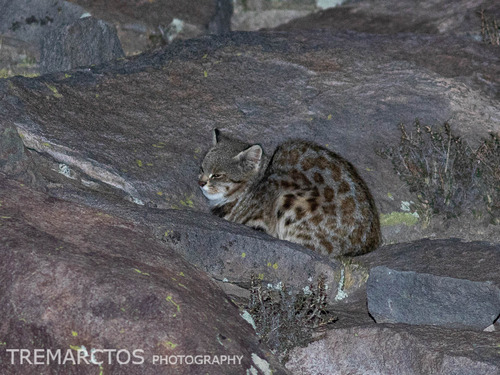
Other species in the genus Leopardus
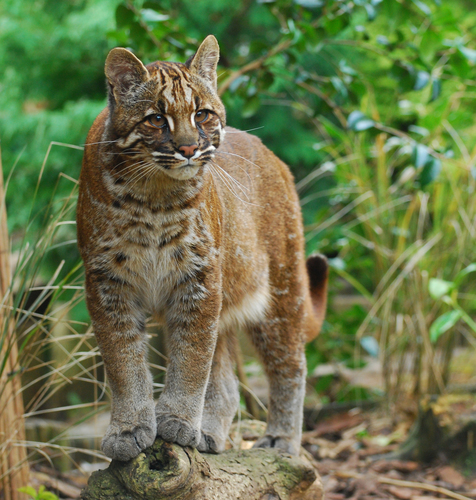
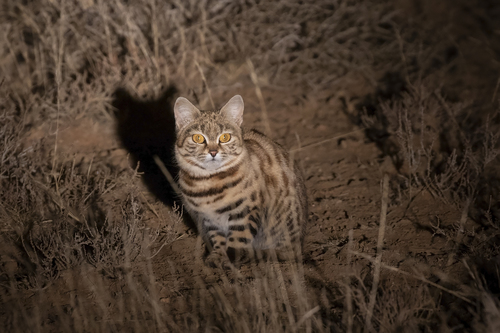
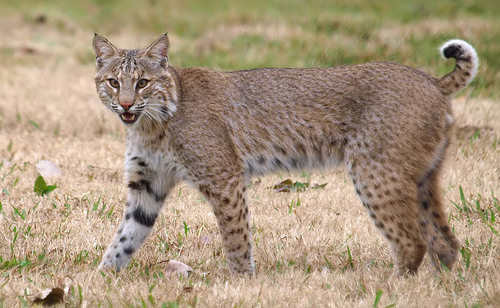
Other species in the family Felidae
Sources
Conservation status, range description and population estimate come from the IUCN Red List assessment for Leopardus pardalis. Countries are derived from that range description, not from a mapped country list. Last refreshed on .
The distribution map is drawn from the IUCN Red List spatial data compiled in 2015. Arturo Caso, Paula Cruz, Carlos De Angelo, Yamil Di Blanco, Carlos Lopez Gonzalez, Agustin Paviolo, Veronica Quiroga