
Northern Bettong
Bettongia tropica
Red List assessment
Endangeredon the IUCN Red List
- EXExtinct
- EWExtinct in the Wild
- CRCritically Endangered
- ENEndangered
- VUVulnerable
- NTNear Threatened
- LCLeast Concern
The Northern Bettong is recorded in one country, Australia across Oceania. The IUCN Red List assesses the Northern Bettong as Endangered. Estimated total population is fewer than 2,500 mature individuals, with a declining trend due to habitat loss and predation pressures.
- Family
- Potoroidae
- Order
- Diprotodontia
- Genus
- Bettongia
- Countries recorded
- 1
- Continents
- Oceania
- Red List category
- Endangered
- Data updated
- August 9, 2026
What is the Northern Bettong?
The Northern Bettong is a small, nocturnal marsupial macropod native to a very limited range in tropical north Queensland. It is remarkable for its dependence on a specific fire-maintained grassy woodland ecosystem and its diet largely based on underground fungi. It is one of Australia's most endangered mammals, surviving in only a handful of isolated populations.
Where does the Northern Bettong live?
Restricted to a small area of northeastern Queensland, Australia, primarily around the Lamb Range, Mount Carbine Tableland, and the Coane Range near Cairns and Mareeba.
Endemic to a very small region of northeastern Queensland, Australia, with known populations restricted to the Lamb Range, Mount Carbine Tableland, and Coane Range near the Atherton Tablelands.
Altitude and depth
Found at elevations roughly between 400 and 1200 meters above sea level in upland woodland habitats.
Seasonal movements
No true migration or hibernation; however, breeding and foraging activity can shift seasonally in response to wet and dry season changes affecting fungal and food availability.
Habitat of the Northern Bettong
Inhabits open eucalypt woodlands and tall grassy sclerophyll forests with a wet-dry tropical climate, often on the margins between rainforest and savanna. Requires areas with frequent low-intensity fires to maintain open understorey and encourage fungal fruiting bodies.
Adaptations to its environment
Possesses strong hind limbs for hopping and digging claws adapted for excavating hypogeous (underground) fungi, its primary food source. Its dependence on fire-adapted grassy woodland reflects a specialized ecological niche shaped by long-term coexistence with Aboriginal fire management practices.
Conservation status and numbers
Classified as Endangered (EN) by the IUCN due to a drastically reduced and fragmented range, with ongoing decline linked to habitat degradation and altered fire regimes.
Estimated population
Estimated total population is fewer than 2,500 mature individuals, with a declining trend due to habitat loss and predation pressures.
What threatens the Northern Bettong?
Major threats include loss and fragmentation of habitat from changed fire regimes, encroachment of rainforest into former woodland habitat due to fire suppression, predation by feral cats and foxes, and cattle grazing impacts.
Diseases and parasites
Specific diseases are not well documented, though like other marsupials it may host internal and external parasites such as ticks and nematodes.
What is being done to protect it?
Conservation actions include habitat protection within national parks (e.g., Lamb Range Conservation Park), prescribed fire management programs, and predator control initiatives. Research and monitoring programs are run in partnership with Queensland conservation agencies and universities.
Recommended actions
Priorities include maintaining and restoring traditional fire regimes, expanding predator control programs, protecting and connecting fragmented habitat patches, and conducting further population monitoring and genetic studies.
What the Northern Bettong looks like
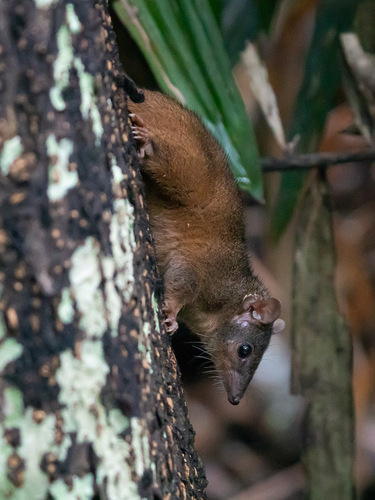
The Northern Bettong has soft grey-brown fur above and paler, cream-colored fur below, with a long tail that may have a small dark tuft near the tip. It has a pointed snout, large hind feet for hopping, and small forepaws adapted for digging.
Size
Body length (head to body) ranges from about 34 to 39 cm, with a tail adding roughly 30 to 36 cm.
Weight
Adults typically weigh between 1.2 and 1.6 kg, with limited sexual size difference.
Distinctive features
It can be distinguished from other bettong species by its slightly smaller size, specific pale facial markings, and its highly restricted tropical range in contrast to the more widespread Brush-tailed Bettong.
Differences between males and females
Sexual dimorphism is minimal, with males and females similar in size and coloration.
Behaviour and diet of the Northern Bettong
Generally solitary, coming together only briefly for mating; individuals maintain separate nesting and foraging areas.
When it is active
Nocturnal, foraging at night for underground fungi and resting during the day in nests made of grass and other vegetation.
Diet
Primarily a specialist feeder on underground (hypogeous) fungi, supplemented by roots, tubers, and some plant material and invertebrates.
Communication
Communication is likely through scent marking and limited vocalizations such as soft grunts, typical of small macropods, though detailed studies are scarce.
Interactions with other species
Faces predation from feral cats and red foxes, and competes with introduced herbivores like cattle for food resources; it also plays a mutualistic role with fungi through spore dispersal.
Role in its ecosystem
Acts as an important ecological agent for fungal spore dispersal, helping maintain mycorrhizal fungal networks vital for eucalypt woodland health.
Reproduction and lifecycle
Breeding can occur year-round but may peak in favorable seasons; gestation lasts about three weeks, and typically a single young (joey) is born and raised in the pouch.
Raising the young
As with other macropods, the female carries and nurses the joey in her pouch for several months until it is weaned and becomes independent.
Maturity and lifespan
Sexual maturity is reached at about 12 months of age; lifespan in the wild is estimated at 4-6 years, potentially longer in captivity.
Taxonomy and naming of the Northern Bettong
Classification
Class Mammalia > Order Diprotodontia > Family Potoroidae > Genus Bettongia > Species Bettongia tropica
Scientific synonyms
Previously considered a subspecies or closely related to Bettongia penicillata; sometimes referenced under older combined taxonomy of tropical bettongs.
What research says
Recent studies
Recent studies have focused on the effects of fire regime changes and rainforest encroachment on habitat suitability, as well as genetic diversity assessments of isolated populations to guide conservation management.
Compared with similar species
Compared to the more widespread Brush-tailed Bettong (Bettongia penicillata), the Northern Bettong has a much smaller range, is more specialized in fungal diet, and inhabits a distinct tropical woodland ecosystem.
The Northern Bettong and people
The Northern Bettong is sometimes called a 'fungi farmer' because it disperses fungal spores that are essential for forest health. It is one of the few mammals highly dependent on fire-maintained habitats for survival, linking its fate closely to traditional Aboriginal land management practices.
Where and how to see it
Best observed at dusk or during the night in protected woodland areas like the Lamb Range Conservation Park, using red-filtered spotlights to minimize disturbance; patience and quiet movement are essential due to its shy, elusive nature.
Risks to humans
No notable risk to humans.
Countries where the Northern Bettong is recorded
The 1 countries named in the range description of its IUCN Red List assessment.
Questions about the Northern Bettong
Where does the Northern Bettong live?
The Northern Bettong is recorded in Australia across Oceania. These countries come from the range description of its IUCN Red List assessment, and they are what place the species on the interactive map.
Is the Northern Bettong endangered?
Yes. The IUCN Red List assesses the Northern Bettong as Endangered, one of the three threatened categories. The species faces a very high risk of extinction in the wild — a step below Critically Endangered, but still on a trajectory that ends badly without intervention.
How many are left in the wild?
Estimated total population is fewer than 2,500 mature individuals, with a declining trend due to habitat loss and predation pressures. This figure comes from the species assessment on the IUCN Red List; population estimates for wild mammals are ranges, not counts, and are revised at each assessment.
What habitat does the Northern Bettong live in?
Inhabits open eucalypt woodlands and tall grassy sclerophyll forests with a wet-dry tropical climate, often on the margins between rainforest and savanna.
What is the scientific name of the Northern Bettong?
The Northern Bettong is Bettongia tropica, in the family Potoroidae, order Diprotodontia.
Other species in the genus Bettongia
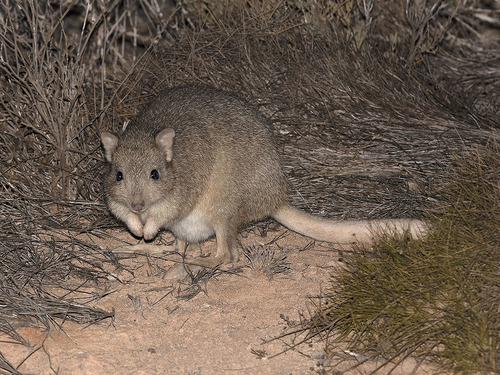
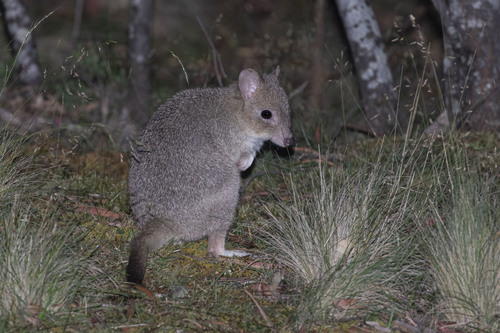
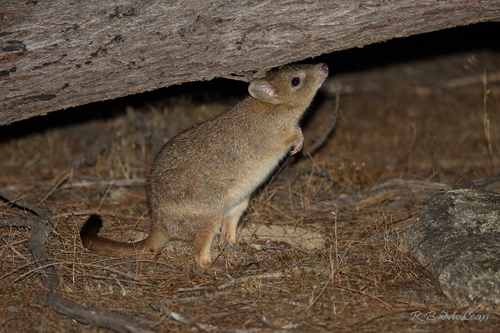
Other species in the family Potoroidae
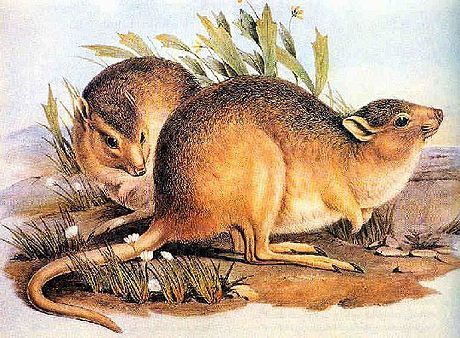
Species that share its range

Sources
Conservation status, range description and population estimate come from the IUCN Red List assessment for Bettongia tropica. Countries are derived from that range description, not from a mapped country list. Last refreshed on .
The distribution map is drawn from the IUCN Red List spatial data compiled in 2024. IUCN (International Union for Conservation of Nature)