
Nepalese Field Mouse
Apodemus gurkha
Red List assessment
Least Concernon the IUCN Red List
- EXExtinct
- EWExtinct in the Wild
- CRCritically Endangered
- ENEndangered
- VUVulnerable
- NTNear Threatened
- LCLeast Concern
The Nepalese Field Mouse is recorded in 3 countries across Asia. The IUCN Red List assesses the Nepalese Field Mouse as Least Concern. No formal global population estimate exists.
- Family
- Muridae
- Order
- Rodentia
- Genus
- Apodemus
- Countries recorded
- 3
- Continents
- Asia
- Red List category
- Least Concern
- Data updated
- August 9, 2026
What is the Nepalese Field Mouse?
Apodemus gurkha is a small murid rodent endemic to the central Himalayan region, primarily known from Nepal. It belongs to the diverse Old World field mouse genus Apodemus, which includes many ecologically important small mammals across Eurasia. The species inhabits montane forest and scrubland habitats at considerable altitude, making it adapted to the harsh climatic conditions of the Himalayas. Its common name references the Gurkha people of Nepal, reflecting the region from which the type specimen was first collected.
Where does the Nepalese Field Mouse live?
Central Himalayas, primarily Nepal, with possible range extensions into adjacent regions of northern India (Uttarakhand) and southern Tibet (China).
The species is primarily documented from central Nepal, within the Himalayan mountain chain. Its range may marginally extend into adjacent northern India (Uttarakhand/Himachal Pradesh) and possibly into the southern Tibetan plateau. It remains poorly surveyed across much of its presumed range.
Altitude and depth
Estimated range of approximately 1,500 to 4,000 meters above sea level, typical of high-altitude Himalayan small mammal communities.
Seasonal movements
No formal migration has been documented. Like related species, it likely exhibits reduced activity during the harshest winter months and may shift to lower elevations or rely on cached food stores, but true hibernation is not documented for the genus Apodemus.
Habitat of the Nepalese Field Mouse
Montane forests (broadleaf and mixed conifer-broadleaf), shrublands, rocky hillsides, and forest edges at high altitude in the Himalayas. The species likely uses ground-level microhabitats such as root systems, rock crevices, and dense undergrowth for shelter and foraging.
Adaptations to its environment
Possesses thick, insulating fur suited to cold Himalayan temperatures. Strong hindlimbs and agile body form facilitate movement across rocky, uneven terrain. Broad dietary flexibility allows exploitation of seasonally variable food resources in montane environments.
Conservation status and numbers
Least Concern (LC) on the IUCN Red List. The species is not believed to be experiencing significant population declines, and while data are limited, it is considered relatively widespread within its Himalayan range and faces no immediate overwhelming threats at present.
Estimated population
No formal global population estimate exists. The population trend is presumed stable, though rigorous surveys are lacking across much of its range.
What threatens the Nepalese Field Mouse?
Habitat degradation from deforestation, agricultural expansion into montane zones, and overgrazing by livestock represent the most likely threats. Climate change poses a growing long-term risk by compressing suitable high-altitude habitat upward. The species may also be vulnerable to introduced predators and rodenticides used near human settlements.
Diseases and parasites
Specific parasites have not been formally documented for this species, but rodents of the genus Apodemus are known hosts for fleas, ticks, mites, tapeworms, and roundworms. The species could potentially act as a reservoir for zoonotic pathogens, though this has not been studied.
What is being done to protect it?
Part of the range falls within protected areas in Nepal, including Annapurna Conservation Area and Langtang National Park, which provide indirect habitat protection. No species-specific conservation programs are known to exist for Apodemus gurkha.
Recommended actions
Priority actions include systematic field surveys to clarify the full distribution and population size, monitoring of habitat integrity within protected areas, and assessment of climate change vulnerability. Integration into broader Himalayan small mammal biodiversity monitoring programs would greatly improve understanding of this species.
What the Nepalese Field Mouse looks like
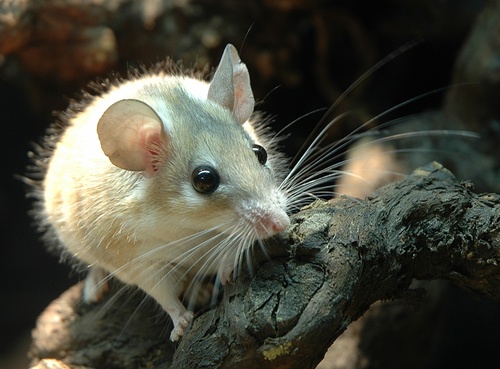
Dorsal fur is typically tawny-brown to reddish-brown, grading to pale grey-white or buff on the ventral surface. The eyes are relatively large and dark, the ears rounded and prominent. The tail is lightly bicolored and sparsely haired.
Size
Body length approximately 80–110 mm; tail length roughly 90–115 mm, often subequal to or slightly longer than the body. Overall size is typical for the genus Apodemus.
Weight
Estimated body weight of 15–30 grams, with no strong documentation of sexual size dimorphism; likely similar to other mid-sized Apodemus species.
Distinctive features
Distinguished from other Himalayan Apodemus species (such as A. pallipes and A. rusiges) by subtle differences in skull morphology, tooth dimensions, and fur coloration. Precise identification often requires craniometric analysis. It tends to be more robustly built than some congeners.
Differences between males and females
Minimal sexual dimorphism is expected, consistent with the genus. Males and females are of similar size and coloration, with standard rodent anatomical differences in the urogenital region.
Behaviour and diet of the Nepalese Field Mouse
Presumed to be mostly solitary outside of the breeding season, as is typical for most Apodemus species. Overlapping home ranges may exist, with some tolerance between individuals, especially in resource-rich areas.
When it is active
Primarily nocturnal, with peak foraging activity occurring at night. Some crepuscular activity may occur. Daytime hours are typically spent sheltering in burrows, under rocks, or in dense vegetation.
Diet
Omnivorous; diet likely consists of seeds, berries, plant material, fungi, invertebrates (insects, larvae, worms), and occasionally small vertebrates. Seed caching behavior for winter food storage is plausible given the cold seasonal environment.
How it feeds and hunts
Forages on the ground and possibly in low shrub layers, using keen olfaction to locate seeds and invertebrates. Opportunistically hunts small invertebrates encountered during foraging activity.
Communication
Uses ultrasonic vocalizations for social and reproductive communication, as well as scent marking via urine and specialized glands to establish territories and signal reproductive status. Body posture and tactile signals also play a role during social interactions.
Interactions with other species
Likely prey for Himalayan owls (e.g., tawny owl relatives), small raptors, weasels, and larger mustelids. Competes with other sympatric small rodents for food and shelter resources. May serve as an intermediate host for helminths and ectoparasites shared with other mammal species.
Role in its ecosystem
Functions as a secondary consumer and an important prey item in Himalayan forest food webs. As a seed cacher, it likely contributes to seed dispersal and forest regeneration. Its burrowing activity may also have minor soil aeration effects.
Reproduction and lifecycle
Breeding is likely seasonal, concentrated in the warmer months from spring to early autumn (approximately April–September). Gestation period is estimated at approximately 19–25 days, consistent with other Apodemus species. Litter size is likely 3–6 pups per litter.
Raising the young
Young are altricial (born hairless and with eyes closed) and reared in a nest by the female. Weaning likely occurs at approximately 3 weeks of age. Males are not typically involved in direct parental care.
Maturity and lifespan
Sexual maturity likely reached at 6–8 weeks of age, consistent with the genus. Wild lifespan is probably 1–2 years; captive individuals of related species may survive up to 3 years under ideal conditions.
Taxonomy and naming of the Nepalese Field Mouse
Classification
Mammalia > Rodentia > Muridae > Apodemus > Apodemus gurkha
Scientific synonyms
Originally described as Apodemus gurkha Thomas, 1924. No widely accepted synonyms are currently recognized.
What research says
Recent studies
The species remains among the least-studied members of the genus Apodemus. No major recent molecular phylogenetic or ecological studies focusing specifically on A. gurkha have been published as of the early 2020s.
Genome and DNA
No published chromosome count or genomic study specific to Apodemus gurkha is known. Related Apodemus species typically have diploid chromosome numbers of 2n = 48.
Compared with similar species
Most closely related to other Himalayan and South Asian Apodemus species such as A. pallipes (Kashmir field mouse) and A. rusiges. Compared to the well-studied European A. sylvaticus, A. gurkha occupies higher and more extreme altitudinal environments and is far less documented.
The Nepalese Field Mouse and people
1. The species' name 'gurkha' honors the renowned Gurkha warriors of Nepal, from whose homeland the type specimen was collected in 1924. 2. Despite living at altitudes where temperatures can plunge well below freezing, this mouse does not hibernate, relying instead on food caching and insulative fur to survive the mountain winters. 3. Apodemus mice as a group are extraordinarily widespread across Eurasia, yet the Nepalese Field Mouse remains one of the most poorly known members of the entire genus.
Where and how to see it
Best chances of observing this species are in central Nepal's montane forests between 2,000 and 3,500 m elevation, particularly in areas such as the Annapurna or Langtang regions, during the warmer months (May–October). Setting small live traps along forest edges at night offers the best method of detection, as the species is strictly nocturnal and shy.
Risks to humans
No notable risk to humans. Like all wild rodents, it may carry ectoparasites or pathogens, so handling wild-caught individuals should be done with appropriate precautions.
Countries where the Nepalese Field Mouse is recorded
The 3 countries named in the range description of its IUCN Red List assessment.
Questions about the Nepalese Field Mouse
Where does the Nepalese Field Mouse live?
The Nepalese Field Mouse is recorded in China, India and Nepal across Asia. These countries come from the range description of its IUCN Red List assessment, and they are what place the species on the interactive map.
Is the Nepalese Field Mouse endangered?
The IUCN Red List assesses the Nepalese Field Mouse as Least Concern. The species is widespread and abundant enough not to qualify for any threatened category. It does not mean the species is safe forever, only that nothing in the current data raises an alarm.
How many are left in the wild?
No formal global population estimate exists. This figure comes from the species assessment on the IUCN Red List; population estimates for wild mammals are ranges, not counts, and are revised at each assessment.
What habitat does the Nepalese Field Mouse live in?
Montane forests (broadleaf and mixed conifer-broadleaf), shrublands, rocky hillsides, and forest edges at high altitude in the Himalayas.
What is the scientific name of the Nepalese Field Mouse?
The Nepalese Field Mouse is Apodemus gurkha, in the family Muridae, order Rodentia.
Other species in the genus Apodemus
Other species in the family Muridae
Sources
Conservation status, range description and population estimate come from the IUCN Red List assessment for Apodemus gurkha. Countries are derived from that range description, not from a mapped country list. Last refreshed on .
The distribution map is drawn from the IUCN Red List spatial data compiled in 2016. IUCN SSC Small Mammal Specialist Group