
Namdapha Flying Squirrel
Biswamoyopterus biswasi
Red List assessment
Critically Endangeredon the IUCN Red List
- EXExtinct
- EWExtinct in the Wild
- CRCritically Endangered
- ENEndangered
- VUVulnerable
- NTNear Threatened
- LCLeast Concern
The Namdapha Flying Squirrel is recorded in 2 countries across Asia. The IUCN Red List assesses the Namdapha Flying Squirrel as Critically Endangered. Unknown; no reliable population estimate exists due to lack of confirmed sightings since the holotype was collected, trend presumed declining based on regional habitat loss.
- Family
- Sciuridae
- Order
- Rodentia
- Genus
- Biswamoyopterus
- Countries recorded
- 2
- Continents
- Asia
- Red List category
- Critically Endangered
- Data updated
- August 9, 2026
What is the Namdapha Flying Squirrel?
The Namdapha Flying Squirrel is one of the rarest and most enigmatic mammals on Earth, known from only a single specimen collected in 1981 in Namdapha National Park, India. It is a large gliding rodent adapted to tropical rainforest canopy life, using a patagium to glide between trees. Its extreme rarity and lack of subsequent confirmed sightings for decades make it a flagship species for Critically Endangered mammals of Asia.
Where does the Namdapha Flying Squirrel live?
Northeastern India (Arunachal Pradesh), specifically the Namdapha National Park region
Known only from the type locality near Namdapha National Park in Arunachal Pradesh, northeastern India, near the border with Myanmar; possible but unconfirmed range extension into adjacent Myanmar forests.
Altitude and depth
Approximately 200-1500 meters above sea level, within hill and lowland tropical forest zones.
Seasonal movements
No documented seasonal migration; presumed to be a year-round forest resident with possible increased activity during warmer, wetter monsoon months when fruiting is more abundant.
Habitat of the Namdapha Flying Squirrel
Tropical and subtropical evergreen rainforest with dense canopy cover, typically in undisturbed lowland to hill forest ecosystems within protected areas.
Adaptations to its environment
Possesses a furred patagium (gliding membrane) stretching between fore and hind limbs enabling long-distance gliding through dense canopy, reducing energy expenditure for arboreal locomotion. Large eyes suggest strong nocturnal vision adapted to low-light forest conditions.
Conservation status and numbers
Listed as Critically Endangered by IUCN due to its presumed extremely restricted range, potential extinction risk from habitat loss, and the fact that it has been recorded only once in over 30 years despite survey efforts.
Estimated population
Unknown; no reliable population estimate exists due to lack of confirmed sightings since the holotype was collected, trend presumed declining based on regional habitat loss.
What threatens the Namdapha Flying Squirrel?
Deforestation and habitat degradation from logging and agricultural encroachment, hunting for bushmeat by local communities, and the inherent vulnerability of a species with an apparently minuscule known range.
What is being done to protect it?
Namdapha National Park provides some legal habitat protection; renewed survey expeditions (including a notable 2004 rediscovery of a related specimen in a market, sparking interest) have aimed to confirm the species' continued existence.
Recommended actions
Intensive camera-trap and nocturnal survey efforts within and around Namdapha National Park, stronger anti-poaching enforcement, habitat protection expansion, and genetic studies of any newly found specimens to clarify taxonomic status.
What the Namdapha Flying Squirrel looks like
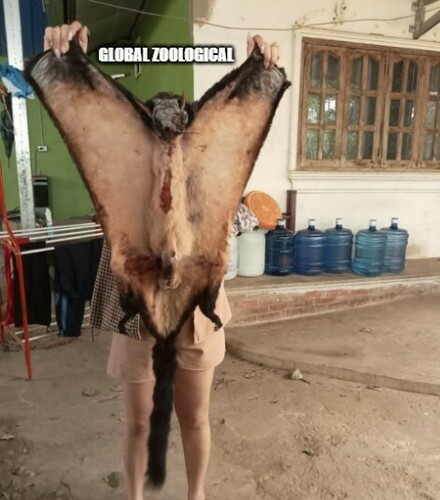
Grayish-brown to reddish dorsal fur with lighter, creamy underparts, a long fluffy tail, and a wide gliding membrane connecting limbs; large dark eyes adapted for nocturnal vision.
Size
Estimated body length of 40-50 cm (head-body), with a long bushy tail adding an additional 45-50 cm, based on the single known specimen.
Weight
Estimated weight around 1.5-2 kg, based on comparison with related large flying squirrel species.
Distinctive features
Distinguished from its closest relative, the Laotian Giant Flying Squirrel (Biswamoyopterus laoensis), by subtle differences in skull morphology, fur coloration, and tail characteristics documented in the original 1981 description.
Behaviour and diet of the Namdapha Flying Squirrel
Presumed solitary or loosely social, consistent with most flying squirrel species, though behavior is entirely undocumented due to lack of field observations.
When it is active
Nocturnal, consistent with other flying squirrels, likely most active during dusk and nighttime hours when gliding between canopy trees.
Diet
Presumed herbivorous, likely feeding on fruits, seeds, nuts, leaves, and possibly bark or tree sap, based on the diet of related flying squirrel species.
Communication
Unknown; related flying squirrel species use vocal calls, scent marking, and body postures, which may also apply to this species.
Interactions with other species
Likely preyed upon by forest raptors, arboreal snakes, and small carnivores; may compete with other arboreal rodents and squirrels for food resources in the canopy.
Role in its ecosystem
Likely plays a role in seed dispersal and forest regeneration through fruit and seed consumption, contributing to the health of its tropical forest ecosystem.
Reproduction and lifecycle
Completely undocumented; presumed similar to related flying squirrels with likely one or two litters per year and small litter sizes of 1-3 offspring.
Raising the young
Unknown, but likely similar to other flying squirrels where the mother provides sole parental care, nursing young in a tree hollow nest until weaning.
Maturity and lifespan
Unknown; related flying squirrel species typically reach sexual maturity around 1 year of age with lifespans of 4-6 years in the wild.
Taxonomy and naming of the Namdapha Flying Squirrel
Classification
Class Mammalia > Order Rodentia > Family Sciuridae > Genus Biswamoyopterus > Species Biswamoyopterus biswasi
What research says
Recent studies
A 2019 study confirmed the rediscovery of the genus Biswamoyopterus through a specimen found in a Laotian market, renewing hope that B. biswasi may still survive; genetic comparisons have helped clarify relationships within the genus.
Compared with similar species
Closely related to the Laotian Giant Flying Squirrel (Biswamoyopterus laoensis) and the Yunnan Giant Flying Squirrel (Biswamoyopterus fuscus), together forming a small, poorly known genus of giant flying squirrels distinguished by unique cranial and dental features.
The Namdapha Flying Squirrel and people
Known from only a single museum specimen collected in 1981, making it one of the least-documented mammals in the world; the genus Biswamoyopterus was thought to contain only this one species for over 20 years until relatives were discovered in Laos and China.
Where and how to see it
Observation is essentially impossible given no confirmed sightings since 1981; any survey attempts should focus on nighttime canopy searches with spotlights and camera traps within Namdapha National Park during dry season months for better visibility.
Risks to humans
No notable risk to humans.
Human uses
No documented human use, though related flying squirrel species are sometimes hunted for bushmeat or traditional medicine in the region.
Countries where the Namdapha Flying Squirrel is recorded
The 2 countries named in the range description of its IUCN Red List assessment.
Questions about the Namdapha Flying Squirrel
Where does the Namdapha Flying Squirrel live?
The Namdapha Flying Squirrel is recorded in India and Myanmar across Asia. These countries come from the range description of its IUCN Red List assessment, and they are what place the species on the interactive map.
Is the Namdapha Flying Squirrel endangered?
Yes. The IUCN Red List assesses the Namdapha Flying Squirrel as Critically Endangered, one of the three threatened categories. The species faces an extremely high risk of extinction in the wild. This is the last category before extinction, and it is reached through a very small or steeply declining population, a tiny range, or both.
How many are left in the wild?
Unknown; no reliable population estimate exists due to lack of confirmed sightings since the holotype was collected, trend presumed declining based on regional habitat loss. This figure comes from the species assessment on the IUCN Red List; population estimates for wild mammals are ranges, not counts, and are revised at each assessment.
What habitat does the Namdapha Flying Squirrel live in?
Tropical and subtropical evergreen rainforest with dense canopy cover, typically in undisturbed lowland to hill forest ecosystems within protected areas.
What is the scientific name of the Namdapha Flying Squirrel?
The Namdapha Flying Squirrel is Biswamoyopterus biswasi, in the family Sciuridae, order Rodentia.
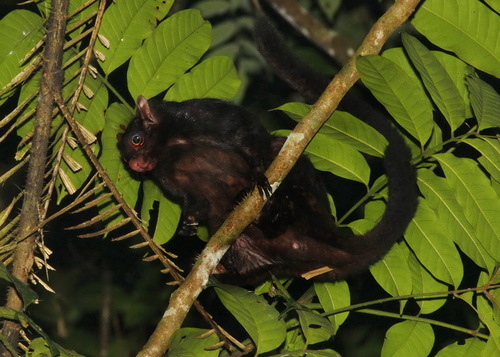
Other species in the genus Biswamoyopterus
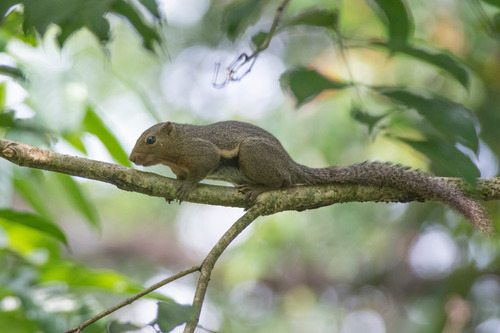
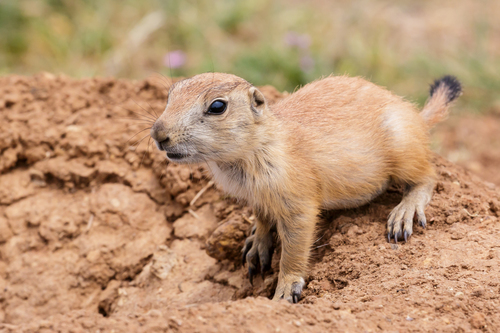
Other species in the family Sciuridae
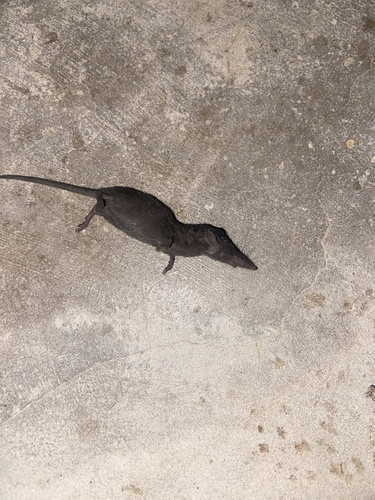
Species that share its range
Sources
Conservation status, range description and population estimate come from the IUCN Red List assessment for Biswamoyopterus biswasi. Countries are derived from that range description, not from a mapped country list. Last refreshed on .
The distribution map is drawn from the IUCN Red List spatial data compiled in 2008. IUCN (International Union for Conservation of Nature)