
Lindbergh's Grass Mouse
Akodon lindberghi
Red List assessment
Data Deficienton the IUCN Red List
- EXExtinct
- EWExtinct in the Wild
- CRCritically Endangered
- ENEndangered
- VUVulnerable
- NTNear Threatened
- LCLeast Concern
Data Deficient has no position on the scale above — it records the absence of an assessment, not a degree of risk.
The Lindbergh's Grass Mouse is recorded in one country, Brazil across South America. The IUCN Red List records the Lindbergh's Grass Mouse as Data Deficient. Unknown; no reliable population estimate exists.
- Family
- Cricetidae
- Order
- Rodentia
- Genus
- Akodon
- Countries recorded
- 1
- Continents
- South America
- Red List category
- Data Deficient
- Data updated
- August 9, 2026
What is the Lindbergh's Grass Mouse?
Akodon lindberghi is a small South American sigmodontine rodent belonging to the diverse genus Akodon, commonly known as grass mice. It was formally described by Hershkovitz in 1990, based on specimens collected in Minas Gerais, Brazil, and is named in honor of conservationist Charles Lindbergh. The species is associated with the Cerrado biome, one of the world's most biodiverse tropical savannas. It remains extremely poorly known, with very few specimens documented in scientific collections, contributing to its Data Deficient IUCN status.
Where does the Lindbergh's Grass Mouse live?
Central Brazil, primarily the state of Minas Gerais and possibly adjacent areas of the Cerrado biome
Known from a restricted range within the state of Minas Gerais, central Brazil, with possible occurrence in adjacent areas of Goiás. The precise extent of its distribution is poorly defined due to very limited collection records.
Altitude and depth
Likely inhabits altitudes between 600 and 1200 m above sea level, consistent with the elevated plateau regions of the Cerrado in Minas Gerais.
Seasonal movements
No specific seasonal behavioral data are available for this species. Like other cerrado rodents, it may show increased activity during the wet season (October–March) when food resources are more abundant.
Habitat of the Lindbergh's Grass Mouse
The species is believed to inhabit the Cerrado, the vast tropical savanna and grassland biome of central Brazil, characterized by open grasslands, gallery forests along watercourses, and shrubby woodland vegetation known as cerradão. It likely uses areas with dense herbaceous cover for foraging and shelter, typical of other Akodon grass mice.
Adaptations to its environment
As a grass mouse, it is likely adapted to life in dense ground-level vegetation, with a body plan suited for moving through grass and litter. Its cryptic brownish coloration provides camouflage against the grassland substrate. Like other Akodon species, it probably has efficient kidneys to manage water balance in seasonally dry cerrado habitats.
Conservation status and numbers
Listed as Data Deficient (DD) by the IUCN Red List, meaning insufficient information is available to assess its extinction risk. The scarcity of specimen records and lack of ecological and population data prevent a more definitive classification. Its association with the heavily threatened Cerrado biome raises concern.
Estimated population
Unknown; no reliable population estimate exists. Given the extreme scarcity of records and ongoing habitat loss in the Cerrado, the population may be small and potentially declining.
What threatens the Lindbergh's Grass Mouse?
The primary threat is the ongoing destruction and degradation of the Cerrado biome, which has lost over 50% of its original cover to agriculture, especially soybean cultivation and cattle ranching. Habitat fragmentation, pesticide use, and fire management practices also pose significant risks to small rodents in this biome.
Diseases and parasites
No specific disease or parasite data are available for this species. Like other sigmodontine rodents in Brazil, it may serve as a reservoir host for hantaviruses and harbor ectoparasites such as fleas, ticks, and mites.
What is being done to protect it?
The species may benefit indirectly from protected areas within its range in Minas Gerais, such as the Parque Nacional Grande Sertão Veredas. Brazil's national legislation (Lei de Proteção da Fauna, No. 5.197/1967) provides general protection to wild fauna. No species-specific conservation programs are known.
Recommended actions
Targeted field surveys are urgently needed to locate extant populations and define the species' range. Genetic and morphological studies are required to clarify its taxonomic status. Long-term monitoring programs and protection of Cerrado remnants within its suspected range should be prioritized.
What the Lindbergh's Grass Mouse looks like
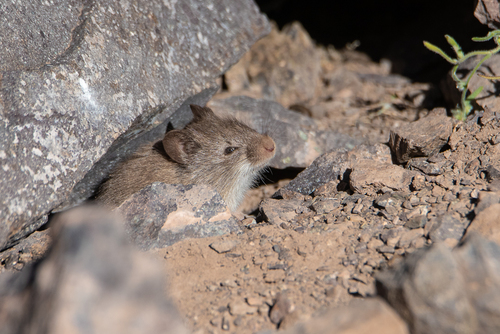
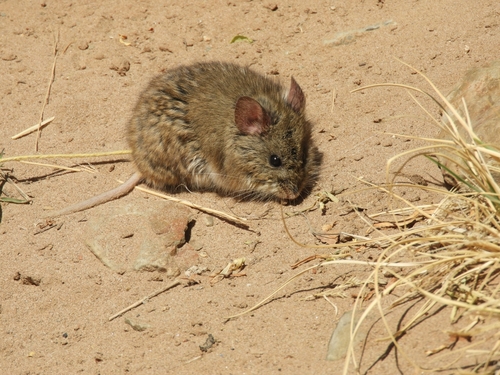
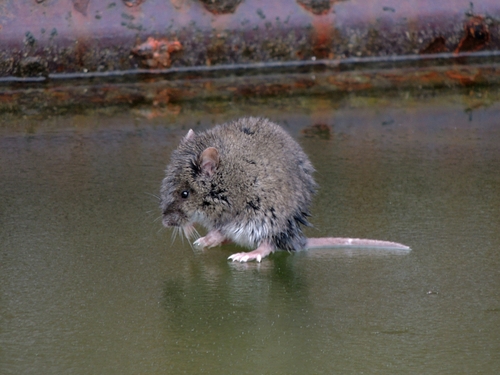
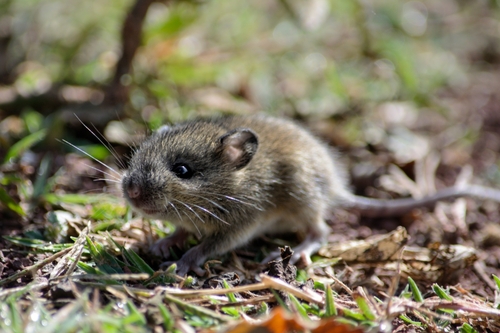
Likely has soft, dense dorsal fur that is brownish or grayish-brown in color, with a paler grayish or buffy-white ventral surface. The tail is moderately long and sparsely haired. The ears are rounded and relatively small, and the eyes are dark and small.
Size
Estimated body length of approximately 80–110 mm (head and body), with a tail of roughly 60–90 mm, consistent with other small Akodon species.
Weight
Estimated between 15 and 35 g based on comparisons with closely related Akodon species; no sex-specific weight data are available.
Distinctive features
Distinguished from closely related Akodon species by subtle morphological characters including skull morphology, molar tooth structure, and pelage coloration. Molecular markers and karyotypic data may further differentiate it from sympatric congeners such as Akodon cursor or Akodon montensis.
Differences between males and females
Likely minimal, as is typical in most Akodon species, with no notable differences in coloration between sexes; males may be marginally larger than females.
Behaviour and diet of the Lindbergh's Grass Mouse
Presumed to be largely solitary outside of the breeding season, as is typical of most Akodon grass mice. Small, overlapping home ranges may occur, particularly among females.
When it is active
Likely nocturnal to crepuscular, with peak foraging activity occurring at night, consistent with the activity patterns documented in other Akodon species.
Diet
Presumably omnivorous, feeding on seeds, plant material, invertebrates, and fungi, as is characteristic of the genus Akodon. The cerrado provides a diverse array of grasses, forbs, and arthropods that likely form the bulk of its diet.
How it feeds and hunts
Forages on the ground and in low vegetation, using olfactory and tactile senses to locate food items such as seeds and invertebrates. No specific hunting data are available.
Communication
Likely communicates via ultrasonic vocalizations, scent marking using urine and glandular secretions, and tactile contact, as observed in other Akodon species. These signals are used in mate recognition and territory delineation.
Interactions with other species
Likely preyed upon by owls (e.g., Tyto alba), snakes, small felids, and mustelids typical of the Cerrado. It potentially competes with sympatric small rodents for food and nesting resources. May play a role in dispersing fungal spores and small seeds.
Role in its ecosystem
Functions as a secondary consumer and prey item in the cerrado food web, contributing to nutrient cycling through seed consumption and defecation. As a small granivore-omnivore, it may play a modest role in seed dispersal and invertebrate population regulation.
Reproduction and lifecycle
Reproductive biology is unstudied for this species specifically. Based on congeners, breeding likely occurs year-round with peaks in the wet season; litter sizes in Akodon typically range from 2 to 6 pups, with a gestation period of approximately 23–25 days.
Raising the young
Parental care is likely provided primarily by the female, as in most sigmodontine rodents. Pups are altricial at birth and are weaned after approximately 2–3 weeks.
Maturity and lifespan
Sexual maturity likely reached at 2–3 months of age, as in related Akodon species. Wild lifespan is probably 1–2 years; captive lifespan data are unavailable for this species.
Taxonomy and naming of the Lindbergh's Grass Mouse
Classification
Mammalia > Rodentia > Cricetidae > Sigmodontinae > Akodon > Akodon lindberghi
Scientific synonyms
No widely recognized synonyms; described as a distinct species by Hershkovitz in 1990.
What research says
Recent studies
No notable recent studies focused specifically on Akodon lindberghi are known. The species has been included in broader molecular phylogenies of the genus Akodon, which continue to clarify species boundaries and diversity within this complex group.
Genome and DNA
Karyotype is not definitively described for this species. Related Akodon species typically have diploid chromosome numbers (2n) ranging from 24 to 44; molecular phylogenetic studies have confirmed the monophyly of the Akodon genus.
Compared with similar species
Most closely related to other Brazilian Akodon species such as Akodon cursor and Akodon montensis, which share similar body plans and cerrado/Atlantic Forest habitats. Akodon lindberghi is distinguished by subtle cranial and dental morphology and its more restricted distribution compared to the wide-ranging A. cursor.
The Lindbergh's Grass Mouse and people
Akodon lindberghi is named after Charles Lindbergh, the pioneering aviator who later became a dedicated wildlife conservationist with a strong interest in Brazil's biodiversity. The genus Akodon is one of the most speciose mammal genera in the world, with over 40 recognized species. Despite being described over 30 years ago, this mouse remains so rarely encountered that almost nothing is known about its day-to-day life.
Where and how to see it
Extremely difficult to observe in the wild due to its rarity and nocturnal habits. The best approach would be to conduct live-trapping surveys in intact cerrado grassland habitats of central Minas Gerais, Brazil, during the wet season when small mammal activity is highest. Collaboration with Brazilian mammalogists and university research groups would maximize chances of encounter.
Risks to humans
No notable direct risk to humans. As a potential reservoir of hantavirus and leptospirosis, standard precautions should be taken when handling wild-caught specimens.
Countries where the Lindbergh's Grass Mouse is recorded
The 1 countries named in the range description of its IUCN Red List assessment.
Questions about the Lindbergh's Grass Mouse
Where does the Lindbergh's Grass Mouse live?
The Lindbergh's Grass Mouse is recorded in Brazil across South America. These countries come from the range description of its IUCN Red List assessment, and they are what place the species on the interactive map.
Is the Lindbergh's Grass Mouse endangered?
The IUCN Red List assesses the Lindbergh's Grass Mouse as Data Deficient. There is not enough information to judge the risk of extinction, usually because the species is rarely seen or has never been surveyed. It is not a reassuring category: several species were Data Deficient right up to the point they were found to be Critically Endangered.
How many are left in the wild?
Unknown; no reliable population estimate exists. This figure comes from the species assessment on the IUCN Red List; population estimates for wild mammals are ranges, not counts, and are revised at each assessment.
What habitat does the Lindbergh's Grass Mouse live in?
The species is believed to inhabit the Cerrado, the vast tropical savanna and grassland biome of central Brazil, characterized by open grasslands, gallery forests along watercourses, and shrubby woodland vegetation known as cerradão.
What is the scientific name of the Lindbergh's Grass Mouse?
The Lindbergh's Grass Mouse is Akodon lindberghi, in the family Cricetidae, order Rodentia.
Other species in the genus Akodon

Other species in the family Cricetidae
Sources
Conservation status, range description and population estimate come from the IUCN Red List assessment for Akodon lindberghi. Countries are derived from that range description, not from a mapped country list. Last refreshed on .
The distribution map is drawn from the IUCN Red List spatial data compiled in 2018. IUCN SSC Small Mammal Specialist Group