
Large Vesper Mouse
Calomys callosus
Red List assessment
Least Concernon the IUCN Red List
- EXExtinct
- EWExtinct in the Wild
- CRCritically Endangered
- ENEndangered
- VUVulnerable
- NTNear Threatened
- LCLeast Concern
The Large Vesper Mouse is recorded in 4 countries across South America. The IUCN Red List assesses the Large Vesper Mouse as Least Concern. Population size is not precisely quantified but considered abundant and stable across its range, with local fluctuations tied to rainfall and food availability.
- Family
- Cricetidae
- Order
- Rodentia
- Genus
- Calomys
- Countries recorded
- 4
- Continents
- South America
- Red List category
- Least Concern
- Data updated
- August 9, 2026
What is the Large Vesper Mouse?
Calomys callosus, commonly known as the Large Vesper Mouse, is a small terrestrial rodent native to the seasonally flooded grasslands and savannas of central South America. It is notable for its role as a reservoir host for Machupo virus, the causative agent of Bolivian hemorrhagic fever. This adaptable species thrives in disturbed and agricultural habitats, making it both ecologically significant and a subject of public health concern.
Where does the Large Vesper Mouse live?
Central South America, primarily Bolivia, Paraguay, Brazil (especially the Pantanal and Cerrado regions), and northern Argentina
Found across the Gran Chaco and Pantanal regions spanning Bolivia, Paraguay, western Brazil (Mato Grosso, Mato Grosso do Sul), and northern Argentina.
Altitude and depth
Typically found at low elevations, from near sea level up to approximately 1000 meters.
Seasonal movements
Population densities fluctuate seasonally, peaking after rainy seasons when food (grasses and seeds) is abundant; no true hibernation but activity may decrease during extreme dry periods.
Habitat of the Large Vesper Mouse
Inhabits savannas, grasslands, seasonally flooded wetlands (like the Pantanal), agricultural fields, and disturbed edge habitats; often found near human settlements and croplands.
Adaptations to its environment
Possesses a flexible diet and burrowing behavior that allows survival in seasonally flooded and disturbed habitats; high reproductive rate enables rapid population recovery after environmental fluctuations or floods.
Conservation status and numbers
Listed as Least Concern (LC) by IUCN due to its wide distribution, large population, tolerance of habitat disturbance, and lack of major population decline.
Estimated population
Population size is not precisely quantified but considered abundant and stable across its range, with local fluctuations tied to rainfall and food availability.
What threatens the Large Vesper Mouse?
No major threats identified; the species is resilient to agricultural expansion and habitat modification, though pesticide use and rodent control programs (due to disease concerns) may locally reduce populations.
Diseases and parasites
Well known as the natural reservoir of Machupo virus (causing Bolivian hemorrhagic fever) and may harbor various ectoparasites such as mites, fleas, and ticks.
What is being done to protect it?
No specific conservation programs target this species; it is sometimes monitored as part of public health surveillance due to its role in zoonotic disease transmission.
Recommended actions
Continued ecological and epidemiological monitoring recommended, particularly regarding Machupo virus dynamics, rather than direct conservation intervention given its stable status.
What the Large Vesper Mouse looks like
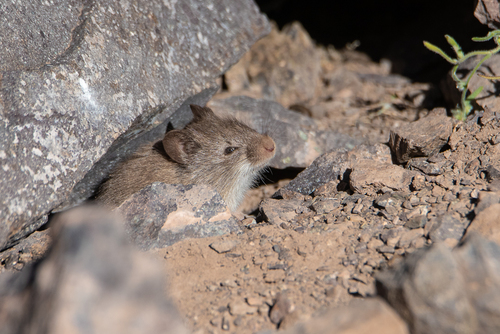
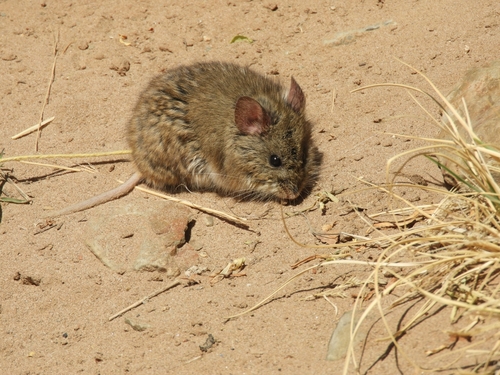
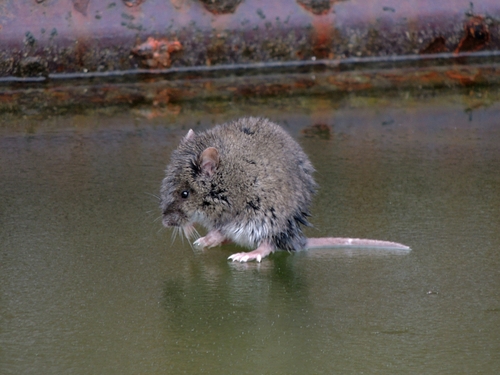
Soft, dense fur ranging from grayish-brown to reddish-brown dorsally, with paler, whitish to buff underparts; has large, prominent eyes and rounded ears typical of vesper mice.
Size
Body length (head and body) typically 90-140 mm, with a tail length of approximately 60-100 mm.
Weight
Adults typically weigh between 20-50 grams, with some seasonal variation in body mass.
Distinctive features
Distinguished from related Calomys species by slightly larger body size, tail length relative to body, and specific cranial and dental features used in taxonomic identification.
Differences between males and females
Minimal sexual dimorphism; males and females are similar in size and coloration, though males may be marginally larger.
Behaviour and diet of the Large Vesper Mouse
Generally solitary or found in loose family groups; not highly social, though multiple individuals may share burrow systems especially in high-density populations.
When it is active
Primarily nocturnal and crepuscular, being most active during dusk, dawn, and nighttime hours to avoid predators and thermal stress.
Diet
Omnivorous, feeding mainly on seeds, grasses, and plant material, supplemented with insects and other small invertebrates when available.
How it feeds and hunts
Forages on the ground, using keen olfactory and tactile senses to locate seeds, plant matter, and occasional insect prey; does not hunt vertebrate prey.
Communication
Communicates via ultrasonic vocalizations, scent marking through urine and glandular secretions, and tactile interactions during social encounters.
Interactions with other species
Preyed upon by owls, snakes, small carnivorous mammals, and birds of prey; competes with other small rodents for food and burrow resources; serves as a reservoir host for Machupo virus affecting human health.
Role in its ecosystem
Plays an important ecological role as a seed disperser and as a prey base supporting various predator populations within grassland and savanna ecosystems.
Reproduction and lifecycle
Breeds year-round in favorable conditions with peaks during wetter seasons; gestation lasts about 21-24 days, producing litters of 3-8 pups; weaning occurs around 3 weeks of age.
Raising the young
Females provide primary parental care, nursing and protecting young in nest burrows until weaning; males typically do not participate significantly in offspring care.
Maturity and lifespan
Reaches sexual maturity at approximately 2-3 months of age; lifespan in the wild is typically less than 1 year, though captive individuals can live up to 2-3 years.
Taxonomy and naming of the Large Vesper Mouse
Classification
Class Mammalia > Order Rodentia > Family Cricetidae > Genus Calomys > Species Calomys callosus
Subspecies
Taxonomy debated; several populations previously classified as subspecies (e.g., C. c. callosus, C. c. villosus) are now often treated as distinct species or synonyms pending further genetic study.
Scientific synonyms
Hesperomys callosus (original combination); some populations previously included under Calomys laucha complex.
What research says
Recent studies
Recent research has focused on the ecology of Machupo virus transmission dynamics and habitat factors influencing rodent population outbreaks linked to hemorrhagic fever cases in Bolivia.
Genome and DNA
Diploid chromosome number reported as 2n=36 in some populations, though karyotype can vary; genetic studies have focused on virus-host relationships rather than extensive genomic mapping.
Compared with similar species
Similar in appearance to other Calomys species such as C. laucha and C. musculinus, but distinguished by slightly larger size and specific habitat preferences tied to seasonally flooded regions.
The Large Vesper Mouse and people
This unassuming mouse is infamous in virology as the natural host of the deadly Machupo virus; despite this, it remains classified as Least Concern due to its widespread abundance and ecological resilience.
Where and how to see it
Best observed at dusk in grassland or agricultural edge habitats within the Pantanal or Gran Chaco region using small mammal trapping or careful nighttime observation with red-light headlamps.
Risks to humans
Can pose a serious health risk as a reservoir for Machupo virus, which causes Bolivian hemorrhagic fever in humans through contact with rodent excreta or direct handling.
Human uses
No direct commercial or agricultural use; primarily significant in biomedical and epidemiological research related to viral hemorrhagic fever studies.
Countries where the Large Vesper Mouse is recorded
The 4 countries named in the range description of its IUCN Red List assessment.
Questions about the Large Vesper Mouse
Where does the Large Vesper Mouse live?
The Large Vesper Mouse is recorded in Argentina, Bolivia, Brazil and Paraguay across South America. These countries come from the range description of its IUCN Red List assessment, and they are what place the species on the interactive map.
Is the Large Vesper Mouse endangered?
The IUCN Red List assesses the Large Vesper Mouse as Least Concern. The species is widespread and abundant enough not to qualify for any threatened category. It does not mean the species is safe forever, only that nothing in the current data raises an alarm.
How many are left in the wild?
Population size is not precisely quantified but considered abundant and stable across its range, with local fluctuations tied to rainfall and food availability. This figure comes from the species assessment on the IUCN Red List; population estimates for wild mammals are ranges, not counts, and are revised at each assessment.
What habitat does the Large Vesper Mouse live in?
Inhabits savannas, grasslands, seasonally flooded wetlands (like the Pantanal), agricultural fields, and disturbed edge habitats; often found near human settlements and croplands.
What is the scientific name of the Large Vesper Mouse?
The Large Vesper Mouse is Calomys callosus, in the family Cricetidae, order Rodentia.
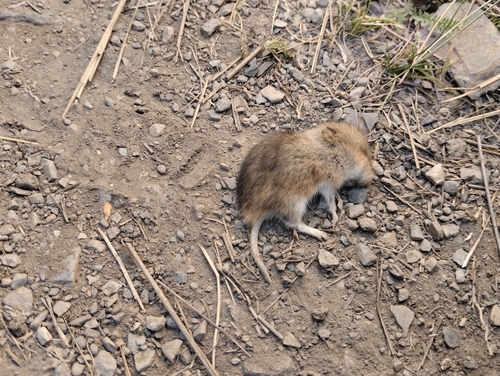
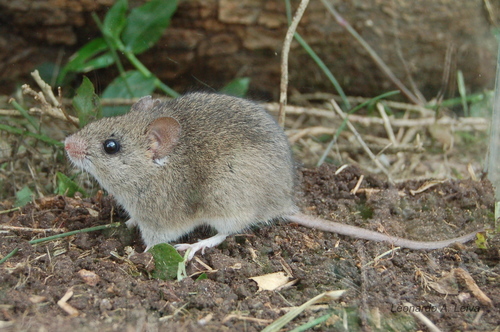
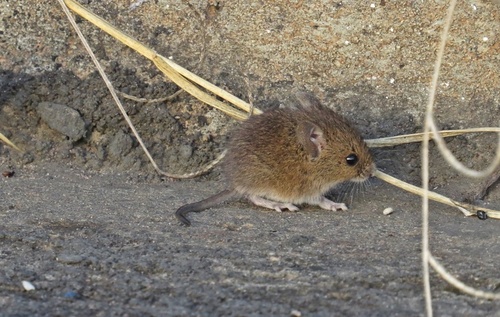
Other species in the genus Calomys
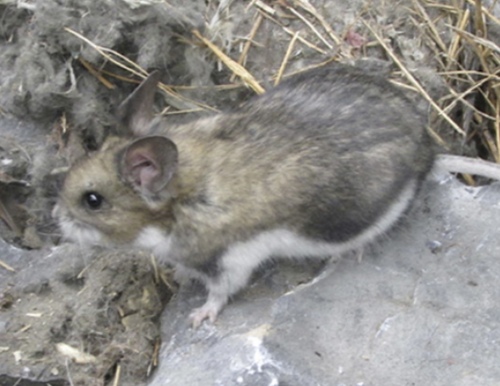
Other species in the family Cricetidae
Sources
Conservation status, range description and population estimate come from the IUCN Red List assessment for Calomys callosus. Countries are derived from that range description, not from a mapped country list. Last refreshed on .
The distribution map is drawn from the IUCN Red List spatial data compiled in 2008. IUCN (International Union for Conservation of Nature)