
Lar Gibbon
Hylobates lar
Red List assessment
Endangeredon the IUCN Red List
- EXExtinct
- EWExtinct in the Wild
- CRCritically Endangered
- ENEndangered
- VUVulnerable
- NTNear Threatened
- LCLeast Concern
The Lar Gibbon is recorded in 6 countries across Asia. The IUCN Red List assesses the Lar Gibbon as Endangered. Estimated at fewer than 100,000 individuals globally, with populations in continuous decline across most of its range due to ongoing deforestation.
- Family
- Hylobatidae
- Order
- Primates
- Genus
- Hylobates
- Countries recorded
- 6
- Continents
- Asia
- Red List category
- Endangered
- Data updated
- August 9, 2026
What is the Lar Gibbon?
The Lar Gibbon, also called the White-handed Gibbon, is a small arboreal ape native to the tropical rainforests of Southeast Asia. It is renowned for its extraordinary brachiation ability, swinging rapidly through the forest canopy using long arms. This species is remarkable for its complex duetting songs between mated pairs, which help maintain territory and pair bonds. Lar Gibbons are also notable for their striking white hands and feet contrasting with darker or lighter body fur.
Where does the Lar Gibbon live?
Southeast Asia, primarily Thailand, Myanmar, Laos, Malaysia, and Sumatra (Indonesia)
Distributed across mainland Southeast Asia including southern Myanmar, Thailand, Laos, and the Malay Peninsula, extending into the northern part of Sumatra in Indonesia. Historically also present in southwestern China (Yunnan), though this population is likely extirpated.
Altitude and depth
0-1500m, though most populations occur below 1200m in lowland to hill forests
Habitat of the Lar Gibbon
Primarily found in tropical and subtropical evergreen rainforests, including lowland dipterocarp forests and semi-evergreen forests. They require tall, continuous canopy cover for their arboreal lifestyle and rarely descend to the ground.
Adaptations to its environment
Extremely long arms relative to body size (arm span up to 1.5x body length) enable efficient brachiation through dense canopy. Ball-and-socket wrist joints allow 360-degree rotation for swinging, while a specialized larynx enables loud, far-carrying vocalizations for territorial communication in dense forest.
Conservation status and numbers
Endangered (EN) according to IUCN Red List, with population declines exceeding 50% over the past 40-45 years (approximately three generations) due to habitat loss and hunting pressure.
Estimated population
Estimated at fewer than 100,000 individuals globally, with populations in continuous decline across most of its range due to ongoing deforestation.
What threatens the Lar Gibbon?
Deforestation and habitat fragmentation from logging, agriculture (particularly palm oil), and infrastructure development are primary threats. Illegal hunting for the pet trade and traditional medicine, along with habitat degradation from human encroachment, further threaten populations.
Diseases and parasites
Susceptible to various gastrointestinal parasites including nematodes and protozoa, as well as respiratory infections; captive populations have shown susceptibility to human-transmitted diseases due to close genetic relation.
What is being done to protect it?
Protected under CITES Appendix I, prohibiting international commercial trade. Found within numerous protected areas including Khao Yai National Park in Thailand and various reserves in Malaysia and Sumatra, with active reforestation and anti-poaching programs in several regions.
Recommended actions
Priority actions include strengthening enforcement against illegal logging and poaching, expanding and connecting protected forest corridors, and increasing community-based conservation education programs in range countries to reduce human-wildlife conflict.
What the Lar Gibbon looks like
Fur color varies dramatically from pale cream/buff to dark brown or black, even within the same population, but always features distinctive white or cream-colored hands, feet, and a white facial fringe around a dark face. The body is slender with no tail, long limbs, and a rounded head.
Size
Body length (head to rump) ranges from 42-58cm, with an arm span that can reach up to 150cm despite the small body size.
Weight
Males typically weigh 5.0-7.5kg, while females weigh slightly less at 4.5-6.5kg, showing minimal size difference between sexes.
Distinctive features
Distinguished from other gibbon species by its characteristic white hands and feet combined with a white facial ring, plus its variable body coloration that ranges from black to buff within the same population, unlike most other gibbons which show more uniform coloration.
Differences between males and females
Minimal sexual dimorphism in size, though males and females can sometimes be distinguished by subtle differences in genital coloration and fur pattern variations.
Behaviour and diet of the Lar Gibbon
Lives in small monogamous family groups typically consisting of a mated adult pair and their offspring, usually 2-6 individuals total. Groups defend well-established territories through vocal duets and occasional physical displays rather than sustained conflict.
When it is active
Strictly diurnal, becoming active shortly after dawn and typically resting by mid-afternoon, with peak activity in early morning hours dedicated to feeding and territorial calling.
Diet
Primarily frugivorous, with fruit comprising 50-60% of diet, supplemented by young leaves, flowers, insects, and occasionally bird eggs. They show preference for ripe, sugar-rich fruits from a wide variety of tropical tree species.
How it feeds and hunts
Forages by moving through the canopy via brachiation, using keen color vision and spatial memory to locate scattered fruiting trees; insects are opportunistically caught by hand while foraging rather than through active pursuit.
Communication
Renowned for elaborate vocal duets between mated pairs, especially the female's loud 'great call' used for territorial advertisement and pair bonding, audible up to several kilometers away. Additional communication includes scent marking, facial expressions, and body postures.
Interactions with other species
Natural predators include large raptors, clouded leopards, and pythons, though their arboreal lifestyle and vocal warning systems help avoid predation. They often share habitat with other primates like macaques and langurs with minimal direct competition due to different feeding strategies.
Role in its ecosystem
Plays an important ecological role as a seed disperser for numerous tropical tree species, contributing to forest regeneration and biodiversity maintenance through consumption and excretion of fruit seeds across their territory.
Reproduction and lifecycle
Breeding occurs year-round without a distinct season, with females giving birth to a single offspring after a gestation period of approximately 200-212 days (about 7 months). Interbirth intervals typically range from 2-3 years.
Raising the young
Infants are carried and nursed primarily by the mother for the first year, with weaning occurring around 18-24 months. Both parents may participate in grooming and protecting offspring, and juveniles often remain with the family group until sexual maturity around 6-8 years.
Maturity and lifespan
Sexual maturity is reached around 6-9 years of age. Lifespan in the wild is estimated at 25-30 years, while captive individuals have been recorded living up to 40-44 years.
Taxonomy and naming of the Lar Gibbon
Classification
Mammalia > Primates > Hylobatidae > Hylobates > Hylobates lar
Subspecies
Five recognized subspecies: H. l. lar (Malay Peninsula), H. l. carpenteri (northern Thailand, Laos), H. l. entelloides (central Thailand), H. l. vestitus (Sumatra), and H. l. yunnanensis (possibly extinct, southern China/Yunnan).
Scientific synonyms
Simia lar (Linnaeus, 1771), Hylobates variegatus
What research says
Recent studies
Recent research has focused on vocal duet complexity and its role in pair bonding and territorial defense, as well as genomic studies examining the rapid chromosomal evolution characteristic of gibbons compared to other primates.
Genome and DNA
Diploid chromosome number is 44 (2n=44). Genomic studies have revealed significant chromosomal rearrangements among gibbon species, making Hylobatidae valuable for studying primate chromosomal evolution.
Compared with similar species
Similar to the Agile Gibbon (Hylobates agilis) and Pileated Gibbon (Hylobates pileatus), with which it can hybridize in contact zones, but is distinguished by its more variable coat coloration and specific vocal call patterns. Unlike siamangs, Lar Gibbons lack a throat sac for vocalization amplification.
The Lar Gibbon and people
Lar Gibbons can achieve speeds of up to 55 km/h while brachiating through the canopy, making them one of the fastest arboreal mammals. Their morning duet songs are so distinctive that researchers can identify individual pairs by their unique vocal patterns.
Where and how to see it
Best observed in protected areas like Khao Yai National Park in Thailand or Gunung Leuser National Park in Sumatra, ideally at dawn when their loud territorial duets make them easier to locate in the canopy. Patient, quiet observation with binoculars increases chances of extended viewing.
Risks to humans
No notable risk to humans under normal circumstances, though wild individuals may bite if cornered or threatened, and as with all primates, there is potential for zoonotic disease transmission through close contact.
Human uses
Historically captured for the exotic pet trade and used in traditional medicine in some regions, though this is now illegal under CITES protections. They are also significant ecotourism attractions in several Southeast Asian national parks.
Myths and legends
In Thai folklore, gibbons are sometimes associated with forest spirits and are considered omens; their haunting calls at dawn have inspired various local legends about forest guardians in Southeast Asian cultures.
Countries where the Lar Gibbon is recorded
The 6 countries named in the range description of its IUCN Red List assessment.
Questions about the Lar Gibbon
Where does the Lar Gibbon live?
The Lar Gibbon is recorded in China, Indonesia, Laos, Malaysia and Myanmar, among 6 countries in total across Asia. These countries come from the range description of its IUCN Red List assessment, and they are what place the species on the interactive map.
Is the Lar Gibbon endangered?
Yes. The IUCN Red List assesses the Lar Gibbon as Endangered, one of the three threatened categories. The species faces a very high risk of extinction in the wild — a step below Critically Endangered, but still on a trajectory that ends badly without intervention.
How many are left in the wild?
Estimated at fewer than 100,000 individuals globally, with populations in continuous decline across most of its range due to ongoing deforestation. This figure comes from the species assessment on the IUCN Red List; population estimates for wild mammals are ranges, not counts, and are revised at each assessment.
What habitat does the Lar Gibbon live in?
Primarily found in tropical and subtropical evergreen rainforests, including lowland dipterocarp forests and semi-evergreen forests.
What is the scientific name of the Lar Gibbon?
The Lar Gibbon is Hylobates lar, in the family Hylobatidae, order Primates.
Other species in the genus Hylobates
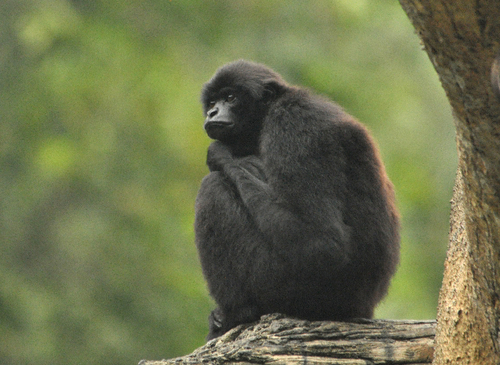
Other species in the family Hylobatidae

Species that share its range
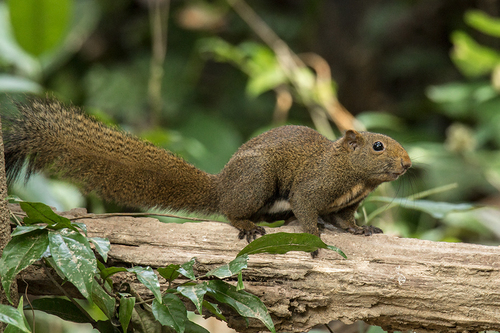
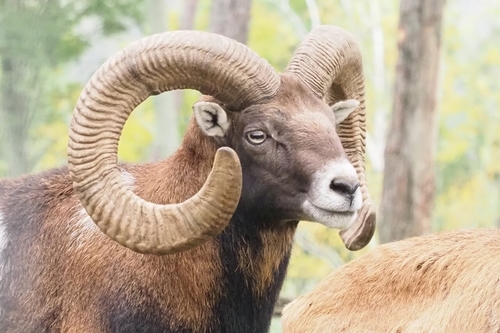

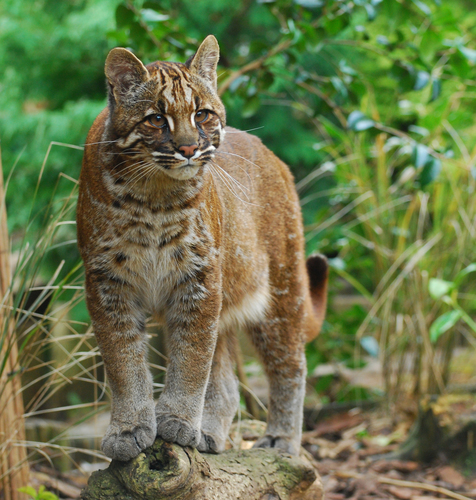
Sources
Conservation status, range description and population estimate come from the IUCN Red List assessment for Hylobates lar. Countries are derived from that range description, not from a mapped country list. Last refreshed on .
The distribution map is drawn from the IUCN Red List spatial data compiled in 2020. IUCN (International Union for Conservation of Nature)