
Klipspringer
Oreotragus oreotragus
Red List assessment
Least Concernon the IUCN Red List
- EXExtinct
- EWExtinct in the Wild
- CRCritically Endangered
- ENEndangered
- VUVulnerable
- NTNear Threatened
- LCLeast Concern
The Klipspringer is recorded in 10 countries across Africa. The IUCN Red List assesses the Klipspringer as Least Concern. Global population is not precisely quantified but believed to be in the tens of thousands, with overall stable numbers, though some localized populations are declining due to habitat degradation.
- Family
- Bovidae
- Order
- Artiodactyla
- Genus
- Oreotragus
- Countries recorded
- 10
- Continents
- Africa
- Red List category
- Least Concern
- Data updated
- August 9, 2026
What is the Klipspringer?
The klipspringer is a small, agile antelope uniquely adapted to rocky, mountainous terrain across eastern and southern Africa. It is remarkable for its distinctive tip-toe stance on rounded hooves, allowing it to navigate steep cliffs and boulders with extraordinary agility. Its thick, speckled coat and cryptic coloration provide excellent camouflage against rocky backgrounds. Monogamous pairs are often seen standing sentinel on rock outcrops, a hallmark behavior of the species.
Where does the Klipspringer live?
Eastern and southern Africa, primarily in mountainous and rocky regions of South Africa, Namibia, Zimbabwe, Kenya, Ethiopia, and surrounding countries.
Widely but patchily distributed across eastern and southern Africa, including South Africa, Namibia, Botswana, Zimbabwe, Mozambique, Tanzania, Kenya, Uganda, Ethiopia, and parts of the Democratic Republic of Congo, wherever suitable rocky habitat exists.
Altitude and depth
Ranges from near sea level to over 4,500m in Ethiopian highlands, though most populations occur between 500-3,000m in rocky hill country.
Seasonal movements
No long-distance migration; klipspringers are territorial and sedentary year-round, though breeding activity may show slight seasonal peaks correlating with rainfall and vegetation growth.
Habitat of the Klipspringer
Rocky outcrops, cliffs, koppies, and mountainous terrain with sparse vegetation; also found in rugged escarpments and gorges. Requires rocky substrate for its specialized hoof adaptations and predator avoidance strategy.
Adaptations to its environment
Unique hooves with rubbery, cushioned soles and the ability to stand on the tips of all four hooves simultaneously enable precise balance on narrow rock ledges. Thick, hollow guard hairs provide insulation and cushioning against rocky terrain. Excellent vision and a habit of using elevated vantage points help detect predators early.
Conservation status and numbers
Listed as Least Concern by the IUCN due to a wide distribution and generally stable populations, though some regional populations face localized declines from habitat fragmentation and hunting.
Estimated population
Global population is not precisely quantified but believed to be in the tens of thousands, with overall stable numbers, though some localized populations are declining due to habitat degradation.
What threatens the Klipspringer?
Habitat loss from agricultural expansion and human settlement, illegal hunting for bushmeat, and competition with livestock in some areas. Localized threats also stem from predation pressure changes due to human alteration of predator populations.
Diseases and parasites
Susceptible to ticks and associated tick-borne diseases, as well as internal parasites such as gastrointestinal nematodes; generally resilient due to its low-density, dispersed population structure.
What is being done to protect it?
Protected within numerous national parks and reserves across its range, including Kruger National Park, Etosha National Park, and various private conservancies. Some regional hunting regulations help manage sustainable use.
Recommended actions
Continued protection of rocky habitat corridors, monitoring of regional population trends, enforcement of anti-poaching laws, and community-based conservation incentives in areas bordering protected zones.
What the Klipspringer looks like
Dense, speckled yellowish-grey to olive-brown coat composed of thick, brittle hollow hairs that give a somewhat bristly, grizzled appearance. The coat provides camouflage against rocky, lichen-covered surfaces. Large eyes and prominent ears aid in predator detection.
Size
Shoulder height of 43-60 cm; body length approximately 75-115 cm.
Weight
Typically weighs between 8-18 kg, with males and females of similar size.
Distinctive features
Distinguished by its unique tip-toe stance on rounded hoof tips, unlike any other antelope, and its stocky, compact build suited for climbing steep rock faces. Its speckled fur texture is unusual among bovids and differs from the smoother coats of related duikers and dik-diks.
Differences between males and females
Only males typically possess short, straight horns (3-9 cm), though females occasionally show small horn buds in some populations; otherwise the sexes are similar in size and coloration.
Behaviour and diet of the Klipspringer
Typically found in monogamous pairs or small family groups consisting of a mated pair and their most recent offspring. Pairs maintain strong territorial bonds and are rarely seen apart.
When it is active
Primarily diurnal with peak activity during early morning and late afternoon, resting in shaded rocky crevices during the heat of midday.
Diet
Herbivorous browser feeding on a wide variety of leaves, shoots, fruits, flowers, and lichens; it obtains most of its water needs from succulent plants and morning dew, making it well adapted to arid environments.
Communication
Uses a sharp, high-pitched whistling alarm call to warn mates and offspring of danger; also relies on scent marking via preorbital glands to mark territory boundaries on rocks and vegetation.
Interactions with other species
Preyed upon by leopards, caracals, jackals, and birds of prey such as martial eagles; shares rocky habitats with rock hyraxes and various bird species, sometimes benefiting from shared vigilance against predators.
Role in its ecosystem
As a browsing herbivore, the klipspringer contributes to seed dispersal and vegetation dynamics in rocky, arid ecosystems, and serves as prey supporting predator populations in mountainous habitats.
Reproduction and lifecycle
Breeding can occur year-round in many regions, though births often peak during wetter seasons; gestation lasts approximately 210-225 days, typically resulting in a single calf.
Raising the young
The mother hides the calf in dense vegetation or rocky crevices for the first several weeks of life, visiting periodically to nurse; the father assists in guarding the territory and alerting to predators via alarm whistles.
Maturity and lifespan
Reaches sexual maturity at around 1 year of age; lifespan in the wild is typically 10-15 years, while captive individuals may live slightly longer with veterinary care.
Taxonomy and naming of the Klipspringer
Classification
Class Mammalia > Order Artiodactyla > Family Bovidae > Genus Oreotragus > Species Oreotragus oreotragus.
Subspecies
Up to 11 subspecies have been described historically (e.g., O. o. oreotragus, O. o. saltatrixoides, O. o. porteousi), though many are now considered invalid or synonymous due to limited genetic differentiation; taxonomy remains debated.
Scientific synonyms
Antilope oreotragus (Zimmermann, 1783); Oreotragus saltator.
What research says
Recent studies
Recent studies have focused on clarifying subspecies validity through genetic analysis, revealing lower diversity than historically assumed based on morphology alone, suggesting a need for taxonomic revision.
Genome and DNA
Diploid chromosome number reported as 2n=46; limited genomic studies exist compared to other African bovids, though some phylogenetic work has clarified its basal position within Antilopinae.
Compared with similar species
Compared to duikers and dik-diks, the klipspringer is more specialized for vertical rocky terrain, with a stockier body and unique hoof morphology; it lacks the speed-based escape strategy of open-plain antelopes, relying instead on agility among cliffs.
The Klipspringer and people
Klipspringers can leap several meters between rocky outcrops with remarkable precision. Their name means 'rock jumper' in Afrikaans/Dutch, reflecting their extraordinary climbing ability. They are one of the few antelope species that form truly monogamous, lifelong pair bonds.
Where and how to see it
Best observed at dawn or dusk in rocky outcrop habitats within reserves such as Kruger National Park, Table Mountain, or Namibia's escarpment regions; look for pairs standing motionless on prominent rocks.
Risks to humans
No notable risk to humans.
Human uses
Historically hunted for meat and hide by local communities; today mostly valued for ecotourism and trophy hunting in regulated conservancies.
Myths and legends
In some African folklore, the klipspringer is regarded as a symbol of agility and vigilance due to its habit of standing sentinel on high rocks, though it does not feature prominently in major mythological traditions.
Countries where the Klipspringer is recorded
The 10 countries named in the range description of its IUCN Red List assessment.
Questions about the Klipspringer
Where does the Klipspringer live?
The Klipspringer is recorded in Botswana, Democratic Republic of the Congo, Ethiopia, Kenya and Mozambique, among 10 countries in total across Africa. These countries come from the range description of its IUCN Red List assessment, and they are what place the species on the interactive map.
Is the Klipspringer endangered?
The IUCN Red List assesses the Klipspringer as Least Concern. The species is widespread and abundant enough not to qualify for any threatened category. It does not mean the species is safe forever, only that nothing in the current data raises an alarm.
How many are left in the wild?
Global population is not precisely quantified but believed to be in the tens of thousands, with overall stable numbers, though some localized populations are declining due to habitat degradation. This figure comes from the species assessment on the IUCN Red List; population estimates for wild mammals are ranges, not counts, and are revised at each assessment.
What habitat does the Klipspringer live in?
Rocky outcrops, cliffs, koppies, and mountainous terrain with sparse vegetation; also found in rugged escarpments and gorges.
What is the scientific name of the Klipspringer?
The Klipspringer is Oreotragus oreotragus, in the family Bovidae, order Artiodactyla.
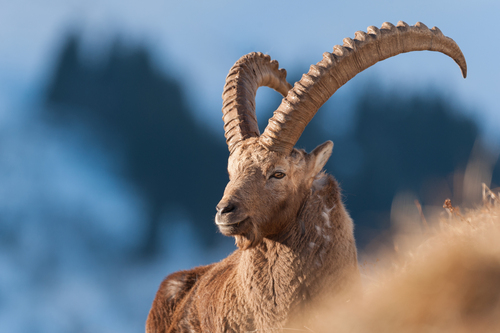
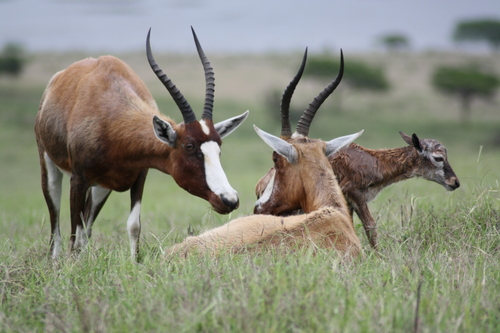
Other species in the family Bovidae
Species that share its range

Sources
Conservation status, range description and population estimate come from the IUCN Red List assessment for Oreotragus oreotragus. Countries are derived from that range description, not from a mapped country list. Last refreshed on .
The distribution map is drawn from the IUCN Red List spatial data compiled in 2016. IUCN (International Union for Conservation of Nature)