
Hawaiian Monk Seal
Neomonachus schauinslandi
Red List assessment
Vulnerableon the IUCN Red List
- EXExtinct
- EWExtinct in the Wild
- CRCritically Endangered
- ENEndangered
- VUVulnerable
- NTNear Threatened
- LCLeast Concern
The Hawaiian Monk Seal is recorded in one country, United States across North America. The IUCN Red List assesses the Hawaiian Monk Seal as Vulnerable. Approximately 1,500-1,600 individuals, with a slowly increasing trend in recent years due to conservation interventions, though still historically depleted.
- Family
- Phocidae
- Order
- Carnivora
- Genus
- Neomonachus
- Countries recorded
- 1
- Continents
- North America
- Red List category
- Vulnerable
- Data updated
- August 9, 2026
What is the Hawaiian Monk Seal?
The Hawaiian monk seal is one of the most endangered pinnipeds in the world, endemic to the Hawaiian Islands. It is one of only two surviving monk seal species, the other being the Mediterranean monk seal. Known locally as 'ʻIlio-holo-i-ka-uaua' (dog that runs in rough water), it is a solitary, tropical seal remarkable for surviving in warm waters unlike most other seal species. It is a culturally significant and heavily protected species under U.S. federal law.
Where does the Hawaiian Monk Seal live?
Hawaiian Archipelago, USA (Northwestern and Main Hawaiian Islands)
Endemic to the Hawaiian Archipelago, USA, spanning from the Main Hawaiian Islands (Oahu, Kauai, Maui, Hawaii Island) to the remote Northwestern Hawaiian Islands including French Frigate Shoals, Laysan, and Midway Atoll.
Altitude and depth
Primarily coastal and shallow waters 0-100m, though dives to over 500m have been recorded during foraging.
Seasonal movements
No true migration; seals show localized movements between islands and atolls, with pupping season concentrated from March to August.
Habitat of the Hawaiian Monk Seal
Sandy beaches and atolls for resting and pupping, coupled with coral reefs, lagoons, and open ocean foraging grounds. Found in both the remote Northwestern Hawaiian Islands and increasingly in the more populated Main Hawaiian Islands.
Adaptations to its environment
Thick blubber layer helps thermoregulation despite living in warm tropical waters, unlike cold-water seal relatives. Their streamlined body and strong flippers allow efficient diving for benthic prey, and they can rest for extended periods on land to conserve energy.
Conservation status and numbers
Classified as Vulnerable by IUCN, though it is also listed as Endangered under the U.S. Endangered Species Act due to small population size, restricted range, and multiple ongoing threats.
Estimated population
Approximately 1,500-1,600 individuals, with a slowly increasing trend in recent years due to conservation interventions, though still historically depleted.
What threatens the Hawaiian Monk Seal?
Entanglement in marine debris and fishing gear, food limitation and competition, shark predation on pups, disease (e.g., toxoplasmosis), habitat loss from coastal development, and human-seal conflict in the Main Hawaiian Islands.
Diseases and parasites
Susceptible to toxoplasmosis (from cat feces runoff), morbillivirus, hookworm infections in pups, and various parasites affecting overall health and survival.
What is being done to protect it?
Protected under the U.S. Endangered Species Act and Marine Mammal Protection Act; NOAA Fisheries runs active recovery programs including pup rescue, disentanglement, vaccination against morbillivirus, and translocation of at-risk seals.
Recommended actions
Continued reduction of marine debris and fishing gear entanglement, expansion of vaccination and health monitoring programs, community education to reduce human disturbance, and habitat protection against coastal development and sea-level rise.
What the Hawaiian Monk Seal looks like
Sleek, grey to brown coat that fades to a lighter shade with algae growth, short foreflippers, and a rounded head with large dark eyes. Pups are born with a black lanugo coat that molts within weeks.
Size
Adults typically reach 2.1 to 2.4 meters in length.
Weight
Adults weigh between 170 and 270 kg, with females generally slightly larger than males.
Distinctive features
Distinguished from other seals by its short muzzle, lack of external ear flaps typical of true seals, and adaptation to a warm tropical environment rather than polar or temperate zones.
Differences between males and females
Minimal sexual dimorphism; females are typically slightly larger than males, which is unusual compared to many other seal species.
Behaviour and diet of the Hawaiian Monk Seal
Largely solitary outside of breeding season, though seals may haul out in loose aggregations on beaches; no strong social hierarchy is maintained.
When it is active
Primarily diurnal for hauling out and resting, while foraging dives often occur throughout the day and into early evening.
Diet
Carnivorous, feeding on a wide variety of reef fish, cephalopods (octopus, squid), and crustaceans found on or near the seafloor.
How it feeds and hunts
Forages by diving to the seafloor and using tactile whiskers (vibrissae) to detect prey hidden in sand or reef crevices, often hunting alone.
Communication
Communicates through vocalizations such as grunts and roars, along with body posturing and physical contact, especially during mating and mother-pup bonding.
Interactions with other species
Vulnerable to predation by tiger sharks, particularly on pups, and may compete with fisheries for prey resources; interacts occasionally with reef ecosystems as a mid-level predator.
Role in its ecosystem
Functions as a mid-trophic level predator in Hawaiian reef ecosystems, helping regulate populations of reef fish and invertebrates.
Reproduction and lifecycle
Breeding season peaks between March and August; females give birth to a single pup after an 11-month gestation, including delayed implantation.
Raising the young
Mothers nurse pups intensively for 5-6 weeks without feeding themselves, losing significant body mass, after which the pup is weaned and left to fend independently.
Maturity and lifespan
Sexual maturity is reached around 5-10 years old; lifespan in the wild is typically 25-30 years.
Taxonomy and naming of the Hawaiian Monk Seal
Classification
Mammalia > Carnivora > Phocidae > Neomonachus > Neomonachus schauinslandi
Scientific synonyms
Monachus schauinslandi (former genus classification before reclassification into Neomonachus in 2014)
What research says
Recent studies
Recent research has focused on toxoplasmosis transmission pathways from land to sea, as well as satellite tracking studies revealing expanded foraging ranges and habitat use patterns.
Genome and DNA
Genetic studies reveal low genetic diversity due to historical population bottlenecks, raising concerns about disease susceptibility and long-term adaptability.
Compared with similar species
Closely related to the extinct Caribbean monk seal (Neomonachus tropicalis) and the critically endangered Mediterranean monk seal (Monachus monachus), but distinguished by its exclusive Pacific tropical range and genetic lineage within Neomonachus.
The Hawaiian Monk Seal and people
Hawaiian monk seals are one of the only seal species that breed and live entirely in tropical waters. They are considered a living fossil lineage, having diverged from other seals millions of years ago, and are Hawaii's official state mammal.
Where and how to see it
Best observed resting on beaches in the Main Hawaiian Islands such as Kauai and Oahu, especially during early morning hours; observers should maintain a respectful distance of at least 50 feet as mandated by law.
Risks to humans
No notable risk to humans under normal circumstances, though close approach can cause stress to the animal and is illegal under federal protection laws.
Myths and legends
In Hawaiian culture, the monk seal is regarded as a family guardian spirit ('ʻaumakua) by some native Hawaiian families, symbolizing protection and ancestral connection to the ocean.
Countries where the Hawaiian Monk Seal is recorded
The 1 countries named in the range description of its IUCN Red List assessment.
Questions about the Hawaiian Monk Seal
Where does the Hawaiian Monk Seal live?
The Hawaiian Monk Seal is recorded in United States across North America. These countries come from the range description of its IUCN Red List assessment, and they are what place the species on the interactive map.
Is the Hawaiian Monk Seal endangered?
Yes. The IUCN Red List assesses the Hawaiian Monk Seal as Vulnerable, one of the three threatened categories. The species faces a high risk of extinction in the wild. It is the first of the three threatened categories: numbers are falling, the range is shrinking, or the population is small enough that a single bad event could do lasting damage.
How many are left in the wild?
Approximately 1,500-1,600 individuals, with a slowly increasing trend in recent years due to conservation interventions, though still historically depleted. This figure comes from the species assessment on the IUCN Red List; population estimates for wild mammals are ranges, not counts, and are revised at each assessment.
What habitat does the Hawaiian Monk Seal live in?
Sandy beaches and atolls for resting and pupping, coupled with coral reefs, lagoons, and open ocean foraging grounds.
What is the scientific name of the Hawaiian Monk Seal?
The Hawaiian Monk Seal is Neomonachus schauinslandi, in the family Phocidae, order Carnivora.
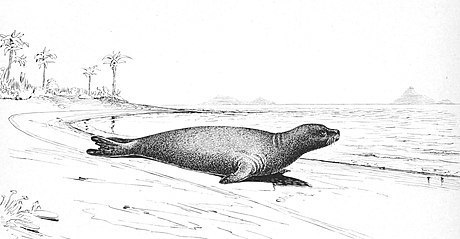
Other species in the genus Neomonachus
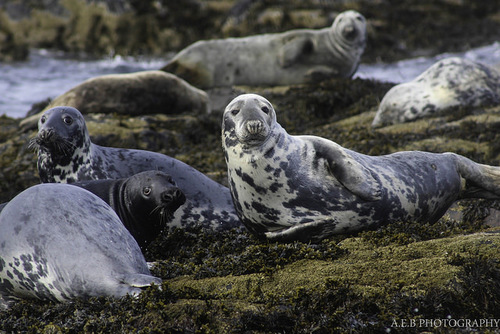
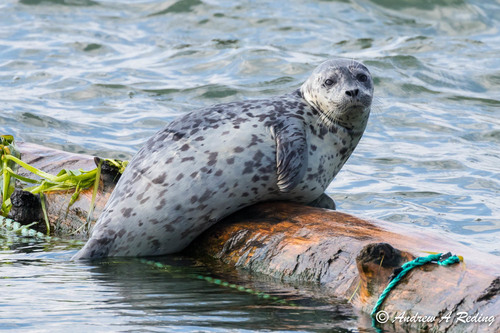
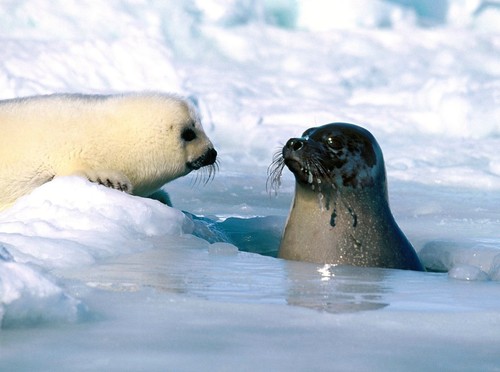
Other species in the family Phocidae
Species that share its range
Sources
Conservation status, range description and population estimate come from the IUCN Red List assessment for Neomonachus schauinslandi. Countries are derived from that range description, not from a mapped country list. Last refreshed on .
The distribution map is drawn from the IUCN Red List spatial data compiled in 2015. Charles Littnan