
European Roe Deer
Capreolus capreolus
Red List assessment
Least Concernon the IUCN Red List
- EXExtinct
- EWExtinct in the Wild
- CRCritically Endangered
- ENEndangered
- VUVulnerable
- NTNear Threatened
- LCLeast Concern
The European Roe Deer is recorded in 3 countries across Europe. The IUCN Red List assesses the European Roe Deer as Least Concern. Several million individuals across Europe; population trend is stable to increasing in most countries.
- Family
- Cervidae
- Order
- Artiodactyla
- Genus
- Capreolus
- Countries recorded
- 3
- Continents
- Europe
- Red List category
- Least Concern
- Data updated
- August 9, 2026
What is the European Roe Deer?
The European Roe Deer is a small, elegant deer species widespread throughout Europe, easily recognized by its reddish summer coat and grey winter coat. It is highly adaptable, thriving in forests, farmland, and even suburban edges. Unlike many deer, it is largely solitary or forms small groups, and males have short, upright antlers. It is one of the most common and successful wild ungulates in Europe today.
Where does the European Roe Deer live?
Widespread across most of Europe, from the British Isles to the Caucasus, and parts of the Middle East
Found throughout continental Europe from Scandinavia to the Mediterranean, including the British Isles, and extending east into parts of Russia, Anatolia, and the Caucasus. Absent from Ireland, Iceland, and most Mediterranean islands.
Altitude and depth
Sea level up to around 2000m in mountainous regions such as the Alps and Pyrenees
Seasonal movements
Not migratory, but exhibits seasonal changes in coat color (reddish-brown in summer, grey-brown in winter) and reduced activity in harsh winters; embryonic diapause delays implantation until winter.
Habitat of the European Roe Deer
Prefers deciduous and mixed forests with dense undergrowth, but also thrives in agricultural landscapes, hedgerows, and forest edges. Increasingly found in suburban parks and gardens across parts of its range.
Adaptations to its environment
Delayed implantation (embryonic diapause) allows births to be timed with spring food abundance. Its small size and agility enable it to navigate dense vegetation, while a varied diet allows adaptation to diverse habitats.
Conservation status and numbers
Least Concern (LC) according to IUCN; populations are stable or increasing across most of its range due to successful habitat adaptation and reduced hunting pressure in some areas.
Estimated population
Several million individuals across Europe; population trend is stable to increasing in most countries.
What threatens the European Roe Deer?
Localized threats include vehicle collisions, habitat fragmentation, and in some regions overhunting or poaching; disease outbreaks can also impact local populations.
Diseases and parasites
Susceptible to parasites such as liver flukes, ticks (vectors for Lyme disease), and lungworms; can also be affected by bluetongue virus in some regions.
What is being done to protect it?
Protected under various national wildlife laws and regulated hunting quotas in most European countries; not a priority conservation species due to abundant populations.
Recommended actions
Continued monitoring of population density to prevent overpopulation impacts on forests, wildlife corridor planning to reduce vehicle collisions, and sustainable hunting management.
What the European Roe Deer looks like
Reddish-brown coat in summer, turning grey-brown in winter, with a pale rump patch ("mirror") that is more visible in winter. Slender build with large ears and dark eyes, short tail almost invisible.
Size
Body length 95-135 cm; shoulder height 65-75 cm
Weight
Males (bucks) 15-30 kg; females (does) slightly lighter, 15-25 kg
Distinctive features
Distinguished from other European deer by its small size, short antlers with three points at most, and lack of a visible tail. The white rump patch shape differs between sexes and seasons.
Differences between males and females
Males have short, rugged antlers (up to 25 cm) shed and regrown annually; females are antlerless and slightly smaller with a tuft of hair instead of a penis sheath visible in males.
Behaviour and diet of the European Roe Deer
Mostly solitary or found in small family groups, especially in forested habitats; in open agricultural areas may form larger winter groups of a dozen or more individuals.
When it is active
Crepuscular, most active at dawn and dusk, though can be active at various times depending on human disturbance levels.
Diet
Herbivorous browser feeding on shoots, leaves, brambles, herbs, and agricultural crops; selective feeder favoring high-nutrient plant parts.
Communication
Uses barking alarm calls, scent marking via facial and pedal glands, and body postures such as flagging the rump patch to signal alarm to other deer.
Interactions with other species
Preyed upon by wolves, lynx, and foxes (fawns especially); competes with other herbivores like red deer for food resources in shared habitats.
Role in its ecosystem
Plays an important role as a browser affecting forest understory composition and regeneration; also serves as prey base for large carnivores in areas where they coexist.
Reproduction and lifecycle
Mating season (the rut) occurs in July-August; due to delayed implantation, embryos don't begin developing until December-January, with births occurring in May-June after around 10 months total including diapause. Typically 1-2 fawns per litter.
Raising the young
Females give birth to and raise fawns alone, hiding them in vegetation for the first few weeks before they can follow her; weaning occurs around 3 months, though fawns may remain near mother into their first year.
Maturity and lifespan
Sexual maturity around 14 months for females, slightly later for males; lifespan typically 7-10 years in the wild, up to 15 years in captivity.
Taxonomy and naming of the European Roe Deer
Classification
Class Mammalia > Order Artiodactyla > Family Cervidae > Genus Capreolus > Species Capreolus capreolus
Subspecies
Several subspecies recognized including C. c. capreolus (mainland Europe), C. c. italicus (Italy), C. c. garganta (southern Spain), and C. c. caucasicus (Caucasus region), though taxonomy remains debated.
Scientific synonyms
Cervus capreolus (Linnaeus, 1758) original classification
What research says
Recent studies
Recent studies have used GPS telemetry to reveal fine-scale habitat selection and movement ecology, showing increasing urbanization tolerance and shifts in activity patterns due to human disturbance and climate change.
Genome and DNA
Diploid chromosome number 2n=70; genetic studies have identified distinct regional lineages reflecting postglacial recolonization patterns across Europe.
Compared with similar species
Smaller and more solitary than red deer (Cervus elaphus), roe deer also differ in lacking a visible tail and having simpler antlers with fewer points; often confused with young red deer at a distance.
The European Roe Deer and people
Roe deer can leap distances of over 6 meters and are known for their unique embryonic diapause, a rare reproductive strategy among deer species. They can also swim well and sometimes cross rivers or lakes.
Where and how to see it
Best observed at dawn or dusk in forest edges or agricultural fields during spring and autumn; national parks in Germany, France, and the UK offer good sighting opportunities, especially during the rutting season in summer.
Risks to humans
No notable risk to humans directly, though they can cause vehicle collisions and agricultural crop damage in high-density areas.
Human uses
Hunted for meat (venison) and sport across much of Europe under regulated hunting seasons; also valued in wildlife tourism and photography.
Myths and legends
In European folklore, the roe deer is often associated with grace, gentleness, and the forest spirit; appears in various fairy tales as a symbol of innocence and transformation.
Countries where the European Roe Deer is recorded
The 3 countries named in the range description of its IUCN Red List assessment.
Questions about the European Roe Deer
Where does the European Roe Deer live?
The European Roe Deer is recorded in Iceland, Ireland and Russia across Europe. These countries come from the range description of its IUCN Red List assessment, and they are what place the species on the interactive map.
Is the European Roe Deer endangered?
The IUCN Red List assesses the European Roe Deer as Least Concern. The species is widespread and abundant enough not to qualify for any threatened category. It does not mean the species is safe forever, only that nothing in the current data raises an alarm.
How many are left in the wild?
Several million individuals across Europe; population trend is stable to increasing in most countries. This figure comes from the species assessment on the IUCN Red List; population estimates for wild mammals are ranges, not counts, and are revised at each assessment.
What habitat does the European Roe Deer live in?
Prefers deciduous and mixed forests with dense undergrowth, but also thrives in agricultural landscapes, hedgerows, and forest edges.
What is the scientific name of the European Roe Deer?
The European Roe Deer is Capreolus capreolus, in the family Cervidae, order Artiodactyla.
Other species in the genus Capreolus
Other species in the family Cervidae
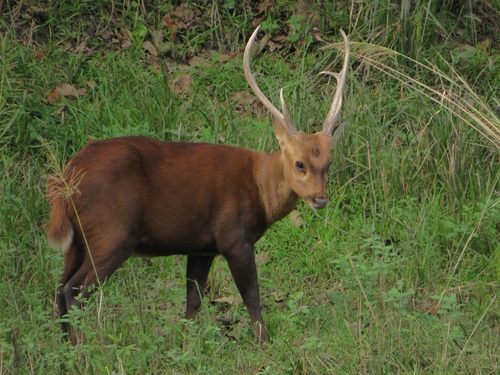
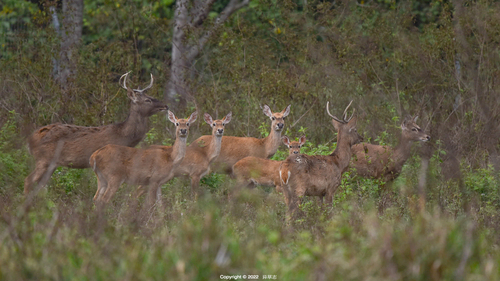
Species that share its range
Sources
Conservation status, range description and population estimate come from the IUCN Red List assessment for Capreolus capreolus. Countries are derived from that range description, not from a mapped country list. Last refreshed on .
The distribution map is drawn from the IUCN Red List spatial data compiled in 2016. IUCN (International Union for Conservation of Nature)