
Day's Grass Mouse
Akodon dayi
Red List assessment
Least Concernon the IUCN Red List
- EXExtinct
- EWExtinct in the Wild
- CRCritically Endangered
- ENEndangered
- VUVulnerable
- NTNear Threatened
- LCLeast Concern
The Day's Grass Mouse is recorded in 3 countries across South America. The IUCN Red List assesses the Day's Grass Mouse as Least Concern. No precise global population estimate is available.
- Family
- Cricetidae
- Order
- Rodentia
- Genus
- Akodon
- Countries recorded
- 3
- Continents
- South America
- Red List category
- Least Concern
- Data updated
- August 9, 2026
What is the Day's Grass Mouse?
Day's Grass Mouse is a small South American sigmodontine rodent belonging to the species-rich genus Akodon, commonly known as grass mice or field mice. It inhabits the Andean Yungas forests and adjacent montane grasslands of Bolivia, occupying a relatively restricted range along the humid eastern slopes of the Andes. Like other members of its genus, it is a terrestrial, semi-fossorial mouse adapted to dense ground-level vegetation. It is considered Least Concern by the IUCN, suggesting a relatively stable population with no immediate major threats.
Where does the Day's Grass Mouse live?
Bolivia, primarily in the Yungas region along the eastern Andean slopes, possibly extending into adjacent areas of Peru and northwestern Brazil.
Endemic or near-endemic to Bolivia, with records concentrated in the departments of Cochabamba and Santa Cruz along the eastern Andean foothills. Its range may marginally extend into adjacent regions of Peru or Brazil, but this remains poorly documented.
Altitude and depth
Typically recorded between approximately 500 and 2500 m above sea level, corresponding to the Yungas altitudinal belt on the eastern Andean slopes.
Seasonal movements
No documented seasonal migrations. Like most small Akodon rodents in the region, it is likely active year-round, with possible fluctuations in population density linked to seasonal rainfall and food availability.
Habitat of the Day's Grass Mouse
Primarily montane humid forests (Yungas) and ecotonal areas between cloud forest and high-Andean grassland (puna). It favors dense herbaceous undergrowth, leaf litter, and scrubby vegetation where ground cover provides shelter. It may also occur in secondary growth areas along forest edges.
Adaptations to its environment
Its compact, robust body and short limbs are suited for movement through dense ground vegetation and leaf litter. Dense pelage provides insulation against the cool, moist Yungas climate. Generalist dietary habits allow it to exploit variable food resources across seasons.
Conservation status and numbers
Least Concern (LC) on the IUCN Red List. The species is presumed to have a sufficiently large and stable population within its Bolivian Yungas range, with no evidence of rapid decline meeting threatened thresholds. Its habitat, though subject to ongoing pressure, still supports viable populations.
Estimated population
No precise global population estimate is available. The population trend is assumed to be stable based on IUCN LC classification, though detailed surveys are lacking.
What threatens the Day's Grass Mouse?
Habitat loss and fragmentation due to agricultural expansion, coca cultivation, logging, and road construction in the Bolivian Yungas are the primary threats. Climate change may alter cloud forest distributions and reduce suitable habitat over time.
Diseases and parasites
Like other Akodon, it is likely a host for hantaviruses (a notable concern for the genus in South America), as well as fleas, ticks, mites, and intestinal helminths. Specific parasite surveys for this species are not well documented.
What is being done to protect it?
Portions of its range fall within protected areas such as Carrasco National Park and Amboró National Park in Bolivia, which provide some degree of habitat protection. Bolivian national legislation offers general wildlife protections applicable to this species.
Recommended actions
Comprehensive field surveys to better define population size and range limits; monitoring of habitat integrity within Bolivian Yungas protected areas; strengthening enforcement against illegal deforestation in buffer zones; and taxonomic/genetic studies to clarify species boundaries.
What the Day's Grass Mouse looks like
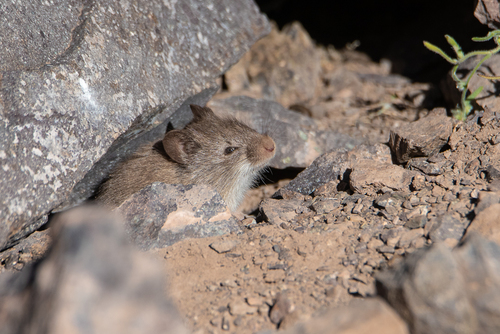
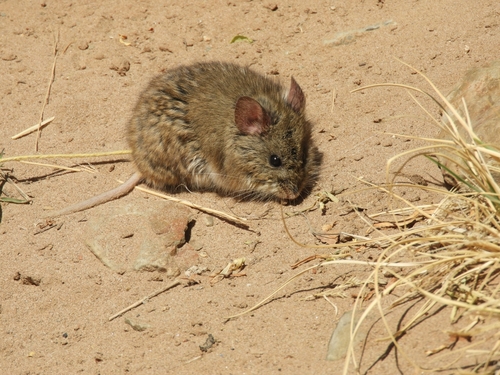
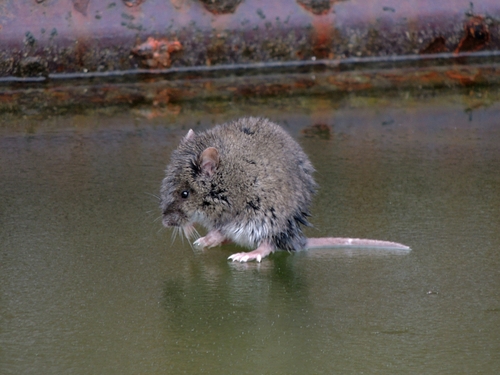
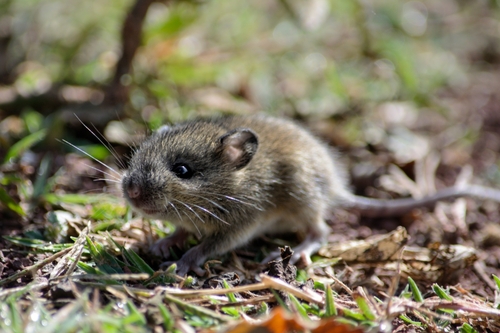
Dorsal fur is brownish to grayish-brown, often with a slightly darker mid-dorsal stripe or grizzled appearance. The ventral surface is paler, typically grayish-white or buffy. The tail is relatively short compared to body length, lightly bicolored, and sparsely haired. Ears are small and rounded.
Size
Total body length approximately 90–130 mm; tail length roughly 60–95 mm; hindfoot length approximately 18–24 mm. No significant published size data specific to this species; estimates are based on morphologically similar congeners.
Weight
Estimated 15–35 g, typical for Akodon species of similar size. No documented sexual weight dimorphism data specific to this species.
Distinctive features
Distinguished from closely related Bolivian Akodon species (e.g., Akodon boliviensis, Akodon cursor) by subtle cranial morphology, dental proportions, and molecular characters. Precise field identification requires careful measurement and often genetic analysis, as external appearance is broadly similar across the genus.
Differences between males and females
Sexual dimorphism is minimal in external appearance, as is typical for Akodon. Males may average slightly larger than females, but the difference is not diagnostically reliable in the field.
Behaviour and diet of the Day's Grass Mouse
Likely solitary or loosely social outside the breeding season, consistent with most Akodon species. Population densities can fluctuate markedly with resource availability. Territorial behavior around burrows or core foraging areas is probable.
When it is active
Primarily nocturnal to crepuscular, with most foraging activity occurring after dusk. Daytime rest periods are spent sheltering under logs, dense vegetation, or in shallow burrows.
Diet
Omnivorous; diet likely includes seeds, plant material (stems, roots, fungi), and invertebrates (insects, larvae, worms). Dietary composition probably shifts with seasonal availability of resources, as documented in closely related species.
How it feeds and hunts
Forages by actively searching through leaf litter and ground vegetation for invertebrates and seeds. May use olfactory cues to locate buried seeds or soil-dwelling invertebrates. No pursuit hunting; captures prey by pouncing or digging.
Communication
Communication likely involves ultrasonic vocalizations for mother-pup interactions, scent marking via urine and glandular secretions to demarcate territories, and tactile and visual signals during conspecific encounters.
Interactions with other species
Predated upon by owls (e.g., Tyto alba, Strix species), snakes, and small felids (e.g., Oncilla). Competes with sympatric rodents such as other Akodon species and Oligoryzomys for food and microhabitat. May serve as host for ectoparasites and endoparasites shared with other small mammals in the Yungas community.
Role in its ecosystem
Plays a role as a seed disperser and consumer of invertebrates in the Yungas forest ecosystem. As prey for raptors and carnivores, it functions as an important link in the local food web. Its burrowing activity may contribute modestly to soil aeration.
Reproduction and lifecycle
Breeding likely peaks during the warmer, wetter months (austral spring and summer, approximately October–March), consistent with other Andean Akodon. Gestation is approximately 20–23 days in the genus. Litter size is typically 2–6 pups.
Raising the young
The female is the primary caregiver, nursing and protecting pups in a nest. Young are altricial at birth (eyes closed, hairless) and are weaned at approximately 14–21 days. Males show little to no direct parental involvement, as is typical in the genus.
Maturity and lifespan
Sexual maturity is typically reached at 2–3 months of age in Akodon species. Lifespan in the wild is estimated at 1–2 years; captive individuals may live up to 3–4 years under optimal conditions.
Taxonomy and naming of the Day's Grass Mouse
Classification
Mammalia > Rodentia > Cricetidae (subfamily Sigmodontinae) > Akodon > Akodon dayi
Scientific synonyms
Originally described by Osgood in 1916; no widely recognized synonyms, though earlier specimens may have been attributed to related Akodon taxa before formal species delimitation.
What research says
Recent studies
Molecular phylogenetic studies of the Akodon boliviensis species group have helped clarify the taxonomic status and boundaries of A. dayi relative to closely related taxa in the eastern Andean foothills. No landmark discoveries specific to this species have been widely published as of 2023.
Genome and DNA
The Akodon genus is renowned for remarkable karyotypic variability, including cases of XY females in some species. The chromosome number for A. dayi has not been extensively published; diploid numbers across the genus range from 2n=10 to 2n=44. Genetic studies placing A. dayi within Akodon phylogenies have been limited.
Compared with similar species
Akodon dayi is most similar to Akodon boliviensis and Akodon sylvanus, which share overlapping or adjacent ranges in Bolivian montane habitats. It is distinguished primarily by cranial measurements and molecular markers. The broader Akodon genus (~40 species) is one of the most speciose mammalian genera in South America.
The Day's Grass Mouse and people
The Akodon genus contains some of the only mammal species in the world where a significant proportion of genetic females carry an XY sex chromosome pair rather than XX — a phenomenon linked to a non-functional Y chromosome variant. Day's Grass Mouse shares its Yungas home with an extraordinary diversity of endemic species, making the Bolivian cloud forest one of the world's most biodiverse regions per unit area. Despite being relatively understudied, A. dayi has contributed to broader understanding of Andean small mammal biogeography.
Where and how to see it
Best observed during nocturnal surveys in the Yungas forests of central Bolivia (e.g., around Carrasco National Park or the Chapare region) using live-trapping with Sherman traps baited with oats, peanut butter, or seeds. The rainy season (November–March) tends to coincide with higher activity and population peaks. A permit from Bolivian wildlife authorities is required for trapping surveys.
Risks to humans
No notable direct risk to humans. As with other wild rodents in South America, there is a theoretical risk of hantavirus exposure through contact with urine, feces, or saliva; standard precautions (gloves, masks) are advised when handling wild individuals.
Countries where the Day's Grass Mouse is recorded
The 3 countries named in the range description of its IUCN Red List assessment.
Questions about the Day's Grass Mouse
Where does the Day's Grass Mouse live?
The Day's Grass Mouse is recorded in Bolivia, Brazil and Peru across South America. These countries come from the range description of its IUCN Red List assessment, and they are what place the species on the interactive map.
Is the Day's Grass Mouse endangered?
The IUCN Red List assesses the Day's Grass Mouse as Least Concern. The species is widespread and abundant enough not to qualify for any threatened category. It does not mean the species is safe forever, only that nothing in the current data raises an alarm.
How many are left in the wild?
No precise global population estimate is available. This figure comes from the species assessment on the IUCN Red List; population estimates for wild mammals are ranges, not counts, and are revised at each assessment.
What habitat does the Day's Grass Mouse live in?
Primarily montane humid forests (Yungas) and ecotonal areas between cloud forest and high-Andean grassland (puna).
What is the scientific name of the Day's Grass Mouse?
The Day's Grass Mouse is Akodon dayi, in the family Cricetidae, order Rodentia.
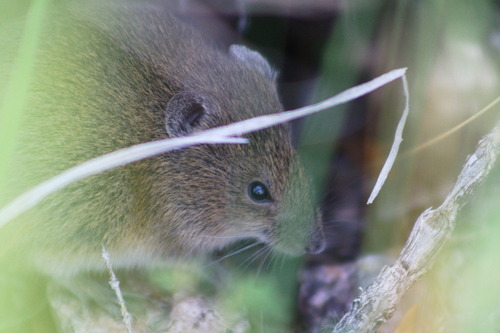
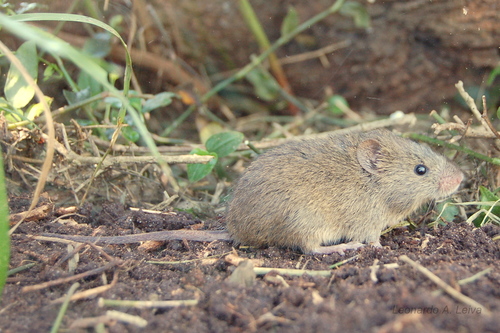
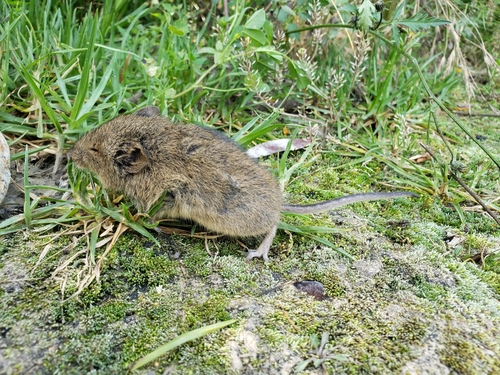
Other species in the genus Akodon

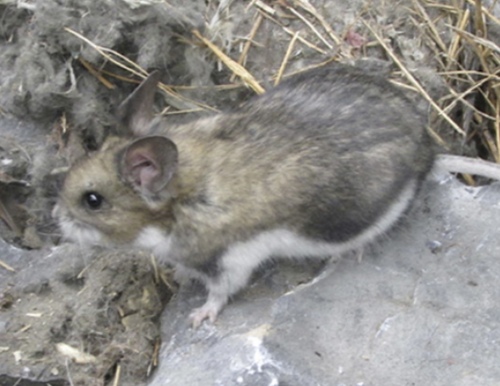
Other species in the family Cricetidae
Sources
Conservation status, range description and population estimate come from the IUCN Red List assessment for Akodon dayi. Countries are derived from that range description, not from a mapped country list. Last refreshed on .
The distribution map is drawn from the IUCN Red List spatial data compiled in 2008. IUCN (International Union for Conservation of Nature)