
Chaco Grass Mouse
Akodon toba
Red List assessment
Least Concernon the IUCN Red List
- EXExtinct
- EWExtinct in the Wild
- CRCritically Endangered
- ENEndangered
- VUVulnerable
- NTNear Threatened
- LCLeast Concern
The Chaco Grass Mouse is recorded in 3 countries across South America. The IUCN Red List assesses the Chaco Grass Mouse as Least Concern. No precise global population estimate exists.
- Family
- Cricetidae
- Order
- Rodentia
- Genus
- Akodon
- Countries recorded
- 3
- Continents
- South America
- Red List category
- Least Concern
- Data updated
- August 9, 2026
What is the Chaco Grass Mouse?
Akodon toba is a small, terrestrial rodent belonging to the South American grass mice genus Akodon, one of the most species-rich rodent genera in the Neotropics with over 40 recognized species. It inhabits the dry forests, shrublands, and grasslands of the Gran Chaco — one of South America's largest seasonal dry forest ecosystems covering over one million km². The species is named after the Toba (Qom) people, an indigenous group historically inhabiting the Gran Chaco. Despite being relatively little-studied, it is considered common within its range and is classified as Least Concern by the IUCN.
Where does the Chaco Grass Mouse live?
Found in the Gran Chaco region of South America, primarily in western Paraguay, southeastern Bolivia, and northern Argentina (provinces of Chaco, Formosa, Salta, Jujuy, and Santiago del Estero).
Distributed across the Gran Chaco lowlands: western and central Paraguay (Boquerón and Presidente Hayes departments), southeastern Bolivia (departments of Santa Cruz, Chuquisaca, and Tarija), and northern Argentina (provinces of Chaco, Formosa, Salta, Jujuy, and Santiago del Estero).
Altitude and depth
Primarily found at low to moderate elevations, typically from near sea level up to approximately 1,000 m in Andean foothills. The core of its range lies in the lowland Chaco plains at roughly 100–500 m elevation.
Seasonal movements
No known long-distance migrations. Population densities likely fluctuate seasonally in response to the Gran Chaco's pronounced wet (November–March) and dry (April–October) seasons. Breeding activity probably peaks during the wet season when food and vegetative cover are most abundant.
Habitat of the Chaco Grass Mouse
Primarily inhabits dry thorn forests, xerophytic shrublands, open grasslands, and gallery forests of the Gran Chaco ecosystem. It is frequently associated with disturbed habitats, agricultural margins, and areas with dense herbaceous ground cover including native grasses and low shrubs characteristic of the Chaco.
Adaptations to its environment
Generalist dietary habits allow exploitation of diverse food sources in a highly seasonal environment. Its compact, robust body and terrestrial lifestyle are well suited to navigating dense shrub and grass cover. Presumed physiological tolerance to the extreme heat (summer temperatures regularly exceeding 45 °C) and prolonged seasonal drought characteristic of the Gran Chaco.
Conservation status and numbers
Listed as Least Concern (LC) on the IUCN Red List. The species has a broad distribution across the Gran Chaco, is presumably locally abundant in suitable habitats, and demonstrates tolerance of moderate habitat disturbance. No population decline approaching threatened thresholds has been documented.
Estimated population
No precise global population estimate exists. The species is considered locally common across its range; population trend is presumed stable overall, though underlying deforestation pressures in the Gran Chaco are likely causing localized and ongoing declines in some areas.
What threatens the Chaco Grass Mouse?
The primary threat is large-scale deforestation and land conversion in the Gran Chaco for cattle ranching and soybean agriculture — this region has one of the highest deforestation rates globally, losing over 500,000 ha of native vegetation per year. Habitat fragmentation reduces population connectivity, and intensive pesticide use in agricultural zones may reduce invertebrate food resources.
Diseases and parasites
Like other Akodon species, it may serve as a reservoir host for hantaviruses and other rodent-borne zoonotic pathogens circulating in the Gran Chaco. Ectoparasites (fleas, mites, ticks) and endoparasites (cestodes, nematodes) are expected based on data from closely related species; species-specific parasitological data for A. toba are limited.
What is being done to protect it?
The species is present in several protected areas within its range, including Gran Chaco National Park (Bolivia), Kaa-Iya del Gran Chaco National Park (Bolivia), and Argentine national parks such as El Rey and Copo. No species-specific conservation programs are known; it benefits indirectly from broader Gran Chaco biome conservation initiatives.
Recommended actions
Priority actions include systematic population monitoring across the range, expansion and strengthened enforcement of protected areas to curb Chaco deforestation, further taxonomic clarification using molecular tools, and ecological studies to quantify sensitivity to habitat degradation.
What the Chaco Grass Mouse looks like
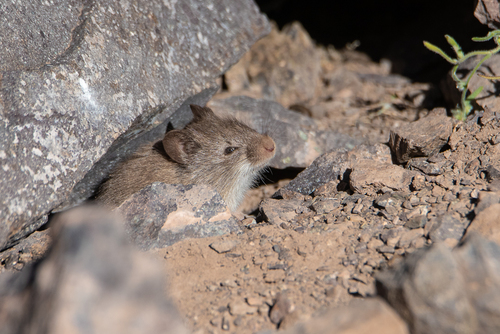
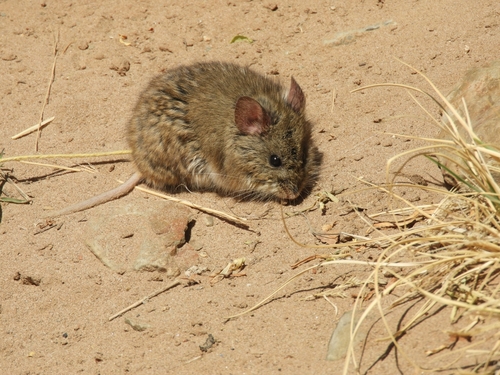
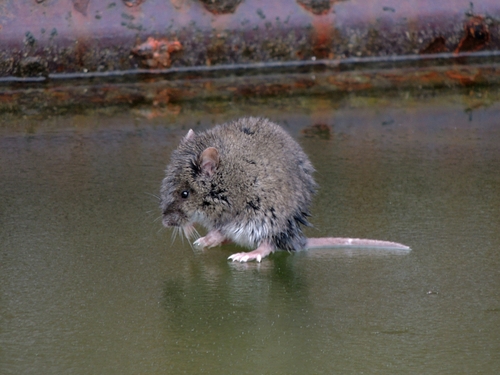
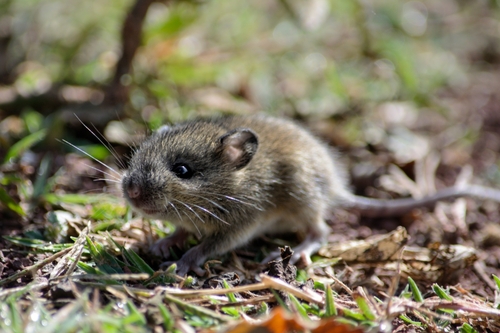
Dorsal pelage is brownish to grayish-brown, often with a darker mid-dorsal suffusion; ventral fur is paler grayish or buffy-white. The tail is bicolored (darker above, paler below) and moderately haired. Ears are rounded and moderate in size; the muzzle is blunt and the vibrissae are well developed.
Size
Head-body length approximately 90–120 mm; tail length approximately 65–95 mm, notably shorter than the body. A compact, medium-small mouse typical of the Akodon genus.
Weight
Typically 20–40 g. Limited published data suggest no strong sexual size dimorphism, though males may average slightly heavier than females.
Distinctive features
Distinguished from sympatric Akodon species such as A. simulator by subtle differences in cranial morphology (e.g., dimensions of the braincase and zygomatic arches), dental proportions, and pelage tone. Molecular (genetic) analysis is often necessary for definitive identification in zones of sympatry.
Differences between males and females
Sexual dimorphism is minimal; males may be slightly heavier than females on average. No notable differences in coloration, pelage pattern, or external morphology between sexes.
Behaviour and diet of the Chaco Grass Mouse
Presumed to be largely solitary outside the breeding season, as is typical of Akodon grass mice. Individuals maintain exclusive or partially overlapping home ranges; males likely patrol larger areas than females, particularly during the breeding season.
When it is active
Primarily nocturnal and crepuscular, with peak foraging activity occurring after dusk. Like most small Neotropical sigmodontine rodents, it likely rests in burrows or dense ground vegetation during the intense midday heat.
Diet
Omnivorous; diet consists of seeds, green plant material, fruits, and invertebrates (insects, larvae, and other arthropods). Dietary emphasis likely shifts seasonally — more plant matter and seeds during the dry season, more invertebrates during the wet season when arthropod abundance peaks.
How it feeds and hunts
Forages terrestrially, using olfaction and highly sensitive vibrissae to locate seeds and invertebrates within soil, leaf litter, and grasses. It likely gleans insects from the ground surface and probes loose substrate with its snout.
Communication
Communicates through ultrasonic vocalizations (especially between mothers and pups), urine-based scent marking, and glandular secretions used for territory delineation and mate attraction. Tactile signals (grooming, contact) are likely important in reproductive contexts.
Interactions with other species
Predated upon by nocturnal raptors (e.g., Barn Owl Tyto alba, Burrowing Owl Athene cunicularia), pit vipers, and small to medium carnivorous mammals (Lycalopex foxes, Galictis mustelids). Competes for food resources with sympatric small rodents such as Calomys laucha and Oligoryzomys species. May contribute modestly to seed dispersal.
Role in its ecosystem
Functions as a secondary consumer, seed predator, and incidental seed disperser within the Gran Chaco food web. Serves as a critical prey base for higher-order predators, supporting ecosystem stability. Its burrowing and foraging activity contributes to soil aeration and nutrient cycling.
Reproduction and lifecycle
Breeding peaks during the austral wet season (November–March). Gestation period for Akodon species is approximately 23–25 days. Litter sizes typically range from 2 to 6 altricial young. Multiple litters per year are possible under favorable resource conditions.
Raising the young
Young are born hairless and helpless; they are raised in a concealed grass or soil nest by the female. Paternal investment is not well documented in Akodon. Weaning occurs at approximately 2–3 weeks, after which juveniles rapidly attain independence.
Maturity and lifespan
Sexual maturity is reached at approximately 2–3 months of age, typical for the genus. Wild lifespan is estimated at 1–2 years due to high predation pressure; captive individuals of congeners have lived up to 3–4 years under optimal conditions.
Taxonomy and naming of the Chaco Grass Mouse
Classification
Mammalia > Rodentia > Cricetidae (subfamily Sigmodontinae) > Akodon > Akodon toba Thomas, 1921
Scientific synonyms
Described by Oldfield Thomas in 1921; sometimes treated in older literature as a subspecies or close relative within the Akodon varius species group, occasionally cited as Akodon varius toba. Current taxonomy recognizes it as a distinct species.
What research says
Recent studies
Phylogenetic studies of the Akodon varius species group have helped clarify the systematic placement of A. toba within the genus. Broader molecular phylogenies of the subfamily Sigmodontinae have confirmed deep diversification of Akodon across South American biomes. However, A. toba itself remains one of the less intensively studied species in the genus.
Genome and DNA
Specific karyotype data for Akodon toba are not well documented in the literature. The genus Akodon is notable for high chromosomal diversity across species; some members exhibit a remarkable XY sex-chromosome system in phenotypically normal females. Chromosome number for A. toba likely falls within the 2n = 38–44 range typical of the genus, but confirmation is lacking.
Compared with similar species
Akodon toba is closely related to A. simulator and A. varius — all members of the Akodon varius group occupying xeric lowland habitats of central South America. It differs ecologically from high-Andean congeners (e.g., A. boliviensis, A. cursor) by its restriction to lowland dry Chaco environments rather than montane grasslands.
The Chaco Grass Mouse and people
1) The Gran Chaco is the second-largest forest ecosystem in South America after the Amazon, and Akodon toba is among scores of small mammal species found almost exclusively within this remarkable wilderness. 2) The genus Akodon is one of the most species-rich rodent genera on Earth, having diversified explosively across virtually every South American biome. 3) Some Akodon species possess phenotypically normal females with XY sex chromosomes — one of the most startling exceptions to the canonical mammalian sex-determination system ever documented.
Where and how to see it
Best sought in Kaa-Iya del Gran Chaco National Park (Bolivia) or Argentine Chaco reserves (e.g., Copo National Park) during the wet season (November–March) at dusk and at night. Sherman-type live traps baited with oats or peanut butter, placed along vegetated ground trails or shrub edges at 10 m intervals, are the standard field method used by researchers to detect this species.
Risks to humans
No notable direct risk to humans. As with other wild rodents in the Gran Chaco, there is a theoretical zoonotic risk (e.g., hantavirus) through contact with urine, feces, saliva, or bites; handling of wild individuals should be performed using gloves and appropriate biosafety precautions.
Human uses
No known direct human use for food, medicine, or trade. The species has been used as a subject in systematic, biogeographic, and phylogenetic research contributing to broader understanding of South American rodent evolution and Chaco biodiversity.
Myths and legends
No specific myths are formally recorded for Akodon toba itself. However, the species' namesake — the Toba (Qom) people of the Gran Chaco — maintain rich oral traditions in which small animals of the Chaco, including rodents, embody qualities of cunning, resourcefulness, and endurance in the face of harsh conditions.
Countries where the Chaco Grass Mouse is recorded
The 3 countries named in the range description of its IUCN Red List assessment.
Questions about the Chaco Grass Mouse
Where does the Chaco Grass Mouse live?
The Chaco Grass Mouse is recorded in Argentina, Bolivia and Paraguay across South America. These countries come from the range description of its IUCN Red List assessment, and they are what place the species on the interactive map.
Is the Chaco Grass Mouse endangered?
The IUCN Red List assesses the Chaco Grass Mouse as Least Concern. The species is widespread and abundant enough not to qualify for any threatened category. It does not mean the species is safe forever, only that nothing in the current data raises an alarm.
How many are left in the wild?
No precise global population estimate exists. This figure comes from the species assessment on the IUCN Red List; population estimates for wild mammals are ranges, not counts, and are revised at each assessment.
What habitat does the Chaco Grass Mouse live in?
Primarily inhabits dry thorn forests, xerophytic shrublands, open grasslands, and gallery forests of the Gran Chaco ecosystem.
What is the scientific name of the Chaco Grass Mouse?
The Chaco Grass Mouse is Akodon toba, in the family Cricetidae, order Rodentia.
Other species in the genus Akodon

Other species in the family Cricetidae
Sources
Conservation status, range description and population estimate come from the IUCN Red List assessment for Akodon toba. Countries are derived from that range description, not from a mapped country list. Last refreshed on .
The distribution map is drawn from the IUCN Red List spatial data compiled in 2008. IUCN (International Union for Conservation of Nature)