
Cape Dune Mole Rat
Bathyergus suillus
Red List assessment
Least Concernon the IUCN Red List
- EXExtinct
- EWExtinct in the Wild
- CRCritically Endangered
- ENEndangered
- VUVulnerable
- NTNear Threatened
- LCLeast Concern
The Cape Dune Mole Rat is recorded in one country, South Africa across Africa. The IUCN Red List assesses the Cape Dune Mole Rat as Least Concern. No precise global population estimate exists, but the species is considered locally common within suitable habitat; overall population trend is thought to be stable to slightly declining due to habitat loss.
- Family
- Bathyergidae
- Order
- Rodentia
- Genus
- Bathyergus
- Countries recorded
- 1
- Continents
- Africa
- Red List category
- Least Concern
- Data updated
- August 9, 2026
What is the Cape Dune Mole Rat?
The Cape dune mole rat is the largest species of African mole rat, a strictly subterranean rodent endemic to the sandy coastal regions of the Western Cape, South Africa. It is remarkable for its digging prowess, using powerful foreclaws rather than teeth to excavate extensive burrow systems in loose sandy soils. Unlike some other mole rat species, it is solitary rather than eusocial. Its large size and restriction to coastal dune and sandy habitats make it ecologically distinctive among African mole rats.
Where does the Cape Dune Mole Rat live?
South Africa, restricted to the Western Cape and southwestern Cape coastal regions
Endemic to a narrow coastal strip of the Western Cape Province, South Africa, extending from around Lambert's Bay in the north to the Cape Peninsula and eastward towards Mossel Bay.
Altitude and depth
Occurs at low elevations near sea level up to a few hundred meters; burrows typically 10-30 cm below the surface with deeper nest chambers up to 1 meter.
Seasonal movements
Breeding and above-ground foraging activity (e.g., pushing soil mounds) tends to increase after rains when soil is easier to dig and vegetation growth peaks, particularly in the wetter winter months.
Habitat of the Cape Dune Mole Rat
Inhabits sandy coastal lowlands, dunes, and sandy agricultural fields (particularly vineyards and pastures) within the fynbos biome. Requires loose, well-drained sandy substrates suitable for burrowing.
Adaptations to its environment
Possesses enormous foreclaws and strong forelimbs for digging in sand rather than using teeth like many other mole rats. Reduced eyes and ears, a cylindrical body, and dense fur are adaptations to a fossorial lifestyle. Its large body size may also aid in maintaining efficient burrow systems in loose sandy soil.
Conservation status and numbers
Listed as Least Concern by the IUCN due to a relatively wide distribution within its endemic range and tolerance of some agricultural habitats, though it faces localized declines from habitat transformation.
Estimated population
No precise global population estimate exists, but the species is considered locally common within suitable habitat; overall population trend is thought to be stable to slightly declining due to habitat loss.
What threatens the Cape Dune Mole Rat?
Habitat loss and fragmentation due to urban development, agriculture, and coastal infrastructure expansion in the Western Cape. Considered an agricultural pest in some areas, leading to control/culling efforts.
Diseases and parasites
Specific data limited, but like other subterranean rodents it may host ectoparasites (mites, fleas) adapted to burrow environments.
What is being done to protect it?
Occurs within several protected areas in the Western Cape including nature reserves and national parks that preserve fynbos and coastal habitat. No species-specific conservation programs are known, given its Least Concern status.
Recommended actions
Monitor population trends in agricultural landscapes, mitigate human-wildlife conflict through non-lethal control methods, and protect remaining natural sandy habitat from urban and agricultural expansion.
What the Cape Dune Mole Rat looks like
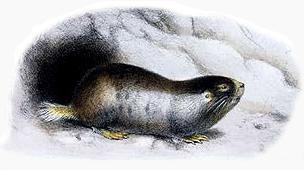
Robust, cylindrical body covered in short, dense, grayish-brown to blackish fur. Small eyes, no external ears, and a short tail. Large, prominent orange-colored incisors are visible but not primarily used for digging.
Size
Body length approximately 20-27 cm, making it the largest African mole rat species.
Weight
Adults typically weigh between 500-830 grams, with males generally larger than females.
Distinctive features
Distinguished from other African mole rats by its much larger size and by digging primarily with its large foreclaws rather than its teeth, unlike genera such as Cryptomys or Fukomys.
Differences between males and females
Males are generally larger and heavier than females, though external differences are otherwise subtle.
Behaviour and diet of the Cape Dune Mole Rat
Solitary and highly territorial outside of breeding encounters; each individual maintains and defends its own burrow system, aggressively excluding conspecifics.
When it is active
Primarily active both day and night within its burrow system, with activity patterns influenced more by soil conditions and foraging needs than by light cycles, since it lives almost entirely underground.
Diet
Herbivorous, feeding on roots, bulbs, tubers, and underground plant storage organs encountered while burrowing; also consumes some above-ground vegetation pulled down into burrow entrances.
Communication
Communicates primarily through vibrational signals (foot drumming) transmitted through burrow walls, as well as vocalizations during aggressive encounters or mating; scent marking may also play a role in territory delineation.
Interactions with other species
Preyed upon occasionally by mole snakes, birds of prey, and mammalian predators when surfacing or during dispersal; competes indirectly with other burrowing rodents for food and space in shared habitats.
Role in its ecosystem
As a burrowing herbivore, it plays a role in soil aeration and turnover in sandy coastal ecosystems, and its burrow systems can influence local plant community structure and provide shelter for other small organisms.
Reproduction and lifecycle
Breeding season is linked to the wetter winter months when soil is soft; gestation lasts about 40 days, with litters typically of 2-5 pups born in an underground nest chamber.
Raising the young
Females raise the young alone in the nest chamber; pups are weaned after several weeks and eventually disperse to establish their own separate burrow systems, as adults do not tolerate cohabitation.
Maturity and lifespan
Sexual maturity is reached at around 1 year of age; lifespan in the wild is estimated at several years, potentially longer in captivity, though precise figures are not well documented.
Taxonomy and naming of the Cape Dune Mole Rat
Classification
Mammalia > Rodentia > Bathyergidae > Bathyergus > Bathyergus suillus
Scientific synonyms
Georychus suillus (original combination by Schreber, 1782)
What research says
Recent studies
Recent research on African mole rats has focused on comparative physiology of burrowing rodents, including thermoregulation and energy efficiency in fossorial species like Bathyergus suillus.
Genome and DNA
Limited specific genomic studies are available, though Bathyergidae as a family has been used in comparative studies of longevity and hypoxia tolerance genetics.
Compared with similar species
Compared to the smaller Cape mole rat (Georychus capensis) and common mole rat (Cryptomys hottentotus), Bathyergus suillus is notably larger and relies on claw-digging rather than tooth-digging, distinguishing its burrowing ecology and morphology.
The Cape Dune Mole Rat and people
It is the largest species of African mole rat, capable of moving substantial amounts of sand to create extensive burrow systems visible as mounds on the surface. Despite living almost entirely underground, it can dig burrows spanning hundreds of meters over its lifetime.
Where and how to see it
Rarely seen above ground; the best way to detect its presence is by observing fresh sand mounds in coastal dune areas or vineyards in the Western Cape, especially after rains when digging activity increases.
Risks to humans
No notable risk to humans; it does not bite or transmit disease to people, though it can cause agricultural damage to root crops and vineyards.
Human uses
Not used for food, medicine, or trade; historically considered an agricultural pest in vineyards and pastures, sometimes subject to control measures by farmers.
Countries where the Cape Dune Mole Rat is recorded
The 1 countries named in the range description of its IUCN Red List assessment.
Questions about the Cape Dune Mole Rat
Where does the Cape Dune Mole Rat live?
The Cape Dune Mole Rat is recorded in South Africa across Africa. These countries come from the range description of its IUCN Red List assessment, and they are what place the species on the interactive map.
Is the Cape Dune Mole Rat endangered?
The IUCN Red List assesses the Cape Dune Mole Rat as Least Concern. The species is widespread and abundant enough not to qualify for any threatened category. It does not mean the species is safe forever, only that nothing in the current data raises an alarm.
How many are left in the wild?
No precise global population estimate exists, but the species is considered locally common within suitable habitat; overall population trend is thought to be stable to slightly declining due to habitat loss. This figure comes from the species assessment on the IUCN Red List; population estimates for wild mammals are ranges, not counts, and are revised at each assessment.
What habitat does the Cape Dune Mole Rat live in?
Inhabits sandy coastal lowlands, dunes, and sandy agricultural fields (particularly vineyards and pastures) within the fynbos biome.
What is the scientific name of the Cape Dune Mole Rat?
The Cape Dune Mole Rat is Bathyergus suillus, in the family Bathyergidae, order Rodentia.
Other species in the genus Bathyergus
Other species in the family Bathyergidae
Species that share its range
Sources
Conservation status, range description and population estimate come from the IUCN Red List assessment for Bathyergus suillus. Countries are derived from that range description, not from a mapped country list. Last refreshed on .
The distribution map is drawn from the IUCN Red List spatial data compiled in 2017. IUCN (International Union for Conservation of Nature)