
Striped Field Mouse
Apodemus agrarius
Red List assessment
Least Concernon the IUCN Red List
- EXExtinct
- EWExtinct in the Wild
- CRCritically Endangered
- ENEndangered
- VUVulnerable
- NTNear Threatened
- LCLeast Concern
The Striped Field Mouse is recorded in 15 countries across Asia and Europe. The IUCN Red List assesses the Striped Field Mouse as Least Concern. No precise global estimate exists, but the species is considered one of the most abundant small mammals in Eurasia.
- Family
- Muridae
- Order
- Rodentia
- Genus
- Apodemus
- Countries recorded
- 15
- Continents
- Asia and Europe
- Red List category
- Least Concern
- Data updated
- August 9, 2026
What is the Striped Field Mouse?
The Striped Field Mouse is a small, agile rodent belonging to the family Muridae, instantly recognizable by its prominent black dorsal stripe running from the nape to the base of the tail. It inhabits a wide variety of open and semi-open habitats across the Palearctic, ranging from agricultural fields and meadows to forest edges and gardens. It is one of the most abundant small mammals in European agricultural landscapes and plays a crucial ecological role as both seed predator and prey. It is also medically significant as a primary reservoir host for Dobrava-Belgrade hantavirus in Eastern Europe.
Where does the Striped Field Mouse live?
Widely distributed across Europe and Asia, from Central Europe (Germany, Poland, Czech Republic, Hungary, Romania) eastward through Russia, Ukraine, Belarus, Kazakhstan, China, the Korean Peninsula, and Taiwan.
Range extends from Central and Eastern Europe (Germany, Austria, Switzerland, Poland, Czech Republic, Slovakia, Hungary, Romania, Ukraine, Belarus, Baltic states) across Russia and Central Asia to China, Mongolia, the Korean Peninsula, and Taiwan. An isolated or introduced population exists in some western European regions. Northern range limit reaches approximately 60°N in Scandinavia and Russia.
Altitude and depth
Typically found from sea level up to approximately 2,000 m in mountainous regions of Central Asia and China; most abundant at lowland altitudes in agricultural plains.
Seasonal movements
Does not hibernate; remains active year-round but significantly reduces surface activity during harsh winters. Population sizes fluctuate dramatically between seasons, with peaks in late summer and autumn following the breeding season. In autumn, individuals move toward buildings and haystacks seeking warmth and food stores.
Habitat of the Striped Field Mouse
Primarily inhabits arable farmland, grain fields, meadows, forest margins, hedgerows, orchards, and parks. It shows a strong preference for open and edge habitats with dense ground cover and is frequently found in anthropogenic landscapes. It avoids dense closed-canopy forests but may enter woodland edges, especially in autumn.
Adaptations to its environment
Constructs elaborate burrow systems for shelter, food storage, and reproduction, providing insulation against temperature extremes. Its generalist omnivorous diet allows exploitation of abundant seasonal resources such as grain harvests. The relatively short tail (shorter than body length) compared to other Apodemus species may be an adaptation to temperate, ground-dwelling life. Fat reserves built up in autumn help it survive food-scarce winter periods.
Conservation status and numbers
Least Concern (LC) on the IUCN Red List. The species has an extremely wide range, high reproductive rate, large and stable overall population, and tolerates human-modified habitats well. No significant range-wide decline has been documented.
Estimated population
No precise global estimate exists, but the species is considered one of the most abundant small mammals in Eurasia. Population densities can reach 50–150 individuals per hectare in optimal habitats. Overall population trend is stable, with local fluctuations linked to agricultural cycles.
What threatens the Striped Field Mouse?
Local threats include intensive agricultural practices (pesticide use, habitat homogenization), rodenticide use in farmland management, and predation by domestic cats. Climate change may alter population dynamics and disease vector interactions. Not considered globally threatened.
Diseases and parasites
Primary reservoir host for Dobrava-Belgrade hantavirus (DOBV), which can cause hemorrhagic fever with renal syndrome (HFRS) in humans. Also implicated as a host for Leptospira spp. (leptospirosis), tick-borne encephalitis virus, and Borrelia burgdorferi (Lyme disease agent). Commonly parasitized by fleas (Ctenocephalides spp., Nosopsyllus fasciatus), ticks (Ixodes ricinus), mites (Laelaps spp.), and various internal helminths (tapeworms, nematodes).
What is being done to protect it?
No specific conservation programs are required or implemented given its Least Concern status. It is monitored as part of broader small mammal biodiversity surveys across Europe. In some countries it is managed as an agricultural pest rather than a conservation concern.
Recommended actions
Continued monitoring of population trends and hantavirus prevalence is recommended for public health purposes. Maintaining habitat heterogeneity in agricultural landscapes benefits predators that regulate its populations naturally. Reduction of indiscriminate rodenticide use would benefit both the species and associated raptors.
What the Striped Field Mouse looks like
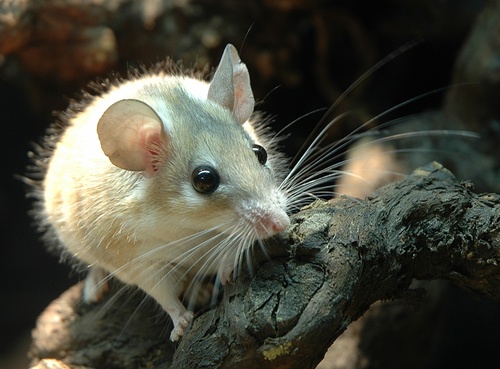
The back is reddish-brown to sandy-brown with a conspicuous black stripe running along the entire dorsal midline from the neck to the tail base. The flanks are pale ochre and the underside is clean white or pale grey. The ears are moderately sized and rounded, the eyes are small and dark, and the muzzle is pointed. The tail is bicolored, darker above and paler below.
Size
Body length 95–130 mm; tail length 65–110 mm (notably shorter than body length); hind foot 17–21 mm; ear length 13–17 mm.
Weight
Typically 14–35 g; adults in autumn may reach up to 40 g due to fat accumulation. Slight sexual size dimorphism exists but is minor.
Distinctive features
The bold, continuous black dorsal stripe is the most diagnostic feature, immediately distinguishing it from all other European Apodemus species (A. sylvaticus, A. flavicollis, A. uralensis), none of which bear this stripe. It also has a shorter tail relative to body length compared to A. sylvaticus and A. flavicollis.
Differences between males and females
Minimal; males are slightly larger on average than females. Both sexes share identical coloration and external morphology. Reproductive females develop prominent nipples during lactation.
Behaviour and diet of the Striped Field Mouse
Broadly solitary outside the breeding season, though overlapping home ranges are common in high-density populations. Territorial behavior is observed around burrow systems, particularly in males. During winter, small groups may share burrows or haystacks for warmth, displaying facultative social tolerance.
When it is active
Primarily nocturnal and crepuscular, with peak activity shortly after dusk and before dawn. Activity levels are greatly reduced in cold weather and near-zero temperatures. Individuals may briefly forage during daylight hours in undisturbed environments or during late autumn when food caching is intensive.
Diet
Omnivorous; the diet includes seeds (especially cereal grains, grass seeds, tree seeds), green plant material, fungi, invertebrates (insects, earthworms, larvae), and occasionally small vertebrates. Seeds and grains dominate the diet, especially in autumn when large quantities are cached in underground food stores for winter use.
How it feeds and hunts
Forages by searching the ground, litter layer, and low vegetation for seeds, invertebrates, and plant matter. Uses its sensitive vibrissae and olfaction to locate buried seeds and invertebrates. Invertebrates are caught by quick pouncing movements. Food is transported to burrow caches in cheek pouches.
Communication
Produces ultrasonic vocalizations for mother-pup communication and during mating encounters. Scent marking using urine, feces, and secretions from specialized glands is used to demarcate territories and communicate reproductive status. Threat and submission postures are used in intraspecific encounters.
Interactions with other species
Key prey species for a wide range of predators including barn owls (Tyto alba), tawny owls (Strix aluco), common buzzards (Buteo buteo), foxes (Vulpes vulpes), stoats, weasels, and domestic cats. Competes with other Apodemus species and Microtus voles for food resources. Functions as a primary reservoir and amplifying host for Dobrava-Belgrade hantavirus (DOBV) and has been implicated in tick-borne pathogen transmission.
Role in its ecosystem
Acts as an important seed predator and disperser in agricultural and edge habitats, influencing plant regeneration dynamics. As a high-abundance prey species, it forms a critical link in food webs supporting numerous predatory birds and mammals. Its role as a hantavirus reservoir makes it a key species in zoonotic disease ecology.
Reproduction and lifecycle
Breeding season extends from April to October–November, sometimes earlier in mild years. Gestation period is approximately 19–21 days. Litter size ranges from 3 to 9 (average 5–6). Females can produce 3–5 litters per year. Young are born altricial (blind, hairless, helpless).
Raising the young
Females provide all parental care; males do not participate in raising young. The mother nurses the pups in the nest within the burrow for approximately 3 weeks, after which the young are weaned. Young disperse from the natal burrow shortly after weaning.
Maturity and lifespan
Sexual maturity is reached at approximately 6–8 weeks of age in summer-born individuals, though overwinter individuals may not breed until the following spring. Lifespan in the wild is typically 12–18 months; few survive more than one winter. In captivity, individuals can live up to 3 years.
Taxonomy and naming of the Striped Field Mouse
Classification
Mammalia > Rodentia > Muridae > Apodemus > Apodemus agrarius (Pallas, 1771)
Subspecies
Multiple subspecies recognized, including A. a. agrarius (main European range), A. a. mantchuricus (Manchuria and northeastern China), A. a. ningpoensis (eastern China), A. a. pallidior (Central Asia), A. a. septentrionalis (northern Russia), and A. a. henrici (Taiwan). Subspecific boundaries remain debated.
Scientific synonyms
Mus agrarius Pallas, 1771; Mus agrarius leuconotus Hermann, 1804; formerly placed under Mus before the genus Apodemus was established.
What research says
Recent studies
Recent studies have focused on its role as a hantavirus reservoir, examining factors driving viral spillover to humans. Population genomic analyses have revealed complex post-glacial colonization routes in Europe. Research has also investigated how agricultural intensification affects population density, genetic diversity, and disease prevalence.
Genome and DNA
Diploid chromosome number 2n = 48. Phylogeographic studies have revealed distinct genetic lineages reflecting Pleistocene refugia in the Balkans, Carpathians, and Central Asia. Recent genomic work has examined population structure across the range in relation to hantavirus host-pathogen coevolution.
Compared with similar species
Distinguished from the closely related Wood Mouse (A. sylvaticus) and Yellow-necked Mouse (A. flavicollis) by the unique dorsal stripe and relatively shorter tail. The Ural Field Mouse (A. uralensis) is sympatric in parts of Eastern Europe and resembles A. agrarius but lacks the dorsal stripe and is smaller. Among all European Apodemus, A. agrarius is the most strongly associated with agricultural open habitats.
The Striped Field Mouse and people
The Striped Field Mouse can cache enormous quantities of seeds — a single burrow food store can contain over 1 kg of grain. Despite its small size, it is capable of swimming short distances across water bodies during seasonal dispersal. Its distinctive dorsal stripe may serve as disruptive coloration, helping it blend into grass stems and stubble fields.
Where and how to see it
Best observed at dusk or dawn in agricultural fields, meadow margins, and forest edges during late summer and autumn when populations are at their highest. Live-trapping surveys along hedgerows and field margins are the most reliable method. In Eastern Europe (Poland, Lithuania, Ukraine, Hungary), it is one of the most commonly encountered small mammals in agricultural small mammal trapping grids.
Risks to humans
Significant public health concern as the primary reservoir of Dobrava-Belgrade hantavirus (DOBV) in Eastern Europe, which can cause severe hemorrhagic fever with renal syndrome (HFRS) in humans through inhalation of infected rodent excreta. Also a potential source of leptospirosis and tick-borne diseases. Direct bites are possible if handled but rarely occur under normal circumstances. Should not be handled without appropriate protective equipment.
Human uses
Considered an agricultural pest in grain-growing regions due to direct crop damage and food store contamination; management involves rodenticides and trapping. Used extensively in biomedical research as a model for hantavirus reservoir-host dynamics and zoonotic disease ecology. Occasionally used as prey in falconry training and as live or frozen food for captive raptors and reptiles.
Myths and legends
Not widely featured in specific mythologies, but as a common field inhabitant across agricultural Eurasia it has long been associated with crop damage and harvest misfortune in rural folklore. In some Central European traditions, population outbreaks of field mice were interpreted as omens of bad harvests or harsh winters to come.
Countries where the Striped Field Mouse is recorded
The 15 countries named in the range description of its IUCN Red List assessment.
Questions about the Striped Field Mouse
Where does the Striped Field Mouse live?
The Striped Field Mouse is recorded in Austria, Belarus, China, Czechia and Germany, among 15 countries in total across Asia and Europe. These countries come from the range description of its IUCN Red List assessment, and they are what place the species on the interactive map.
Is the Striped Field Mouse endangered?
The IUCN Red List assesses the Striped Field Mouse as Least Concern. The species is widespread and abundant enough not to qualify for any threatened category. It does not mean the species is safe forever, only that nothing in the current data raises an alarm.
How many are left in the wild?
No precise global estimate exists, but the species is considered one of the most abundant small mammals in Eurasia. This figure comes from the species assessment on the IUCN Red List; population estimates for wild mammals are ranges, not counts, and are revised at each assessment.
What habitat does the Striped Field Mouse live in?
Primarily inhabits arable farmland, grain fields, meadows, forest margins, hedgerows, orchards, and parks.
What is the scientific name of the Striped Field Mouse?
The Striped Field Mouse is Apodemus agrarius, in the family Muridae, order Rodentia.
Other species in the genus Apodemus
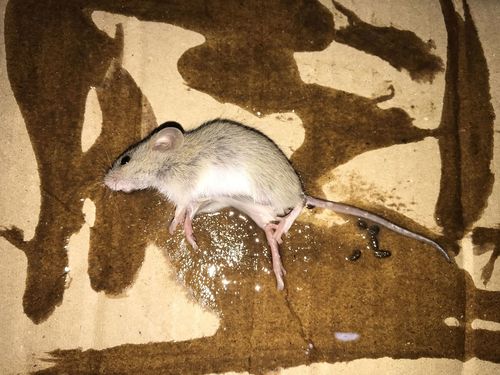
Other species in the family Muridae
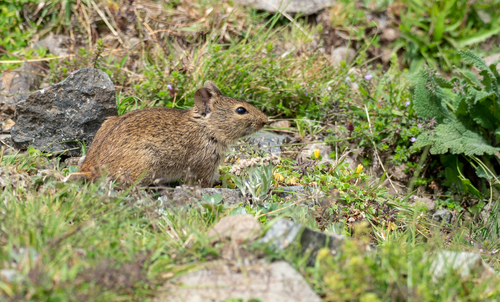
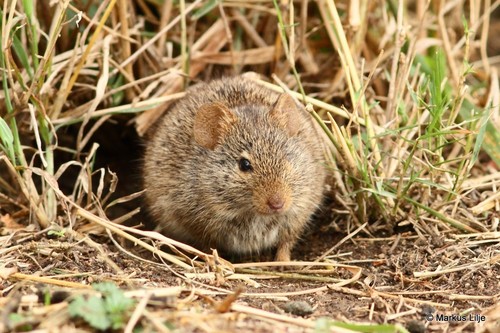
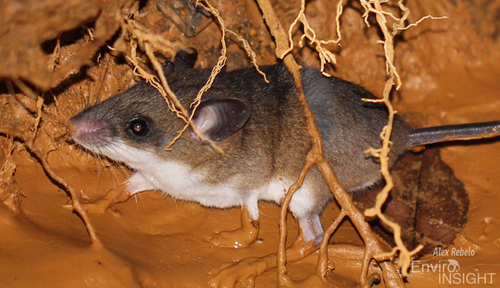
Sources
Conservation status, range description and population estimate come from the IUCN Red List assessment for Apodemus agrarius. Countries are derived from that range description, not from a mapped country list. Last refreshed on .
The distribution map is drawn from the IUCN Red List spatial data compiled in 2008. IUCN (International Union for Conservation of Nature)