
South China Field Mouse
Apodemus draco
Red List assessment
Least Concernon the IUCN Red List
- EXExtinct
- EWExtinct in the Wild
- CRCritically Endangered
- ENEndangered
- VUVulnerable
- NTNear Threatened
- LCLeast Concern
The South China Field Mouse is recorded in 4 countries across Asia. The IUCN Red List assesses the South China Field Mouse as Least Concern. No precise global population estimate is available; the species is considered locally common throughout much of its range.
- Family
- Muridae
- Order
- Rodentia
- Genus
- Apodemus
- Countries recorded
- 4
- Continents
- Asia
- Red List category
- Least Concern
- Data updated
- August 9, 2026
What is the South China Field Mouse?
The South China Field Mouse is a small, agile rodent of the family Muridae endemic to the forests and scrublands of southern and central China. It belongs to the genus Apodemus, a group of Old World field and wood mice known for their large eyes, prominent ears, and relatively long tails. Morphologically similar to the Eurasian wood mouse (Apodemus sylvaticus), A. draco was long conflated with it before being recognized as a distinct species. It plays an important ecological role as a seed disperser and prey species in subtropical and montane forest ecosystems.
Where does the South China Field Mouse live?
Southern and central China (Yunnan, Sichuan, Guizhou, Guangxi, Guangdong, Fujian, Zhejiang, Hunan, Hubei), with possible extension into northern Myanmar, northern Vietnam, and northern Laos
Endemic to China and adjacent border regions, the species ranges across southern and central China, including the provinces of Yunnan, Sichuan, Guizhou, Guangxi, Guangdong, Fujian, Zhejiang, Hunan, and Hubei. Its range may extend marginally into northern Myanmar, northern Vietnam, and northern Laos, though exact limits remain incompletely documented.
Altitude and depth
Typically found between 500 m and 3,200 m above sea level, with greatest abundance in montane zones between 1,000 m and 2,500 m. It is less common at lower elevations where other murid competitors may dominate.
Seasonal movements
Non-migratory and active year-round; does not hibernate. Breeding activity is influenced by seasonal resource availability, peaking in spring and autumn when food is most abundant. During winter, individuals may reduce activity and rely on cached food stores.
Habitat of the South China Field Mouse
Primarily inhabits subtropical and temperate mixed forests, deciduous broadleaf forests, coniferous forests, and dense scrubland. It also colonizes forest edges, bamboo groves, agricultural margins, and grasslands adjacent to wooded areas. It shows a preference for areas with dense ground cover providing shelter from predators.
Adaptations to its environment
Large eyes and ears enhance low-light vision and hearing acuity for nocturnal activity and predator detection. Its long, semi-prehensile tail aids balance when climbing vegetation. Dense, insulating fur is adapted to cool montane conditions. Like other Apodemus, it is capable of food caching, an important behavioral adaptation for surviving resource-scarce winters.
Conservation status and numbers
Listed as Least Concern (LC) on the IUCN Red List due to its broad distribution, presumed large population, and occurrence in multiple protected areas. No evidence of rapid population decline meeting threatened thresholds has been identified.
Estimated population
No precise global population estimate is available; the species is considered locally common throughout much of its range. Population trend is presumed stable overall, though local declines may occur in areas of intense land-use change.
What threatens the South China Field Mouse?
Habitat loss from deforestation, agricultural expansion, and urbanization in southern China represents the primary threat. Pesticide use in agricultural areas can reduce food availability and cause secondary poisoning. Intensification of logging in montane forests may reduce suitable habitat over time.
Diseases and parasites
Susceptible to various ectoparasites including fleas (Siphonaptera), mites (Gamasida, Trombiculidae), and ticks (Ixodidae). Like other Apodemus species, it may act as a reservoir host for hantaviruses and other zoonotic pathogens in some regions. Endoparasites including helminths (nematodes, cestodes) have been reported in related species.
What is being done to protect it?
The species occurs within several protected areas across southern China, including national nature reserves in Yunnan, Sichuan, and Guangxi. It benefits indirectly from broader forest conservation initiatives in China, including national reforestation programs such as the Natural Forest Protection Program (NFPP).
Recommended actions
Continued monitoring of population trends across the range, particularly in areas undergoing rapid habitat change. Taxonomic and genetic surveys to clarify range limits and potential cryptic diversity. Reduction of pesticide use in agricultural zones adjacent to forest habitats.
What the South China Field Mouse looks like
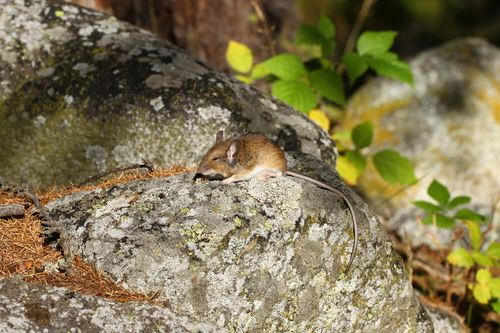
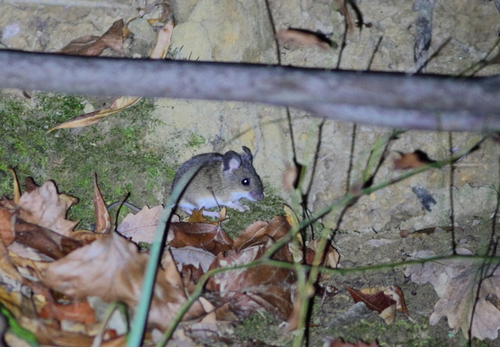
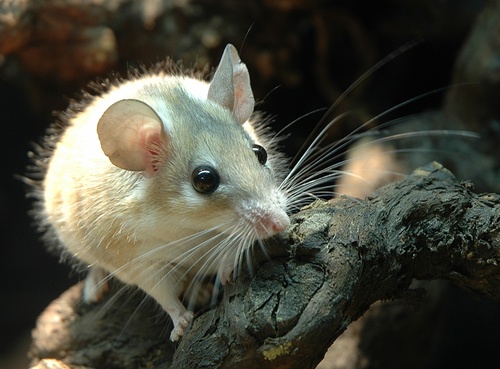
Dorsal pelage is warm brownish to grayish-brown or ochraceous-brown; flanks are paler and slightly more buff-toned. Ventral surface is white to grayish-white, with a relatively sharp demarcation from the dorsal coloration. The tail is bicolored — darker above and pale below — and lightly haired. Eyes are large and dark; ears are relatively large and rounded.
Size
Body length (head-body): 75–115 mm; tail length: 75–110 mm (approximately equal to or slightly shorter than body length); hind foot: 19–24 mm; ear length: 14–18 mm.
Weight
Typically 15–32 g; sexual dimorphism in mass is slight, with males occasionally slightly heavier than females.
Distinctive features
Distinguished from Apodemus agrarius by the absence of a dark dorsal stripe. Differentiated from Apodemus sylvaticus by subtle craniodental characteristics, slightly smaller size on average, and geographic range. Compared to Apodemus latronum and Apodemus peninsulae, A. draco tends to have a shorter tail relative to body length and occupies more southerly latitudes.
Differences between males and females
Sexual dimorphism is minimal; males and females are similar in external appearance and size. Males may be marginally heavier during the breeding season.
Behaviour and diet of the South China Field Mouse
Predominantly solitary outside of the breeding season, with overlapping home ranges between individuals. Mild social tolerance may occur at food resource patches. No evidence of complex social hierarchies; inter-individual interactions are generally agonistic.
When it is active
Strictly nocturnal, with peak activity in the first few hours after sunset. During daylight hours, individuals shelter in burrows, root crevices, or dense leaf litter. Activity levels may decrease during very cold periods in winter.
Diet
Omnivorous; diet includes seeds, nuts, berries, fleshy fruits, fungi, green plant material, insects (beetles, lepidopteran larvae), earthworms, and other invertebrates. Seed consumption is particularly prominent in autumn when mast is available, and food caching behavior is common.
How it feeds and hunts
Forages primarily on the ground and in low vegetation, using olfaction to locate seeds and invertebrates beneath leaf litter. Insects and earthworms are caught opportunistically. Food items may be transported to a cache site or consumed immediately at the foraging location.
Communication
Communicates via ultrasonic vocalizations (beyond human hearing range), particularly during social interactions and mating. Scent marking using urine and glandular secretions is used to delineate home ranges and signal reproductive status. Tactile communication occurs during mating and mother-offspring interactions.
Interactions with other species
Prey for a variety of predators including owls (Strix spp., Tyto spp.), weasels (Mustela spp.), small felids, and snakes. Competes for food resources with other small rodents such as Rattus and Niviventer species, as well as congeneric Apodemus. Acts as a seed disperser for forest tree species whose seeds it caches and sometimes fails to retrieve.
Role in its ecosystem
Plays a significant ecological role as a primary consumer, seed disperser, and prey species within forest food webs. Seed caching behavior contributes to forest regeneration. As a prey item for numerous predator species, it serves as an important energy conduit in montane and subtropical ecosystems.
Reproduction and lifecycle
Breeding occurs predominantly in spring (March–May) and again in autumn (August–October), corresponding to periods of peak food abundance. Gestation lasts approximately 19–25 days. Litter size typically ranges from 3 to 7 pups, with an average of approximately 5.
Raising the young
Females are the primary caregivers; they construct a nest of plant material in a burrow or sheltered crevice. Pups are born altricial (blind, naked, and helpless) and are weaned at approximately 18–21 days of age. Males provide no direct parental care.
Maturity and lifespan
Sexual maturity is reached at approximately 6–8 weeks of age. Lifespan in the wild is typically 12–18 months due to high predation pressure; individuals in captivity may survive up to 3–4 years under optimal conditions.
Taxonomy and naming of the South China Field Mouse
Classification
Mammalia > Rodentia > Muridae > Apodemus > Apodemus draco (Barrett-Hamilton, 1900)
Subspecies
No widely recognized subspecies are currently formally described; however, populations across the broad geographic range show some morphological variation that may warrant future taxonomic review.
Scientific synonyms
Mus draco Barrett-Hamilton, 1900; historically sometimes treated as a subspecies or synonym of Apodemus sylvaticus in older Chinese literature.
What research says
Recent studies
Molecular systematic studies in the 2000s and 2010s using mitochondrial and nuclear DNA markers confirmed the validity of A. draco as a distinct species separate from A. sylvaticus. Ongoing surveys in Yunnan and Sichuan continue to refine understanding of its range boundaries and genetic structure.
Genome and DNA
Karyotype not precisely confirmed for this species specifically; closely related Apodemus species typically have diploid chromosome numbers (2n) ranging from 46 to 48. Molecular phylogenetic studies have helped clarify its distinction from Apodemus sylvaticus and other Asian congeners.
Compared with similar species
Most closely related to other Asian Apodemus species, particularly Apodemus latronum (Large-eared Field Mouse) and Apodemus peninsulae (Korean Field Mouse). It most resembles A. sylvaticus externally but is allopatric with it, occupying the subtropical southern Chinese region while A. sylvaticus is distributed from Europe to Central Asia. Compared to A. agrarius, it lacks the characteristic dark dorsal stripe.
The South China Field Mouse and people
Like a natural forester, the South China Field Mouse inadvertently plants trees by caching seeds that it later fails to recover — contributing to forest regeneration across mountainous southern China. Despite its small size, it can cover surprisingly large distances in a single night, patrolling a home range of up to 0.5 hectares. Its large, reflective eyes are so adapted to low-light conditions that it can navigate complex forest floor environments on even the darkest nights.
Where and how to see it
Best observed in montane forest habitats in reserves such as Wolong (Sichuan) or Xishuangbanna (Yunnan) during nocturnal transects with a red-light headlamp, which minimizes disturbance. Autumn months (September–October) when food resources are high and animals are most active offer the best sighting opportunities. Sherman-type live traps set along forest trails and edges at dusk are the standard method used by researchers.
Risks to humans
Poses minimal direct risk to humans. As with other small wild rodents, there is a theoretical risk of zoonotic disease transmission (e.g., hantavirus) through contact with urine, feces, or bites; standard precautions should be taken when handling wild-caught individuals. Bites can occur if the animal is handled carelessly but are not venomous.
Human uses
Not commercially exploited. Used occasionally as a study organism in ecological and parasitological research. No known use in traditional medicine specific to this species, though small rodents are occasionally used in folk remedies in some parts of rural southern China.
Myths and legends
No specific myths or legends are directly associated with Apodemus draco in Chinese cultural tradition; however, mice and rats broadly feature prominently in Chinese mythology and the zodiac, symbolizing resourcefulness, abundance, and adaptability. The species epithet 'draco' (dragon) is a nod to China's deep association with the dragon symbol.
Countries where the South China Field Mouse is recorded
The 4 countries named in the range description of its IUCN Red List assessment.
Questions about the South China Field Mouse
Where does the South China Field Mouse live?
The South China Field Mouse is recorded in China, Laos, Myanmar and Vietnam across Asia. These countries come from the range description of its IUCN Red List assessment, and they are what place the species on the interactive map.
Is the South China Field Mouse endangered?
The IUCN Red List assesses the South China Field Mouse as Least Concern. The species is widespread and abundant enough not to qualify for any threatened category. It does not mean the species is safe forever, only that nothing in the current data raises an alarm.
How many are left in the wild?
No precise global population estimate is available; the species is considered locally common throughout much of its range. This figure comes from the species assessment on the IUCN Red List; population estimates for wild mammals are ranges, not counts, and are revised at each assessment.
What habitat does the South China Field Mouse live in?
Primarily inhabits subtropical and temperate mixed forests, deciduous broadleaf forests, coniferous forests, and dense scrubland.
What is the scientific name of the South China Field Mouse?
The South China Field Mouse is Apodemus draco, in the family Muridae, order Rodentia.
Other species in the genus Apodemus
Other species in the family Muridae
Sources
Conservation status, range description and population estimate come from the IUCN Red List assessment for Apodemus draco. Countries are derived from that range description, not from a mapped country list. Last refreshed on .
The distribution map is drawn from the IUCN Red List spatial data compiled in 2008. IUCN (International Union for Conservation of Nature)