
Solomons Free-tailed Bat
Mops solomonis
Red List assessment
Endangeredon the IUCN Red List
- EXExtinct
- EWExtinct in the Wild
- CRCritically Endangered
- ENEndangered
- VUVulnerable
- NTNear Threatened
- LCLeast Concern
The Solomons Free-tailed Bat is recorded in 2 countries across Oceania. The IUCN Red List assesses the Solomons Free-tailed Bat as Endangered. No precise population estimate exists; the species is considered rare with a declining population trend inferred from ongoing habitat loss across its limited island range.
- Family
- Molossidae
- Order
- Chiroptera
- Genus
- Mops
- Countries recorded
- 2
- Continents
- Oceania
- Red List category
- Endangered
- Data updated
- August 9, 2026
What is the Solomons Free-tailed Bat?
Mops solomonis is a small, insectivorous free-tailed bat endemic to the Solomon Islands and nearby Bougainville. It is a poorly known species, roosting in caves, hollow trees, and human structures, and foraging on the wing for flying insects over forest and coastal habitats. Its restricted island range and limited ecological data make it a species of conservation concern. It is remarkable as one of the few molossid bats endemic to this Melanesian island group.
Where does the Solomons Free-tailed Bat live?
Solomon Islands archipelago, including Bougainville Island (Papua New Guinea)
Endemic to the Solomon Islands, with records from Bougainville Island (politically part of Papua New Guinea) and several islands within the Solomon archipelago in the southwestern Pacific.
Altitude and depth
Primarily lowland areas from sea level up to approximately 500-600 m elevation
Seasonal movements
No long-distance migration is known; the species is likely non-migratory but may show localized roost-switching behavior related to rainfall and insect abundance seasons.
Habitat of the Solomons Free-tailed Bat
Found in lowland tropical rainforest, coastal forest, and secondary vegetation; roosts in caves, rock crevices, hollow trees, and occasionally buildings. Prefers areas with access to open airspace for aerial insect foraging.
Adaptations to its environment
Possesses long, narrow wings typical of molossid bats, enabling fast, sustained flight for aerial insect hawking in open spaces above the canopy. Its free tail assists in maneuverability, and echolocation calls are adapted for detecting prey in open-air habitats rather than dense clutter.
Conservation status and numbers
Classified as Endangered (EN) by the IUCN due to its very restricted island distribution, small number of known localities, and ongoing habitat loss from logging and land conversion across its limited range.
Estimated population
No precise population estimate exists; the species is considered rare with a declining population trend inferred from ongoing habitat loss across its limited island range.
What threatens the Solomons Free-tailed Bat?
Major threats include deforestation and logging for timber and agriculture, habitat degradation from mining activities, disturbance or destruction of roosting caves, and the compounding effects of a naturally restricted island range.
Diseases and parasites
Specific pathogens and parasites have not been well documented for this species, though bats in general can host ectoparasites such as mites and bat flies, and various viruses.
What is being done to protect it?
Specific targeted conservation programs for this species are lacking; some protection may occur incidentally through general forest and cave protection measures in parts of the Solomon Islands, though enforcement and monitoring remain limited.
Recommended actions
Priority actions include surveys to clarify distribution and population status, protection of key roosting caves, mitigation of deforestation in core habitat areas, and increased research into the species' ecology and threats.
What the Solomons Free-tailed Bat looks like
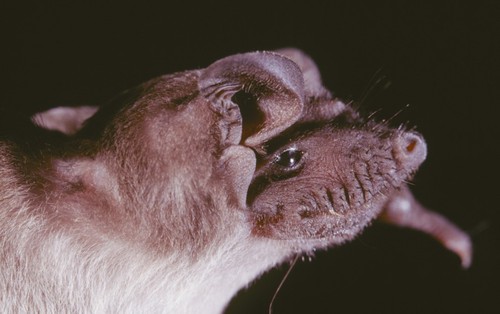
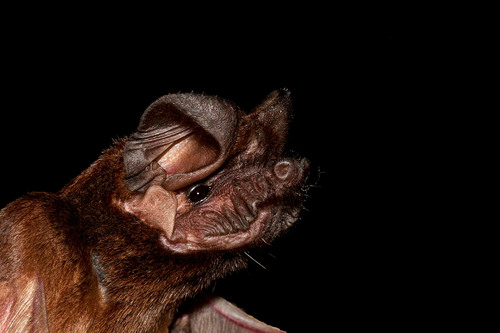
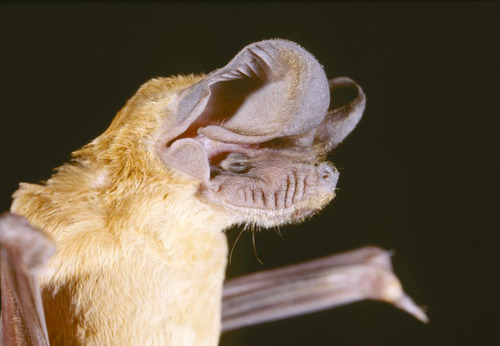
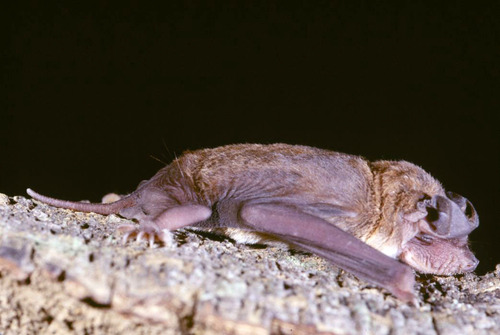
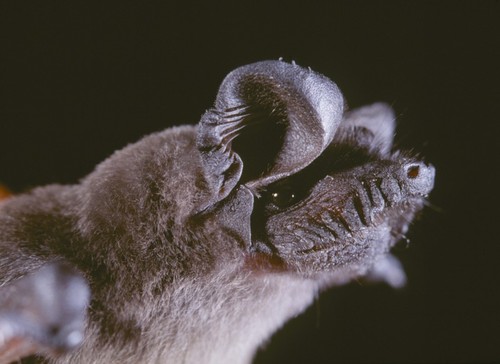
Dark brown to blackish dorsal fur with slightly paler underparts, a robust molossid body shape, broad rounded ears, a wrinkled upper lip typical of free-tailed bats, and a tail that extends freely beyond the interfemoral membrane.
Size
Forearm length approximately 38-42 mm; total body length roughly 8-10 cm, typical of small molossid bats.
Weight
Estimated 10-15 grams, consistent with similarly sized free-tailed bats in the genus Mops.
Distinctive features
Distinguished from congeners by subtle differences in skull morphology, dental characters, and forearm length; field identification is difficult and often requires specimen examination or genetic analysis to separate from other regional Mops species.
Differences between males and females
Minimal sexual dimorphism reported; males and females are similar in size and coloration, as is typical for most molossid bats.
Behaviour and diet of the Solomons Free-tailed Bat
Likely colonial, roosting in groups within caves or hollow trees, though exact colony sizes and social structure for this species remain poorly documented.
When it is active
Nocturnal, emerging at dusk to forage for flying insects and returning to daytime roosts before dawn.
Diet
Insectivorous, feeding on a variety of small flying insects such as moths, beetles, and other aerial arthropods captured on the wing.
How it feeds and hunts
Uses echolocation to detect and track flying insect prey while hawking in open airspace above forest canopy or along forest edges, typical of fast-flying molossid foraging strategy.
Communication
Communicates primarily through echolocation calls for navigation and prey detection, along with social vocalizations within roost colonies, though specific call structure for this species is not well studied.
Interactions with other species
Likely preyed upon by birds of prey, snakes, and possibly introduced predators near roost sites; may compete with other insectivorous bat species for aerial insect resources within its range.
Role in its ecosystem
Plays an ecological role as an insectivorous predator, helping regulate populations of night-flying insects within its forest and coastal habitats.
Reproduction and lifecycle
Reproductive biology is not well documented, but related Mops species typically breed seasonally with a single pup per litter and gestation periods of around 2-3 months.
Raising the young
Presumed maternal care similar to other molossids, with females nursing a single pup in a roost colony until it is capable of independent flight and foraging, likely within a few weeks to a couple months.
Maturity and lifespan
Age of sexual maturity and lifespan are not specifically documented, but similar small molossid bats typically mature within their first year and can live several years to over a decade in the wild.
Taxonomy and naming of the Solomons Free-tailed Bat
Classification
Class Mammalia > Order Chiroptera > Family Molossidae > Genus Mops > Species Mops solomonis
Scientific synonyms
Chaerephon solomonis; Tadarida solomonis (older combinations reflecting shifting molossid genus assignments)
What research says
Recent studies
Recent taxonomic and phylogenetic studies on Melanesian molossid bats have helped clarify the status of Mops solomonis relative to other regional free-tailed bats, though dedicated ecological studies remain scarce.
Compared with similar species
Closely related to other Pacific and Southeast Asian Mops species such as Mops sarasinorum, from which it can be difficult to distinguish without careful morphological or genetic comparison; overall it fits the general molossid free-tailed bat body plan.
The Solomons Free-tailed Bat and people
It is one of the few bat species considered essentially endemic to the Solomon Islands, highlighting the unique biodiversity of this Pacific archipelago. Despite being a bat, its free-tail and molossid wing shape make it an exceptionally fast, agile flier compared to many other bat families.
Where and how to see it
Best observed at dusk near forest edges or cave entrances on Solomon Islands or Bougainville, using bat detectors to identify echolocation calls; specific roost locations are not well publicized due to limited research.
Risks to humans
No notable risk to humans; like other bats, it should not be handled directly due to general precautions around zoonotic disease transmission.
Countries where the Solomons Free-tailed Bat is recorded
The 2 countries named in the range description of its IUCN Red List assessment.
Questions about the Solomons Free-tailed Bat
Where does the Solomons Free-tailed Bat live?
The Solomons Free-tailed Bat is recorded in Papua New Guinea and Solomon Islands across Oceania. These countries come from the range description of its IUCN Red List assessment, and they are what place the species on the interactive map.
Is the Solomons Free-tailed Bat endangered?
Yes. The IUCN Red List assesses the Solomons Free-tailed Bat as Endangered, one of the three threatened categories. The species faces a very high risk of extinction in the wild — a step below Critically Endangered, but still on a trajectory that ends badly without intervention.
How many are left in the wild?
No precise population estimate exists; the species is considered rare with a declining population trend inferred from ongoing habitat loss across its limited island range. This figure comes from the species assessment on the IUCN Red List; population estimates for wild mammals are ranges, not counts, and are revised at each assessment.
What habitat does the Solomons Free-tailed Bat live in?
Found in lowland tropical rainforest, coastal forest, and secondary vegetation; roosts in caves, rock crevices, hollow trees, and occasionally buildings.
What is the scientific name of the Solomons Free-tailed Bat?
The Solomons Free-tailed Bat is Mops solomonis, in the family Molossidae, order Chiroptera.
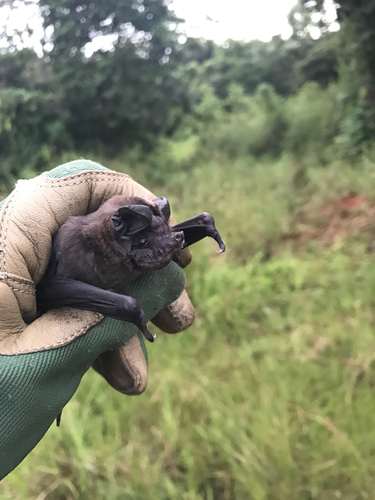
Other species in the genus Mops

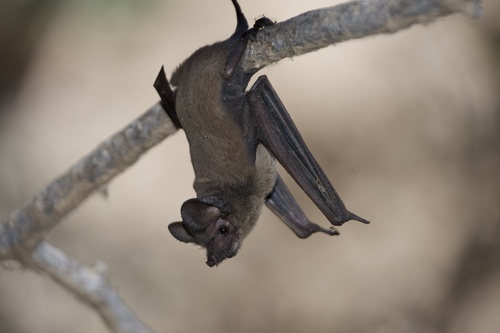
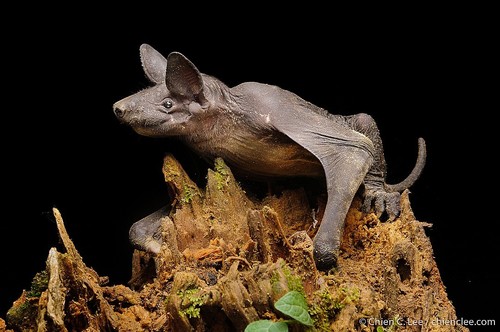
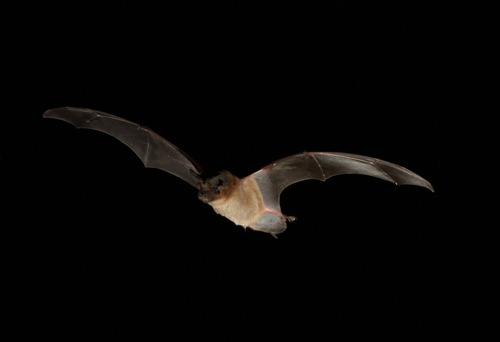
Other species in the family Molossidae

Sources
Conservation status, range description and population estimate come from the IUCN Red List assessment for Mops solomonis. Countries are derived from that range description, not from a mapped country list. Last refreshed on .
The distribution map is drawn from the IUCN Red List spatial data compiled in 2020. IUCN (International Union for Conservation of Nature)