
Seychelles Free-tailed Bat
Mops pusillus
Red List assessment
Vulnerableon the IUCN Red List
- EXExtinct
- EWExtinct in the Wild
- CRCritically Endangered
- ENEndangered
- VUVulnerable
- NTNear Threatened
- LCLeast Concern
The Seychelles Free-tailed Bat is recorded in one country, Seychelles across Africa. The IUCN Red List assesses the Seychelles Free-tailed Bat as Vulnerable. The global population is small and not precisely quantified, but is believed to be declining due to ongoing habitat pressures on the limited Seychelles granitic islands; population trend is considered decreasing.
- Family
- Molossidae
- Order
- Chiroptera
- Genus
- Mops
- Countries recorded
- 1
- Continents
- Africa
- Red List category
- Vulnerable
- Data updated
- August 9, 2026
What is the Seychelles Free-tailed Bat?
The Seychelles Free-tailed Bat is a small insectivorous molossid bat endemic to the granitic islands of the Seychelles. It roosts in caves, rock crevices, and buildings, emerging at dusk to hunt flying insects over forest and coastal habitats. Its restricted island range makes it particularly vulnerable to habitat disturbance and environmental change, and it is considered one of the more range-limited bat species in the western Indian Ocean.
Where does the Seychelles Free-tailed Bat live?
Seychelles archipelago, Indian Ocean, primarily on granitic islands such as Mahé, Praslin, and Silhouette.
Endemic to the granitic islands of the Seychelles, with confirmed records from Mahé, Praslin, and Silhouette Island. It is not known to occur on the outer coralline islands, restricting its total range to a very small area of the western Indian Ocean.
Altitude and depth
Occurs from sea level up to around 500-600 meters, corresponding to the highest elevations found on the granitic Seychelles islands.
Seasonal movements
No long-distance migration is known; the species appears to be a year-round resident, though minor shifts in roosting and foraging activity may occur with the wet and dry seasons.
Habitat of the Seychelles Free-tailed Bat
Found in lowland tropical forest, coastal scrub, and human-modified landscapes including gardens and plantations near roosting sites. Roosts are typically located in caves, rock fissures, and the roofs of buildings, often close to freshwater sources and forested foraging grounds.
Adaptations to its environment
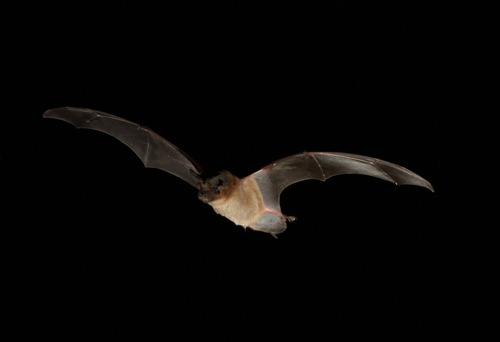
Possesses narrow, pointed wings adapted for fast, agile flight in open and semi-open airspace, allowing efficient aerial insect capture. Echolocation calls are tuned to detect small flying insects in cluttered forest edges and open areas alike. Its free tail (extending beyond the tail membrane) aids in maneuverability during flight.
Conservation status and numbers
Classified as Vulnerable (VU) by the IUCN due to its extremely restricted range confined to a few small islands, combined with ongoing habitat degradation and small, fragmented populations that are highly susceptible to stochastic events.
Estimated population
The global population is small and not precisely quantified, but is believed to be declining due to ongoing habitat pressures on the limited Seychelles granitic islands; population trend is considered decreasing.
What threatens the Seychelles Free-tailed Bat?
Main threats include habitat loss from tourism development and agriculture, disturbance or destruction of roost sites (caves and buildings), invasive predators such as rats and feral cats, and potential impacts of climate change including sea-level rise and increased storm intensity on small island ecosystems.
Diseases and parasites
Specific studies on diseases or parasites in this species are limited, but like other bats it may host ectoparasites such as mites and bat flies, and could be susceptible to region-relevant bat pathogens.
What is being done to protect it?
Some roost sites fall within protected areas and national parks in Seychelles, and general biodiversity legislation offers indirect protection. Conservation organizations in Seychelles have included bats in broader island restoration and invasive species control programs, though species-specific monitoring remains limited.
Recommended actions
Priority actions include systematic population surveys and roost site mapping, legal protection of key roosting caves and buildings, control of invasive predators near roost sites, and public education to reduce disturbance of bat colonies in human structures.
What the Seychelles Free-tailed Bat looks like
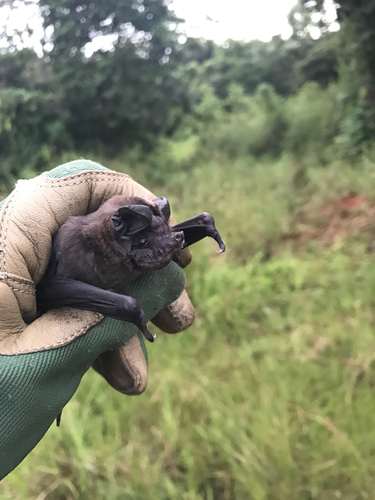
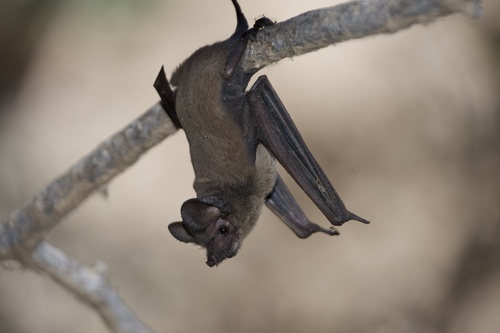
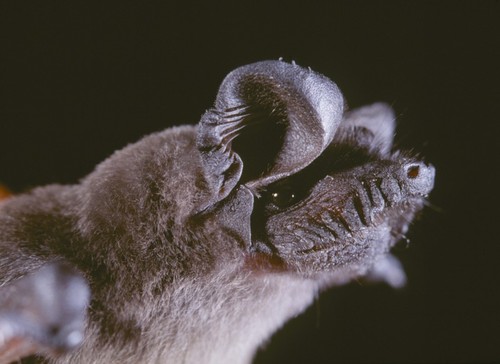
Small molossid bat with short, dense dark brown to blackish fur, a robust body, and characteristic wrinkled lips typical of free-tailed bats. The tail extends noticeably beyond the interfemoral membrane, giving the species its common name.
Size
Body length approximately 4-5 cm (excluding tail), with a forearm length of about 33-37 mm and a wingspan estimated around 20-25 cm.
Weight
Approximately 6-10 grams; sexes are similar in size with only marginal average differences.
Distinctive features
Distinguished from related Mops and Chaerephon species by its smaller size, specific skull and dental measurements, and its restricted endemic range to the Seychelles granitic islands.
Differences between males and females
Minimal sexual dimorphism; males and females are similar in size and coloration, with only slight average differences in forearm length.
Behaviour and diet of the Seychelles Free-tailed Bat
Roosts in small to moderate colonies, often numbering from a few individuals to several dozen, sharing crevices or building roofs. Social structure within colonies is not well studied but likely involves loose aggregation rather than strict hierarchy.
When it is active
Nocturnal, emerging around dusk to forage and returning to roosts before dawn; peak activity often occurs in the early evening hours.
Diet
Insectivorous, feeding on a variety of small flying insects such as moths, beetles, and flies caught on the wing.
How it feeds and hunts
Uses echolocation to detect and track flying insects in open airspace and along forest edges, employing fast, direct flight to intercept prey mid-air.
Communication
Communicates primarily through ultrasonic echolocation calls used for navigation and prey detection, supplemented by audible social calls within roosting colonies for contact and alarm signaling.
Interactions with other species
Faces predation pressure from introduced species such as rats and feral cats at roost sites, and may compete for roosting space and insect prey with other sympatric bat species in the Seychelles.
Role in its ecosystem
Plays an important ecological role as a nocturnal insect predator, helping regulate populations of flying insects including agricultural and forest pests within its island ecosystem.
Reproduction and lifecycle
Believed to breed once or twice per year, with gestation lasting around 2-3 months typical of molossid bats; litter size is usually a single pup.
Raising the young
Females carry and nurse a single pup, which clings to the mother in the roost during early development until capable of independent flight and foraging, typically within a few weeks to a couple of months.
Maturity and lifespan
Sexual maturity is likely reached within the first year, consistent with similar small molossid bats; lifespan in the wild is estimated at several years, though precise data for this species is scarce.
Taxonomy and naming of the Seychelles Free-tailed Bat
Classification
Class Mammalia > Order Chiroptera > Family Molossidae > Genus Mops > Species Mops pusillus
Scientific synonyms
Chaerephon pusillus; Nyctinomus pusillus (older combinations before genus revision)
What research says
Recent studies
Recent taxonomic and genetic studies on Indian Ocean molossid bats have helped clarify species boundaries within the Mops and Chaerephon genera, though dedicated ecological research on Mops pusillus in Seychelles remains limited.
Compared with similar species
Similar in general appearance to other small free-tailed bats such as Chaerephon species found in Africa and Madagascar, but distinguished by its smaller size and geographic isolation on the Seychelles granitic islands.
The Seychelles Free-tailed Bat and people
This bat's tail extends freely beyond its tail membrane, an unusual trait among bats that gives the whole family its common name 'free-tailed bats'. Despite its tiny size of just a few grams, it can fly considerable distances each night to forage for insects across forested islands.
Where and how to see it
Best observed at dusk near known roost sites such as caves or old buildings on Mahé or Silhouette Island, watching for fast, erratic flight patterns typical of free-tailed bats as they emerge to forage.
Risks to humans
No notable risk to humans; like most bats it should not be handled due to general precautionary concerns about zoonotic disease transmission.
Countries where the Seychelles Free-tailed Bat is recorded
The 1 countries named in the range description of its IUCN Red List assessment.
Questions about the Seychelles Free-tailed Bat
Where does the Seychelles Free-tailed Bat live?
The Seychelles Free-tailed Bat is recorded in Seychelles across Africa. These countries come from the range description of its IUCN Red List assessment, and they are what place the species on the interactive map.
Is the Seychelles Free-tailed Bat endangered?
Yes. The IUCN Red List assesses the Seychelles Free-tailed Bat as Vulnerable, one of the three threatened categories. The species faces a high risk of extinction in the wild. It is the first of the three threatened categories: numbers are falling, the range is shrinking, or the population is small enough that a single bad event could do lasting damage.
How many are left in the wild?
The global population is small and not precisely quantified, but is believed to be declining due to ongoing habitat pressures on the limited Seychelles granitic islands; population trend is considered decreasing. This figure comes from the species assessment on the IUCN Red List; population estimates for wild mammals are ranges, not counts, and are revised at each assessment.
What habitat does the Seychelles Free-tailed Bat live in?
Found in lowland tropical forest, coastal scrub, and human-modified landscapes including gardens and plantations near roosting sites.
What is the scientific name of the Seychelles Free-tailed Bat?
The Seychelles Free-tailed Bat is Mops pusillus, in the family Molossidae, order Chiroptera.
Other species in the genus Mops
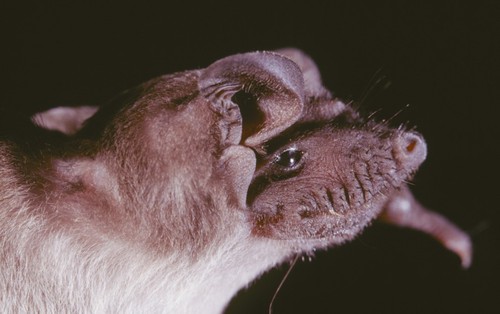
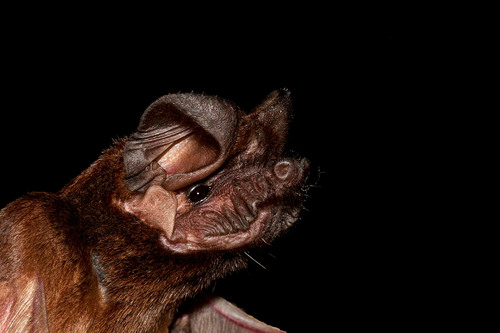

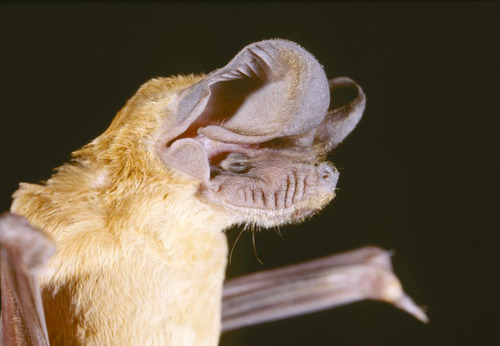
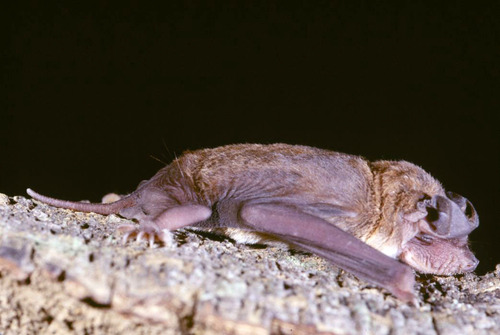
Other species in the family Molossidae

Sources
Conservation status, range description and population estimate come from the IUCN Red List assessment for Mops pusillus. Countries are derived from that range description, not from a mapped country list. Last refreshed on .
The distribution map is drawn from the IUCN Red List spatial data compiled in 2020. IUCN (International Union for Conservation of Nature)