
São Tomé Free-tailed Bat
Mops tomensis
Red List assessment
Endangeredon the IUCN Red List
- EXExtinct
- EWExtinct in the Wild
- CRCritically Endangered
- ENEndangered
- VUVulnerable
- NTNear Threatened
- LCLeast Concern
The São Tomé Free-tailed Bat is recorded in 2 countries across Africa. The IUCN Red List assesses the São Tomé Free-tailed Bat as Endangered. Population size is unknown but presumed to be small given the extremely limited island range; trend is suspected to be declining due to ongoing habitat loss
- Family
- Molossidae
- Order
- Chiroptera
- Genus
- Mops
- Countries recorded
- 2
- Continents
- Africa
- Red List category
- Endangered
- Data updated
- August 9, 2026
What is the São Tomé Free-tailed Bat?
The São Tomé Free-tailed Bat is a small insectivorous bat endemic to the island of São Tomé in the Gulf of Guinea. It belongs to the free-tailed bat family, characterized by a tail extending beyond the interfemoral membrane. This species is remarkable for its extremely restricted range, being found nowhere else on Earth, making it a flagship species for island endemism conservation. Very little is known about its ecology due to its rarity and the limited research conducted on it.
Where does the São Tomé Free-tailed Bat live?
Endemic to São Tomé Island, São Tomé and Príncipe, Gulf of Guinea, West Africa
Restricted entirely to the island of São Tomé, part of the São Tomé and Príncipe archipelago in the Gulf of Guinea, off the coast of Central West Africa. No populations are known from Príncipe or the African mainland.
Altitude and depth
Likely ranges from sea level up to mid-elevation forests, approximately 0-800 meters, though precise altitudinal data is lacking
Seasonal movements
No documented seasonal migration; as a tropical island species, it likely maintains year-round activity without hibernation
Habitat of the São Tomé Free-tailed Bat
Inhabits tropical lowland and possibly montane forests on São Tomé Island, likely roosting in caves, rock crevices, or hollow trees. May also utilize degraded or secondary forest edges near human settlements.
Adaptations to its environment
Possesses narrow, elongated wings typical of free-tailed bats, enabling fast, direct flight suited for open-air insect foraging. Echolocation calls are adapted for detecting small flying insects in forest edge or open habitats.
Conservation status and numbers
Endangered (EN) according to IUCN, primarily due to its extremely small range restricted to a single island and inferred population decline from habitat loss. The species qualifies under criteria related to limited area of occupancy and ongoing habitat degradation.
Estimated population
Population size is unknown but presumed to be small given the extremely limited island range; trend is suspected to be declining due to ongoing habitat loss
What threatens the São Tomé Free-tailed Bat?
Deforestation and habitat conversion for agriculture on São Tomé, disturbance of roosting sites (caves and trees), and potential impacts from invasive species or pesticide use affecting insect prey availability.
What is being done to protect it?
Limited specific conservation programs target this species directly, though it may benefit indirectly from forest protection measures on São Tomé, including designated natural parks such as Obô Natural Park
Recommended actions
Conduct dedicated surveys to determine population size, distribution, and roost locations; protect remaining forest habitat; and raise awareness about bat conservation among local communities and policymakers.
What the São Tomé Free-tailed Bat looks like
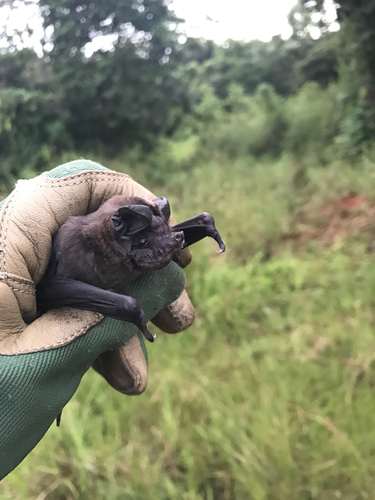
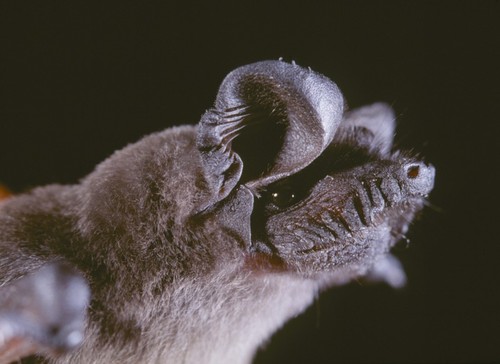
Dark brown to blackish fur covering the body, with the characteristic free-tailed bat morphology including a tail extending beyond the tail membrane. Large ears and a robust, somewhat flattened skull typical of molossids aid in echolocation and crevice-dwelling.
Size
Forearm length approximately 35-40mm; total body length estimated around 8-10cm including tail
Weight
Estimated weight range of 8-12 grams, typical for small molossid bats
Distinctive features
Distinguished from related Mops species by subtle differences in skull morphology, dental characteristics, and echolocation call frequency, though field identification is challenging without genetic or acoustic analysis.
Differences between males and females
Minimal sexual dimorphism reported, consistent with most molossid bat species where males and females are similar in size and coloration
Behaviour and diet of the São Tomé Free-tailed Bat
Likely colonial, roosting in groups as is typical for free-tailed bats, though specific colony sizes and social structure for this species remain undocumented
When it is active
Nocturnal, emerging at dusk to forage for flying insects and returning to roost sites before dawn
Diet
Insectivorous, likely feeding on small flying insects such as moths, beetles, and flies captured during aerial pursuit
How it feeds and hunts
Uses echolocation to detect and track flying insects, employing fast, agile flight typical of open-air aerial insectivores to capture prey on the wing
Communication
Communicates primarily through echolocation calls for navigation and prey detection, along with social vocalizations within roosting colonies
Interactions with other species
Faces predation risk from birds of prey and possibly snakes; may compete with other insectivorous bat species on the island for food resources and roosting sites
Role in its ecosystem
Plays an important ecological role as an insect population regulator, helping control nocturnal flying insect populations including potential agricultural pests
Reproduction and lifecycle
Reproductive biology is poorly documented, but likely follows patterns similar to related Mops species with possible birth of a single pup per breeding cycle, timed with seasonal insect abundance
Raising the young
Presumed maternal care typical of bats, with females nursing and carrying or roosting with a single pup until it becomes volant
Maturity and lifespan
Specific data unavailable, but likely reaches sexual maturity within the first year, with lifespan potentially ranging 5-10 years as typical for small molossid bats
Taxonomy and naming of the São Tomé Free-tailed Bat
Classification
Class Mammalia > Order Chiroptera > Family Molossidae > Genus Mops > Species Mops tomensis
Scientific synonyms
Formerly classified under genus Chaerephon; also historically referenced as Tadarida tomensis in older literature
What research says
Recent studies
Limited recent scientific literature exists on this species; most information stems from historical taxonomic descriptions and IUCN Red List assessments, highlighting an urgent need for updated field research
Compared with similar species
Similar to other Mops species found in continental Africa but distinguished by its island endemism and isolated evolutionary history, likely showing genetic divergence due to long-term isolation on São Tomé
The São Tomé Free-tailed Bat and people
This bat is one of the rarest mammals in the world, found only on a single small island; its extreme endemism makes it a unique example of island evolution among African bats.
Where and how to see it
Best observed at dusk near forest edges or caves on São Tomé Island, though sightings are rare and require permission and guidance from local conservation authorities or researchers familiar with known roost sites
Risks to humans
No notable risk to humans
Countries where the São Tomé Free-tailed Bat is recorded
The 2 countries named in the range description of its IUCN Red List assessment.
Questions about the São Tomé Free-tailed Bat
Where does the São Tomé Free-tailed Bat live?
The São Tomé Free-tailed Bat is recorded in Guinea and São Tomé and Príncipe across Africa. These countries come from the range description of its IUCN Red List assessment, and they are what place the species on the interactive map.
Is the São Tomé Free-tailed Bat endangered?
Yes. The IUCN Red List assesses the São Tomé Free-tailed Bat as Endangered, one of the three threatened categories. The species faces a very high risk of extinction in the wild — a step below Critically Endangered, but still on a trajectory that ends badly without intervention.
How many are left in the wild?
Population size is unknown but presumed to be small given the extremely limited island range; trend is suspected to be declining due to ongoing habitat loss This figure comes from the species assessment on the IUCN Red List; population estimates for wild mammals are ranges, not counts, and are revised at each assessment.
What habitat does the São Tomé Free-tailed Bat live in?
Inhabits tropical lowland and possibly montane forests on São Tomé Island, likely roosting in caves, rock crevices, or hollow trees.
What is the scientific name of the São Tomé Free-tailed Bat?
The São Tomé Free-tailed Bat is Mops tomensis, in the family Molossidae, order Chiroptera.
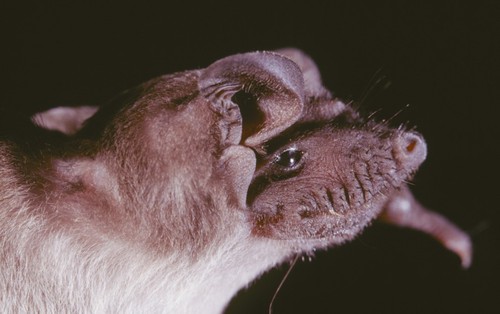
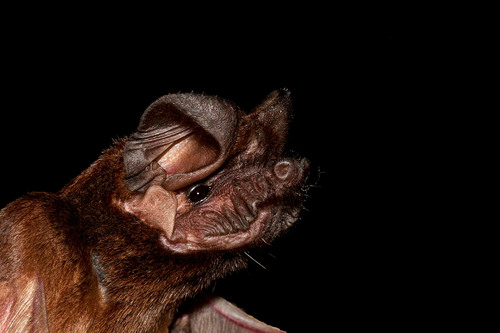
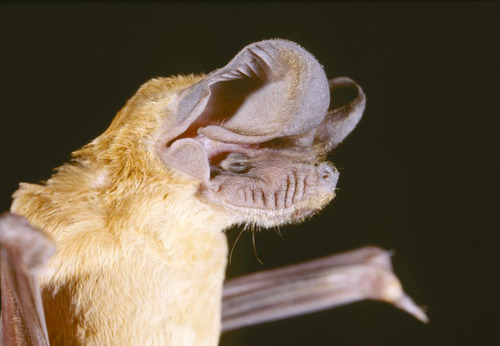
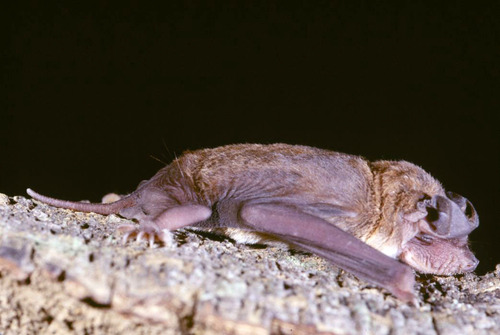
Other species in the genus Mops

Other species in the family Molossidae

Sources
Conservation status, range description and population estimate come from the IUCN Red List assessment for Mops tomensis. Countries are derived from that range description, not from a mapped country list. Last refreshed on .
The distribution map is drawn from the IUCN Red List spatial data compiled in 2019. IUCN (International Union for Conservation of Nature)