
Red Panda
Ailurus fulgens
Red List assessment
Endangeredon the IUCN Red List
- EXExtinct
- EWExtinct in the Wild
- CRCritically Endangered
- ENEndangered
- VUVulnerable
- NTNear Threatened
- LCLeast Concern
The Red Panda is recorded in 5 countries across Asia. The IUCN Red List assesses the Red Panda as Endangered. Fewer than 10,000 mature individuals are estimated to remain in the wild according to the IUCN, with several field assessments suggesting the true number may be as low as 2,500 mature individuals.
- Family
- Ailuridae
- Order
- Carnivora
- Genus
- Ailurus
- Countries recorded
- 5
- Continents
- Asia
- Red List category
- Endangered
- Data updated
- August 9, 2026
What is the Red Panda?
The red panda (Ailurus fulgens) is a small, arboreal mammal native to the temperate montane forests of the eastern Himalayas and southwestern China, celebrated for its striking rust-red fur, white-tipped ears, and long, bushy ringed tail. Despite sharing the common name 'panda' with the giant panda, it belongs to its own unique family, Ailuridae, and is not closely related to bears. It is remarkable as a dietary bamboo specialist within the order Carnivora, having convergently evolved a 'false thumb' for gripping bamboo stalks. The red panda is considered an indicator species for the health of Himalayan temperate forest ecosystems.
Where does the Red Panda live?
Eastern Himalayas and southwestern China, primarily in Nepal, Bhutan, northeastern India (Sikkim, Darjeeling, Arunachal Pradesh), northern Myanmar, and the Chinese provinces of Yunnan and Sichuan.
Occupies a narrow, fragmented band across approximately 142,000 km² spanning five countries: Nepal (central and eastern hills), Bhutan (throughout), northeastern India (Sikkim, Darjeeling district, Arunachal Pradesh), northern and eastern Myanmar, and southwestern China (Yunnan and Sichuan provinces). Populations are increasingly isolated due to habitat fragmentation.
Altitude and depth
Typically inhabits elevations between 1,500 and 4,800 m above sea level, with peak abundance between 2,200 and 4,200 m. Occasionally recorded at lower elevations near forest edges in winter.
Seasonal movements
Undertakes limited altitudinal movements, descending to lower elevations during harsh winters and ascending in summer. Does not hibernate but may enter brief periods of torpor during extreme cold, lowering its metabolic rate. Breeding is highly seasonal, with mating in January–March and births concentrated in June–July.
Habitat of the Red Panda
Primarily temperate broadleaf and mixed forests with a dense bamboo understory, particularly dominated by Fargesia and Phyllostachys bamboo species. Strongly associated with mature forests featuring hollow trees, fallen logs, and rocky terrain for denning, typically situated on cool, moist slopes with good canopy cover.
Adaptations to its environment
Possesses a radially enlarged sesamoid bone (false thumb) that functions as an opposable digit for gripping bamboo stems — a convergent evolution with the giant panda. Thick, dense woolly fur and heavily furred foot soles provide insulation against cold and grip on icy branches. The reddish-brown dorsal coloration is thought to camouflage the animal among reddish-brown lichens and mosses on tree branches. A slow metabolism and low-calorie bamboo diet are balanced by extended foraging periods of up to 13 hours per day.
Conservation status and numbers
Listed as Endangered (EN) on the IUCN Red List (assessed 2015), reflecting an estimated population decline exceeding 50% over the past three generations (~18 years). The decline is ongoing and driven by habitat loss, fragmentation, and poaching. Listed on CITES Appendix I, prohibiting international commercial trade.
Estimated population
Fewer than 10,000 mature individuals are estimated to remain in the wild according to the IUCN, with several field assessments suggesting the true number may be as low as 2,500 mature individuals. The population trend is declining across the entire range.
What threatens the Red Panda?
Primary threats include deforestation and habitat fragmentation for agriculture, livestock grazing, fuelwood collection, and infrastructure development. Poaching for the illegal fur trade (fur used in traditional hats and clothing) and live capture for the exotic pet trade are significant pressures. Climate change is altering bamboo phenology and shifting suitable habitat to higher elevations, compressing available range. Disease transmission from domestic dogs (canine distemper virus) in villages adjacent to forest areas is an emerging threat.
Diseases and parasites
Susceptible to canine distemper virus (CDV) transmitted from domestic dogs at forest margins, which can cause fatal outbreaks. Gastrointestinal parasites documented include roundworms (Ascaris spp.), hookworms, and Toxoplasma gondii. Ectoparasites including ticks and mites are common. Pseudorabies has been recorded in captive individuals. Bacterial infections and hepatitis have also been documented in zoo animals.
What is being done to protect it?
Protected under Schedule I of India's Wildlife Protection Act (1972), China's Wild Animal Protection Law, and national wildlife legislation in Nepal and Bhutan. Key protected areas include Singalila National Park (India), Kangchenjunga Conservation Area (Nepal), Jigme Dorji National Park (Bhutan), and the Sichuan Giant Panda Sanctuaries (a UNESCO World Heritage Site). The Red Panda Network (RPN) runs community forest guardian programs across Nepal. International zoo breeding programs operate under EAZA's European Studbook (ESB) and the AZA Species Survival Plan (SSP).
Recommended actions
Expanding and connecting protected area networks through wildlife corridors to counter fragmentation; intensifying anti-poaching patrols and reducing demand for red panda fur; implementing community-based forest stewardship programs providing alternative livelihoods; developing transboundary conservation agreements between India, Nepal, Bhutan, Myanmar, and China; monitoring and managing domestic dog populations near forest edges to reduce disease spillover; supporting climate change vulnerability assessments and adaptive bamboo management.
What the Red Panda looks like
Upper body covered in rich rusty-red to chestnut fur; underparts, legs, and feet are jet black. The face is mostly white with distinctive reddish-brown 'tear stripe' markings extending from the inner corner of each eye to the mouth corners. Ears are large, erect, and edged with white fur. The long, bushy tail features alternating pale buff and reddish-brown rings (6–9 rings) and is used for balance and insulation.
Size
Body length: 50–65 cm; tail length: 28–48 cm, giving a total length of 79–120 cm. Shoulder height approximately 25–30 cm. Roughly the size of a large domestic cat.
Weight
Typically 3–6 kg, averaging around 4–5 kg. Males and females are very similar in size, with males marginally heavier on average.
Distinctive features
The unique combination of rust-red body fur, black underparts, white-rimmed ears, pale face with dark tear markings, and a banded ringed tail immediately distinguishes the red panda from all other mammals. Its false thumb (enlarged radial sesamoid) is a key anatomical diagnostic. Unlike the giant panda, it is cat-sized and fully arboreal.
Differences between males and females
Sexual dimorphism is minimal. Males and females are nearly identical in coloration and body size; males may average very slightly heavier but the difference is not reliably distinguishable in the field.
Behaviour and diet of the Red Panda
Strongly solitary outside of the brief mating season, with adults maintaining well-defined individual home ranges of 1–10 km² marked through scent. Overlap between ranges of opposite sexes may occur but direct encounters are rare and often agonistic. No social hierarchy or group structure exists.
When it is active
Primarily crepuscular and nocturnal, with peak activity at dawn, dusk, and overnight. During the day, individuals typically rest in tree canopies, curled up with the tail wrapped around the body for warmth. Activity periods may extend into daylight hours in winter when energy demands are higher.
Diet
Primarily herbivorous; bamboo leaves, stems, and shoots comprise up to 95% of the diet, though bamboo is nutritionally poor, requiring long daily foraging periods. Supplementary foods include fruits (mulberries, cherries, barberries), acorns, roots, grasses, lichens, and opportunistically small vertebrates, bird eggs, and insects. Diet composition shifts seasonally with bamboo species availability.
How it feeds and hunts
Primarily a slow, methodical forager rather than an active hunter. Uses its false thumb in combination with five true digits to grip and strip bamboo stalks with precision. Selects the most nutritious young bamboo leaves and fresh shoots. Small animal prey (insects, eggs, nestlings) is opportunistically taken when encountered during foraging routes.
Communication
Communicates primarily through scent marking, using secretions from anal glands, mid-dorsal scent glands, and plantar glands on the feet to deposit chemical messages on branches, rocks, and stumps. Vocalizations include short high-pitched whistles, soft twitter-like contact calls, and a distinctive 'huff-quack' alarm call emitted when threatened. Body postures and tail position convey arousal and threat level.
Interactions with other species
Natural predators include snow leopards (Panthera uncia), yellow-throated martens (Martes flavigula), and occasionally golden jackals. Shares bamboo habitats with giant pandas (Ailuropoda melanoleuca) in parts of Sichuan and Yunnan without significant direct dietary competition due to differences in bamboo plant parts consumed. Domestic dogs represent an increasing threat through both direct predation and disease transmission (canine distemper virus). Shares forest with Himalayan black bears, musk deer, and barking deer.
Role in its ecosystem
Serves as a secondary bamboo consumer and may play a role in regulating bamboo undergrowth density. Acts as a seed disperser for various fruiting forest plants consumed in its diet. As an indicator species for old-growth temperate Himalayan forests, its presence signals habitat integrity. Its conservation serves as an umbrella for a diverse suite of Himalayan biodiversity.
Reproduction and lifecycle
Mating occurs January–March, with females entering estrus for only 12–24 hours annually. Gestation lasts 112–158 days (average ~134 days), with delayed implantation likely accounting for the wide range. Litters of 1–4 cubs (usually 1–2) are born June–July. Cubs weigh approximately 110–130 g at birth.
Raising the young
The female is the sole caregiver. Prior to birth, she constructs a nest in a hollow tree, rock crevice, or dense root system, lining it with moss, leaves, and grass. Cubs are born altricial (blind, nearly hairless) and remain in the nest for about 90 days. Nursing continues for approximately 6–8 months. Young reach near-adult size by late autumn and become fully independent by the following spring, shortly before the birth of a new litter.
Maturity and lifespan
Sexual maturity is reached at approximately 18 months, with first successful breeding typically occurring at 2–3 years of age. Estimated wild lifespan is 8–10 years. In captivity, individuals have been documented living up to 14–15 years, with exceptional individuals reaching 18 years.
Taxonomy and naming of the Red Panda
Classification
Mammalia > Carnivora > Ailuridae > Ailurus > Ailurus fulgens. Ailurus fulgens is the sole living member of the family Ailuridae, which diverged from other carnivore lineages roughly 47 million years ago.
Subspecies
Two subspecies are currently recognized: Ailurus fulgens fulgens (Himalayan red panda), found in Nepal, northeastern India, and Bhutan; and Ailurus fulgens styani (Chinese red panda), found in southwestern China and northern Myanmar. A landmark 2020 genomic study (Hu et al.) proposed elevating these to full species status based on ~250,000 years of genetic isolation, though this remains debated.
Scientific synonyms
Historically placed in Procyonidae and Ursidae before being assigned its own family Ailuridae. Taxonomic synonyms include Ictides fulgens (Cuvier, 1825) and Ailurus refulgens. Some taxonomists now recognize Ailurus styani as a distinct species separate from A. fulgens sensu stricto.
What research says
Recent studies
A landmark 2020 study (Hu et al., Science Advances) used whole-genome sequencing of 65 individuals to demonstrate ~250,000 years of genetic isolation between the two red panda lineages, recommending full species recognition. Climate niche modeling studies (2021–2023) project a 30–47% reduction in suitable habitat by 2050 under moderate warming scenarios, with range fragmentation intensifying. Population genomics research has highlighted dangerously low effective population sizes in isolated subpopulations, raising concerns about inbreeding depression.
Genome and DNA
Diploid chromosome number: 2n = 36. A high-quality reference genome was published in 2019, revealing extensive adaptive evolution in genes related to bamboo digestion, cold adaptation, and muscle energy metabolism. The 2020 whole-genome study by Hu et al. (Science Advances) identified over 200,000 SNPs differentiating the Himalayan and Chinese lineages, supporting their potential recognition as distinct species.
Compared with similar species
Superficially resembles the raccoon (Procyon lotor) in its facial mask and ringed tail, leading early taxonomists to incorrectly classify it in Procyonidae; however, it is only distantly related. Its false thumb is a striking convergent evolution with the giant panda (Ailuropoda melanoleuca, family Ursidae), despite the two species being separated by tens of millions of years of evolution. Within Carnivora, its closest relatives are mustelids, procyonids, and ursids, reflecting the ancient divergence of Ailuridae. No other living species belongs to Ailuridae.
The Red Panda and people
The red panda was formally described by science in 1825 — nearly 50 years before the giant panda — making it the original animal to bear the name 'panda,' likely derived from the Nepali word 'ponya' (bamboo-eater or claw-footed). The Mozilla Firefox browser logo was originally inspired by the red panda rather than a fox, as 'Firefox' is an alternative English name for the species. When threatened, red pandas rear up on their hind legs, spread their forelegs wide, and display their claws to appear much larger and more intimidating — a dramatic bluffing posture that belies their normally gentle temperament.
Where and how to see it
Best chances for wild observation exist in Singalila National Park (West Bengal, India) and Langtang National Park (Nepal) during early morning or late afternoon hours between October and April when bamboo foliage is less dense. Himalayan eco-lodges in the Darjeeling and Ilam (Nepal) regions offer guided treks with knowledgeable local naturalists. For guaranteed sightings, numerous world-class zoos maintain red pandas in naturalistic enclosures, including the Smithsonian's National Zoo (Washington D.C.), Edinburgh Zoo, and Padmaja Naidu Himalayan Zoological Park in Darjeeling.
Risks to humans
No notable risk to humans under normal conditions. If cornered or handled, a red panda may scratch with its sharp semi-retractile claws or deliver a bite, but encounters leading to injury are extremely rare. Not venomous and not implicated in significant zoonotic disease transmission to humans.
Human uses
Historically, red panda fur has been used in traditional hats and ceremonial clothing in parts of China and Bhutan, particularly for wedding garments. It continues to be captured for the illegal exotic pet trade, particularly in South and Southeast Asia. In recent decades, the red panda has become a high-value ecotourism flagship species, generating significant conservation awareness and local economic benefits. It serves as the official mascot of Darjeeling (India) and features prominently in national conservation campaigns across all five range countries.
Myths and legends
In Himalayan cultures of Nepal and Bhutan, the red panda is sometimes associated with mountain forest spirits and is regarded as a sign of good fortune when encountered. In parts of Sikkim, it holds informal cultural reverence and features in regional conservation folklore. In China, where it is known as xiǎo xióng māo (小熊猫, 'small bear-cat'), it has historically featured in local mountain folk tales and has become a prominent symbol in modern Chinese conservation culture and popular media.
Countries where the Red Panda is recorded
The 5 countries named in the range description of its IUCN Red List assessment.
Questions about the Red Panda
Where does the Red Panda live?
The Red Panda is recorded in Bhutan, China, India, Myanmar and Nepal across Asia. These countries come from the range description of its IUCN Red List assessment, and they are what place the species on the interactive map.
Is the Red Panda endangered?
Yes. The IUCN Red List assesses the Red Panda as Endangered, one of the three threatened categories. The species faces a very high risk of extinction in the wild — a step below Critically Endangered, but still on a trajectory that ends badly without intervention.
How many are left in the wild?
Fewer than 10,000 mature individuals are estimated to remain in the wild according to the IUCN, with several field assessments suggesting the true number may be as low as 2,500 mature individuals. This figure comes from the species assessment on the IUCN Red List; population estimates for wild mammals are ranges, not counts, and are revised at each assessment.
What habitat does the Red Panda live in?
Primarily temperate broadleaf and mixed forests with a dense bamboo understory, particularly dominated by Fargesia and Phyllostachys bamboo species.
What is the scientific name of the Red Panda?
The Red Panda is Ailurus fulgens, in the family Ailuridae, order Carnivora.
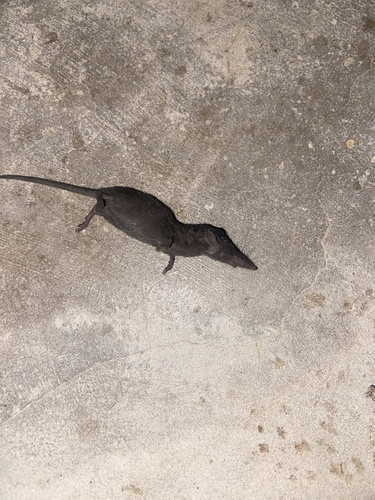
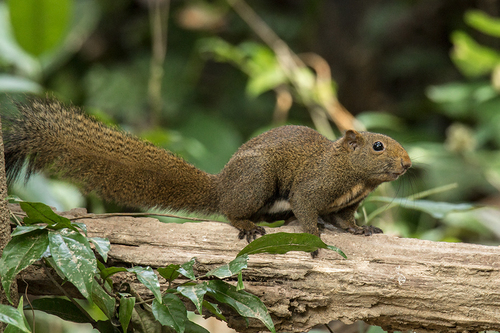
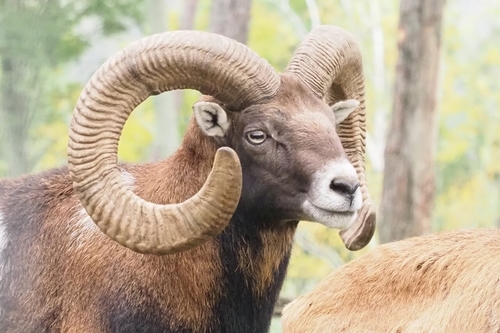
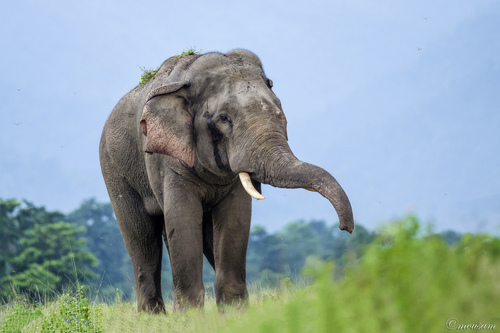
Species that share its range
Sources
Conservation status, range description and population estimate come from the IUCN Red List assessment for Ailurus fulgens. Countries are derived from that range description, not from a mapped country list. Last refreshed on .
The distribution map is drawn from the IUCN Red List spatial data compiled in 2015. International Union for the Conservation of Nature