
Pygmy Fruit Bat
Aethalops alecto
Red List assessment
Least Concernon the IUCN Red List
- EXExtinct
- EWExtinct in the Wild
- CRCritically Endangered
- ENEndangered
- VUVulnerable
- NTNear Threatened
- LCLeast Concern
The Pygmy Fruit Bat is recorded in 4 countries across Asia. The IUCN Red List assesses the Pygmy Fruit Bat as Least Concern. No reliable global population estimate exists.
- Family
- Pteropodidae
- Order
- Chiroptera
- Genus
- Aethalops
- Countries recorded
- 4
- Continents
- Asia
- Red List category
- Least Concern
- Data updated
- August 9, 2026
What is the Pygmy Fruit Bat?
The Pygmy Fruit Bat (Aethalops alecto) is one of the smallest Old World fruit bats (family Pteropodidae) found in the tropical rainforests of Sundaland, Southeast Asia. It is characterized by its compact body, short dog-like muzzle, large eyes, and dark velvety fur. Despite its diminutive stature, it plays a meaningful ecological role as a seed disperser for small-fruited forest plants. It is a nocturnal foliage-roosting bat that navigates primarily by vision and olfaction rather than echolocation.
Where does the Pygmy Fruit Bat live?
Malay Peninsula (Malaysia, southern Thailand), Sumatra, Java, Bali, Borneo (Malaysia, Indonesia, Brunei), and surrounding smaller islands of Sundaland, Southeast Asia
Distributed across the Sundaic biogeographic region: Peninsular Malaysia, southern Thailand, Sumatra and its offshore islands (e.g., Mentawai archipelago), Java, Bali, and Borneo (Sabah, Sarawak, Kalimantan, Brunei). The species is broadly distributed but patchily recorded throughout this range.
Altitude and depth
Recorded from sea level to approximately 1,700–2,000 m altitude. It appears broadly tolerant of elevation and is sometimes more frequently captured at mid-montane elevations (500–1,500 m) during field surveys.
Seasonal movements
No documented seasonal migrations. The species is believed to be a year-round resident throughout its range. Foraging activity and diet composition may shift subtly with seasonal fluctuations in fruit availability in the forest.
Habitat of the Pygmy Fruit Bat
Primary and secondary tropical rainforests, including both lowland dipterocarp forests and montane forests up to approximately 2,000 m. It uses forest interiors and edges for foraging and roosts concealed within dense foliage. Occasionally found in disturbed or logged forest areas adjacent to intact habitat.
Adaptations to its environment
Relies on large, well-developed eyes and a keen sense of smell to locate ripe fruit in darkness, as it lacks sophisticated echolocation typical of microbats. Its small body size allows it to exploit small fruits inaccessible to larger pteropodids and to maneuver efficiently within dense forest understory. Its cryptic dark fur provides camouflage while roosting among foliage.
Conservation status and numbers
Listed as Least Concern (LC) by the IUCN Red List. The species has a wide distribution across Sundaland and is considered tolerably common within appropriate habitat. Although forest loss is an ongoing concern across its range, current population declines are not believed to approach thresholds warranting a threatened category.
Estimated population
No reliable global population estimate exists. The species is considered relatively common within suitable forested habitat, but population trend is assumed to be in slow decline commensurate with ongoing deforestation across Sundaland.
What threatens the Pygmy Fruit Bat?
The primary threat is large-scale deforestation and forest degradation across Sundaland, driven by industrial logging, expansion of oil palm and rubber plantations, and agricultural encroachment. Conversion of lowland rainforest in Malaysia and Indonesia has been particularly severe. Climate change may also alter forest composition and fruit availability over the long term.
Diseases and parasites
No specific diseases or parasite loads have been formally documented for Aethalops alecto. As a bat, it is likely host to ectoparasites such as nycteribiid bat flies and mites. Like other Southeast Asian bats, it may carry viruses of zoonotic concern, though no specific surveys have been published for this genus.
What is being done to protect it?
The species benefits indirectly from protection within established national parks and forest reserves such as Taman Negara (Malaysia), Gunung Leuser National Park (Sumatra), and Danum Valley Conservation Area (Borneo). General wildlife protection legislation in Malaysia, Indonesia, Thailand, and Brunei provides some legal coverage.
Recommended actions
Priority actions include halting illegal deforestation in key Sundaic forests, strengthening enforcement within existing protected areas, conducting systematic population monitoring programs, and expanding research into the species' ecology and sensitivity to habitat degradation. Taxonomic clarification of the genus Aethalops should also be prioritized.
What the Pygmy Fruit Bat looks like
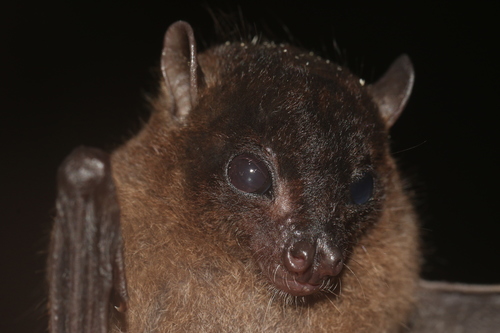
Dorsal fur is dark brownish-gray to blackish-brown, sometimes with a faintly frosted appearance due to pale fur tips. The ventral surface is slightly paler. The face is short and fox-like with notably large, prominent eyes adapted for nocturnal vision. Ears are small and rounded. Wings are dark-membraned and relatively narrow.
Size
Body length approximately 70–85 mm; no visible external tail. Forearm length approximately 36–42 mm. Estimated wingspan approximately 25–30 cm.
Weight
Approximately 15–25 g. Sexual dimorphism in mass is not pronounced.
Distinctive features
Distinguished from the closely related Aethalops aequalis by its slightly larger size and broader geographic distribution outside of Borneo. It is separable from other small pteropodids in Sundaland (e.g., Cynopterus minutus) by its distinctly shorter muzzle, darker overall coloration, and absence of any visible tail.
Differences between males and females
Minimal sexual dimorphism; males and females are similar in size and coloration. Females possess a pair of axillary or pectoral mammae. Males may show slightly larger body mass on average, but differences are not conspicuous.
Behaviour and diet of the Pygmy Fruit Bat
Likely roosts solitarily or in small groups hidden within dense forest foliage, similar to other small foliage-roosting pteropodids. Detailed social structure has not been formally studied in the wild.
When it is active
Strictly nocturnal; foraging activity begins after dusk and continues through the night. Daytime hours are spent roosting concealed within foliage.
Diet
Predominantly frugivorous, feeding on small soft fruits from a range of tropical forest plants including figs (Ficus spp.) and various berry-producing understory species. May supplement diet with nectar and pollen from forest flowers. Fruit pulp is typically chewed and juice extracted before fibrous matter is discarded as a pellet.
How it feeds and hunts
Forages by flying through forest interior and edges, using vision and olfaction to detect ripe fruit. It plucks fruit while clinging briefly to branches or while hovering. After harvesting, it may carry small fruits to a feeding perch to consume them.
Communication
Does not use laryngeal echolocation like microbats. Communication likely involves audible social calls, olfactory signaling via scent glands, and visual cues. Specific vocalizations of this species have not been systematically described in the scientific literature.
Interactions with other species
Potential predators include forest owls (e.g., Strix leptogrammica), arboreal snakes, and possibly small forest raptors. It competes for fruit resources with other small frugivorous bats (e.g., Cynopterus spp.) and fruit-eating birds. As a seed disperser, it has a mutualistic relationship with the plants whose fruits it consumes.
Role in its ecosystem
Serves as a seed disperser for small-fruited tropical plants, contributing to forest regeneration and plant community diversity. When visiting flowers for nectar, it may incidentally facilitate pollination. Its ecological function is typical of small frugivorous bats that operate in the forest interior and understory layer.
Reproduction and lifecycle
Reproductive biology is incompletely documented. As with many tropical pteropodids, breeding is likely aseasonal or loosely bimodal, influenced by fruit availability. Litter size is almost certainly one pup per reproductive event, consistent with the Pteropodidae family norm. Gestation duration has not been precisely recorded for this species.
Raising the young
The mother is the primary caregiver, nursing the pup and initially carrying it during foraging flights. As the pup grows, it is left at the roost while the mother forages. Duration of maternal dependency is undocumented but likely ranges from several weeks to a couple of months, as in related species.
Maturity and lifespan
Age at sexual maturity and lifespan in the wild are not specifically documented for this species. By analogy with similarly sized pteropodids, sexual maturity likely occurs within the first year, and wild lifespan may range from 5 to 10 years under favorable conditions.
Taxonomy and naming of the Pygmy Fruit Bat
Classification
Mammalia > Chiroptera > Pteropodidae > Aethalops > Aethalops alecto (Thomas, 1923)
Subspecies
No formally recognized subspecies at present. Aethalops aequalis (Bornean Pygmy Fruit Bat) was historically considered a subspecies of A. alecto but is now generally elevated to full species status based on morphological and molecular data.
What research says
Recent studies
Broad phylogenomic studies of Old World fruit bats (Pteropodidae) published in the 2010s–2020s have helped confirm the monophyly of the genus Aethalops and support the species-level distinction of A. aequalis from A. alecto. Survey-based bat inventories across Sundaland continue to refine knowledge of this species' distribution and elevation range.
Genome and DNA
No published karyotype or chromosome count is available specifically for Aethalops alecto. The species has been included in molecular phylogenetic analyses of Pteropodidae (e.g., using mitochondrial and nuclear markers) to resolve its relationships within the family.
Compared with similar species
Most closely related to Aethalops aequalis (Bornean Pygmy Fruit Bat), which is slightly smaller and restricted to Borneo. Together, the two Aethalops species are among the smallest pteropodids in Asia. Compared to Cynopterus minutus (Least Dog-faced Fruit Bat), A. alecto has a shorter muzzle and darker fur. Both Aethalops species are dwarfed by the region's large flying foxes (Pteropus vampyrus, wingspan up to 1.5 m).
The Pygmy Fruit Bat and people
Despite belonging to the same family as the giant flying foxes with wingspans exceeding 1.5 m, this bat fits comfortably in a human palm. It navigates entirely by its large eyes and nose in complete darkness, with no echolocation system whatsoever. After chewing a fruit, it spits out a neat fibrous pellet — a 'spit ball' — which researchers can collect to identify its diet.
Where and how to see it
Best opportunities for observation occur in montane forest areas of Peninsular Malaysia such as Fraser's Hill, Cameron Highlands, and the Titiwangsa Range after dusk. In Sumatra, montane forests of Gunung Leuser offer suitable habitat. Mist-netting surveys conducted by licensed researchers are the most effective detection method; casual observers may spot it foraging at fruiting trees with a dim red-light torch to minimize disturbance.
Risks to humans
No notable risk to humans under normal circumstances. As with all wild bats, direct handling without appropriate protective equipment is inadvisable due to the general possibility of bat-associated pathogens. No specific documented cases of disease transmission from this species to humans are known.
Countries where the Pygmy Fruit Bat is recorded
The 4 countries named in the range description of its IUCN Red List assessment.
Questions about the Pygmy Fruit Bat
Where does the Pygmy Fruit Bat live?
The Pygmy Fruit Bat is recorded in Brunei, Indonesia, Malaysia and Thailand across Asia. These countries come from the range description of its IUCN Red List assessment, and they are what place the species on the interactive map.
Is the Pygmy Fruit Bat endangered?
The IUCN Red List assesses the Pygmy Fruit Bat as Least Concern. The species is widespread and abundant enough not to qualify for any threatened category. It does not mean the species is safe forever, only that nothing in the current data raises an alarm.
How many are left in the wild?
No reliable global population estimate exists. This figure comes from the species assessment on the IUCN Red List; population estimates for wild mammals are ranges, not counts, and are revised at each assessment.
What habitat does the Pygmy Fruit Bat live in?
Primary and secondary tropical rainforests, including both lowland dipterocarp forests and montane forests up to approximately 2,000 m.
What is the scientific name of the Pygmy Fruit Bat?
The Pygmy Fruit Bat is Aethalops alecto, in the family Pteropodidae, order Chiroptera.
Other species in the genus Aethalops
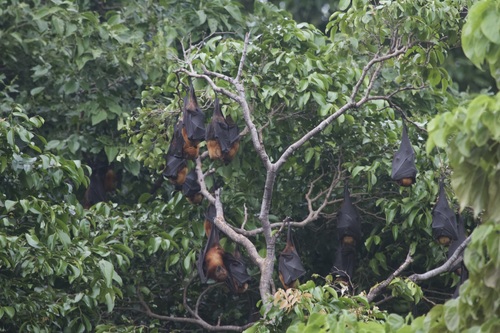
Other species in the family Pteropodidae


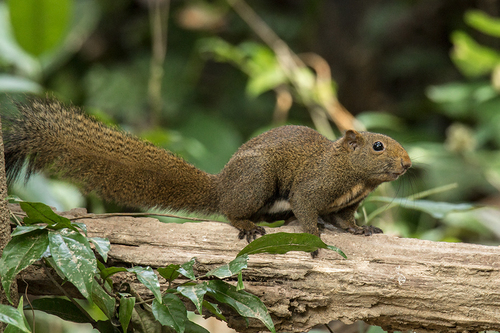
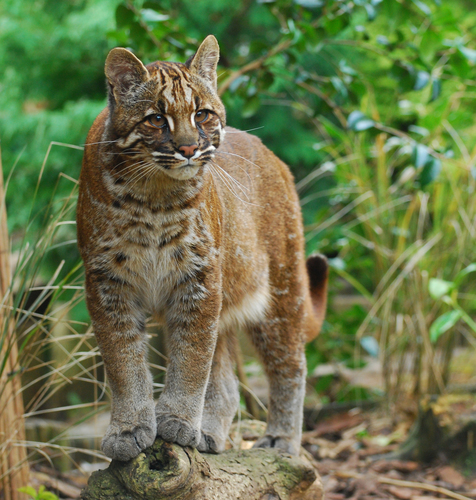
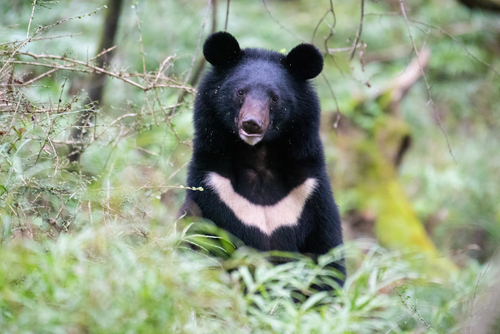
Species that share its range

Sources
Conservation status, range description and population estimate come from the IUCN Red List assessment for Aethalops alecto. Countries are derived from that range description, not from a mapped country list. Last refreshed on .
The distribution map is drawn from the IUCN Red List spatial data compiled in 2023. IUCN (International Union for Conservation of Nature)