
Przewalski's Horse
Equus ferus
Red List assessment
Endangeredon the IUCN Red List
- EXExtinct
- EWExtinct in the Wild
- CRCritically Endangered
- ENEndangered
- VUVulnerable
- NTNear Threatened
- LCLeast Concern
The Przewalski's Horse is recorded in 3 countries across Asia and Europe. The IUCN Red List assesses the Przewalski's Horse as Endangered. Approximately 2,000-2,500 individuals globally, with population trend increasing due to ongoing reintroduction and conservation efforts.
- Family
- Equidae
- Order
- Perissodactyla
- Genus
- Equus
- Countries recorded
- 3
- Continents
- Asia and Europe
- Red List category
- Endangered
- Data updated
- August 9, 2026
What is the Przewalski's Horse?
Przewalski's Horse is the only truly wild horse subspecies surviving today, native to the steppes and semi-desert regions of Mongolia and northern China. It went extinct in the wild during the 1960s but was successfully reintroduced starting in the 1990s through captive breeding programs. Remarkable for its genetic distinctiveness from domestic horses (65 vs 64 chromosomes), it represents a living link to prehistoric equine ancestors.
Where does the Przewalski's Horse live?
Mongolia and northern China, with reintroduced populations in Mongolia's steppes and Gobi Desert region
Historically ranged across the Eurasian steppe from Ukraine to Mongolia and China. Currently found in reintroduced populations primarily in Mongolia (Hustai National Park, Great Gobi B Strictly Protected Area) and China (Xinjiang, Gansu provinces).
Altitude and depth
900-2000m above sea level
Seasonal movements
Exhibits seasonal changes in coat thickness, growing a dense winter coat for extreme cold and shedding to a shorter summer coat. Herd movements may shift seasonally in search of water and grazing.
Habitat of the Przewalski's Horse
Inhabits open grasslands, steppes, and semi-desert regions with sparse vegetation, requiring access to water sources. Prefers flat to rolling terrain that allows for grazing and predator detection.
Adaptations to its environment
Possesses a thick double-layered winter coat to withstand extreme temperature fluctuations from -40°C to 40°C. Has an exceptional ability to digest low-quality, fibrous vegetation and can survive on minimal water for extended periods.
Conservation status and numbers
Endangered (EN) according to IUCN, having been previously classified as Extinct in the Wild before successful reintroduction programs. Population remains vulnerable due to limited genetic diversity from a small founder population of approximately 12 individuals.
Estimated population
Approximately 2,000-2,500 individuals globally, with population trend increasing due to ongoing reintroduction and conservation efforts.
What threatens the Przewalski's Horse?
Genetic bottleneck from small founder population, habitat competition with domestic livestock, harsh winters (dzud events) causing mass mortality, and potential hybridization with domestic horses.
Diseases and parasites
Susceptible to equine parasites including strongyles and botflies, as well as diseases common to wild equids such as equine influenza and strangles.
What is being done to protect it?
Extensive captive breeding programs coordinated internationally, reintroduction projects in Hustai National Park and Gobi Desert reserves, and genetic management programs to maintain diversity. Protected under Mongolian and Chinese wildlife laws.
Recommended actions
Continue genetic diversity management through careful breeding coordination, expand protected habitat areas, monitor for hybridization with domestic horses, and strengthen anti-poaching and habitat protection measures.
What the Przewalski's Horse looks like
Stocky build with a dun-colored coat, typically tan to reddish-brown with a lighter belly, dark legs, and a distinctive upright dark mane that does not fall to one side like domestic horses. Features a large head relative to body size and a short, thick neck.
Size
Body length 210-280 cm, shoulder height 120-146 cm
Weight
200-300 kg, with males typically slightly larger than females
Distinctive features
Distinguished from domestic horses by its erect mane, lack of forelock, dorsal stripe, larger head, and stockier build. Has 66 chromosomes compared to the domestic horse's 64.
Differences between males and females
Minimal sexual dimorphism; males are slightly larger and more muscular than females, with subtle differences in body proportions.
Behaviour and diet of the Przewalski's Horse
Lives in complex social structures including harem groups (one stallion with several mares and offspring) and bachelor male groups. Typical herd sizes range from 5-15 individuals with strong social bonds.
When it is active
Primarily diurnal, with peak activity during dawn and dusk (crepuscular tendencies), spending significant time grazing throughout daylight hours.
Diet
Herbivorous grazer feeding primarily on grasses, herbs, and shrubs. Diet includes various steppe vegetation such as feather grass, and can consume woody plants when other food is scarce.
Communication
Uses a range of vocalizations including whinnies, snorts, and squeals, combined with body language such as ear position and tail movement. Scent marking through urine and feces helps establish territory and social status.
Interactions with other species
Historically preyed upon by wolves, with foals being particularly vulnerable. Competes with domestic livestock for grazing resources and water access in shared habitats.
Role in its ecosystem
Functions as a key herbivore in steppe ecosystems, influencing grassland vegetation structure through grazing patterns and seed dispersal through dung.
Reproduction and lifecycle
Breeding season occurs in spring and summer (April-August), with gestation lasting approximately 11-12 months. Typically produces a single foal, with mares capable of breeding again shortly after giving birth.
Raising the young
Foals are precocial and can stand within an hour of birth, but remain closely bonded with their mothers for 8-13 months. Mares provide primary care while stallions protect the harem group from predators and rival males.
Maturity and lifespan
Sexual maturity reached at 2-3 years old; lifespan averages 20-25 years in the wild and up to 30-35 years in captivity.
Taxonomy and naming of the Przewalski's Horse
Classification
Mammalia > Perissodactyla > Equidae > Equus > Equus ferus
Subspecies
Equus ferus przewalskii is generally considered the only surviving wild subspecies; the nominate subspecies Equus ferus ferus (Tarpan) is extinct.
Scientific synonyms
Equus przewalskii, Equus caballus przewalskii
What research says
Recent studies
Recent genomic research has revealed evidence of ancient domestic horse ancestry within the Przewalski's Horse lineage, challenging previous assumptions about its status as entirely wild. Studies continue to refine understanding of population genetics for conservation breeding programs.
Genome and DNA
Possesses 66 chromosomes (33 pairs), distinct from the domestic horse's 64 chromosomes. Genetic studies confirm all living Przewalski's horses descend from approximately 12 founder individuals plus later domestic horse introgression.
Compared with similar species
Similar to but distinct from domestic horses (Equus caballus) in chromosome number, mane structure, and body proportions. Differs from the extinct Tarpan primarily in coat coloration and some skeletal features, though both represent wild Equus ferus lineages.
The Przewalski's Horse and people
Przewalski's Horse was declared extinct in the wild in 1969 but successfully reintroduced from zoo populations starting in 1992, making it one of the few successful species de-extinction-in-the-wild stories. All living individuals descend from just 12 founding animals captured in the early 20th century.
Where and how to see it
Best observed in Hustai National Park, Mongolia, particularly during early morning or late afternoon when horses are most active and visible grazing in open grasslands. Guided tours are recommended for the best viewing opportunities and to minimize disturbance.
Risks to humans
No notable risk to humans under normal circumstances, though wild stallions can display aggressive behavior if approached too closely, particularly during breeding season.
Human uses
Primarily valued for conservation, ecotourism, and scientific research rather than traditional agricultural or economic use. Historically hunted for meat and hides by indigenous peoples of the steppe regions.
Myths and legends
Named after Russian explorer Nikolai Przhevalsky who documented the species in 1878, it holds cultural significance in Mongolia as a symbol of wild steppe heritage and is referenced in ancient cave paintings believed to depict wild horses.
Countries where the Przewalski's Horse is recorded
The 3 countries named in the range description of its IUCN Red List assessment.
Questions about the Przewalski's Horse
Where does the Przewalski's Horse live?
The Przewalski's Horse is recorded in China, Mongolia and Ukraine across Asia and Europe. These countries come from the range description of its IUCN Red List assessment, and they are what place the species on the interactive map.
Is the Przewalski's Horse endangered?
Yes. The IUCN Red List assesses the Przewalski's Horse as Endangered, one of the three threatened categories. The species faces a very high risk of extinction in the wild — a step below Critically Endangered, but still on a trajectory that ends badly without intervention.
How many are left in the wild?
Approximately 2,000-2,500 individuals globally, with population trend increasing due to ongoing reintroduction and conservation efforts. This figure comes from the species assessment on the IUCN Red List; population estimates for wild mammals are ranges, not counts, and are revised at each assessment.
What habitat does the Przewalski's Horse live in?
Inhabits open grasslands, steppes, and semi-desert regions with sparse vegetation, requiring access to water sources.
What is the scientific name of the Przewalski's Horse?
The Przewalski's Horse is Equus ferus, in the family Equidae, order Perissodactyla.
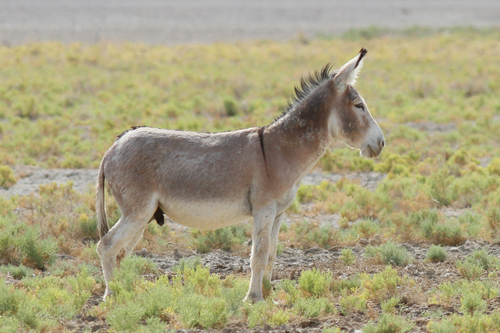
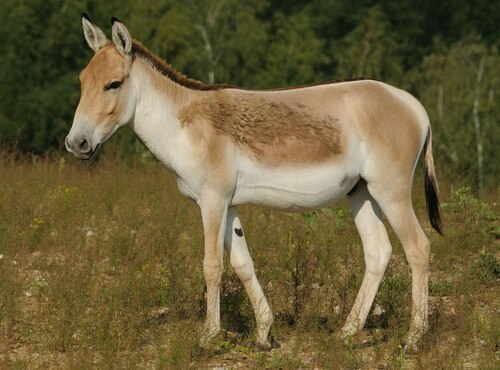
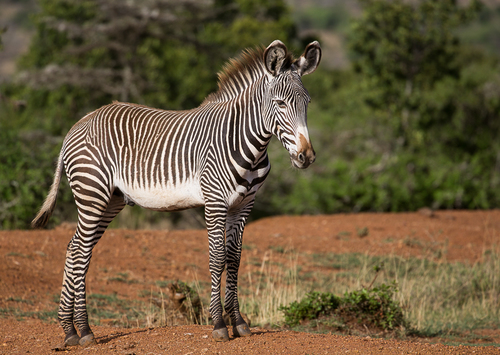
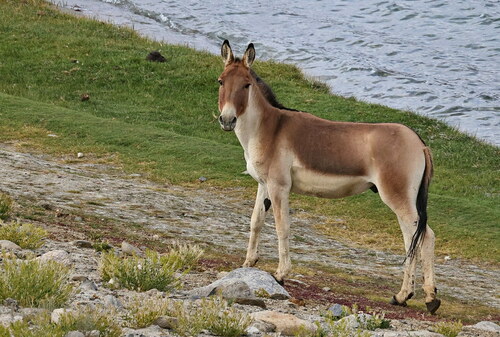
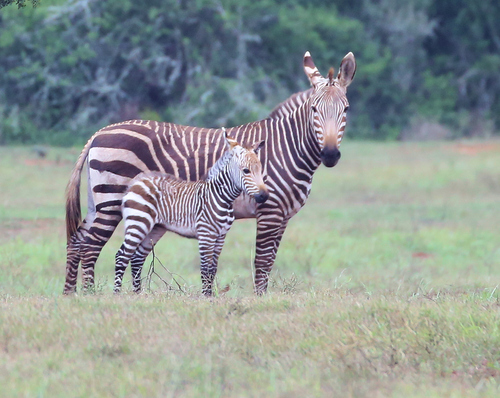
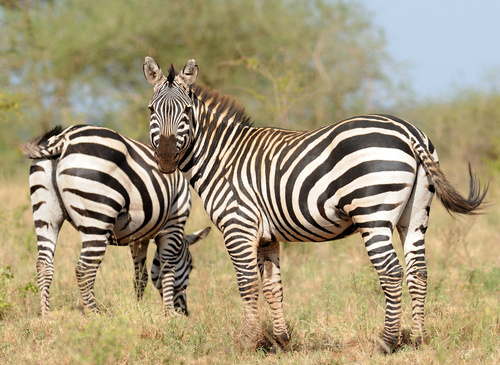
Other species in the genus Equus
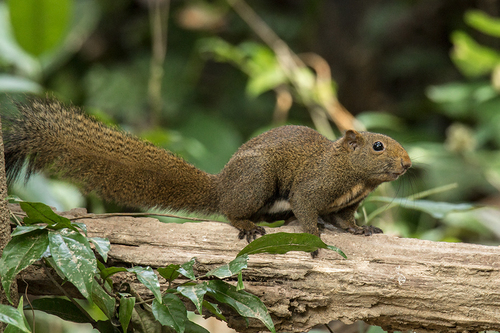
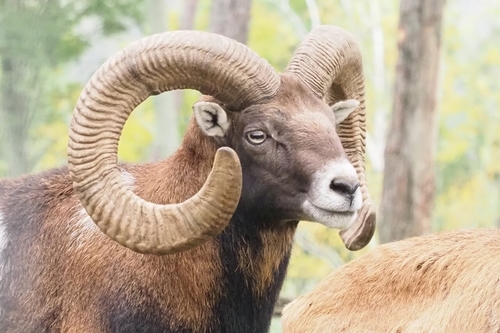
Species that share its range
Sources
Conservation status, range description and population estimate come from the IUCN Red List assessment for Equus ferus. Countries are derived from that range description, not from a mapped country list. Last refreshed on .
The distribution map is drawn from the IUCN Red List spatial data compiled in 2015. IUCN (International Union for Conservation of Nature)