
Percival's Trident Bat
Cloeotis percivali
Red List assessment
Least Concernon the IUCN Red List
- EXExtinct
- EWExtinct in the Wild
- CRCritically Endangered
- ENEndangered
- VUVulnerable
- NTNear Threatened
- LCLeast Concern
The Percival's Trident Bat is recorded in 6 countries across Africa. The IUCN Red List assesses the Percival's Trident Bat as Least Concern. No precise global population estimate exists, but the species is considered to have a stable population trend, though locally it can be rare and patchily distributed.
- Family
- Hipposideridae
- Order
- Chiroptera
- Genus
- Cloeotis
- Countries recorded
- 6
- Continents
- Africa
- Red List category
- Least Concern
- Data updated
- August 9, 2026
What is the Percival's Trident Bat?
Percival's Trident Bat is a very small insectivorous bat restricted to a scattered range across southern and eastern Africa. It is notable for its distinctive trident-shaped noseleaf and for producing one of the highest-frequency echolocation calls recorded in any bat species. It roosts in caves and mines, often in mixed colonies with other bat species, and is a specialist predator of small moths.
Where does the Percival's Trident Bat live?
Southern and eastern Africa, including South Africa, Zimbabwe, Mozambique, Malawi, Tanzania, and Kenya
Distributed patchily across South Africa, Zimbabwe, Mozambique, Malawi, Tanzania, and Kenya, generally in the eastern and southern regions of the African continent. Populations are isolated and localized around suitable cave systems.
Altitude and depth
Typically found at low to moderate elevations, roughly 300-1500 meters above sea level.
Seasonal movements
No long-distance migration is known; the species may show seasonal shifts in roost use and can enter periods of torpor during cooler months.
Habitat of the Percival's Trident Bat
Found in savanna, woodland, and rocky outcrop habitats near caves, mine tunnels, or rock crevices used as roosts. It prefers areas with dense vegetation cover for foraging close to the ground or understory.
Adaptations to its environment
Possesses an extremely high-frequency echolocation call (around 212 kHz), among the highest known in bats, allowing detection of very small prey and fine-scale obstacles. Its trident-shaped noseleaf helps focus and direct these ultrasonic calls efficiently.
Conservation status and numbers
Listed as Least Concern by the IUCN, though some regional assessments have historically considered it Near Threatened due to its patchy distribution and reliance on specific cave roosts. Overall the species is not currently facing rapid population decline at a global scale.
Estimated population
No precise global population estimate exists, but the species is considered to have a stable population trend, though locally it can be rare and patchily distributed.
What threatens the Percival's Trident Bat?
Main threats include disturbance or destruction of cave and mine roosts, human disturbance during hibernation or breeding, and habitat degradation from agriculture and urban expansion.
Diseases and parasites
Like other bats, it can host external parasites such as mites and bat flies, and may be susceptible to certain viral pathogens, though specific disease studies are limited.
What is being done to protect it?
Some roost sites fall within protected areas or nature reserves in South Africa and Zimbabwe, and cave protection initiatives help limit human disturbance. Bat conservation organizations monitor colonies in known roosts.
Recommended actions
Priority actions include protecting known cave and mine roosts from disturbance, conducting further population surveys to clarify distribution, and raising awareness about the ecological importance of insectivorous bats.
What the Percival's Trident Bat looks like
It has soft brownish-grey fur, large rounded ears, and a distinctive trident-shaped noseleaf on its snout used for echolocation. The wings are broad and rounded, suited for slow, maneuverable flight in cluttered habitats.
Size
Body length is approximately 35-40 mm, with a forearm length of about 30-33 mm and wingspan around 200-220 mm.
Weight
Weighs approximately 4-6 grams, making it one of the smaller members of the Hipposideridae family.
Distinctive features
Distinguished from related hipposiderid bats by its extremely small size and its unique trident-shaped noseleaf structure, as well as its exceptionally high echolocation frequency.
Differences between males and females
Sexual dimorphism is minimal, with males and females being similar in size and coloration.
Behaviour and diet of the Percival's Trident Bat
Roosts in colonies, often mixed with other bat species, in caves or mine tunnels; colony sizes can range from a few individuals to several hundred.
When it is active
Strictly nocturnal, emerging after dusk to forage and returning to roost before dawn.
Diet
Feeds exclusively on small flying insects, particularly moths, which it detects using its specialized high-frequency echolocation.
How it feeds and hunts
Uses slow, fluttering flight combined with high-frequency echolocation calls to detect and capture small moths in dense vegetation or close to the ground.
Communication
Primarily communicates through ultrasonic echolocation calls; social calls within roosts may also be used for group cohesion, though these are less studied.
Interactions with other species
Shares roosts with other bat species and may face predation from owls, snakes, and small carnivores near roost entrances.
Role in its ecosystem
Plays an important ecological role as a nocturnal insectivore, helping control populations of moths and other small flying insects, contributing to pest regulation in its habitat.
Reproduction and lifecycle
Breeding typically occurs once per year, with mating in late summer or autumn and births in early summer; gestation lasts several months, producing a single offspring.
Raising the young
Females care for the single pup, nursing it in the roost until it is capable of flight and independent foraging, typically over several weeks.
Maturity and lifespan
Sexual maturity is likely reached within the first year of life; lifespan in the wild is estimated at several years, though exact data is limited due to few long-term studies.
Taxonomy and naming of the Percival's Trident Bat
Classification
Class Mammalia > Order Chiroptera > Family Hipposideridae > Genus Cloeotis > Species Cloeotis percivali
Subspecies
Two subspecies are sometimes recognized: Cloeotis percivali percivali (southern Africa) and Cloeotis percivali australis (South Africa and Zimbabwe), though taxonomy remains debated.
Scientific synonyms
Originally described as Rhinolophus percivali by Thomas in 1901 before being placed in its own genus Cloeotis.
What research says
Recent studies
Recent bioacoustic studies have focused on its extremely high-frequency echolocation calls, examining how such calls function in prey detection and environmental adaptation.
Genome and DNA
Specific genomic studies are limited, though chromosomal and molecular phylogenetic work has helped clarify its placement within Hipposideridae.
Compared with similar species
Compared to other hipposiderid bats like Hipposideros species, Cloeotis percivali is notably smaller and has a much higher echolocation frequency, reflecting its specialization for tiny prey and cluttered habitats.
The Percival's Trident Bat and people
Percival's Trident Bat has one of the highest-pitched echolocation calls of any bat species on Earth, reaching around 212 kHz. Despite its tiny size, it can detect insects as small as a few millimeters using sound alone.
Where and how to see it
Best observed at dusk near known cave or mine roosts in South Africa or Zimbabwe, particularly in nature reserves with documented bat colonies; specialized bat detectors are needed to detect its ultra-high frequency calls.
Risks to humans
No notable risk to humans; it does not bite or carry diseases known to significantly affect people under normal circumstances.
Countries where the Percival's Trident Bat is recorded
The 6 countries named in the range description of its IUCN Red List assessment.
Questions about the Percival's Trident Bat
Where does the Percival's Trident Bat live?
The Percival's Trident Bat is recorded in Kenya, Malawi, Mozambique, South Africa and Tanzania, among 6 countries in total across Africa. These countries come from the range description of its IUCN Red List assessment, and they are what place the species on the interactive map.
Is the Percival's Trident Bat endangered?
The IUCN Red List assesses the Percival's Trident Bat as Least Concern. The species is widespread and abundant enough not to qualify for any threatened category. It does not mean the species is safe forever, only that nothing in the current data raises an alarm.
How many are left in the wild?
No precise global population estimate exists, but the species is considered to have a stable population trend, though locally it can be rare and patchily distributed. This figure comes from the species assessment on the IUCN Red List; population estimates for wild mammals are ranges, not counts, and are revised at each assessment.
What habitat does the Percival's Trident Bat live in?
Found in savanna, woodland, and rocky outcrop habitats near caves, mine tunnels, or rock crevices used as roosts.
What is the scientific name of the Percival's Trident Bat?
The Percival's Trident Bat is Cloeotis percivali, in the family Hipposideridae, order Chiroptera.
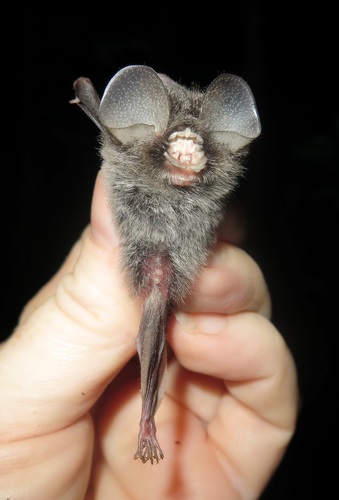
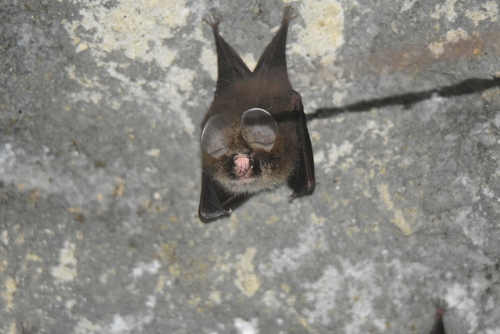
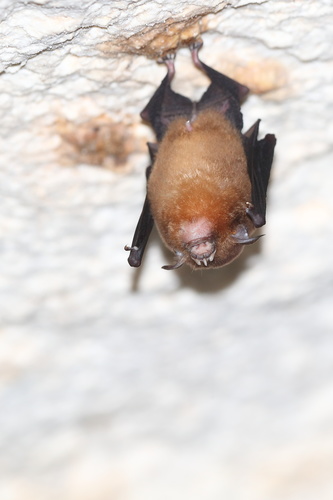
Other species in the family Hipposideridae


Species that share its range
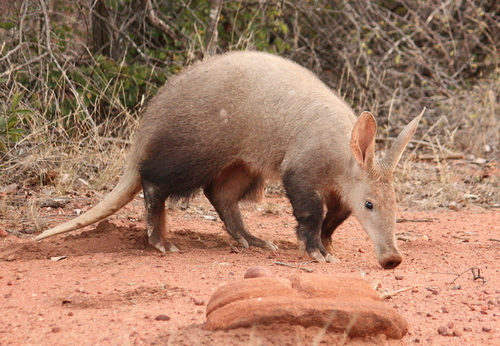


Sources
Conservation status, range description and population estimate come from the IUCN Red List assessment for Cloeotis percivali. Countries are derived from that range description, not from a mapped country list. Last refreshed on .
The distribution map is drawn from the IUCN Red List spatial data compiled in 2008. IUCN (International Union for Conservation of Nature)