
Patrizi's Trident Leaf-nosed Bat
Asellia patrizii
Red List assessment
Least Concernon the IUCN Red List
- EXExtinct
- EWExtinct in the Wild
- CRCritically Endangered
- ENEndangered
- VUVulnerable
- NTNear Threatened
- LCLeast Concern
The Patrizi's Trident Leaf-nosed Bat is recorded in 3 countries across Africa. The IUCN Red List assesses the Patrizi's Trident Leaf-nosed Bat as Least Concern. No reliable global population estimate exists.
- Family
- Hipposideridae
- Order
- Chiroptera
- Genus
- Asellia
- Countries recorded
- 3
- Continents
- Africa
- Red List category
- Least Concern
- Data updated
- August 9, 2026
What is the Patrizi's Trident Leaf-nosed Bat?
Patrizi's Trident Leaf-nosed Bat is a small insectivorous bat endemic to the arid Horn of Africa, particularly Somalia. It belongs to the family Hipposideridae, the Old World leaf-nosed bats, distinguished by a complex, trident-shaped noseleaf used in echolocation. Named in honor of the Italian naturalist Saverio Patrizi, it is one of the lesser-studied members of its genus. It represents a remarkable example of bat diversity in one of the world's most biologically underexplored regions.
Where does the Patrizi's Trident Leaf-nosed Bat live?
Horn of Africa, primarily Somalia; possibly adjacent parts of Ethiopia and Djibouti
Its confirmed range is centered on Somalia, with possible occurrence in neighboring Djibouti and the Ogaden region of eastern Ethiopia. It is endemic to the Horn of Africa sub-region and has a restricted distribution compared to its close relative Asellia tridens.
Altitude and depth
Typically found from near sea level up to approximately 1,500 m, in rocky terrain and lowland semi-arid zones of the Horn of Africa.
Seasonal movements
Limited seasonal data are available. Like related species, it may reduce activity or enter torpor during the driest and hottest periods, and reproductive activity likely synchronizes with the regional wet seasons when insect prey is more abundant.
Habitat of the Patrizi's Trident Leaf-nosed Bat
Primarily found in hot, arid and semi-arid landscapes including rocky outcrops, limestone cave systems, and dry bushland or scrubland typical of the Somali-Masai ecoregion. Like other Asellia species, it likely relies on caves and rocky crevices for day roosts and hibernacula.
Adaptations to its environment
Possesses a highly developed trident-shaped noseleaf that facilitates precise echolocation, critical for detecting insects in open arid habitats. Its kidneys are likely adapted to conserve water in desert and semi-arid environments, and its pale or sandy fur coloration may serve as camouflage against rocky substrates.
Conservation status and numbers
Least Concern (LC) on the IUCN Red List. The species is assessed as not facing imminent extinction risk, though data remain sparse and monitoring is very limited due to the political instability and remoteness of its range.
Estimated population
No reliable global population estimate exists. The species is presumed to maintain a stable or modestly declining population, but quantitative data are essentially absent.
What threatens the Patrizi's Trident Leaf-nosed Bat?
Potential threats include cave disturbance and roost destruction, overgrazing leading to habitat degradation, and possibly human disturbance of colonial roost sites. The ongoing armed conflict and instability in Somalia severely limit conservation monitoring capacity.
Diseases and parasites
No specific disease or parasite studies are available for this species. Like other cave-dwelling bats, it may harbor ectoparasites (mites, nycteribiid flies) and potentially carry coronaviruses or other bat-associated pathogens, though no studies have been conducted.
What is being done to protect it?
No species-specific conservation programs are known. General protections may apply through national wildlife laws in Somalia and Ethiopia, though enforcement is extremely limited. The species may incidentally benefit from protected areas in the region.
Recommended actions
Priority actions include systematic cave and roost surveys in Somalia and neighboring countries, genetic studies to clarify taxonomic relationships with Asellia tridens, development of community-based cave protection initiatives, and integration of the species into regional bat conservation frameworks.
What the Patrizi's Trident Leaf-nosed Bat looks like
Fur is typically pale brownish, sandy, or greyish-brown on the dorsal surface with paler, whitish or cream underparts — coloration suited to arid rocky environments. The face bears the characteristic complex noseleaf of the genus, with a prominent central projection flanked by two lateral leaflets forming a trident shape. The ears are large and pointed, aiding echolocation.
Size
Forearm length approximately 55–65 mm; total body length approximately 60–75 mm; wingspan estimated at 28–35 cm, consistent with other Asellia species.
Weight
Estimated 10–18 g, consistent with congeneric species; no sex-specific weight data available for this species.
Distinctive features
Distinguished from the closely related Asellia tridens primarily by its geographic restriction to the Horn of Africa, subtle morphological differences in noseleaf structure, and possibly slight cranial or dental dimensions. Molecular and morphometric analysis is needed for definitive differentiation.
Differences between males and females
Sexual dimorphism is not well documented for this species. In related Asellia species, females are sometimes marginally larger than males (typical for many bat species), but differences are generally minor.
Behaviour and diet of the Patrizi's Trident Leaf-nosed Bat
Presumed to be colonial, roosting in caves or rock crevices in groups as is characteristic of the genus Asellia. Colony sizes may range from small clusters to hundreds of individuals depending on roost availability.
When it is active
Strictly nocturnal. Foraging flights typically begin shortly after dusk and the bat returns to its roost before dawn, spending the day in torpor to conserve energy in its hot environment.
Diet
Insectivorous, feeding primarily on flying insects such as moths, beetles, and other arthropods. Prey is detected via high-frequency echolocation calls emitted through the noseleaf.
How it feeds and hunts
Uses continuous echolocation with frequency-modulated or constant-frequency calls emitted nasally through the noseleaf. Likely employs passive listening and active echolocation to detect and intercept aerial insect prey in open or cluttered airspace near rocky terrain.
Communication
Communicates via ultrasonic echolocation calls for navigation and prey detection, and likely uses social calls, tactile interactions, and olfactory signals within roost colonies. Nose leaf structure helps beam and shape echolocation pulses.
Interactions with other species
Potential predators include owls, small carnivores, and snakes that may target roost sites. May share caves with other bat species, creating mixed-species roosts. As an insectivore, it plays a role in regulating insect populations.
Role in its ecosystem
Plays an important ecological role as an insect predator, contributing to the regulation of nocturnal insect populations in semi-arid ecosystems. May also serve as prey for higher-level predators in the Horn of Africa food web.
Reproduction and lifecycle
Reproductive biology is poorly documented. Related species typically give birth to a single pup per year, with births timed to coincide with peak insect availability during or after seasonal rains. Gestation is approximately 3–4 months.
Raising the young
As with other hipposiderids, the mother is presumed to carry the pup initially, then park it in the roost while foraging. Lactation lasts several weeks until the juvenile achieves flight capability, typically at 4–6 weeks of age.
Maturity and lifespan
Sexual maturity is likely reached at 1–2 years of age, consistent with related species. Lifespan in the wild is estimated at 5–10 years, though no long-term studies exist for this species specifically.
Taxonomy and naming of the Patrizi's Trident Leaf-nosed Bat
Classification
Mammalia > Chiroptera > Hipposideridae > Asellia > Asellia patrizii
Scientific synonyms
Sometimes treated historically as a subspecies or synonym of Asellia tridens; described by de Beaux in 1931. Some authorities have listed it as Asellia tridens patrizii.
What research says
Recent studies
Taxonomic studies reviewing the Asellia tridens species complex have periodically re-evaluated the status of A. patrizii as a valid species versus a subspecies. Molecular phylogenetic work on African hipposiderids has shed some light on the genus, though A. patrizii remains one of the least studied members.
Genome and DNA
No published chromosome count or genomic data are available specifically for Asellia patrizii. The broader genus Asellia has been subject to limited phylogenetic studies placing it within Hipposideridae.
Compared with similar species
Asellia patrizii is most closely related to Asellia tridens (the Common Trident Bat), which has a much wider distribution from North Africa to South Asia. A. patrizii is generally restricted to the Horn of Africa and may differ in noseleaf morphology and size. It is also related to Asellia italosomalica, another Somali endemic bat.
The Patrizi's Trident Leaf-nosed Bat and people
Despite being named after an Italian naturalist, this bat lives exclusively in one of Africa's most remote and understudied regions, making it a zoological mystery even today. Its trident-shaped noseleaf functions like a biological satellite dish, focusing and shaping echolocation beams with extraordinary precision. The bat can detect an insect just millimeters in size in complete darkness by processing the echo of its own ultrasonic calls in under a millisecond.
Where and how to see it
Best observed near cave entrances in rocky limestone areas of northern or central Somalia, or along the Ethiopian Ogaden border region, at dusk when bats emerge to forage. Access is extremely challenging due to political instability in Somalia; guided expeditions through specialized wildlife research organizations are strongly recommended.
Risks to humans
No notable specific risk. As with all wild bats, direct handling should be avoided due to the potential (though unconfirmed for this species) for zoonotic disease transmission. A bite from a cornered individual is possible if handled.
Countries where the Patrizi's Trident Leaf-nosed Bat is recorded
The 3 countries named in the range description of its IUCN Red List assessment.
Questions about the Patrizi's Trident Leaf-nosed Bat
Where does the Patrizi's Trident Leaf-nosed Bat live?
The Patrizi's Trident Leaf-nosed Bat is recorded in Djibouti, Ethiopia and Somalia across Africa. These countries come from the range description of its IUCN Red List assessment, and they are what place the species on the interactive map.
Is the Patrizi's Trident Leaf-nosed Bat endangered?
The IUCN Red List assesses the Patrizi's Trident Leaf-nosed Bat as Least Concern. The species is widespread and abundant enough not to qualify for any threatened category. It does not mean the species is safe forever, only that nothing in the current data raises an alarm.
How many are left in the wild?
No reliable global population estimate exists. This figure comes from the species assessment on the IUCN Red List; population estimates for wild mammals are ranges, not counts, and are revised at each assessment.
What habitat does the Patrizi's Trident Leaf-nosed Bat live in?
Primarily found in hot, arid and semi-arid landscapes including rocky outcrops, limestone cave systems, and dry bushland or scrubland typical of the Somali-Masai ecoregion.
What is the scientific name of the Patrizi's Trident Leaf-nosed Bat?
The Patrizi's Trident Leaf-nosed Bat is Asellia patrizii, in the family Hipposideridae, order Chiroptera.
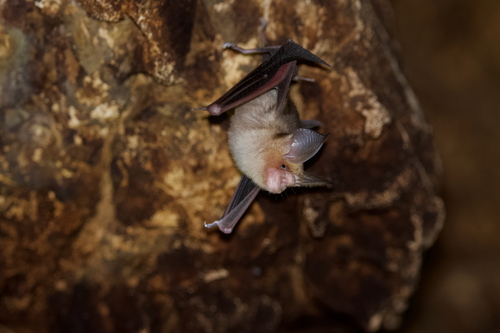
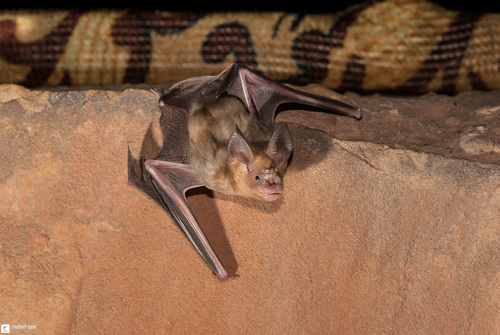
Other species in the genus Asellia

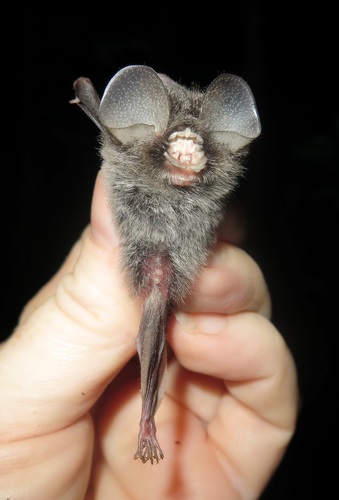
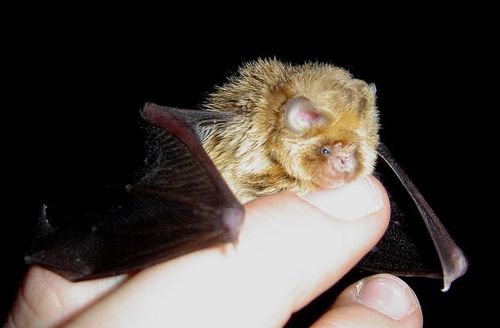
Other species in the family Hipposideridae

Species that share its range
Sources
Conservation status, range description and population estimate come from the IUCN Red List assessment for Asellia patrizii. Countries are derived from that range description, not from a mapped country list. Last refreshed on .
The distribution map is drawn from the IUCN Red List spatial data compiled in 2017. IUCN (International Union for Conservation of Nature)