
North American River Otter
Lontra canadensis
Red List assessment
Least Concernon the IUCN Red List
- EXExtinct
- EWExtinct in the Wild
- CRCritically Endangered
- ENEndangered
- VUVulnerable
- NTNear Threatened
- LCLeast Concern
The North American River Otter is recorded in 3 countries across North America. The IUCN Red List assesses the North American River Otter as Least Concern. Population size is not precisely quantified but is considered large and stable to increasing across most of its range due to successful reintroduction programs and improved water quality.
- Family
- Mustelidae
- Order
- Carnivora
- Genus
- Lontra
- Countries recorded
- 3
- Continents
- North America
- Red List category
- Least Concern
- Data updated
- August 9, 2026
What is the North American River Otter?
The North American river otter is a semi-aquatic mustelid found throughout most of Canada and the United States, closely associated with rivers, lakes, and coastal waters. It is highly playful and agile, known for sliding down muddy or snowy banks as both locomotion and social play. As a mesopredator, it plays an important role in aquatic food webs and is often used as an indicator of freshwater ecosystem health.
Where does the North American River Otter live?
Canada, United States (widespread across most states except arid Southwest), and northern Mexico
Ranges across almost all of Canada and the United States, from Alaska to Florida, with populations extending into northern Mexico; historically absent from very arid regions like parts of the southwestern US.
Altitude and depth
Sea level to around 2,500 m in mountainous freshwater habitats; typically forages in water less than 5 m deep.
Seasonal movements
No true hibernation or migration; remains active year-round, including under ice in winter, though home range use may shift seasonally with prey availability.
Habitat of the North American River Otter
Rivers, streams, lakes, marshes, swamps, and coastal marine shorelines; requires clean water with abundant fish and adjacent vegetated banks for denning and cover.
Adaptations to its environment
Has webbed feet, a streamlined body, dense waterproof fur with high follicle density for insulation, and can close its nostrils and ears underwater. Long, muscular tail aids propulsion, and a high metabolism supports activity in cold water.
Conservation status and numbers
Listed as Least Concern by the IUCN due to widespread distribution and recovering populations following historical declines from trapping and pollution.
Estimated population
Population size is not precisely quantified but is considered large and stable to increasing across most of its range due to successful reintroduction programs and improved water quality.
What threatens the North American River Otter?
Water pollution and contamination (heavy metals, pesticides), habitat degradation, wetland loss, vehicle collisions, and historical overtrapping for fur.
Diseases and parasites
Susceptible to canine distemper, leptospirosis, and various internal parasites such as flukes and roundworms, as well as external parasites like fleas and ticks.
What is being done to protect it?
Protected under various state and provincial wildlife regulations, benefiting from Clean Water Act protections in the US, and reintroduced successfully in many states where it had been extirpated (e.g., through river otter reintroduction projects in the 1980s-90s).
Recommended actions
Continued monitoring of water quality, protection of riparian habitats, regulation of trapping quotas, and maintenance of wildlife corridors along waterways.
What the North American River Otter looks like
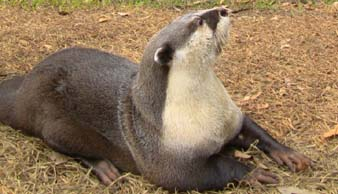
Sleek, elongated body with short legs, webbed feet, a thick tapering tail, and dense dark brown fur that appears almost black when wet, with a lighter, silvery-grey throat and chest.
Size
Body length (including tail) ranges from about 90 to 130 cm, with the tail comprising roughly one-third of total length.
Weight
Typically 5 to 14 kg, with males generally larger than females.
Distinctive features
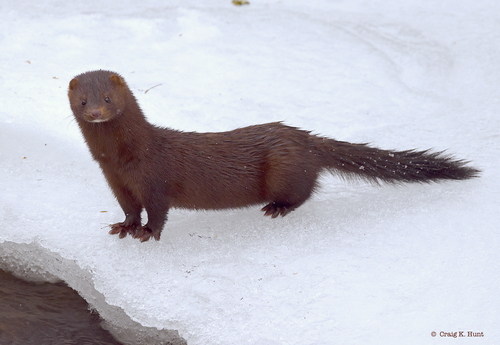
Distinguished from mink by larger size, more robust build, and a thicker tail; differs from sea otters by smaller size and less specialized flipper-like hind feet.
Differences between males and females
Males are generally 20-25% larger and heavier than females, though coloration and markings are similar between sexes.
Behaviour and diet of the North American River Otter
Generally solitary or found in small family groups, especially females with young; adult males may form loose bachelor groups outside breeding season.
When it is active
Primarily crepuscular and nocturnal, though can also be active during the day, especially in areas with low human disturbance.
Diet
Carnivorous, feeding mainly on fish, crayfish, frogs, and aquatic invertebrates, supplemented occasionally by birds, small mammals, and eggs.
How it feeds and hunts
Hunts by active pursuit underwater, using keen underwater vision and sensitive whiskers (vibrissae) to detect prey movement in murky water; often forages cooperatively in family groups.
Communication
Communicates through a range of vocalizations including chirps, whistles, growls, and screams, as well as scent marking via latrines and body language such as tail wagging and playful posturing.
Interactions with other species
Preyed upon occasionally by large predators such as coyotes, bobcats, and birds of prey when on land; competes with mink and other semi-aquatic carnivores for similar prey resources.
Role in its ecosystem
Acts as a mesopredator helping regulate fish and invertebrate populations, and serves as a bioindicator species reflecting the health of freshwater and coastal ecosystems.
Reproduction and lifecycle
Breeding occurs in late winter to early spring, with delayed implantation extending apparent gestation to about 10-12 months, though actual embryonic development takes around 2 months; litters typically contain 1-6 pups.
Raising the young
Females raise pups alone in dens near water, nursing them for about 3 months and teaching them to swim and hunt; young typically stay with mother for about a year before dispersing.
Maturity and lifespan
Reaches sexual maturity around 2-3 years of age; lifespan is typically 8-13 years in the wild and can exceed 20 years in captivity.
Taxonomy and naming of the North American River Otter
Classification
Class Mammalia > Order Carnivora > Family Mustelidae > Genus Lontra > Species Lontra canadensis
Subspecies
Several subspecies have been proposed historically (e.g., L. c. canadensis, L. c. pacifica, L. c. lataxina, L. c. periclyzomae), though modern taxonomy often treats these as clinal variation rather than distinct valid subspecies.
Scientific synonyms
Lutra canadensis (older genus placement before Lontra was split from Lutra)
What research says
Recent studies
Recent research has focused on using river otters as bioindicators for mercury and other contaminant levels in freshwater systems, as well as genetic studies tracking recolonization patterns after reintroductions.
Genome and DNA
Diploid chromosome number is 2n=38; genetic studies have been used to assess population structure and success of reintroduction programs across North America.
Compared with similar species
Similar in general body plan to the Eurasian otter (Lutra lutra) but generally larger, with differences in skull shape and fur texture; distinct from the much larger, marine-dwelling sea otter (Enhydra lutris) which rarely comes ashore.
The North American River Otter and people
River otters are known to slide repeatedly down muddy or snowy slopes purely for play, not just locomotion. They can hold their breath underwater for up to 8 minutes while hunting. Their whiskers are so sensitive they can detect prey vibrations even in complete darkness.
Where and how to see it
Best observed at dawn or dusk near quiet rivers, lakes, or coastal estuaries with minimal human disturbance; looking for slide trails, tracks, and scat (spraint) near water can help locate active otter territories.
Risks to humans
No notable risk to humans under normal circumstances, though they may bite defensively if cornered or handled; can occasionally carry zoonotic pathogens like leptospirosis.
Human uses
Historically trapped extensively for its dense, valuable fur pelt, a practice that continues on a regulated basis in some regions; also valued today for ecotourism and as a flagship species for wetland conservation.
Myths and legends
In various Native American traditions, the otter is regarded as a symbol of playfulness, curiosity, and feminine energy, sometimes appearing as a clan animal or spirit guide in folklore.
Countries where the North American River Otter is recorded
The 3 countries named in the range description of its IUCN Red List assessment.
Questions about the North American River Otter
Where does the North American River Otter live?
The North American River Otter is recorded in Canada, Mexico and United States across North America. These countries come from the range description of its IUCN Red List assessment, and they are what place the species on the interactive map.
Is the North American River Otter endangered?
The IUCN Red List assesses the North American River Otter as Least Concern. The species is widespread and abundant enough not to qualify for any threatened category. It does not mean the species is safe forever, only that nothing in the current data raises an alarm.
How many are left in the wild?
Population size is not precisely quantified but is considered large and stable to increasing across most of its range due to successful reintroduction programs and improved water quality. This figure comes from the species assessment on the IUCN Red List; population estimates for wild mammals are ranges, not counts, and are revised at each assessment.
What habitat does the North American River Otter live in?
Rivers, streams, lakes, marshes, swamps, and coastal marine shorelines; requires clean water with abundant fish and adjacent vegetated banks for denning and cover.
What is the scientific name of the North American River Otter?
The North American River Otter is Lontra canadensis, in the family Mustelidae, order Carnivora.
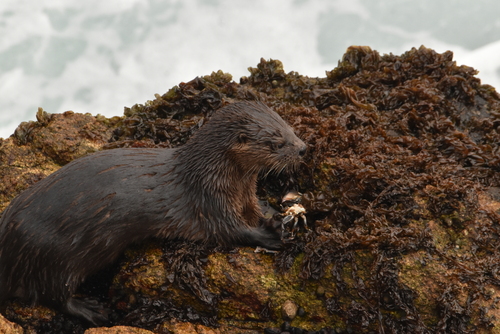
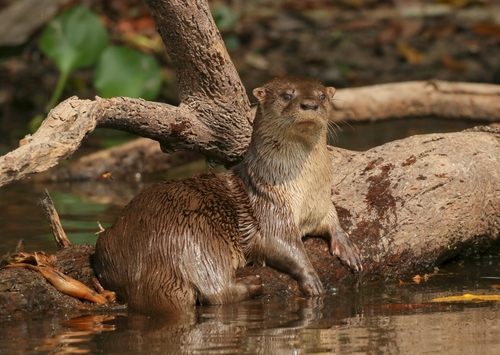
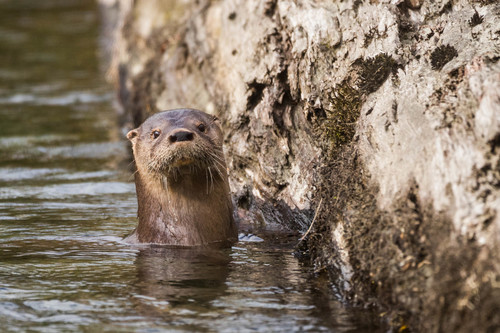
Other species in the genus Lontra
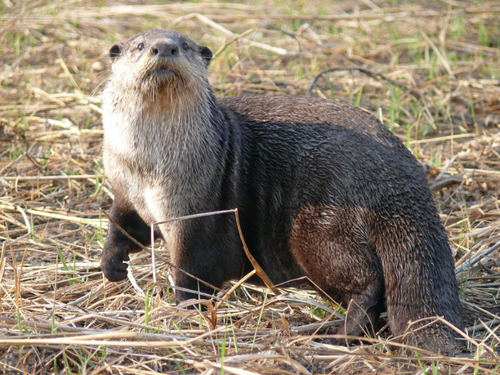
Other species in the family Mustelidae

Species that share its range
Sources
Conservation status, range description and population estimate come from the IUCN Red List assessment for Lontra canadensis. Countries are derived from that range description, not from a mapped country list. Last refreshed on .
The distribution map is drawn from the IUCN Red List spatial data compiled in 2015. IUCN (International Union for Conservation of Nature)