
Mullah Spiny Mouse
Acomys mullah
Red List assessment
Least Concernon the IUCN Red List
- EXExtinct
- EWExtinct in the Wild
- CRCritically Endangered
- ENEndangered
- VUVulnerable
- NTNear Threatened
- LCLeast Concern
The Mullah Spiny Mouse is recorded in 4 countries across Africa. The IUCN Red List assesses the Mullah Spiny Mouse as Least Concern. No quantitative population estimate is available.
- Family
- Muridae
- Order
- Rodentia
- Genus
- Acomys
- Countries recorded
- 4
- Continents
- Africa
- Red List category
- Least Concern
- Data updated
- August 9, 2026
What is the Mullah Spiny Mouse?
The Mullah Spiny Mouse is a small, arid-adapted rodent endemic to the Horn of Africa, named after the Mullah region of Somalia where the type specimen was collected. Like all members of the genus Acomys, its dorsal fur is modified into stiff, spine-like bristles, giving the animal a distinctly rough texture. It inhabits rocky and semi-arid scrubland environments of the Somali-Ethiopian lowlands. It is notable as part of a remarkable genus known for extraordinary skin regeneration abilities and production of highly precocial young.
Where does the Mullah Spiny Mouse live?
Somalia (main range), eastern Ethiopia (Ogaden/Somali Region), and possibly Djibouti
Endemic to the Horn of Africa region. Its range centers on Somalia (including Somaliland and Puntland), extends into the Ogaden and Somali Regional State of eastern Ethiopia, and may marginally reach Djibouti. It is not known from Kenya or other neighboring countries.
Altitude and depth
Primarily found at low to moderate altitudes, typically between 100 and 1200 m above sea level, across the arid plains and foothills of the Somali peninsula.
Seasonal movements
No significant seasonal migration is known. Activity patterns may shift slightly with seasonal rainfall events (the Gu and Deyr rains), which affect food availability. No hibernation occurs in this tropical arid species.
Habitat of the Mullah Spiny Mouse
Primarily found in arid and semi-arid rocky terrain, including dry scrubland, Acacia-Commiphora bushland, and rocky outcrops. It favors areas with crevices and rock piles that provide shelter from predators and extreme daytime heat. The habitat is characterized by sparse, low-rainfall vegetation typical of the Somali-Maasai biogeographic zone.
Adaptations to its environment
The spine-like dorsal hairs likely deter predators and reduce heat load. Large eyes facilitate activity under low-light conditions. The kidneys are highly efficient at concentrating urine, a critical adaptation to arid environments where free water is scarce. The genus Acomys is also noted for regenerating large areas of skin without scarring, an ability likely present in this species.
Conservation status and numbers
Least Concern (LC) on the IUCN Red List. The species is assessed as widespread within its range, with no evidence of rapid population decline, and it is presumed to tolerate the prevailing arid conditions of Somalia. The political instability of Somalia limits detailed survey data.
Estimated population
No quantitative population estimate is available. The population trend is presumed stable based on the LC assessment, though formal surveys are lacking due to the inaccessibility of much of its range in Somalia.
What threatens the Mullah Spiny Mouse?
Overgrazing by livestock leading to habitat degradation is the primary threat, as it reduces vegetation cover and disturbs rocky microhabitats. Desertification driven by climate change may gradually reduce suitable habitat. Subsistence hunting and collection for local use are minor, localized threats.
Diseases and parasites
Like other Acomys species, it is susceptible to ectoparasites such as fleas, ticks, and mites. It may serve as a reservoir host for Leishmania or other zoonotic pathogens, as documented in related African spiny mice, though no species-specific data exist for A. mullah.
What is being done to protect it?
No species-specific conservation programs are known for Acomys mullah. Parts of its range may overlap with protected areas in Ethiopia, such as areas of the Somali Regional State. General biodiversity monitoring of the Horn of Africa region indirectly benefits the species.
Recommended actions
Field surveys to document population size, distribution limits, and ecological requirements are urgently needed. Habitat assessments in areas of overgrazing should be prioritized. Inclusion in national biodiversity monitoring programs in Somalia and Ethiopia is recommended.
What the Mullah Spiny Mouse looks like
Dorsal fur is sandy-brown to greyish-brown, with stiff, spine-tipped hairs giving the back a rough, bristly texture. The ventral surface is white to pale grey and soft-furred. The ears are large and rounded, and the eyes are large and dark. The tail is thinly haired and approximately as long as the body.
Size
Body length approximately 80–115 mm; tail length approximately 80–110 mm (roughly equal to body length). Ear length approximately 15–20 mm.
Weight
Estimated 20–40 g, consistent with similarly-sized Acomys species in the region. No sex-specific weight data are published for this species.
Distinctive features
Distinguished from closely related Acomys cahirinus by its smaller size, more restricted range in the Horn of Africa, and subtle cranial and morphometric differences. Compared to Acomys dimidiatus, it tends to be paler and has a more northern distribution. The spiny dorsal pelage immediately distinguishes it from sympatric non-Acomys murids.
Differences between males and females
Sexual dimorphism is minimal, as is typical for the genus. Males and females are similar in size and coloration. Females possess 4 pairs of mammae.
Behaviour and diet of the Mullah Spiny Mouse
Likely social or semi-social, as most Acomys species live in small groups or family units in rock crevices and burrows. Group sizes typically range from 2 to 10 individuals sharing a refuge. Social tolerance among conspecifics is relatively high in the genus.
When it is active
Primarily nocturnal and crepuscular, emerging after sunset to forage and retreating before dawn. During the hottest months, activity may be largely restricted to nighttime to avoid lethal daytime temperatures.
Diet
Omnivorous. The diet likely consists of seeds, dry plant matter, invertebrates (beetles, termites, grasshoppers), and occasionally small amounts of plant tissue and fungi. Like other spiny mice in arid zones, it can exploit seasonally abundant food sources such as insect blooms following rains.
How it feeds and hunts
Forages actively on the ground and among rocks, using its vibrissae and keen olfaction to detect seeds and invertebrates. Insects may be caught by rapid pouncing. Food may be cached in dry seasons.
Communication
Communicates via ultrasonic vocalizations, scent marking using urine and glandular secretions, and tactile contact within groups. Alarm calls alert group members to predators. Scent marks may also delineate territories or signal reproductive status.
Interactions with other species
Predated upon by small raptors (owls, kestrels), snakes, monitor lizards, and small carnivorous mammals such as genets and mongooses. Competes with other small granivores and insectivores in its rocky habitat. May share refuges with other small vertebrates in rocky outcrops.
Role in its ecosystem
Acts as a seed disperser and consumer, influencing plant community composition in arid ecosystems. As prey, it is an important energy link between vegetation/invertebrates and meso-predators. Its burrowing and nest-building activities contribute to soil aeration.
Reproduction and lifecycle
Breeding likely occurs year-round with peaks correlated with seasonal rainfall. Gestation in Acomys typically lasts 38–42 days. Litter size is small, usually 1–4 young. Young are born in a highly precocial state, fully furred and with eyes open.
Raising the young
The female provides primary parental care, nursing young in the nest for 3–4 weeks. In communal groups, alloparental care (other group members assisting with pup care) has been observed in related species and may occur here. Young develop rapidly and reach independence within weeks.
Maturity and lifespan
Sexual maturity is reached at approximately 6–8 weeks of age, consistent with the genus. Wild lifespan is estimated at 1–3 years; captive individuals of related species have lived up to 5–6 years.
Taxonomy and naming of the Mullah Spiny Mouse
Classification
Mammalia > Rodentia > Muridae (subfamily Deomyinae, sometimes elevated to family Acomyidae) > Acomys > Acomys mullah
Scientific synonyms
Originally described as Acomys mullah Thomas, 1910. Sometimes treated historically as a subspecies of Acomys cahirinus, but now recognized as a distinct species.
What research says
Recent studies
Acomys mullah has been included in broader molecular phylogenetic revisions of the genus Acomys in the 2000s–2010s, which clarified species boundaries in the Horn of Africa. No dedicated behavioral or ecological studies are available as of 2024, largely due to the inaccessibility of Somalia to field researchers.
Genome and DNA
No published genome or detailed chromosomal study specific to Acomys mullah is available. Related species such as A. cahirinus have a karyotype of 2n = 36–38. Molecular phylogenetic studies of the genus (e.g., using cytochrome b and nuclear markers) have confirmed A. mullah as a valid species within the East African clade.
Compared with similar species
Most closely related to other East African arid-zone Acomys species such as A. wilsoni (Wilson's Spiny Mouse) and A. percivali (Percival's Spiny Mouse). Compared to the widespread A. cahirinus, A. mullah is smaller and more restricted geographically. All share the characteristic spiny pelage, large eyes, and precocial young, but differ in cranial morphology, fur coloration, and habitat preferences.
The Mullah Spiny Mouse and people
1) Spiny mice of the genus Acomys can autotomize (voluntarily shed) large patches of skin to escape predators, then regenerate this skin — including hair follicles and cartilage — with no scar tissue, a feat unique among mammals. 2) Despite their tiny size, Acomys pups are born fully furred with their eyes open, resembling miniature adults within hours of birth — far more developed than typical rodent newborns. 3) The species is named after the Mullah region, evoking the rugged landscape of northern Somalia that shaped its remarkable arid adaptations.
Where and how to see it
Best observed in rocky, semi-arid scrubland areas of Somaliland (e.g., around Hargeisa or Berbera) or the Ethiopian Ogaden region after dusk, using a red-light headlamp. Security and accessibility remain significant challenges in much of its range. Pitfall trapping or camera traps positioned near rock crevices are the most effective survey methods.
Risks to humans
No notable risk to humans. May bite if handled, and as with all wild rodents, there is a theoretical risk of zoonotic disease transmission. Standard precautions when handling wild-caught individuals are recommended.
Countries where the Mullah Spiny Mouse is recorded
The 4 countries named in the range description of its IUCN Red List assessment.
Questions about the Mullah Spiny Mouse
Where does the Mullah Spiny Mouse live?
The Mullah Spiny Mouse is recorded in Djibouti, Ethiopia, Kenya and Somalia across Africa. These countries come from the range description of its IUCN Red List assessment, and they are what place the species on the interactive map.
Is the Mullah Spiny Mouse endangered?
The IUCN Red List assesses the Mullah Spiny Mouse as Least Concern. The species is widespread and abundant enough not to qualify for any threatened category. It does not mean the species is safe forever, only that nothing in the current data raises an alarm.
How many are left in the wild?
No quantitative population estimate is available. This figure comes from the species assessment on the IUCN Red List; population estimates for wild mammals are ranges, not counts, and are revised at each assessment.
What habitat does the Mullah Spiny Mouse live in?
Primarily found in arid and semi-arid rocky terrain, including dry scrubland, Acacia-Commiphora bushland, and rocky outcrops.
What is the scientific name of the Mullah Spiny Mouse?
The Mullah Spiny Mouse is Acomys mullah, in the family Muridae, order Rodentia.
Other species in the genus Acomys
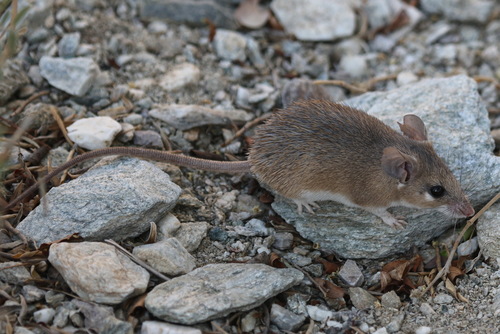
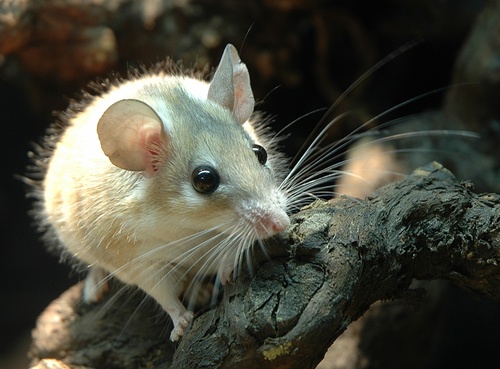
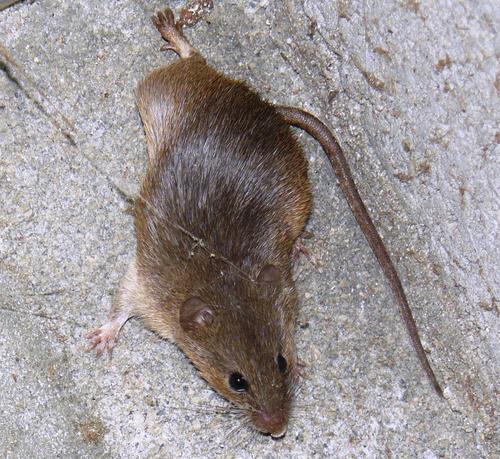
Other species in the family Muridae
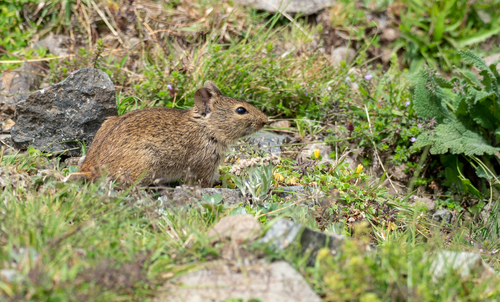
Sources
Conservation status, range description and population estimate come from the IUCN Red List assessment for Acomys mullah. Countries are derived from that range description, not from a mapped country list. Last refreshed on .
The distribution map is drawn from the IUCN Red List spatial data compiled in 2008. IUCN (International Union for Conservation of Nature)