
Lesser Bandicoot Rat
Bandicota bengalensis
Red List assessment
Least Concernon the IUCN Red List
- EXExtinct
- EWExtinct in the Wild
- CRCritically Endangered
- ENEndangered
- VUVulnerable
- NTNear Threatened
- LCLeast Concern
The Lesser Bandicoot Rat is recorded in 6 countries across Asia. The IUCN Red List assesses the Lesser Bandicoot Rat as Least Concern. Population size is not precisely quantified but considered extremely large and stable to increasing, given its status as one of the most abundant rodent pests in South Asia.
- Family
- Muridae
- Order
- Rodentia
- Genus
- Bandicota
- Countries recorded
- 6
- Continents
- Asia
- Red List category
- Least Concern
- Data updated
- August 9, 2026
What is the Lesser Bandicoot Rat?
The Lesser Bandicoot Rat is a medium-sized burrowing rodent widespread across agricultural and urban landscapes of South Asia. It is notorious as one of the most significant agricultural pests in the region due to its burrowing habits and high reproductive rate. Highly adaptable, it thrives in close association with human settlements and farmland. Its ecological and economic importance has made it one of the most studied murid rodents in Asia.
Where does the Lesser Bandicoot Rat live?
South and Southeast Asia, primarily India, Pakistan, Bangladesh, Sri Lanka, Nepal, and Myanmar
Widely distributed across the Indian subcontinent including India, Pakistan, Bangladesh, Nepal, and Sri Lanka, extending into parts of Myanmar and Southeast Asia. It has also been introduced to some Indian Ocean islands and parts of Southeast Asia through human trade.
Altitude and depth
Typically found from sea level up to about 2000 meters, though most populations occur in lowland agricultural areas below 1000 meters.
Seasonal movements
No true hibernation or migration; breeding activity peaks during monsoon and post-monsoon seasons when food and soil moisture are optimal for burrowing.
Habitat of the Lesser Bandicoot Rat
Found in cultivated fields (especially rice paddies), gardens, grasslands, and urban/peri-urban environments including granaries and human dwellings. It prefers soft, easily burrowable soil near water sources or irrigation channels.
Adaptations to its environment
Strong forelimbs and claws adapted for extensive burrow digging, which provides shelter from predators and temperature extremes. Its omnivorous diet and tolerance of human-modified habitats allow it to exploit diverse food sources year-round.
Conservation status and numbers
Listed as Least Concern by the IUCN due to its wide distribution, large population, and adaptability to human-altered environments; it faces no significant extinction threats.
Estimated population
Population size is not precisely quantified but considered extremely large and stable to increasing, given its status as one of the most abundant rodent pests in South Asia.
What threatens the Lesser Bandicoot Rat?
No major threats to the species itself; rather, it is heavily controlled by humans through poisoning, trapping, and habitat destruction of burrows due to its status as an agricultural pest.
Diseases and parasites
Known to carry parasites such as fleas and mites, and can act as a reservoir for zoonotic diseases including leptospirosis and plague-related bacteria.
What is being done to protect it?
No specific conservation programs exist for this species, as it is not threatened; instead, most management efforts focus on population control to mitigate crop damage.
Recommended actions
Management priorities focus on sustainable, targeted pest control methods to minimize crop losses while avoiding non-target ecological impacts from rodenticides.
What the Lesser Bandicoot Rat looks like
The fur is coarse and grayish-brown to blackish-brown dorsally, with a paler grayish underside. It has a robust body, short rounded ears, and a scaly, sparsely haired tail.
Size
Body length ranges from approximately 140-200 mm, with a tail typically shorter than or equal to body length, around 110-170 mm.
Weight
Adults typically weigh between 100-250 grams, with males generally slightly larger than females.
Distinctive features
Distinguished from the larger Bandicota indica by its smaller size, shorter tail relative to body length, and less prominent guard hairs on the back.
Differences between males and females
Minimal sexual dimorphism; males are slightly larger and heavier than females but coloration and body shape are similar.
Behaviour and diet of the Lesser Bandicoot Rat
Generally solitary or living in loose colonies within burrow systems, with limited social hierarchy; burrows may be shared by breeding pairs or family groups temporarily.
When it is active
Primarily nocturnal and crepuscular, though activity can extend into daylight hours in undisturbed agricultural areas.
Diet
Omnivorous, feeding mainly on rice, grains, tubers, vegetables, and other crops, supplemented occasionally with insects and small invertebrates.
Communication
Communicates through ultrasonic vocalizations, scent marking via urine and glandular secretions, and tactile interactions during social encounters.
Interactions with other species
Preyed upon by snakes, owls, mongooses, and domestic cats and dogs; competes with other rodent species for food and burrow space in shared habitats.
Role in its ecosystem
Plays a role in soil aeration through burrowing activity and serves as a prey base for various predators, though its primary ecological significance is as a major agricultural pest affecting crop yields.
Reproduction and lifecycle
Breeding occurs year-round in favorable conditions but peaks during and after the monsoon; gestation lasts about 21-23 days, with litters averaging 6-10 pups.
Raising the young
Females provide all parental care, nursing and protecting young within the burrow until weaning at around 3-4 weeks of age, after which juveniles disperse.
Maturity and lifespan
Reaches sexual maturity at around 2-3 months of age; lifespan in the wild is typically 1-2 years, though captive individuals may live slightly longer.
Taxonomy and naming of the Lesser Bandicoot Rat
Classification
Mammalia > Rodentia > Muridae > Bandicota > Bandicota bengalensis
Subspecies
Several subspecies have been proposed but taxonomy remains debated; commonly cited forms include B. b. bengalensis (mainland South Asia) and B. b. kok (Southeast Asia), though many authorities treat the species as monotypic with clinal variation.
Scientific synonyms
Mus bengalensis, Nesokia bengalensis
What research says
Recent studies
Recent research has focused on rodenticide resistance, population genetics for pest control strategies, and its role as a disease reservoir in agricultural communities.
Genome and DNA
Diploid chromosome number is reported as 2n=42; genetic studies have focused on its pest management and phylogenetic relationships within Bandicota.
Compared with similar species
Smaller and less robust than the Greater Bandicoot Rat (Bandicota indica), with a shorter tail and less coarse dorsal fur; both species overlap in range but occupy slightly different habitat niches.
The Lesser Bandicoot Rat and people
This species can dig extensive burrow systems up to several meters long with multiple entrances used for escape and food storage. It is considered one of the most economically damaging rodents in Asian agriculture, causing significant losses to rice crops annually.
Where and how to see it
Best observed at dusk or night near rice fields, granaries, or irrigation canals in rural South Asia, particularly during and after the monsoon season when activity peaks.
Risks to humans
Can transmit zoonotic diseases such as leptospirosis; bites are uncommon but possible when cornered or handled.
Human uses
Occasionally consumed as a food source in some rural communities in South Asia; primarily significant as a target of pest control efforts in agriculture.
Countries where the Lesser Bandicoot Rat is recorded
The 6 countries named in the range description of its IUCN Red List assessment.
Questions about the Lesser Bandicoot Rat
Where does the Lesser Bandicoot Rat live?
The Lesser Bandicoot Rat is recorded in Bangladesh, India, Myanmar, Nepal and Pakistan, among 6 countries in total across Asia. These countries come from the range description of its IUCN Red List assessment, and they are what place the species on the interactive map.
Is the Lesser Bandicoot Rat endangered?
The IUCN Red List assesses the Lesser Bandicoot Rat as Least Concern. The species is widespread and abundant enough not to qualify for any threatened category. It does not mean the species is safe forever, only that nothing in the current data raises an alarm.
How many are left in the wild?
Population size is not precisely quantified but considered extremely large and stable to increasing, given its status as one of the most abundant rodent pests in South Asia. This figure comes from the species assessment on the IUCN Red List; population estimates for wild mammals are ranges, not counts, and are revised at each assessment.
What habitat does the Lesser Bandicoot Rat live in?
Found in cultivated fields (especially rice paddies), gardens, grasslands, and urban/peri-urban environments including granaries and human dwellings.
What is the scientific name of the Lesser Bandicoot Rat?
The Lesser Bandicoot Rat is Bandicota bengalensis, in the family Muridae, order Rodentia.
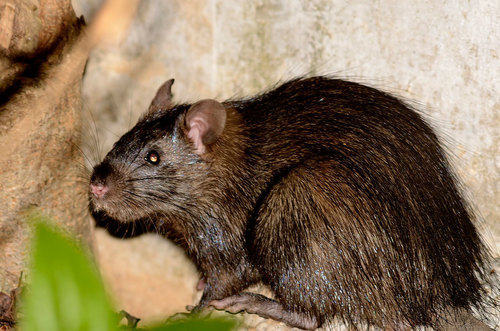
Other species in the genus Bandicota
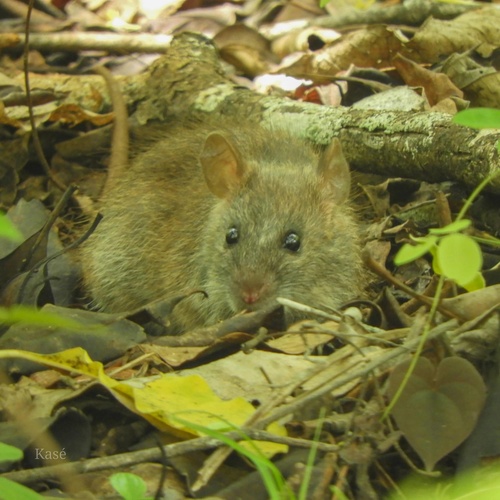
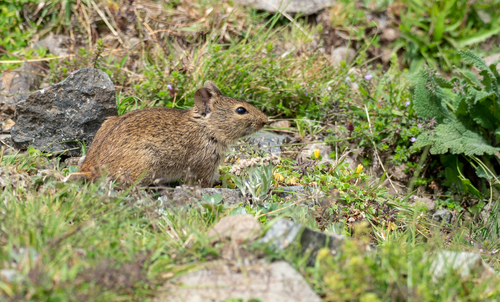
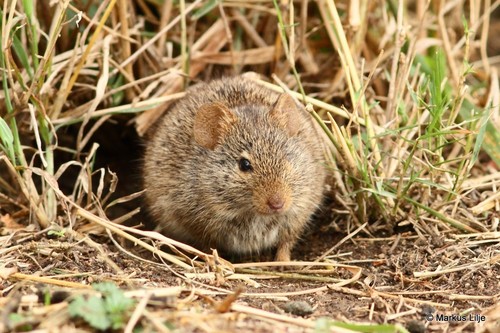
Other species in the family Muridae
Species that share its range
Sources
Conservation status, range description and population estimate come from the IUCN Red List assessment for Bandicota bengalensis. Countries are derived from that range description, not from a mapped country list. Last refreshed on .
The distribution map is drawn from the IUCN Red List spatial data compiled in 2008. IUCN (International Union for Conservation of Nature)