
Guanaco
Lama guanicoe
Red List assessment
Least Concernon the IUCN Red List
- EXExtinct
- EWExtinct in the Wild
- CRCritically Endangered
- ENEndangered
- VUVulnerable
- NTNear Threatened
- LCLeast Concern
The Guanaco is recorded in 5 countries across South America. The IUCN Red List assesses the Guanaco as Least Concern. Approximately 1.5 to 2 million individuals globally, with the population considered stable to slowly increasing in protected areas, though some regional populations continue to decline.
- Family
- Camelidae
- Order
- Artiodactyla
- Genus
- Lama
- Countries recorded
- 5
- Continents
- South America
- Red List category
- Least Concern
- Data updated
- August 9, 2026
What is the Guanaco?
The guanaco is a wild South American camelid, ancestor of the domesticated llama, renowned for its remarkable adaptability across extreme habitats from coastal deserts to high Andean plateaus. It is the most widely distributed native ungulate in South America, found from sea level to over 4000m altitude. Known for its speed, endurance, and distinctive reddish-brown coat, it plays a key ecological role as a primary herbivore in arid ecosystems.
Where does the Guanaco live?
Argentina, Chile, Peru, Bolivia, Paraguay - primarily Patagonia and the Andean highlands
Ranges across western and southern South America including Peru, Bolivia, Paraguay, Chile, and Argentina, with the largest populations concentrated in Patagonia (southern Argentina and Chile). Historically ranged more widely but has been extirpated from parts of its former range.
Altitude and depth
Sea level to approximately 4000-5000m in the Andes
Seasonal movements
Some populations undertake seasonal altitudinal migrations, moving to lower elevations in winter and higher pastures in summer; Patagonian herds may also shift ranges based on forage and snow conditions.
Habitat of the Guanaco
Highly adaptable, inhabiting Patagonian steppe, Andean altiplano, scrubland, semi-desert, and coastal areas. Thrives in arid and semi-arid environments with sparse vegetation and extreme temperature variations.
Adaptations to its environment
Possesses highly efficient kidneys to conserve water in arid environments, a thick double-layered coat for insulation against temperature extremes, and specialized red blood cells with high oxygen affinity for high-altitude survival. Their padded, two-toed feet provide excellent traction on rocky and uneven terrain.
Conservation status and numbers
Least Concern (LC) according to IUCN, though populations are fragmented and some subpopulations face local declines. Historically much more abundant before European colonization led to significant range contraction and population loss.
Estimated population
Approximately 1.5 to 2 million individuals globally, with the population considered stable to slowly increasing in protected areas, though some regional populations continue to decline.
What threatens the Guanaco?
Illegal poaching for meat and hides, habitat loss from livestock grazing competition and agricultural expansion, fencing that disrupts migration routes, and competition with domestic sheep and cattle for forage.
Diseases and parasites
Susceptible to external parasites like ticks and mites, as well as internal parasites including nematodes; can also contract diseases shared with domestic livestock such as foot-and-mouth disease in some regions.
What is being done to protect it?
Protected in numerous national parks including Torres del Paine (Chile) and Patagonia National Park (Argentina); regulated sustainable use programs (chaku) exist for wool harvesting in some countries; CITES Appendix II listing regulates international trade.
Recommended actions
Expand protected corridors to maintain migratory connectivity, strengthen anti-poaching enforcement, promote coexistence strategies with livestock ranching, and support community-based sustainable use programs.
What the Guanaco looks like
Thick woolly coat ranging from light brown to reddish-brown on the back and sides, with a white underbelly, legs, and face; a dark grayish face and small, pointed ears. The neck is long and slender, giving it an elegant, camel-like silhouette.
Size
Body length 1.2-2.25m, shoulder height 90-130cm
Weight
90-140 kg, with males typically slightly larger than females
Distinctive features
Distinguished from the domesticated llama by its smaller size, more uniform coat coloration, and wild, wary temperament; differs from the vicuña by larger body size and coarser wool.
Differences between males and females
Minimal sexual dimorphism; males are slightly larger and heavier than females, and dominant males may show more muscular necks from territorial combat.
Behaviour and diet of the Guanaco
Lives in family groups consisting of one dominant male, several females, and their offspring, typically 4-20 individuals; also forms bachelor herds of young and non-territorial males, sometimes numbering in the hundreds during migrations.
When it is active
Primarily diurnal, most active during early morning and late afternoon, resting during the hottest midday hours in warmer habitats.
Diet
Herbivorous, feeding on a wide variety of grasses, shrubs, lichens, and forbs; highly adaptable diet allows survival in nutrient-poor arid environments.
Communication
Communicates through a variety of vocalizations including a high-pitched alarm call resembling a bleat or laugh, body postures, and scent marking via communal dung piles that establish territory boundaries.
Interactions with other species
Primary natural predator is the puma (Puma concolor), especially targeting young and weak individuals; also faces competition from introduced livestock such as sheep and cattle for grazing resources.
Role in its ecosystem
Functions as a key herbivore in arid and semi-arid ecosystems, shaping vegetation structure through grazing and serving as an important prey species supporting puma populations; its dung also contributes to nutrient cycling in nutrient-poor soils.
Reproduction and lifecycle
Breeding season typically occurs in austral summer (November-February); gestation lasts approximately 11-12 months, usually resulting in a single offspring (chulengo).
Raising the young
The mother provides sole parental care, nursing the chulengo for about 4 months, though the young may remain with the family group until reaching sexual maturity around 1-2 years old, after which they are typically driven out by the dominant male.
Maturity and lifespan
Sexual maturity reached at 1-2 years old; lifespan in the wild is typically 15-20 years, potentially longer in protected or captive settings.
Taxonomy and naming of the Guanaco
Classification
Mammalia > Artiodactyla > Camelidae > Lama > Lama guanicoe
Subspecies
Lama guanicoe guanicoe (southern Patagonia), Lama guanicoe cacsilensis (Peru, northern Chile), Lama guanicoe voglii (central Argentina) - subspecies distinctions are debated among taxonomists.
Scientific synonyms
Auchenia guanicoe, Camelus guanicoe (historical names used before genus Lama was established)
What research says
Recent studies
Recent studies have used GPS collar tracking to reveal detailed migration patterns and habitat connectivity needs in Patagonia, informing conservation corridor planning; genomic research continues to clarify domestication history linking guanacos to llamas.
Genome and DNA
Diploid chromosome number of 2n=74; genetic studies have revealed hybridization capability with llamas and alpacas, confirming close evolutionary relationships within Camelidae.
Compared with similar species
Closely related to the llama (its domesticated descendant) but wilder and more slender; distinguished from the vicuña by larger size and different coloration patterns, and from the alpaca by coarser guard hairs and non-domesticated behavior.
The Guanaco and people
Guanacos can run at speeds up to 56 km/h (35 mph) to escape predators; they are excellent swimmers and can cross rivers and even swim in the ocean in some coastal populations; their fine undercoat wool is highly prized and considered one of the finest natural fibers in the world.
Where and how to see it
Best observed in Torres del Paine National Park (Chile) or Patagonia National Park (Argentina) during early morning or late afternoon hours, particularly in austral spring and summer when herds are most visible grazing in open steppe habitats.
Risks to humans
No notable risk to humans; guanacos are shy and avoid human contact, though they may spit or kick if cornered or threatened.
Human uses
Historically hunted by indigenous peoples for meat, hide, and wool; today sustainably harvested in some regions for their valuable fiber through shearing programs (chaku), and popular as an ecotourism attraction in Patagonian parks.
Myths and legends
In Andean indigenous cultures, the guanaco held spiritual significance and was associated with mountain spirits; some legends describe them as guardians of high-altitude passes, and their imagery appears in pre-Columbian textiles and pottery.
Countries where the Guanaco is recorded
The 5 countries named in the range description of its IUCN Red List assessment.
Questions about the Guanaco
Where does the Guanaco live?
The Guanaco is recorded in Argentina, Bolivia, Chile, Paraguay and Peru across South America. These countries come from the range description of its IUCN Red List assessment, and they are what place the species on the interactive map.
Is the Guanaco endangered?
The IUCN Red List assesses the Guanaco as Least Concern. The species is widespread and abundant enough not to qualify for any threatened category. It does not mean the species is safe forever, only that nothing in the current data raises an alarm.
How many are left in the wild?
Approximately 1.5 to 2 million individuals globally, with the population considered stable to slowly increasing in protected areas, though some regional populations continue to decline. This figure comes from the species assessment on the IUCN Red List; population estimates for wild mammals are ranges, not counts, and are revised at each assessment.
What habitat does the Guanaco live in?
Highly adaptable, inhabiting Patagonian steppe, Andean altiplano, scrubland, semi-desert, and coastal areas.
What is the scientific name of the Guanaco?
The Guanaco is Lama guanicoe, in the family Camelidae, order Artiodactyla.
Other species in the family Camelidae
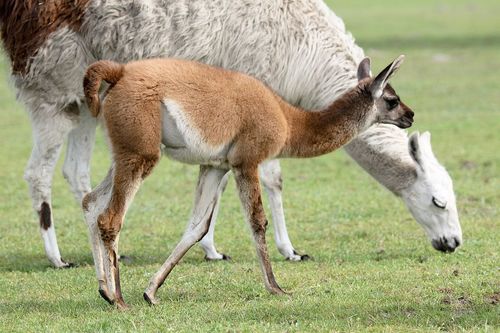
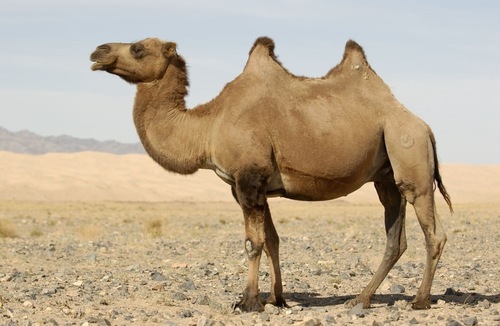
Species that share its range
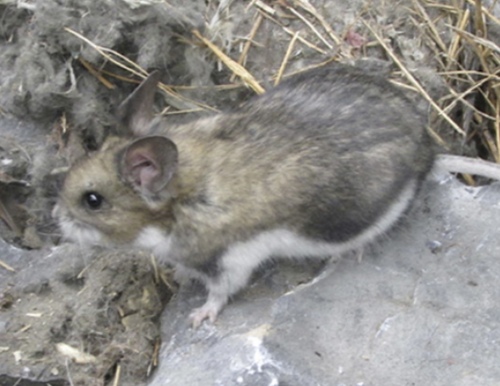
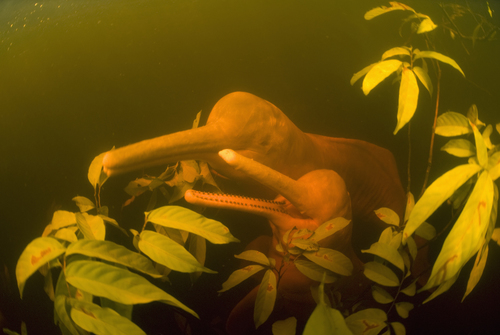
Sources
Conservation status, range description and population estimate come from the IUCN Red List assessment for Lama guanicoe. Countries are derived from that range description, not from a mapped country list. Last refreshed on .
The distribution map is drawn from the IUCN Red List spatial data compiled in 2008. IUCN (International Union for Conservation of Nature)