
Collared Peccary
Pecari tajacu
Red List assessment
Least Concernon the IUCN Red List
- EXExtinct
- EWExtinct in the Wild
- CRCritically Endangered
- ENEndangered
- VUVulnerable
- NTNear Threatened
- LCLeast Concern
The Collared Peccary is recorded in 8 countries across North America and South America. The IUCN Red List assesses the Collared Peccary as Least Concern. Global population is not precisely quantified but is considered large and stable overall, numbering likely in the millions given its extensive range, though some regional populations are declining.
- Family
- Tayassuidae
- Order
- Artiodactyla
- Genus
- Pecari
- Countries recorded
- 8
- Continents
- North America and South America
- Red List category
- Least Concern
- Data updated
- August 9, 2026
What is the Collared Peccary?
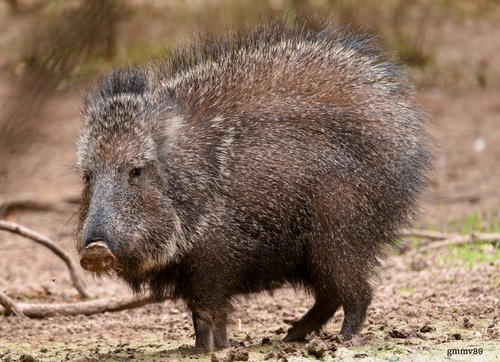
The Collared Peccary is a medium-sized, pig-like ungulate native to the Americas, ranging from the southwestern United States through Central America into South America. It is named for the pale band of fur encircling its neck and shoulders, contrasting with its darker body. Highly adaptable, it thrives in a wide variety of habitats from deserts to tropical forests and plays an important ecological role as a seed disperser and prey species.
Where does the Collared Peccary live?
Southwestern United States, Mexico, Central America, and northern/central South America
Found from the southwestern United States (Arizona, New Mexico, Texas) through Mexico, Central America, and into South America as far south as northern Argentina, encompassing countries like Venezuela, Colombia, Ecuador, Peru, and Brazil.
Altitude and depth
Sea level up to approximately 3,000 meters in elevation, depending on region and habitat availability.
Seasonal movements
No true migration or hibernation; however, activity patterns shift seasonally, with peccaries becoming more diurnal in cooler months and more nocturnal/crepuscular during hot, dry periods to avoid heat stress.
Habitat of the Collared Peccary
Occupies a broad range of habitats including arid deserts, scrublands, thorn forests, tropical and subtropical dry and humid forests, and riparian corridors. It is particularly associated with areas containing cacti (especially prickly pear) and dense understory vegetation for cover.
Adaptations to its environment
Possesses a tough hide and coarse bristly hair for protection against thorny vegetation and predators, along with a musk gland used for scent marking and group cohesion. Its digestive system is adapted to process fibrous, low-quality plant material including cacti with high water content, allowing survival in arid environments with limited water sources.
Conservation status and numbers
Listed as Least Concern (LC) by the IUCN due to its wide distribution, adaptability, and generally stable populations across most of its range, though some localized populations face decline from hunting and habitat loss.
Estimated population
Global population is not precisely quantified but is considered large and stable overall, numbering likely in the millions given its extensive range, though some regional populations are declining.
What threatens the Collared Peccary?
Habitat destruction from agricultural expansion and urbanization, overhunting for meat and hides in some regions, and competition or disease transmission from domestic livestock.
Diseases and parasites
Susceptible to various endo- and ectoparasites including ticks, and can carry diseases such as leptospirosis and pseudorabies, which pose concerns for interactions with domestic livestock.
What is being done to protect it?
Protected under CITES Appendix II in parts of its range, present in numerous national parks and protected areas throughout the Americas, and subject to regulated hunting quotas in several countries including the United States and Mexico.
Recommended actions
Continued habitat protection and connectivity in fragmented landscapes, sustainable hunting management, monitoring of disease interactions with livestock, and further population studies in South American range countries.
What the Collared Peccary looks like
Coarse, bristly grizzled gray-black fur covers the body, with a distinctive pale yellowish-white collar of fur around the neck and shoulders. The head is large relative to the body, with a pig-like snout and small eyes and ears.
Size
Body length typically ranges from 75 to 100 cm, with a shoulder height of about 30 to 50 cm; the tail is vestigial and barely visible.
Weight
Adults typically weigh between 17 and 30 kg, with males and females being similar in size.
Distinctive features
Distinguished from the larger White-lipped Peccary by its smaller size, lack of white lip markings, and presence of the pale neck collar; also has a single, well-developed dorsal scent gland used for marking.
Differences between males and females
Minimal sexual dimorphism; males and females are similar in size and coloration, though males may have slightly larger canine tusks.
Behaviour and diet of the Collared Peccary
Highly social, living in cohesive herds of 6 to 20 individuals (occasionally up to 50), with overlapping home ranges and strong group bonding maintained through mutual scent-marking and rubbing.
When it is active
Primarily crepuscular and diurnal, though it can shift to nocturnal activity in hot climates or areas with high human disturbance to avoid heat and predators.
Diet
Omnivorous, feeding mainly on roots, tubers, fruits, seeds, cacti (especially prickly pear), and occasionally invertebrates, small vertebrates, and carrion when available.
How it feeds and hunts
Forages by rooting in soil with its snout and using acute smell to locate underground food items; not a predator but opportunistically consumes small animals encountered while foraging.
Communication
Uses a combination of vocalizations (grunts, barks, and tooth-clacking as alarm signals), scent marking via a dorsal musk gland, and mutual rubbing behaviors to reinforce social bonds and herd cohesion.
Interactions with other species
Preyed upon by jaguars, pumas, coyotes, and large raptors; competes with other herbivores for food resources and can have complex interactions with domestic pigs, including potential disease transmission.
Role in its ecosystem
Serves as an important seed disperser and soil aerator through its rooting behavior, and is a key prey species supporting populations of large predators like jaguars and pumas within its ecosystem.
Reproduction and lifecycle
Breeding can occur year-round in tropical regions but may peak seasonally in temperate areas; gestation lasts about 145-150 days, typically resulting in 1-3 young (usually twins).
Raising the young
Young are precocial and can follow the mother within hours of birth; the mother provides primary care and nursing for about 6-8 weeks, while other herd members may offer protective vigilance.
Maturity and lifespan
Reaches sexual maturity around 8-14 months of age; lifespan in the wild is typically 7-10 years, while captive individuals can live up to 15-24 years.
Taxonomy and naming of the Collared Peccary
Classification
Class Mammalia > Order Artiodactyla > Family Tayassuidae > Genus Pecari > Species Pecari tajacu
Subspecies
Around 14 subspecies have been described, including P. t. tajacu (South America), P. t. angulatus (southwestern USA and Mexico), P. t. crassus, P. t. nelsoni, and P. t. yucatanicus (Yucatan Peninsula), differing mainly in size and coat coloration across their range.
Scientific synonyms
Dicotyles tajacu; formerly classified under genus Tayassu as Tayassu tajacu
What research says
Recent studies
Recent research has focused on genetic diversity across subspecies, disease transmission risks with domestic pigs, and habitat use patterns in fragmented landscapes of the southwestern United States and Mexico.
Genome and DNA
Diploid chromosome number is 2n=30; genetic studies have helped clarify taxonomic distinctions between Pecari and Tayassu genera within Tayassuidae.
Compared with similar species
Smaller and more widely distributed than the White-lipped Peccary (Tayassu pecari), which is more strictly forest-dependent and forms much larger herds; also distinct from true pigs (Suidae) despite superficial resemblance, belonging to a separate New World family.
The Collared Peccary and people
Collared Peccaries can eat prickly pear cactus spines and all, using their tough mouths to process the plant safely. They have a strong musky scent gland that is so pungent it has earned them the nickname 'musk hog' in parts of the United States.
Where and how to see it
Best observed in early morning or late afternoon in desert regions of Arizona (such as Saguaro National Park) or in tropical dry forests of Central America; look for herds near water sources or cactus patches, and listen for tooth-clacking alarm signals.
Risks to humans
Generally not aggressive toward humans but can act defensively if cornered or if young are threatened, potentially causing bites or charges; also poses a minor risk of disease transmission to livestock.
Human uses
Hunted for meat and hide in many parts of its range, sometimes farmed or ranched sustainably; also of interest in ecotourism and wildlife viewing in protected areas.
Myths and legends
In some Mesoamerican indigenous cultures, peccaries appear in folklore as symbols of the wild forest and are sometimes associated with fertility or forest spirits due to their close ties to the land.
Countries where the Collared Peccary is recorded
The 8 countries named in the range description of its IUCN Red List assessment.
Questions about the Collared Peccary
Where does the Collared Peccary live?
The Collared Peccary is recorded in Argentina, Brazil, Colombia, Ecuador and Mexico, among 8 countries in total across North America and South America. These countries come from the range description of its IUCN Red List assessment, and they are what place the species on the interactive map.
Is the Collared Peccary endangered?
The IUCN Red List assesses the Collared Peccary as Least Concern. The species is widespread and abundant enough not to qualify for any threatened category. It does not mean the species is safe forever, only that nothing in the current data raises an alarm.
How many are left in the wild?
Global population is not precisely quantified but is considered large and stable overall, numbering likely in the millions given its extensive range, though some regional populations are declining. This figure comes from the species assessment on the IUCN Red List; population estimates for wild mammals are ranges, not counts, and are revised at each assessment.
What habitat does the Collared Peccary live in?
Occupies a broad range of habitats including arid deserts, scrublands, thorn forests, tropical and subtropical dry and humid forests, and riparian corridors.
What is the scientific name of the Collared Peccary?
The Collared Peccary is Pecari tajacu, in the family Tayassuidae, order Artiodactyla.
Other species in the family Tayassuidae
Species that share its range
Sources
Conservation status, range description and population estimate come from the IUCN Red List assessment for Pecari tajacu. Countries are derived from that range description, not from a mapped country list. Last refreshed on .
The distribution map is drawn from the IUCN Red List spatial data compiled in 2008. IUCN (International Union for Conservation of Nature)