
Chiru
Pantholops hodgsonii
Red List assessment
Near Threatenedon the IUCN Red List
- EXExtinct
- EWExtinct in the Wild
- CRCritically Endangered
- ENEndangered
- VUVulnerable
- NTNear Threatened
- LCLeast Concern
The Chiru is recorded in 2 countries across Asia. The IUCN Red List assesses the Chiru as Near Threatened. Approximately 150,000-200,000 individuals, with a generally increasing or stable trend following decades of strict anti-poaching enforcement since the 1990s
- Family
- Bovidae
- Order
- Artiodactyla
- Genus
- Pantholops
- Countries recorded
- 2
- Continents
- Asia
- Red List category
- Near Threatened
- Data updated
- August 9, 2026
What is the Chiru?
The Chiru is a medium-sized antelope endemic to the high-altitude Tibetan Plateau, renowned for its long, slender black horns and extraordinary adaptation to extreme cold and low oxygen environments. It is famous for undertaking one of the longest overland migrations of any mammal to reach traditional calving grounds. The species has become a symbol of Tibetan Plateau conservation due to historic poaching for its fine underwool, shahtoosh.
Where does the Chiru live?
Tibetan Plateau, primarily China (Tibet Autonomous Region, Qinghai, Xinjiang) with small populations extending into northern India (Ladakh)
Endemic to the Qinghai-Tibet Plateau in western China, spanning Tibet Autonomous Region, Qinghai, and southern Xinjiang provinces, with a small population extending into the Chang Chenmo Valley of Ladakh, India.
Altitude and depth
3,250 to 5,500 meters above sea level, among the highest-altitude ranges of any large mammal
Seasonal movements
Females undertake long seasonal migrations (up to 300 km one-way) each spring to traditional calving grounds, returning in autumn; males often remain on lower-altitude wintering grounds year-round or migrate separately
Habitat of the Chiru
Alpine steppe, alpine meadow, and high-altitude desert plains characterized by sparse vegetation, extreme cold, and strong winds. The species prefers open, flat to rolling terrain with short grasses and forbs.
Adaptations to its environment
Chiru possess extremely dense, fine underwool (shahtoosh) for insulation against extreme cold, enlarged nasal chambers to warm and humidify thin air, and increased lung capacity and red blood cell efficiency for oxygen uptake at high altitude. Their coloration provides camouflage against the arid steppe landscape.
Conservation status and numbers
Near Threatened (IUCN); population has recovered significantly from severe declines in the late 20th century due to intensive anti-poaching efforts, though it remains vulnerable to renewed poaching and habitat pressures.
Estimated population
Approximately 150,000-200,000 individuals, with a generally increasing or stable trend following decades of strict anti-poaching enforcement since the 1990s
What threatens the Chiru?
Poaching for shahtoosh wool (historically the primary threat), habitat degradation from mining and infrastructure development, competition with livestock, and barriers to migration from fencing and roads
Diseases and parasites
Limited detailed studies exist, but Chiru are known to host various ectoparasites and endoparasites common to Bovidae; disease dynamics with domestic livestock in shared rangelands are a conservation concern
What is being done to protect it?
Protected under Chinese law with severe penalties for poaching; several large reserves established including Chang Tang Nature Reserve, Kekexili (Hoh Xil) National Nature Reserve (a UNESCO World Heritage Site), and Altun Shan Nature Reserve; international CITES trade bans on shahtoosh
Recommended actions
Continued strict enforcement against poaching and illegal shahtoosh trade, mitigation of infrastructure barriers to migration routes, monitoring of calving ground disturbance, and expanded transboundary cooperation with India for the Ladakh population
What the Chiru looks like
Chiru have a pale fawn to reddish-brown coat on the back with a white underbelly, a relatively short tail, and a distinctively puffy, rounded face due to enlarged nasal passages. Males are notably larger and more robust than females.
Size
Shoulder height approximately 80-90 cm; body length around 120-140 cm
Weight
Males typically weigh 35-40 kg; females are smaller, weighing around 24-30 kg
Distinctive features
The long, slender, nearly straight black horns present only in males, reaching 50-60 cm, combined with the swollen nasal structure, distinguish Chiru from other Tibetan Plateau ungulates such as Tibetan gazelle
Differences between males and females
Pronounced sexual dimorphism: only males possess the long ringed horns, and males are significantly larger and heavier than females, which are hornless and smaller-bodied
Behaviour and diet of the Chiru
Highly social, forming large herds that can number in the hundreds to thousands during migration, though smaller groups of a few individuals to a few dozen are common outside migration season. Sexes often segregate for much of the year.
When it is active
Primarily diurnal, most active during daylight hours foraging and resting during the coldest parts of the night
Diet
Herbivorous, grazing on grasses, sedges, and forbs typical of alpine steppe and meadow vegetation, adapting diet seasonally to available sparse vegetation
Communication
Communication includes visual cues such as posture and horn displays among males, along with some vocalizations during rut and alarm situations; scent marking may play a role in territorial and reproductive behavior
Interactions with other species
Predators include the Tibetan wolf and snow leopard, which occasionally take calves or weakened individuals; Chiru share habitat with Tibetan wild ass (kiang), Tibetan gazelle, and wild yak, generally without direct competition due to some dietary and spatial partitioning
Role in its ecosystem
As a primary grazer of the Tibetan Plateau, Chiru contribute to shaping alpine steppe vegetation structure and serve as an important prey base for large predators like wolves and snow leopards in this high-altitude ecosystem
Reproduction and lifecycle
Mating (rut) occurs in winter, around December-January; gestation lasts approximately six months, with females giving birth to a single calf (rarely twins) in June-July at high-altitude calving grounds after long migrations
Raising the young
Females provide sole parental care, nursing and protecting the calf which can stand and move within hours of birth; calves remain close to mothers through the summer before joining larger mixed herds in autumn
Maturity and lifespan
Females typically reach sexual maturity around 1.5-2 years; lifespan in the wild is estimated at 8-10 years, with limited data on captivity due to the species rarely being kept outside its native range
Taxonomy and naming of the Chiru
Classification
Class Mammalia > Order Artiodactyla > Family Bovidae > Genus Pantholops > Species Pantholops hodgsonii
Scientific synonyms
Antilope hodgsonii (original description by Abel, 1826)
What research says
Recent studies
Recent GPS-tracking studies have refined understanding of Chiru migration routes and calving ground fidelity, informing infrastructure planning such as wildlife corridors under the Qinghai-Tibet railway and highways
Compared with similar species
Compared to the Tibetan gazelle (Procapra picticaudata), the Chiru is larger, has longer straighter horns only in males, and undertakes far more extensive migrations; unlike the chiru, gazelles are largely non-migratory
The Chiru and people
Chiru wool is so fine that a single shahtoosh shawl requires the underfur of three to five animals, historically driving devastating poaching; their nasal chambers are so enlarged they give the face a distinctly bulbous appearance, an adaptation unique among antelopes for high-altitude breathing.
Where and how to see it
Best observed in Hoh Xil (Kekexili) National Nature Reserve in Qinghai Province during the summer migration season (June-July) when large aggregations gather at calving grounds; early morning and late afternoon offer optimal visibility
Risks to humans
No notable risk to humans
Human uses
Historically hunted extensively for shahtoosh wool used in luxury shawls, a trade now illegal under CITES and Chinese law; no other significant traditional uses are documented
Myths and legends
The Chiru holds symbolic importance in Tibetan culture and became an emblem of Chinese wildlife conservation, notably represented as one of the mascots (Yingying) for the 2008 Beijing Olympics
Countries where the Chiru is recorded
The 2 countries named in the range description of its IUCN Red List assessment.
Questions about the Chiru
Where does the Chiru live?
The Chiru is recorded in China and India across Asia. These countries come from the range description of its IUCN Red List assessment, and they are what place the species on the interactive map.
Is the Chiru endangered?
The IUCN Red List assesses the Chiru as Near Threatened. The species does not qualify as threatened today, but it is close to the thresholds and likely to cross them soon. It is the category that most often changes at the next assessment.
How many are left in the wild?
Approximately 150,000-200,000 individuals, with a generally increasing or stable trend following decades of strict anti-poaching enforcement since the 1990s This figure comes from the species assessment on the IUCN Red List; population estimates for wild mammals are ranges, not counts, and are revised at each assessment.
What habitat does the Chiru live in?
Alpine steppe, alpine meadow, and high-altitude desert plains characterized by sparse vegetation, extreme cold, and strong winds.
What is the scientific name of the Chiru?
The Chiru is Pantholops hodgsonii, in the family Bovidae, order Artiodactyla.
Other species in the family Bovidae
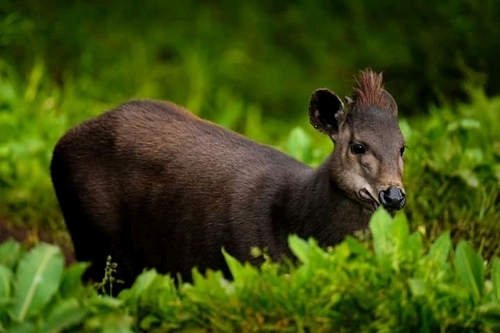
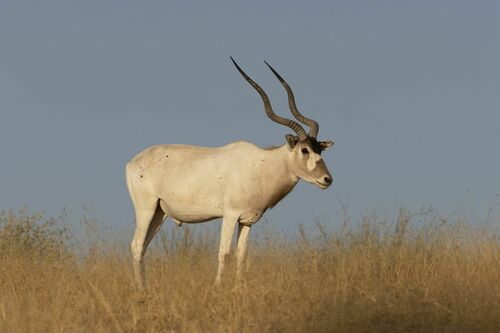
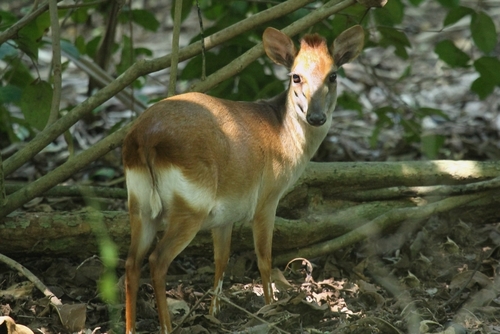
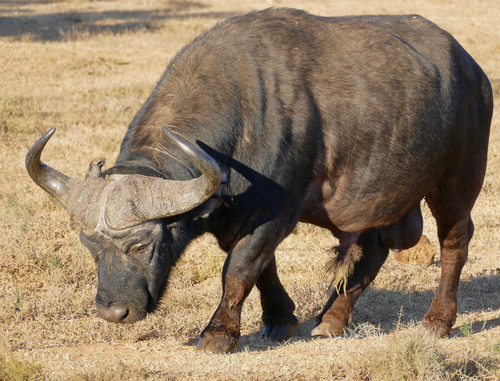
Species that share its range
Sources
Conservation status, range description and population estimate come from the IUCN Red List assessment for Pantholops hodgsonii. Countries are derived from that range description, not from a mapped country list. Last refreshed on .
The distribution map is drawn from the IUCN Red List spatial data compiled in 2008. IUCN (International Union for Conservation of Nature)