
Calabar Angwantibo
Arctocebus calabarensis
Red List assessment
Near Threatenedon the IUCN Red List
- EXExtinct
- EWExtinct in the Wild
- CRCritically Endangered
- ENEndangered
- VUVulnerable
- NTNear Threatened
- LCLeast Concern
The Calabar Angwantibo is recorded in 5 countries across Africa. The IUCN Red List assesses the Calabar Angwantibo as Near Threatened. No precise global population estimate is available.
- Family
- Lorisidae
- Order
- Primates
- Genus
- Arctocebus
- Countries recorded
- 5
- Continents
- Africa
- Red List category
- Near Threatened
- Data updated
- August 9, 2026
What is the Calabar Angwantibo?
The Calabar Angwantibo is a small, nocturnal, arboreal primate of the family Lorisidae, found in the tropical rainforests of West and Central Africa. It is remarkable for its nearly vestigial index finger, which greatly enhances its gripping power, and for its extremely slow, deliberate movements through the forest understory. It is one of only two species in the genus Arctocebus, and is considered a 'proto-primate' lineage offering insights into early primate evolution. Despite its inconspicuous lifestyle, it plays a notable ecological role as an insectivore within dense tropical forest habitats.
Where does the Calabar Angwantibo live?
Southeastern Nigeria, Cameroon, and possibly northwestern Gabon and Equatorial Guinea, in the Niger Delta and Cross River region.
Endemic to a relatively restricted range in West-Central Africa: southeastern Nigeria (especially Cross River and Niger Delta states), Cameroon (south and west of the Sanaga River), with possible presence in northern Gabon and Equatorial Guinea. Its range is broadly sympatric with the Golden Angwantibo (A. aureus) in parts of Cameroon.
Altitude and depth
Primarily found at low to mid elevations, typically from sea level up to approximately 1,000 meters, but most common in lowland forest below 500 meters.
Seasonal movements
No documented seasonal migration. Activity patterns may shift slightly with insect availability during rainy versus dry seasons, but the species remains resident year-round in its forest habitat.
Habitat of the Calabar Angwantibo
Dense lowland tropical rainforest, particularly the lower stratum of vegetation including undergrowth, lianas, and shrubs typically below 5 meters above ground. It favors areas with thick tangles of vegetation and secondary forest edges that provide abundant insect prey and cover.
Adaptations to its environment
The greatly reduced second digit (index finger) forms a powerful pincer-like grip with the thumb, allowing secure arboreal locomotion. Large eyes with a tapetum lucidum provide excellent night vision. Its slow, deliberate locomotion minimizes branch movement and reduces detection by predators. It can tolerate hairy or chemically defended caterpillars by using its dental comb to scrape off irritating hairs before consumption.
Conservation status and numbers
Near Threatened (NT) on the IUCN Red List. The species does not yet meet the threshold for Vulnerable but faces ongoing and accelerating habitat loss across much of its range. Population trends are considered declining due to persistent deforestation in the Niger Delta and Cameroonian forest zones.
Estimated population
No precise global population estimate is available. The population trend is considered declining, correlated with ongoing forest loss estimated at significant rates across southeastern Nigeria and parts of Cameroon.
What threatens the Calabar Angwantibo?
Primary threats include large-scale deforestation for agriculture (particularly oil palm and rubber plantations), logging, and urban expansion in Nigeria and Cameroon. Bushmeat hunting poses a secondary but significant threat. Oil extraction activities in the Niger Delta region directly degrade and fragment its forest habitat.
Diseases and parasites
Susceptible to internal parasites including helminths (nematodes, cestodes) typical of other lorisid primates. Specific disease studies are scarce. Like other strepsirrhines, it may harbor various ectoparasites (mites, ticks) in its dense fur.
What is being done to protect it?
The species receives some protection within established reserves such as Cross River National Park (Nigeria) and various protected areas in Cameroon. It is listed on CITES Appendix II, restricting international commercial trade. National wildlife protection laws in both Nigeria and Cameroon nominally prohibit its capture and trade.
Recommended actions
Priority actions include expanding and enforcing protection of lowland forests in southeastern Nigeria, conducting systematic population surveys to establish a baseline, reducing deforestation rates through sustainable land-use policies, and increasing captive breeding knowledge to support potential future reintroduction programs.
What the Calabar Angwantibo looks like
The dorsal fur is golden-brown to reddish-brown, while the ventral surface is paler cream or whitish. The face is rounded with a short, pointed snout and very large, forward-facing eyes adapted for nocturnal vision. The index finger is reduced to a tiny stub, giving the hand a distinctive appearance. The coat is dense and soft.
Size
Head-body length ranges from approximately 22 to 30 cm. There is no visible external tail (vestigial only). Limbs are relatively short and robust.
Weight
Typically between 200 and 465 grams. Males and females are broadly similar in mass, with males possibly marginally heavier.
Distinctive features
Distinguished from the Golden Angwantibo (Arctocebus aureus) by its generally larger size and darker, less intensely golden dorsal coloration. It differs from sympatric pottos (Perodicticus potto) by its much smaller size, lack of neck spines, and preference for lower forest strata. The vestigial index finger is a hallmark of the entire Arctocebus genus.
Differences between males and females
Sexual dimorphism is minimal; males and females are very similar in body size, weight, and coloration. No significant secondary sexual characteristics have been documented.
Behaviour and diet of the Calabar Angwantibo
Primarily solitary, with individuals maintaining overlapping home ranges. Adult males may have larger ranges that overlap with those of several females. Social interactions are limited, occurring mainly during mating or between a mother and her offspring.
When it is active
Strictly nocturnal. During the day it sleeps curled in dense vegetation or in tree holes. Activity begins shortly after dusk and continues throughout the night, during which it slowly forages through the lower forest layers.
Diet
Highly insectivorous; caterpillars form a major part of the diet, including hairy or toxic species typically avoided by other predators. Also consumes other arthropods (beetles, orthopterans, spiders), small vertebrates occasionally, and some plant matter including fruit and nectar.
How it feeds and hunts
Forages by slow, deliberate quadrupedal climbing through the understory, using its powerful grip to approach prey stealthily. It uses its dental comb (toothcomb) to remove irritating hairs from caterpillars before ingesting them. Prey is seized rapidly with the hands and mouth after careful slow approach.
Communication
Uses urine washing (depositing urine on the hands and feet) for scent-marking and chemical communication. Vocalizations are described as soft, high-pitched whistles or clicks used for close-range communication. Body postures and facial expressions contribute to social signaling during encounters.
Interactions with other species
Predators likely include nocturnal raptors (such as African wood owls), small carnivorous mammals, and possibly large snakes. When threatened, it adopts a defensive 'balling' posture, tucking its head between its forearms to protect the face while presenting its tough back. It does not possess the toxic brachial gland found in slow lorises. Competes ecologically with the potto in the same forest zone.
Role in its ecosystem
Functions as an insectivore helping to regulate arthropod populations in the forest understory. By consuming toxic or unpalatable caterpillars, it occupies a specialized dietary niche. It may also contribute to limited seed dispersal through fruit consumption.
Reproduction and lifecycle
Breeding does not appear strictly seasonal, though births may be somewhat concentrated. Gestation lasts approximately 131–136 days. Usually a single offspring is born; twins are rare. Females give birth approximately once per year.
Raising the young
The mother is the primary caregiver. Initially the infant is carried on the mother's body (clinging to her fur), but as it grows it may be 'parked' on a branch while she forages nearby. Weaning occurs at approximately 4–5 months. Paternal involvement is negligible.
Maturity and lifespan
Sexual maturity is reached at approximately 17–18 months in females and somewhat later in males. Wild lifespan is poorly documented but estimated at 8–12 years. In captivity, individuals have been recorded living over 12–15 years.
Taxonomy and naming of the Calabar Angwantibo
Classification
Mammalia > Primates > Lorisidae > Arctocebus > Arctocebus calabarensis
Scientific synonyms
Formerly placed as Perodicticus calabarensis; the genus Arctocebus was established by Gray in 1863 with this species as the type.
What research says
Recent studies
Recent molecular studies have refined the phylogenetic placement of Arctocebus within Lorisidae, confirming it as a distinct lineage from the potto. Some ecological surveys in Cross River National Park have recorded the species using camera traps and spotlight surveys, improving knowledge of its microhabitat use.
Genome and DNA
Angwantibos have been included in molecular phylogenetic studies of the Lorisiformes, confirming their position as sister to the genus Perodicticus. Detailed karyotype data for A. calabarensis specifically are limited in the published literature.
Compared with similar species
The Calabar Angwantibo is closely related to the Golden Angwantibo (Arctocebus aureus), which is smaller, more brightly colored, and found south of the Sanaga River. Both differ from the potto (Perodicticus potto) in their smaller size, lack of scapular spines, and preference for lower forest levels. They are more distantly related to Asian lorises (Nycticebus, Loris), sharing the family Lorisidae but diverging tens of millions of years ago.
The Calabar Angwantibo and people
The angwantibo specializes in eating hairy, toxic caterpillars that most other animals avoid — it meticulously combs the irritating hairs off with its toothcomb before eating. When threatened, it rolls into a tight defensive ball, tucking its head between its forearms, presenting only its tough, furry back to a predator. Unlike its distant relative the slow loris, the Calabar Angwantibo is completely harmless to handle, possessing no venom glands.
Where and how to see it
Best observed by spotlight or red-light survey at night in lowland forests of southeastern Nigeria (especially Cross River National Park) and southwestern Cameroon. Walking slowly along forest trails with a headlamp approximately 1–4 meters above the ground is the most effective technique, as their eyes produce a bright eye-shine. The dry season months generally offer better forest visibility.
Risks to humans
No notable risk. The Calabar Angwantibo is harmless to humans; it has no venom, and its bite, while possible if it feels trapped, causes no particular harm. It does not carry diseases known to pose significant zoonotic risk.
Human uses
Occasionally taken as bushmeat in parts of its range. Sometimes captured for the illegal exotic pet trade, though this is not common. It has no significant role in traditional medicine documented in the literature.
Myths and legends
Local communities in parts of Nigeria and Cameroon associate angwantibos with the supernatural or with witchcraft due to their eerie nocturnal habits, large glowing eyes, and slow ghost-like movements in the forest at night. They are sometimes considered bad omens in certain local traditions.
Countries where the Calabar Angwantibo is recorded
The 5 countries named in the range description of its IUCN Red List assessment.
Questions about the Calabar Angwantibo
Where does the Calabar Angwantibo live?
The Calabar Angwantibo is recorded in Cameroon, Equatorial Guinea, Gabon, Niger and Nigeria across Africa. These countries come from the range description of its IUCN Red List assessment, and they are what place the species on the interactive map.
Is the Calabar Angwantibo endangered?
The IUCN Red List assesses the Calabar Angwantibo as Near Threatened. The species does not qualify as threatened today, but it is close to the thresholds and likely to cross them soon. It is the category that most often changes at the next assessment.
How many are left in the wild?
No precise global population estimate is available. This figure comes from the species assessment on the IUCN Red List; population estimates for wild mammals are ranges, not counts, and are revised at each assessment.
What habitat does the Calabar Angwantibo live in?
Dense lowland tropical rainforest, particularly the lower stratum of vegetation including undergrowth, lianas, and shrubs typically below 5 meters above ground.
What is the scientific name of the Calabar Angwantibo?
The Calabar Angwantibo is Arctocebus calabarensis, in the family Lorisidae, order Primates.
Other species in the genus Arctocebus
Other species in the family Lorisidae
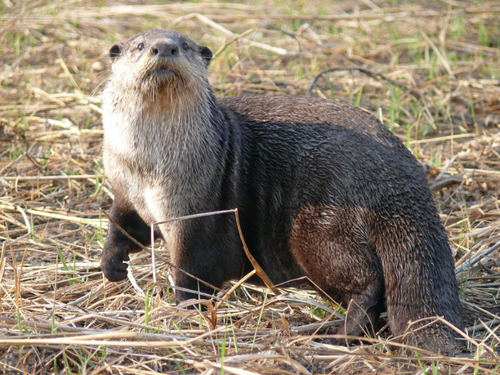
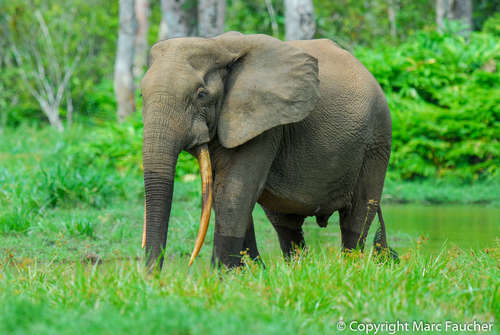
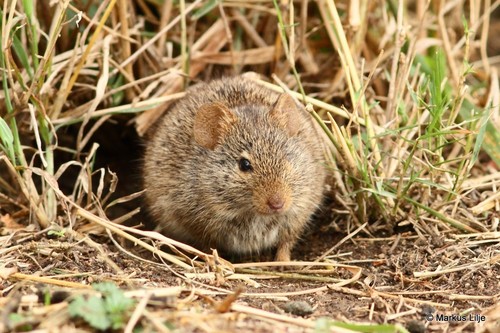
Species that share its range

Sources
Conservation status, range description and population estimate come from the IUCN Red List assessment for Arctocebus calabarensis. Countries are derived from that range description, not from a mapped country list. Last refreshed on .
The distribution map is drawn from the IUCN Red List spatial data compiled in 2008. IUCN (International Union for Conservation of Nature)