
Yellow-necked Field Mouse
Apodemus flavicollis
Red List assessment
Least Concernon the IUCN Red List
- EXExtinct
- EWExtinct in the Wild
- CRCritically Endangered
- ENEndangered
- VUVulnerable
- NTNear Threatened
- LCLeast Concern
The Yellow-necked Field Mouse is recorded in 14 countries across Asia and Europe. The IUCN Red List assesses the Yellow-necked Field Mouse as Least Concern. No precise global population estimate exists; the species is considered abundant and widespread.
- Family
- Muridae
- Order
- Rodentia
- Genus
- Apodemus
- Countries recorded
- 14
- Continents
- Asia and Europe
- Red List category
- Least Concern
- Data updated
- August 9, 2026
What is the Yellow-necked Field Mouse?
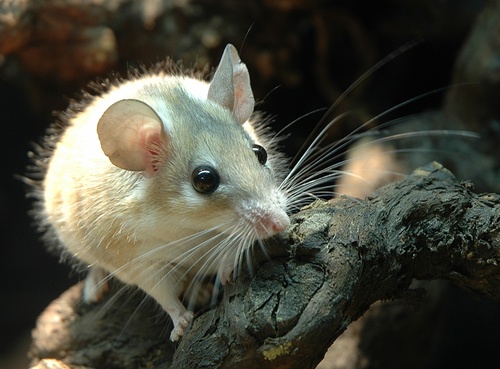
The Yellow-necked Field Mouse is a medium-sized rodent of the family Muridae, closely related to the Wood Mouse (Apodemus sylvaticus) but distinctly larger and bearing a characteristic yellow-buff band or collar across the chest. It inhabits primarily deciduous and mixed woodland habitats across Europe and western Asia. It is a highly agile and accomplished climber, often ascending into tree canopies to forage for seeds and fruits. It is remarkable as both an important seed disperser in European forests and a known reservoir host for several zoonotic pathogens including hantaviruses.
Where does the Yellow-necked Field Mouse live?
Widespread across Europe (from Scandinavia and the British Isles to the Balkans and Turkey) and parts of western Asia including the Caucasus and Levant
Distributed across most of Europe from southern Scandinavia (Norway, Sweden) and the British Isles (England and Wales, absent from Ireland) through France, Germany, the Benelux countries, Switzerland, Austria, Poland, the Czech Republic, Slovakia, Hungary, the Balkans, and into Turkey, the Caucasus, Israel, and Lebanon. Generally absent from the Iberian Peninsula, most of Scotland, and the far north.
Altitude and depth
Typically found from sea level up to approximately 2000 m in mountainous regions such as the Alps and Carpathians; occasionally recorded higher in southern Europe.
Seasonal movements
Does not truly hibernate, but activity and reproduction decline markedly in winter. Individuals may enter short bouts of daily torpor during very cold periods to conserve energy. Breeding is concentrated from March–April to September–October, with population peaks in autumn coinciding with mast availability.
Habitat of the Yellow-necked Field Mouse
Primarily occupies mature deciduous and mixed forests, especially oak, beech, and hornbeam woodland with dense undergrowth. Also found in hedgerows, scrubland, orchards, gardens, and occasionally enters buildings (particularly in autumn and winter). Prefers habitats with abundant leaf litter, woody debris, and a reliable supply of mast (acorns, beech nuts).
Adaptations to its environment
Possesses enlarged hind feet and sharp claws enabling expert climbing in shrubs and trees. Large eyes and ears support acute nocturnal vision and hearing. The species caches food (larder hoarding) to survive winter food scarcity. Its digestive system is adapted to process hard seeds and nuts. A relatively large body size compared to related species helps reduce heat loss in temperate climates.
Conservation status and numbers
Least Concern (LC) on the IUCN Red List. The species has a very wide distribution, large and stable overall population, and tolerates a range of habitat conditions. No significant range-wide decline has been documented, though local declines can occur due to deforestation.
Estimated population
No precise global population estimate exists; the species is considered abundant and widespread. Population densities fluctuate significantly between years, strongly tied to mast-crop cycles (typically 5–100 individuals per hectare in good habitat). Overall trend is considered stable.
What threatens the Yellow-necked Field Mouse?
Habitat loss through deforestation and conversion of woodland to agricultural land poses a local threat. Intensification of forestry practices reducing structural complexity of forests can reduce carrying capacity. Rodenticide use in agricultural areas and gardens causes mortality. Climate-driven changes in mast production may affect population dynamics.
Diseases and parasites
Known reservoir host for hantaviruses (notably Dobrava-Belgrade virus), which can cause hemorrhagic fever with renal syndrome (HFRS) in humans. Also carries Borrelia (Lyme disease spirochetes) and is host to various ectoparasites including ticks (Ixodes ricinus), fleas, and mites, as well as endoparasites such as nematodes and cestodes.
What is being done to protect it?
No species-specific conservation programs are required given LC status. The species benefits indirectly from broader habitat protection policies such as the EU Habitats Directive and national woodland conservation schemes. Its role as a hantavirus reservoir means it is monitored in some public health surveillance programs.
Recommended actions
Maintain and expand mature deciduous woodland with structural diversity. Reduce rodenticide use in woodland-adjacent agricultural areas. Continue monitoring population trends as part of small mammal biodiversity surveys. Further research on its role as a disease reservoir to inform public health strategies.
What the Yellow-necked Field Mouse looks like
Upperparts are rich reddish-brown to tawny brown; underparts are clean white or cream. The most distinctive feature is a yellow-buff band or pectoral collar on the chest connecting the two flanks. The ears are large and rounded, and the tail is long, slender, and bi-colored (darker above, paler below).
Size
Body length 95–130 mm; tail length 90–135 mm (roughly equal to or slightly longer than the body); hind foot length 22–26 mm.
Weight
Adults typically weigh 14–45 g; males are generally slightly larger than females, with autumn individuals being heaviest due to fat accumulation.
Distinctive features
Distinguished from the very similar Wood Mouse (Apodemus sylvaticus) by its larger size, the presence of a clearly defined and continuous yellow chest collar (vs. a small spot or absent in sylvaticus), and a relatively longer hind foot. The fur coloration on the dorsum also tends to be richer and more reddish.
Differences between males and females
Sexual dimorphism is subtle; males are marginally larger and heavier on average than females, but the difference is not striking. Both sexes share the same coloration and coat markings.
Behaviour and diet of the Yellow-necked Field Mouse
Largely solitary outside the breeding season, with individuals maintaining home ranges of 0.1–1 ha that may overlap. Some dominance hierarchies can form where resources are concentrated. In winter, communal huddling has occasionally been reported to conserve warmth.
When it is active
Strictly nocturnal, with peak activity occurring in the first few hours after dusk. Daytime is spent resting in underground burrows, crevices, or tree cavities. Activity increases markedly in autumn during mast harvesting and caching.
Diet
Omnivorous, with a diet dominated by seeds (especially acorns, beech mast, hazelnuts, berries), green plant material, fungi, and invertebrates (insects, earthworms, larvae). Diet varies seasonally: more invertebrate-based in spring and summer, more seed-based in autumn and winter.
How it feeds and hunts
Forages primarily on the forest floor and in vegetation using olfaction and vibrissae (whiskers) to locate food items. Climbs shrubs and trees to access fruits and seeds directly. Employs food caching (larder hoarding) by storing seeds and nuts in underground caches or hollow trees for later retrieval.
Communication
Communicates using ultrasonic vocalizations (above 20 kHz) for intraspecific interactions and possibly mate attraction. Scent marking via urine, feces, and specialized glands plays an important role in territory demarcation and mate assessment. Body posturing and direct contact also feature in social interactions.
Interactions with other species
Predated upon by a wide range of predators including tawny owls (Strix aluco), barn owls (Tyto alba), weasels (Mustela nivalis), stoats, foxes, and domestic cats. Competes with the Wood Mouse (A. sylvaticus) for food and space, often dominating it in mature woodland. Acts as a significant seed disperser for forest trees such as oaks and beeches through scatter-hoarding behavior.
Role in its ecosystem
Plays an important ecological role as a seed disperser and predator of invertebrates in temperate European forests. It is a keystone prey species sustaining populations of many predators. Its seed-caching behavior contributes to forest regeneration, as many cached seeds are never retrieved and germinate.
Reproduction and lifecycle
Breeding typically occurs from March–April to September–October, sometimes extending into winter in mild years. Gestation lasts approximately 23–25 days. Litter size ranges from 2–9 (average 4–6) pups. Females can produce 3–4 litters per year under favorable conditions.
Raising the young
The female alone raises the young in a nest constructed from grass, moss, and leaves, located in a burrow or tree cavity. Pups are born altricial (blind and hairless) and are weaned at approximately 18–21 days. Young disperse shortly after weaning, and females may become sexually mature within 2 months under good conditions.
Maturity and lifespan
Sexual maturity is reached at approximately 6–8 weeks in females and slightly later in males. Average lifespan in the wild is typically less than 12–18 months due to predation and harsh winters; in captivity, individuals can live up to 3–4 years.
Taxonomy and naming of the Yellow-necked Field Mouse
Classification
Mammalia > Rodentia > Muridae > Apodemus > Apodemus flavicollis
Subspecies
Several subspecies are recognized, including A. f. flavicollis (most of Europe), A. f. argyropuli (Caucasus region), A. f. wintoni (British Isles populations), and A. f. tauricus (southeastern range); however, subspecific taxonomy remains partially debated.
Scientific synonyms
Mus flavicollis Melchior, 1834 (basionym); formerly also referred to under Apodemus sylvaticus flavicollis in older literature when treated as a subspecies of the Wood Mouse.
What research says
Recent studies
Recent phylogeographic studies have clarified post-glacial colonization routes across Europe, demonstrating that British populations derive from continental recolonization after the last glacial maximum. Ongoing research investigates its role as a hantavirus reservoir in relation to forest management practices and climate change impacts on mast production and population cycles.
Genome and DNA
Diploid chromosome number is 2n = 48. Phylogeographic studies using mitochondrial DNA have revealed multiple glacial refugia colonization patterns across Europe, identifying distinct genetic lineages in the Balkans, Caucasus, and northern Europe.
Compared with similar species
Most closely related to the Wood Mouse (Apodemus sylvaticus), which it closely resembles but from which it differs in being larger, having a complete pectoral collar, and preferring more mature woodland. The Striped Field Mouse (Apodemus agrarius) is another European relative but is distinguished by a dark dorsal stripe and more open-habitat preference. The genus Apodemus is sometimes informally compared to North American Peromyscus mice, which occupy an analogous ecological niche.
The Yellow-necked Field Mouse and people
1. The yellow neck collar is formed by pigmented, buff-colored hairs and is so consistent a feature that it gave the species its scientific name 'flavicollis' (Latin: 'yellow-necked'). 2. Yellow-necked Field Mice are remarkably agile climbers and have been recorded foraging in tree canopies several meters above ground, often outcompeting birds for ripe berries. 3. Population sizes can fluctuate by an order of magnitude between years, booming in 'mast years' when oaks and beeches produce exceptionally large seed crops, leading to occasional mass invasions of rural homes in autumn.
Where and how to see it
Best observed at night in mature deciduous woodland using a red-light torch (rodents are less sensitive to red light). Live-trapping surveys in oak or beech woodland in autumn, when populations peak, are the most reliable method of detection. Germany's Lüneburg Heath, the New Forest in England, and Polish forests such as the Białowieża Forest are excellent locations. Dusk and the first two hours of night offer the best chances of visual observation near woodland edges.
Risks to humans
Carries hantaviruses (particularly Dobrava virus) that can cause Hemorrhagic Fever with Renal Syndrome (HFRS) in humans, typically through inhalation of infected rodent excreta or dust. Also a reservoir for Lyme disease tick vectors. Direct bites are rare but possible if handled. Precautions should be taken when handling live or dead individuals or cleaning areas of rodent infestation.
Human uses
Widely used as a laboratory research animal in ecological, physiological, and virological studies, particularly for hantavirus transmission dynamics and forest ecology research. Occasionally regarded as a minor agricultural pest due to damage to stored grain and tree seedlings, though impact is generally low. Not used in traditional medicine or commercial trade.
Myths and legends
No specific myths or legends are strongly associated with this species specifically. As with many European rodents, mice in general have featured in European folklore as harbingers of disease or winter, and in some rural traditions the autumn 'invasion' of mice into homes was seen as a sign of a hard winter to come.
Countries where the Yellow-necked Field Mouse is recorded
The 14 countries named in the range description of its IUCN Red List assessment.
Questions about the Yellow-necked Field Mouse
Where does the Yellow-necked Field Mouse live?
The Yellow-necked Field Mouse is recorded in Austria, Czechia, France, Germany and Hungary, among 14 countries in total across Asia and Europe. These countries come from the range description of its IUCN Red List assessment, and they are what place the species on the interactive map.
Is the Yellow-necked Field Mouse endangered?
The IUCN Red List assesses the Yellow-necked Field Mouse as Least Concern. The species is widespread and abundant enough not to qualify for any threatened category. It does not mean the species is safe forever, only that nothing in the current data raises an alarm.
How many are left in the wild?
No precise global population estimate exists; the species is considered abundant and widespread. This figure comes from the species assessment on the IUCN Red List; population estimates for wild mammals are ranges, not counts, and are revised at each assessment.
What habitat does the Yellow-necked Field Mouse live in?
Primarily occupies mature deciduous and mixed forests, especially oak, beech, and hornbeam woodland with dense undergrowth.
What is the scientific name of the Yellow-necked Field Mouse?
The Yellow-necked Field Mouse is Apodemus flavicollis, in the family Muridae, order Rodentia.
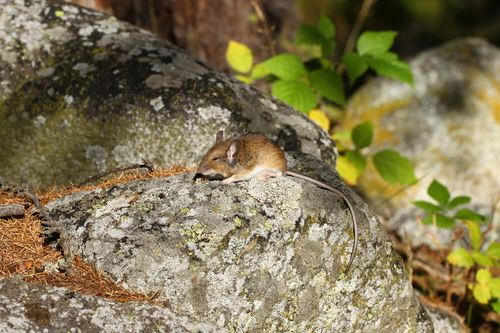
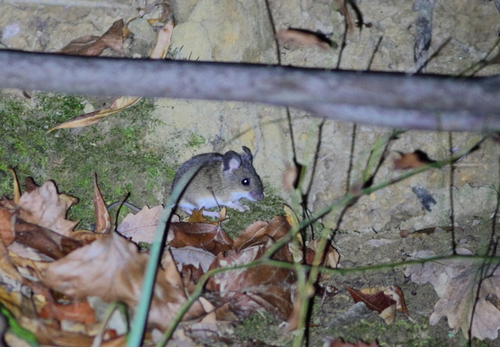
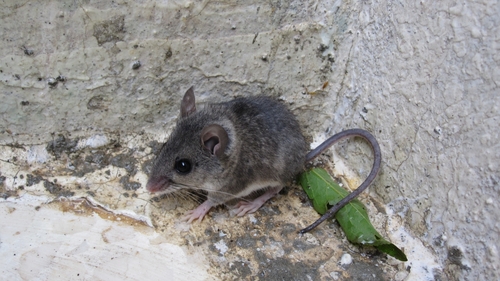
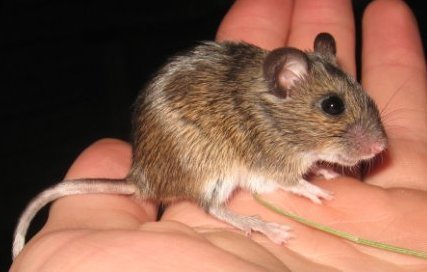
Other species in the genus Apodemus
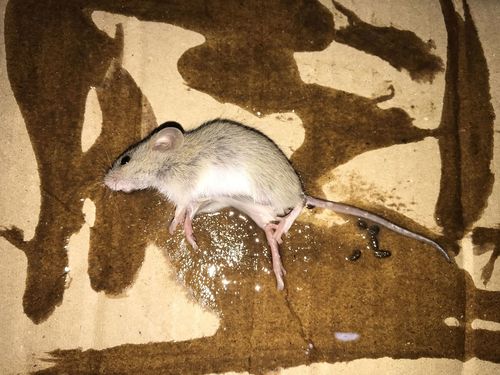
Other species in the family Muridae
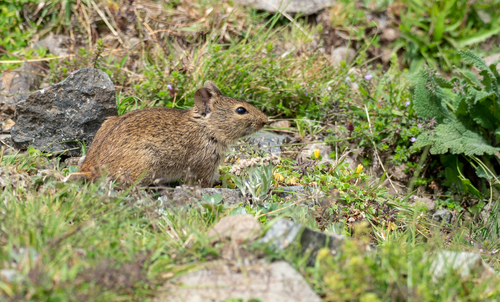
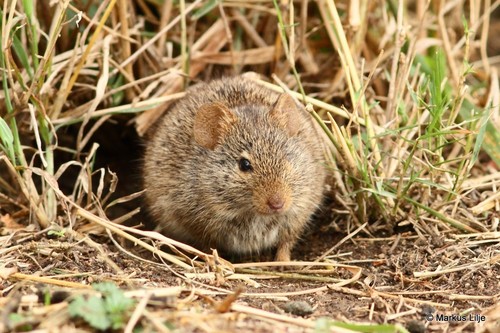
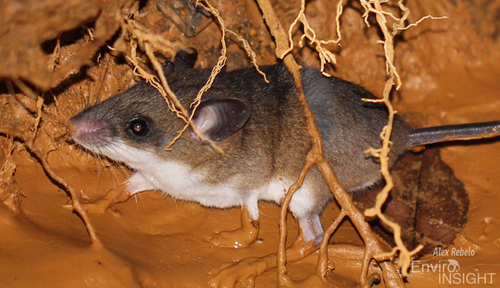
Sources
Conservation status, range description and population estimate come from the IUCN Red List assessment for Apodemus flavicollis. Countries are derived from that range description, not from a mapped country list. Last refreshed on .
The distribution map is drawn from the IUCN Red List spatial data compiled in 2008. IUCN (International Union for Conservation of Nature)