
Vaquita
Phocoena sinus
Red List assessment
Critically Endangeredon the IUCN Red List
- EXExtinct
- EWExtinct in the Wild
- CRCritically Endangered
- ENEndangered
- VUVulnerable
- NTNear Threatened
- LCLeast Concern
The Vaquita is recorded in one country, Mexico across North America. The IUCN Red List assesses the Vaquita as Critically Endangered. Fewer than 20 individuals estimated remaining, with a sharply declining trend despite conservation interventions.
- Family
- Phocoenidae
- Order
- Cetartiodactyla
- Genus
- Phocoena
- Countries recorded
- 1
- Continents
- North America
- Red List category
- Critically Endangered
- Data updated
- August 9, 2026
What is the Vaquita?
The vaquita is the smallest and most endangered cetacean in the world, endemic to the northern Gulf of California. It is a small, shy porpoise rarely seen alive due to its low population and elusive behavior. Its critical status is largely due to bycatch in illegal gillnet fisheries targeting the totoaba fish. It has become a global symbol of marine conservation urgency.
Where does the Vaquita live?
Northern Gulf of California, Mexico
Restricted entirely to a small area in the northern Gulf of California, Mexico, primarily near San Felipe and the Colorado River delta; it is one of the most geographically restricted cetaceans known.
Altitude and depth
Typically found in shallow waters less than 50 meters deep.
Seasonal movements
No known long-distance migration; may show slight seasonal shifts in distribution linked to prey availability and water temperature.
Habitat of the Vaquita
Shallow, murky, nutrient-rich coastal waters of the northern Gulf of California, often near lagoons and river mouths with high turbidity.
Adaptations to its environment
Small body size and rounded fins help minimize heat loss in warm shallow waters while enabling maneuverability in murky, turbid habitats. Dark eye and mouth patches may aid in reducing sun glare and possibly in visual communication.
Conservation status and numbers
Critically Endangered (IUCN); population has collapsed due to bycatch mortality from illegal fishing, with fewer than 20 individuals believed to remain as of recent surveys.
Estimated population
Fewer than 20 individuals estimated remaining, with a sharply declining trend despite conservation interventions.
What threatens the Vaquita?
Illegal gillnet fishing for totoaba (whose swim bladders are trafficked to Asian markets) is the overwhelming threat, causing incidental drowning of vaquitas; habitat degradation from reduced Colorado River flow is a secondary concern.
Diseases and parasites
Limited data exists, though like other cetaceans it may be susceptible to parasitic infections and pathogens found in Gulf of California marine mammals.
What is being done to protect it?
Mexico has established a Vaquita Refuge Area with gillnet bans, naval patrols, and net removal operations; international efforts include CITES trade restrictions on totoaba products and NGO-led acoustic monitoring programs.
Recommended actions
Complete and enforced elimination of gillnets within vaquita habitat, alternative fishing gear development for local communities, stronger anti-trafficking enforcement against totoaba trade, and continued acoustic and visual population monitoring.
What the Vaquita looks like
Small, robust body with a rounded head lacking a beak, dark rings around the eyes and lips, and a dark dorsal fin that is proportionally larger than in other porpoises. Coloration is gray dorsally, fading to white ventrally.
Size
Body length approximately 1.2 to 1.5 meters, making it the smallest cetacean species.
Weight
Adults typically weigh between 30 and 55 kilograms.
Distinctive features
Distinguished from other porpoises by its notably taller, more curved dorsal fin, smaller overall size, and distinct dark eye and lip patches.
Differences between males and females
Females are slightly larger than males, a common pattern among porpoises, though differences are subtle.
Behaviour and diet of the Vaquita
Generally solitary or found in small, loose groups of two to three individuals, occasionally larger loose aggregations reported.
When it is active
Primarily active during daylight hours, though echolocation-based studies suggest activity throughout the day with avoidance of boat traffic.
Diet
Carnivorous, feeding mainly on small fish, squid, and crustaceans found near the seafloor in shallow coastal waters.
How it feeds and hunts
Uses echolocation to detect and capture prey near the benthic zone, employing short-range high-frequency clicks suited to shallow, turbid waters.
Communication
Communicates via high-frequency echolocation clicks used both for navigation and possibly limited social signaling; lacks whistles typical of dolphins.
Interactions with other species
No significant natural predators are known, though occasional predation by large sharks or orcas cannot be ruled out; incidental bycatch mortality from fishing gear targeting other species is the dominant interspecies threat.
Role in its ecosystem
As a small predator of fish and invertebrates, the vaquita plays a role in regulating prey populations within its localized marine ecosystem.
Reproduction and lifecycle
Breeding season likely occurs in spring, with gestation lasting about 10-11 months and typically a single calf born every two years.
Raising the young
Calves are nursed and cared for by the mother for several months, and mother-calf bonds are close given the population's low density and social spacing.
Maturity and lifespan
Sexual maturity is reached around 3-6 years of age; lifespan in the wild is estimated at up to 20 years.
Taxonomy and naming of the Vaquita
Classification
Class Mammalia > Order Cetartiodactyla (Cetacea) > Family Phocoenidae > Genus Phocoena > Species Phocoena sinus
What research says
Recent studies
Recent genomic research (2022) suggested that despite extreme rarity, vaquitas may not face severe inbreeding depression, offering some hope for recovery if bycatch mortality is eliminated.
Genome and DNA
Genomic studies have shown surprisingly low genetic diversity but also low levels of harmful mutations, suggesting some resilience despite historically small population size.
Compared with similar species
Similar in general body plan to other porpoises like the harbor porpoise, but the vaquita is smaller with a taller dorsal fin and distinctive facial markings, and it is restricted to a vastly smaller range.
The Vaquita and people
The vaquita was only formally described by science in 1958, one of the most recently identified cetacean species; its name means 'little cow' in Spanish, referring to the dark patches around its eyes and mouth.
Where and how to see it
Due to extreme rarity, sightings are exceptionally uncommon; the best (and ethically monitored) opportunities occur during scientific survey expeditions in the Gulf of California's Vaquita Refuge near San Felipe, Baja California.
Risks to humans
No notable risk to humans.
Countries where the Vaquita is recorded
The 1 countries named in the range description of its IUCN Red List assessment.
Questions about the Vaquita
Where does the Vaquita live?
The Vaquita is recorded in Mexico across North America. These countries come from the range description of its IUCN Red List assessment, and they are what place the species on the interactive map.
Is the Vaquita endangered?
Yes. The IUCN Red List assesses the Vaquita as Critically Endangered, one of the three threatened categories. The species faces an extremely high risk of extinction in the wild. This is the last category before extinction, and it is reached through a very small or steeply declining population, a tiny range, or both.
How many are left in the wild?
Fewer than 20 individuals estimated remaining, with a sharply declining trend despite conservation interventions. This figure comes from the species assessment on the IUCN Red List; population estimates for wild mammals are ranges, not counts, and are revised at each assessment.
What habitat does the Vaquita live in?
Shallow, murky, nutrient-rich coastal waters of the northern Gulf of California, often near lagoons and river mouths with high turbidity.
What is the scientific name of the Vaquita?
The Vaquita is Phocoena sinus, in the family Phocoenidae, order Cetartiodactyla.
Other species in the genus Phocoena
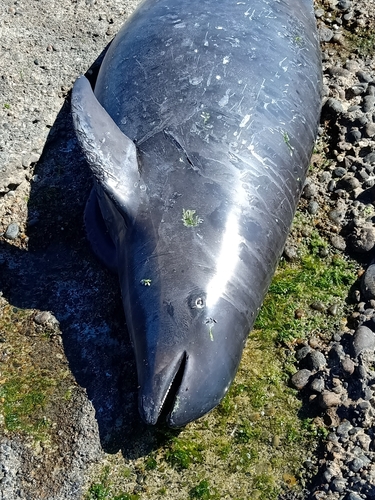
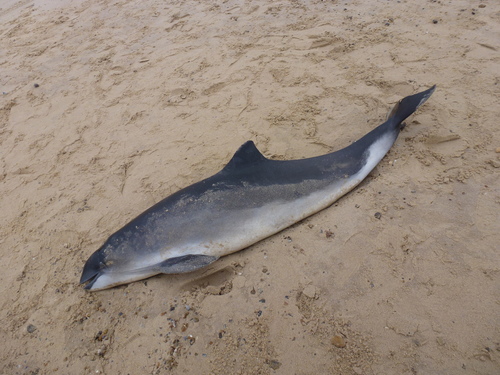
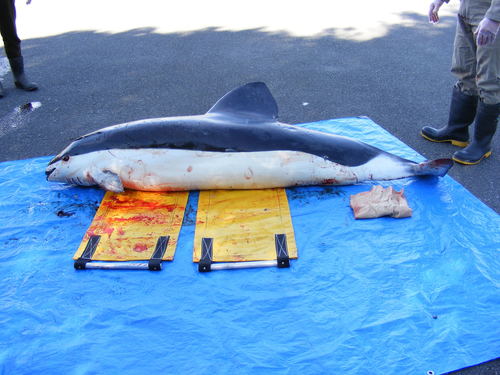
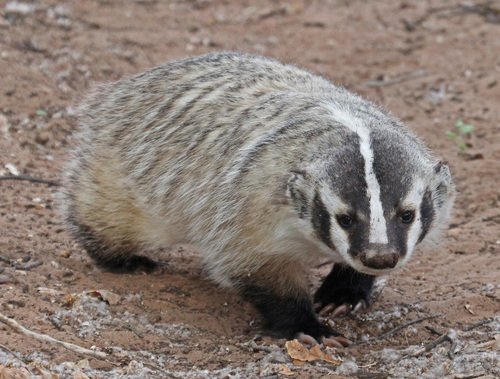
Species that share its range
Sources
Conservation status, range description and population estimate come from the IUCN Red List assessment for Phocoena sinus. Countries are derived from that range description, not from a mapped country list. Last refreshed on .
The distribution map is drawn from the IUCN Red List spatial data compiled in 2017. IUCN (International Union for Conservation of Nature)