
Harbor Porpoise
Phocoena phocoena
Red List assessment
Least Concernon the IUCN Red List
- EXExtinct
- EWExtinct in the Wild
- CRCritically Endangered
- ENEndangered
- VUVulnerable
- NTNear Threatened
- LCLeast Concern
The Harbor Porpoise is recorded in 2 countries across Asia and Europe. The IUCN Red List assesses the Harbor Porpoise as Least Concern. Estimated at 700,000+ individuals globally, with stable overall trend but declining in several regional subpopulations
- Family
- Phocoenidae
- Order
- Cetacea
- Genus
- Phocoena
- Countries recorded
- 2
- Continents
- Asia and Europe
- Red List category
- Least Concern
- Data updated
- August 9, 2026
What is the Harbor Porpoise?
The harbor porpoise is one of the smallest cetacean species, inhabiting cold temperate coastal waters of the Northern Hemisphere. It is known for its shy, elusive behavior and small, rounded dorsal fin. Despite being widespread, it is highly sensitive to human disturbance and bycatch. It plays an important ecological role as a mid-level predator in coastal marine ecosystems.
Where does the Harbor Porpoise live?
Coastal waters of the North Atlantic, North Pacific, and Black Sea, including North Sea, Baltic Sea, Bay of Fundy, and coasts of Northern Europe and North America
North Atlantic (from Nova Scotia to Norway, North Sea, Baltic Sea), North Pacific (California to Alaska, Japan), and the Black Sea; found in temperate to subarctic coastal waters of the Northern Hemisphere
Altitude and depth
Typically found in waters less than 200 meters deep, often within a few kilometers of shore
Seasonal movements
Some populations exhibit seasonal inshore-offshore movements, moving closer to shore in summer for feeding and calving, and offshore in winter
Habitat of the Harbor Porpoise
Shallow coastal and estuarine waters, bays, harbors, and continental shelf areas; occasionally found in river mouths and inland seas like the Baltic and Black Sea
Adaptations to its environment
Thick blubber layer for insulation in cold waters, small body size to reduce heat loss relative to surface area, and echolocation adapted for murky coastal waters
Conservation status and numbers
Least Concern (LC) globally according to IUCN, though some regional populations (e.g., Baltic Sea, Black Sea) are Critically Endangered or Endangered due to localized threats
Estimated population
Estimated at 700,000+ individuals globally, with stable overall trend but declining in several regional subpopulations
What threatens the Harbor Porpoise?
Bycatch in fishing nets (especially gillnets), pollution, habitat degradation, noise pollution from shipping and construction, and prey depletion from overfishing
Diseases and parasites
Susceptible to parasitic infections (lungworms, stomach worms), viral diseases like morbillivirus, and bacterial infections; also affected by biotoxins from harmful algal blooms
What is being done to protect it?
Protected under various national laws, the EU Habitats Directive, ASCOBANS agreement, and marine protected areas; bycatch reduction devices (pingers) increasingly used in fisheries
Recommended actions
Expand use of acoustic deterrent devices in fisheries, strengthen enforcement of bycatch regulations, reduce underwater noise pollution, and protect critical coastal habitats
What the Harbor Porpoise looks like
Small, robust body with a blunt, beakless head; dark gray to brown dorsal coloration fading to lighter gray or white ventrally; small triangular dorsal fin located mid-back
Size
1.4 to 1.9 meters in length, with females generally slightly larger than males
Weight
45 to 65 kg, with some individuals reaching up to 76 kg
Distinctive features
Distinguished from dolphins by its lack of a beak, small triangular (not curved) dorsal fin, and spade-shaped teeth rather than conical ones
Differences between males and females
Females are typically slightly larger than males, a reversed sexual dimorphism pattern compared to many other cetaceans
Behaviour and diet of the Harbor Porpoise
Generally solitary or found in small groups of 2-5 individuals, though larger temporary aggregations can form in productive feeding areas
When it is active
Active both day and night, with feeding often concentrated around dawn and dusk periods
Diet
Carnivorous, feeding primarily on small schooling fish such as herring, sprat, and sandeels, as well as squid
How it feeds and hunts
Uses echolocation to locate prey in murky or dark waters, employing rapid clicks to detect and capture fish through active pursuit
Communication
Primarily communicates via high-frequency echolocation clicks used for navigation and prey detection; limited social vocalizations compared to dolphins
Interactions with other species
Preyed upon by large sharks and killer whales; competes with seabirds and other marine predators for shared fish prey resources
Role in its ecosystem
Serves as a mid-trophic level predator, helping regulate populations of small schooling fish in coastal ecosystems
Reproduction and lifecycle
Breeding occurs in summer months; gestation lasts about 10-11 months, resulting in a single calf born in spring or early summer
Raising the young
Calves are nursed for 8-12 months and stay close to their mothers during this period; mothers provide sole parental care with no male involvement
Maturity and lifespan
Sexual maturity reached around 3-4 years; lifespan typically 8-13 years in the wild, with maximum recorded ages around 20 years
Taxonomy and naming of the Harbor Porpoise
Classification
Mammalia > Cetacea > Phocoenidae > Phocoena > Phocoena phocoena
Subspecies
Several recognized subspecies/populations: P. p. phocoena (North Atlantic), P. p. relicta (Black Sea porpoise), and a Pacific population sometimes classified as P. p. vomerina (Pacific harbor porpoise)
Scientific synonyms
Delphinus phocoena (Linnaeus, 1758, original name)
What research says
Recent studies
Recent research has focused on using passive acoustic monitoring to track population trends and assess the effectiveness of bycatch mitigation measures like pingers
Genome and DNA
Diploid chromosome number of 44; genome studies have been used to distinguish regional subpopulations and assess genetic diversity for conservation purposes
Compared with similar species
Smaller and less social than common dolphins, harbor porpoises differ from other porpoise species like Dall's porpoise by their more coastal habitat preference and less energetic surface behavior
The Harbor Porpoise and people
Harbor porpoises must eat almost constantly due to their high metabolic rate, consuming up to 10% of their body weight daily; they are one of the few cetaceans that rarely bow-ride or breach
Where and how to see it
Best observed from coastal viewpoints or boats in the North Sea, Bay of Fundy, or Baltic Sea during calm weather in summer months when animals feed close to shore
Risks to humans
No notable risk to humans; harbor porpoises are shy and avoid interaction with people
Human uses
Historically hunted for meat and oil in parts of Scandinavia and Greenland, though this practice has largely ceased; now primarily valued for ecotourism and scientific research
Myths and legends
In some Northern European folklore, porpoises were considered omens of storms or messengers between the sea and human world, though less mythologized than dolphins
Countries where the Harbor Porpoise is recorded
The 2 countries named in the range description of its IUCN Red List assessment.
Questions about the Harbor Porpoise
Where does the Harbor Porpoise live?
The Harbor Porpoise is recorded in Japan and Norway across Asia and Europe. These countries come from the range description of its IUCN Red List assessment, and they are what place the species on the interactive map.
Is the Harbor Porpoise endangered?
The IUCN Red List assesses the Harbor Porpoise as Least Concern. The species is widespread and abundant enough not to qualify for any threatened category. It does not mean the species is safe forever, only that nothing in the current data raises an alarm.
How many are left in the wild?
Estimated at 700,000+ individuals globally, with stable overall trend but declining in several regional subpopulations This figure comes from the species assessment on the IUCN Red List; population estimates for wild mammals are ranges, not counts, and are revised at each assessment.
What habitat does the Harbor Porpoise live in?
Shallow coastal and estuarine waters, bays, harbors, and continental shelf areas; occasionally found in river mouths and inland seas like the Baltic and Black Sea
What is the scientific name of the Harbor Porpoise?
The Harbor Porpoise is Phocoena phocoena, in the family Phocoenidae, order Cetacea.
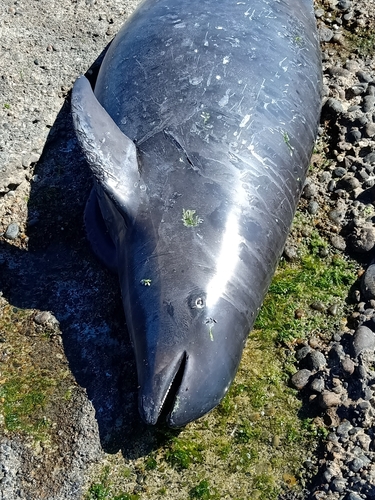
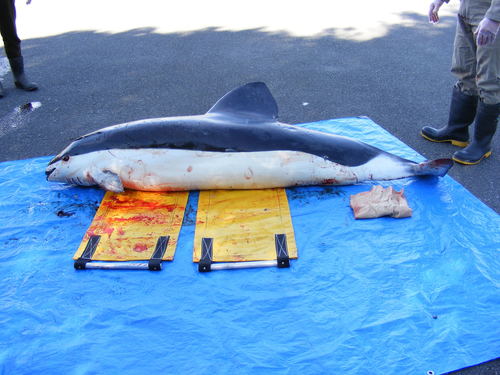
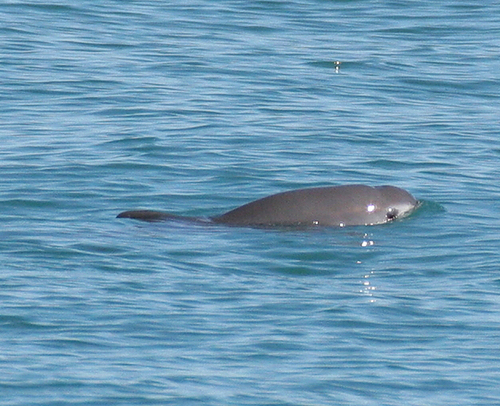
Other species in the genus Phocoena
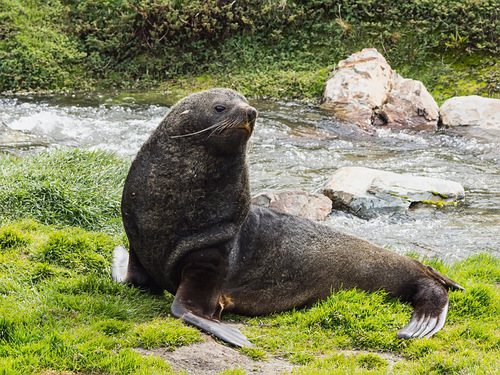
Species that share its range

Sources
Conservation status, range description and population estimate come from the IUCN Red List assessment for Phocoena phocoena. Countries are derived from that range description, not from a mapped country list. Last refreshed on .
The distribution map is drawn from the IUCN Red List spatial data compiled in 2023. IUCN (International Union for Conservation of Nature)