
Tsolov's Mouse-like Hamster
Calomyscus tsolovi
Red List assessment
Data Deficienton the IUCN Red List
- EXExtinct
- EWExtinct in the Wild
- CRCritically Endangered
- ENEndangered
- VUVulnerable
- NTNear Threatened
- LCLeast Concern
Data Deficient has no position on the scale above — it records the absence of an assessment, not a degree of risk.
The Tsolov's Mouse-like Hamster is recorded in one country, Iran across Asia. The IUCN Red List records the Tsolov's Mouse-like Hamster as Data Deficient. No reliable population estimate exists; the species is presumed to have a naturally low and patchy population density typical of rock-dwelling Calomyscus species.
- Family
- Calomyscidae
- Order
- Rodentia
- Genus
- Calomyscus
- Countries recorded
- 1
- Continents
- Asia
- Red List category
- Data Deficient
- Data updated
- August 9, 2026
What is the Tsolov's Mouse-like Hamster?
Calomyscus tsolovi is a small, poorly studied rodent belonging to the mouse-like hamster family, endemic to rocky arid habitats of western Iran. It was described relatively recently and remains one of the least documented members of its genus. Like other Calomyscus species, it is a nocturnal, saxicolous (rock-dwelling) rodent adapted to semi-desert mountainous terrain. Its taxonomic status and ecology are still being clarified through ongoing morphological and genetic studies.
Where does the Tsolov's Mouse-like Hamster live?
Western Iran, particularly the Zagros Mountains region
Endemic to western Iran, with records concentrated in the Zagros Mountain range. The species has a restricted and poorly delineated range due to limited survey effort across its likely habitat.
Altitude and depth
Approximately 1000-2500 meters above sea level, consistent with montane rocky habitats typical of the genus.
Seasonal movements
Likely exhibits reduced surface activity during the coldest winter months, though detailed seasonal behavioral data are lacking for this species.
Habitat of the Tsolov's Mouse-like Hamster
Arid and semi-arid rocky slopes, scree fields, and mountainous foothills with sparse vegetation typical of the Zagros highlands. These habitats provide crevices and rock piles used for shelter from predators and extreme temperatures.
Adaptations to its environment
Possesses a long tail for balance while navigating rocky terrain, along with efficient kidneys to conserve water in arid environments. Nocturnal activity helps avoid extreme daytime heat and predation.
Conservation status and numbers
Listed as Data Deficient (DD) by the IUCN due to insufficient information on population size, distribution, and trends. Taxonomic uncertainty and limited survey coverage hinder accurate assessment.
Estimated population
No reliable population estimate exists; the species is presumed to have a naturally low and patchy population density typical of rock-dwelling Calomyscus species.
What threatens the Tsolov's Mouse-like Hamster?
Potential threats include habitat degradation from overgrazing, mining activity, and climate-driven aridification in its restricted mountain range, though these have not been quantitatively assessed.
What is being done to protect it?
No species-specific conservation programs are currently known; general habitat protection may occur incidentally within Iranian protected areas overlapping its presumed range.
Recommended actions
Priority actions include dedicated field surveys to clarify distribution and abundance, genetic studies to confirm taxonomic status, and habitat assessment within the Zagros region.
What the Tsolov's Mouse-like Hamster looks like
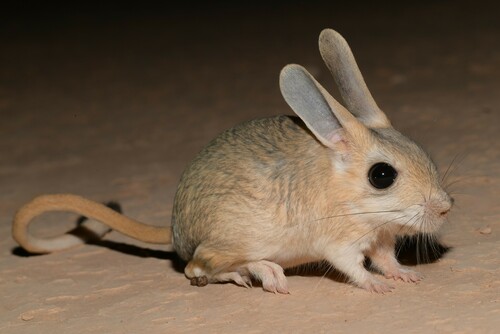
Small rodent with soft grayish-brown dorsal fur, pale or whitish underparts, large eyes, and a long tail often with a slight tuft at the tip.
Size
Body length approximately 7-9 cm, with a tail nearly as long as or longer than the body, typical of the genus Calomyscus.
Weight
Estimated 15-25 grams, consistent with other small Calomyscus species.
Distinctive features
Distinguished from other Calomyscus species primarily through subtle cranial and dental morphological differences identified in taxonomic descriptions, rather than obvious external features.
Behaviour and diet of the Tsolov's Mouse-like Hamster
Presumed solitary or loosely social, based on general Calomyscus behavior, with individuals occupying separate rock crevice shelters.
When it is active
Nocturnal, emerging after dusk to forage among rocks and sparse vegetation.
Diet
Likely omnivorous, feeding on seeds, plant material, and possibly small invertebrates, consistent with dietary patterns observed in related Calomyscus species.
Communication
Likely uses ultrasonic vocalizations and scent marking for communication, as documented in related Calomyscus species, though specific studies on this species are lacking.
Interactions with other species
Potential predators include small owls, foxes, and snakes native to the Zagros region; specific interspecific relationships remain undocumented.
Role in its ecosystem
Plays a role in local seed dispersal and serves as a prey item within rocky montane food webs, contributing to the ecological balance of arid mountain ecosystems.
Reproduction and lifecycle
Details specific to this species are unknown, but related Calomyscus species typically breed in spring and summer, producing small litters of 1-4 young after a gestation of about 25-30 days.
Raising the young
Presumed maternal care similar to other small rodents, with females nursing and sheltering young in rock crevice nests until weaning.
Maturity and lifespan
Sexual maturity is estimated at 2-3 months based on related species; lifespan in the wild is likely 1-2 years, potentially longer in captivity.
Taxonomy and naming of the Tsolov's Mouse-like Hamster
Classification
Class Mammalia > Order Rodentia > Family Calomyscidae > Genus Calomyscus > Species Calomyscus tsolovi
What research says
Recent studies
Recent taxonomic revisions of the genus Calomyscus using molecular and morphological data have helped clarify the distinct status of C. tsolovi relative to other Iranian mouse-like hamsters.
Compared with similar species
Similar in general appearance to other Calomyscus species such as C. bailwardi and C. elburzensis, but distinguished by specific cranial measurements and geographic isolation within the Zagros range.
The Tsolov's Mouse-like Hamster and people
This species was named in honor of a zoologist surnamed Tsolov, reflecting a common taxonomic tradition; it remains one of the most obscure and least-photographed rodents in Iran.
Where and how to see it
Observation is extremely difficult due to its rarity, nocturnal habits, and remote rocky habitat; dedicated nighttime surveys in the Zagros Mountains with spotlighting techniques would be required.
Risks to humans
No notable risk to humans.
Countries where the Tsolov's Mouse-like Hamster is recorded
The 1 countries named in the range description of its IUCN Red List assessment.
Questions about the Tsolov's Mouse-like Hamster
Where does the Tsolov's Mouse-like Hamster live?
The Tsolov's Mouse-like Hamster is recorded in Iran across Asia. These countries come from the range description of its IUCN Red List assessment, and they are what place the species on the interactive map.
Is the Tsolov's Mouse-like Hamster endangered?
The IUCN Red List assesses the Tsolov's Mouse-like Hamster as Data Deficient. There is not enough information to judge the risk of extinction, usually because the species is rarely seen or has never been surveyed. It is not a reassuring category: several species were Data Deficient right up to the point they were found to be Critically Endangered.
How many are left in the wild?
No reliable population estimate exists; the species is presumed to have a naturally low and patchy population density typical of rock-dwelling Calomyscus species. This figure comes from the species assessment on the IUCN Red List; population estimates for wild mammals are ranges, not counts, and are revised at each assessment.
What habitat does the Tsolov's Mouse-like Hamster live in?
Arid and semi-arid rocky slopes, scree fields, and mountainous foothills with sparse vegetation typical of the Zagros highlands.
What is the scientific name of the Tsolov's Mouse-like Hamster?
The Tsolov's Mouse-like Hamster is Calomyscus tsolovi, in the family Calomyscidae, order Rodentia.
Other species in the genus Calomyscus
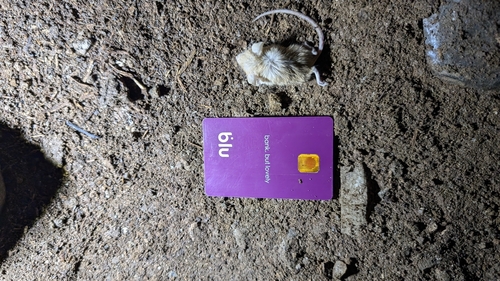
Other species in the family Calomyscidae

Species that share its range
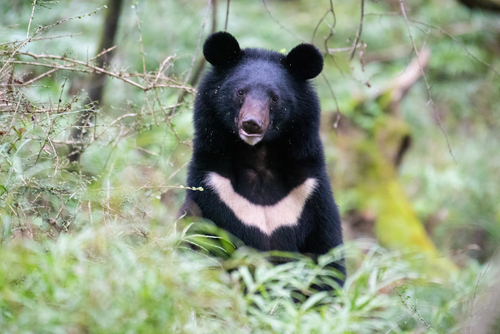
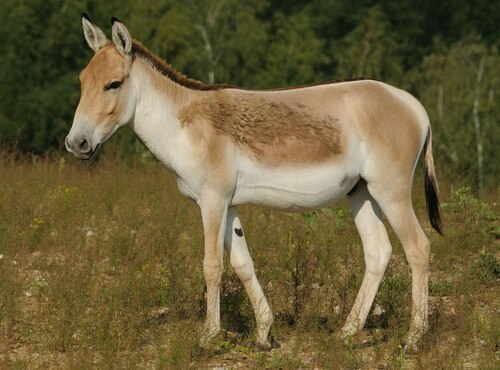
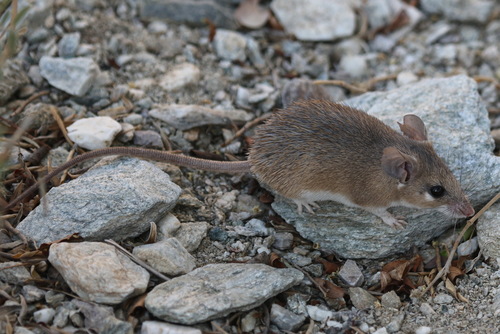
Sources
Conservation status, range description and population estimate come from the IUCN Red List assessment for Calomyscus tsolovi. Countries are derived from that range description, not from a mapped country list. Last refreshed on .
The distribution map is drawn from the IUCN Red List spatial data compiled in 2008. IUCN (International Union for Conservation of Nature)