
Tamaraw
Bubalus mindorensis
Red List assessment
Critically Endangeredon the IUCN Red List
- EXExtinct
- EWExtinct in the Wild
- CRCritically Endangered
- ENEndangered
- VUVulnerable
- NTNear Threatened
- LCLeast Concern
The Tamaraw is recorded in one country, Philippines across Asia. The IUCN Red List assesses the Tamaraw as Critically Endangered. Approximately 400-600 individuals remain in the wild as of recent surveys, with the population considered stable to slightly increasing in the core protected area of Mounts Iglit-Baco Natural Park due to intensive conservation efforts.
- Family
- Bovidae
- Order
- Artiodactyla
- Genus
- Bubalus
- Countries recorded
- 1
- Continents
- Asia
- Red List category
- Critically Endangered
- Data updated
- August 9, 2026
What is the Tamaraw?
The tamaraw is a small, dwarf buffalo species endemic solely to the island of Mindoro in the Philippines. It is remarkable for being one of the most critically endangered large mammals in the world, with a population that has collapsed due to hunting and habitat loss. Smaller and more solitary than its mainland relative the water buffalo, it inhabits dense forests and grasslands at higher elevations, retreating from human disturbance. It is considered a national symbol of the Philippines and a flagship species for Mindoro's biodiversity conservation.
Where does the Tamaraw live?
Philippines, endemic to Mindoro Island
Endemic to Mindoro Island in the Philippines. Historically found across the entire island at various elevations, the species is now restricted to a few isolated populations, primarily within and around Mounts Iglit-Baco Natural Park in the southwestern part of the island.
Altitude and depth
300-2000 meters above sea level, with the core surviving population concentrated around 600-1200 meters
Seasonal movements
No true migration or hibernation, but tamaraw may shift between forest cover and open grassland areas seasonally, moving to grasslands after rains when fresh grass growth occurs and retreating to forest during hot, dry periods
Habitat of the Tamaraw
Tamaraw inhabit dense tropical forests, grasslands, and mixed forest-grassland mosaics, often near water sources. They prefer areas with thick vegetation for cover combined with open grassy patches for grazing, typically in hilly or mountainous terrain away from human settlement.
Adaptations to its environment
Their compact, sturdy body and short legs allow efficient movement through dense forest and steep terrain. Dark grayish-brown skin and short coat provide some protection from insects and heat, while their solitary and secretive nature has evolved as an adaptation to intense hunting pressure over the past century.
Conservation status and numbers
Critically Endangered (CR) according to IUCN, due to a drastic population decline exceeding 80% over the last few decades caused by hunting, habitat loss, and disease transmission from domestic cattle. The species survives only in a few fragmented pockets on Mindoro Island.
Estimated population
Approximately 400-600 individuals remain in the wild as of recent surveys, with the population considered stable to slightly increasing in the core protected area of Mounts Iglit-Baco Natural Park due to intensive conservation efforts.
What threatens the Tamaraw?
Poaching for meat and hides, habitat destruction from agricultural expansion and logging, disease transmission from domestic and feral cattle, and armed conflict in remote areas limiting conservation access are the primary threats.
Diseases and parasites
Susceptible to diseases transmitted from domestic cattle including rinderpest, hemorrhagic septicemia, and foot-and-mouth disease, which have historically caused significant population declines.
What is being done to protect it?
The Philippine government, through the Tamaraw Conservation Program and the DENR, protects the species within Mounts Iglit-Baco Natural Park with anti-poaching patrols, annual population counts, and community engagement. Captive breeding attempts have had limited success, and international organizations provide funding and technical support.
Recommended actions
Priority actions include strengthening anti-poaching enforcement, expanding protected habitat corridors, controlling disease transmission from domestic livestock, engaging indigenous Mangyan communities in conservation, and improving genetic monitoring of the remaining fragmented populations.
What the Tamaraw looks like
Tamaraw have a stocky, compact body covered in short, dark blackish-brown to gray hair, with a distinctive V-shaped pattern of pale hair on the throat and chest. Both sexes bear short, thick horns that grow in a V-shape rather than curving outward like domestic water buffalo.
Size
Shoulder height of approximately 100-105 cm, with a body length of about 220 cm including a short tail
Weight
Adults typically weigh between 180-300 kg, with males generally slightly larger and heavier than females
Distinctive features
Compared to the domestic water buffalo, the tamaraw is notably smaller, has horns that grow more vertically in a tight V-shape rather than sweeping outward, and possesses a more solitary and aggressive temperament. Its skin is also darker and its build more compact and muscular.
Differences between males and females
Males are generally larger and more heavily built than females, with slightly thicker and longer horns; females have comparatively slimmer horns and bodies
Behaviour and diet of the Tamaraw
Tamaraw are largely solitary animals, unlike many other buffalo species that form large herds. Adult males are typically territorial and solitary, while females may be seen with a single calf; small temporary groupings of 2-4 individuals occasionally occur, especially among females and young.
When it is active
Primarily crepuscular and nocturnal, tamaraw are most active during dawn, dusk, and nighttime hours, resting in dense cover during the hottest part of the day to avoid heat and human disturbance.
Diet
Herbivorous, feeding primarily on grasses, young bamboo shoots, and various forest undergrowth plants. They show a preference for fresh grass shoots in open grassland areas, especially after rains.
Communication
Tamaraw communicate through vocalizations such as grunts and snorts, body posturing including head-lowering displays as threats, and scent marking to establish territory boundaries, particularly among solitary males.
Interactions with other species
Historically had few natural predators aside from humans, though young or weak individuals may be vulnerable to feral dogs. They compete with introduced cattle and water buffalo for grazing resources and are susceptible to diseases transmitted by domestic livestock, such as rinderpest and hemorrhagic septicemia.
Role in its ecosystem
As a grazing herbivore, the tamaraw plays a role in shaping grassland and forest-edge vegetation structure on Mindoro Island, contributing to nutrient cycling and maintaining open grassy patches that benefit other grassland-dependent species.
Reproduction and lifecycle
Breeding is not strictly seasonal, though births tend to peak during the rainy season between January and February. Gestation lasts approximately 300-320 days, resulting in a single calf per birth, with females typically breeding once every two years.
Raising the young
Female tamaraw provide sole parental care, nursing and protecting the calf for several months after birth. Calves remain closely associated with their mothers for up to two years before becoming fully independent.
Maturity and lifespan
Sexual maturity is reached around 2-3 years of age. Lifespan in the wild is estimated at 15-20 years, while captive individuals have occasionally lived slightly longer under managed care.
Taxonomy and naming of the Tamaraw
Classification
Mammalia > Artiodactyla > Bovidae > Bubalus > Bubalus mindorensis
Scientific synonyms
Anoa mindorensis; Bubalus mindorensis has sometimes been placed within Bubalus bubalis as a subspecies, but is now widely recognized as a distinct species
What research says
Recent studies
Recent camera trap and population survey studies conducted by the Tamaraw Conservation Program have provided updated population estimates and improved understanding of habitat use patterns within Mounts Iglit-Baco Natural Park, informing more targeted conservation strategies.
Genome and DNA
Limited genetic studies exist, but the tamaraw is known to have a diploid chromosome number of 2n=48, similar to other Bubalus species; conservation genetics research is ongoing to assess inbreeding risk in the fragmented remaining population.
Compared with similar species
The tamaraw is smaller and more solitary than its close relative the domestic water buffalo (Bubalus bubalis) and the wild water buffalo, with more vertically oriented horns and darker coloration. It is also more closely related to the Sulawesi anoas, sharing a dwarfed body size adapted to island environments.
The Tamaraw and people
The tamaraw is one of only a handful of truly wild buffalo species left in the world and is found nowhere else on Earth except Mindoro Island. It is featured on the old Philippine one-peso coin and gives its name to a popular Filipino sports utility vehicle model. Despite its buffalo-like appearance, it is more aggressive and solitary than domestic water buffalo, and early Spanish colonizers reportedly feared it as a dangerous wild beast.
Where and how to see it
The best place to observe wild tamaraw is within the Mounts Iglit-Baco Natural Park on Mindoro Island, particularly during early morning or late afternoon guided treks organized by the Tamaraw Conservation Program. Visitors typically need special permits and local guides due to the species' shy, elusive nature and protected status.
Risks to humans
No notable risk to humans under normal circumstances, though solitary bulls can become aggressive and potentially dangerous if cornered or provoked, given their strength and defensive horn use.
Human uses
Historically hunted for meat and hides by local communities, though this is now illegal due to its critically endangered status. The species now primarily has ecotourism and cultural value, serving as a national symbol and flagship species for conservation funding in the Philippines.
Myths and legends
The tamaraw holds cultural significance among the indigenous Mangyan people of Mindoro, who traditionally viewed it as a symbol of strength and wilderness. It has also become a national symbol of the Philippines, often used to represent toughness and resilience in popular culture.
Countries where the Tamaraw is recorded
The 1 countries named in the range description of its IUCN Red List assessment.
Questions about the Tamaraw
Where does the Tamaraw live?
The Tamaraw is recorded in Philippines across Asia. These countries come from the range description of its IUCN Red List assessment, and they are what place the species on the interactive map.
Is the Tamaraw endangered?
Yes. The IUCN Red List assesses the Tamaraw as Critically Endangered, one of the three threatened categories. The species faces an extremely high risk of extinction in the wild. This is the last category before extinction, and it is reached through a very small or steeply declining population, a tiny range, or both.
How many are left in the wild?
Approximately 400-600 individuals remain in the wild as of recent surveys, with the population considered stable to slightly increasing in the core protected area of Mounts Iglit-Baco Natural Park due to intensive conservation efforts. This figure comes from the species assessment on the IUCN Red List; population estimates for wild mammals are ranges, not counts, and are revised at each assessment.
What habitat does the Tamaraw live in?
Tamaraw inhabit dense tropical forests, grasslands, and mixed forest-grassland mosaics, often near water sources.
What is the scientific name of the Tamaraw?
The Tamaraw is Bubalus mindorensis, in the family Bovidae, order Artiodactyla.
Other species in the genus Bubalus
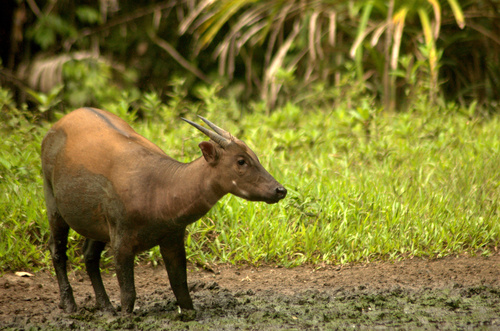
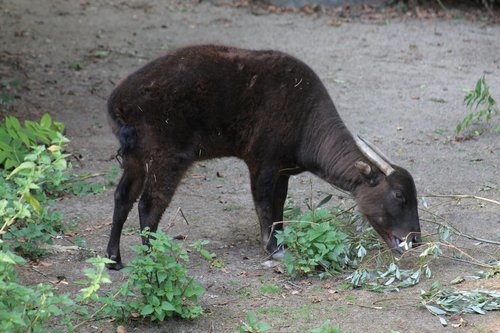
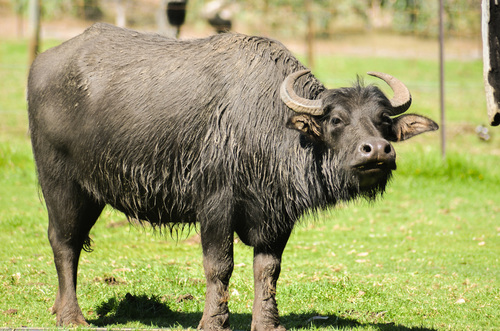
Other species in the family Bovidae
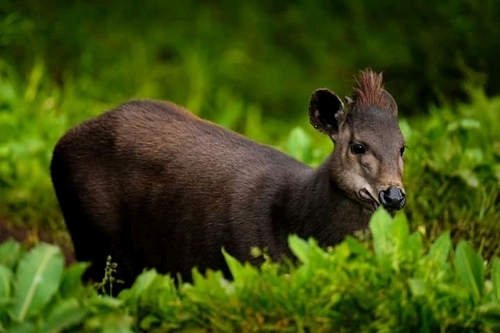
Species that share its range
Sources
Conservation status, range description and population estimate come from the IUCN Red List assessment for Bubalus mindorensis. Countries are derived from that range description, not from a mapped country list. Last refreshed on .
The distribution map is drawn from the IUCN Red List spatial data compiled in 2016. Schutz, E. and Boyles, R.