
Red Fox
Vulpes vulpes
Red List assessment
Least Concernon the IUCN Red List
- EXExtinct
- EWExtinct in the Wild
- CRCritically Endangered
- ENEndangered
- VUVulnerable
- NTNear Threatened
- LCLeast Concern
The Red Fox is recorded in 2 countries across Asia and Oceania. The IUCN Red List assesses the Red Fox as Least Concern. Global population estimated in the millions; considered stable to increasing in many regions, particularly in urban areas across Europe and North America.
- Family
- Canidae
- Order
- Carnivora
- Genus
- Vulpes
- Countries recorded
- 2
- Continents
- Asia and Oceania
- Red List category
- Least Concern
- Data updated
- August 9, 2026
What is the Red Fox?
The red fox is the largest and most widespread species of true fox, renowned for its remarkable adaptability across diverse habitats from Arctic tundra to urban city centers. It is a highly intelligent, opportunistic omnivore recognized for its distinctive reddish coat and bushy tail. As one of the most successful carnivores globally, it thrives alongside human development, often exploiting urban environments for food and shelter.
Where does the Red Fox live?
Widely distributed across the Northern Hemisphere including Europe, North Africa, Asia, and North America; also introduced to Australia.
Native range spans Europe, most of Asia, North Africa, and North America; introduced populations exist in Australia where it is considered invasive. Found from the Arctic Circle to North Africa and from the British Isles to Japan.
Altitude and depth
Sea level to over 4,500m in mountainous regions such as the Himalayas.
Seasonal movements
No true migration, but exhibits seasonal changes in territory size, diet, and social behavior; mating season peaks in winter (December-February in Northern Hemisphere) with increased vocalization and movement.
Habitat of the Red Fox
Extremely adaptable, inhabiting forests, grasslands, mountains, deserts, farmland, and urban/suburban areas. Prefers mixed landscapes with cover for denning and open areas for hunting.
Adaptations to its environment
Highly adaptable diet and behavior allow survival in extreme climates; thick fur provides insulation in cold regions while lighter coats suit warmer climates. Excellent hearing allows detection of prey under snow or vegetation, and a flexible skeleton aids in squeezing through tight spaces.
Conservation status and numbers
Least Concern (LC) due to extremely large range, high population numbers, and adaptability to human-altered landscapes with no significant overall population decline.
Estimated population
Global population estimated in the millions; considered stable to increasing in many regions, particularly in urban areas across Europe and North America.
What threatens the Red Fox?
Localized threats include hunting for fur, vehicle collisions, disease outbreaks (mange, rabies), and habitat fragmentation; in Australia, control programs target it as an invasive species harmful to native wildlife.
Diseases and parasites
Susceptible to rabies, sarcoptic mange, canine distemper, and various parasites including fleas, ticks, and intestinal worms; can serve as a disease reservoir affecting domestic animals.
What is being done to protect it?
Protected under various national wildlife laws in parts of its native range; managed through regulated hunting and fur trade; population control programs exist in Australia and parts of the UK to mitigate ecological impact.
Recommended actions
Continued monitoring of urban populations for disease transmission, responsible management of fur trade, and research into human-wildlife conflict mitigation in expanding urban environments.
What the Red Fox looks like
Distinctive reddish-orange fur on back and sides, white underbelly and throat, black legs and ear tips, and a long bushy tail often with a white tip. Pointed ears and a narrow, elongated muzzle give it a characteristic sharp-featured face.
Size
Body length 45-90 cm with a tail of 30-55 cm; shoulder height typically 35-50 cm.
Weight
Males (dogs) typically weigh 5-8 kg, females (vixens) slightly lighter at 4-6 kg, though size varies significantly by region.
Distinctive features
Distinguished from other fox species by larger size, vivid red coat, white-tipped tail, and vertical pupils (unlike round pupils in most canids). Color morphs including silver, cross, and melanistic forms occur naturally.
Differences between males and females
Minimal visible dimorphism; males are slightly larger and heavier than females, with subtle differences in skull structure, but coloration is similar between sexes.
Behaviour and diet of the Red Fox
Primarily solitary or living in small family groups; territorial with home ranges defended through scent marking. Social structure can include a monogamous pair with helper offspring from previous litters assisting in raising young.
When it is active
Primarily crepuscular and nocturnal, though often active during the day in areas with low human disturbance or abundant food.
Diet
Omnivorous with a diverse diet including small mammals (especially rodents), birds, insects, earthworms, fruits, berries, and human food waste in urban areas. Diet composition shifts seasonally based on availability.
How it feeds and hunts
Uses acute hearing to locate prey under snow or soil, employing a characteristic high-arching pounce to pin down prey; also scavenges opportunistically and caches surplus food for later consumption.
Communication
Complex vocal repertoire including barks, screams, and yips, especially during mating season; extensive use of scent marking via urine, feces, and scent glands to communicate territory and social status. Body language and facial expressions also play a role in social interactions.
Interactions with other species
Natural predators include wolves, coyotes, golden eagles, and large owls; competes with other mesopredators like raccoons and badgers. Occasionally preys on domestic poultry, leading to conflict with humans.
Role in its ecosystem
Functions as a mesopredator, helping regulate rodent and small mammal populations; also acts as a seed disperser through fruit consumption. Plays a role in nutrient cycling through scavenging behavior.
Reproduction and lifecycle
Mating occurs in winter (December-February), with gestation lasting approximately 52-53 days; litters typically contain 4-6 kits, born blind and helpless in an underground den.
Raising the young
Both parents, and sometimes older siblings, participate in raising kits; vixens nurse and guard the den while males provide food. Kits are weaned around 8-10 weeks and become independent by 6-7 months.
Maturity and lifespan
Sexual maturity reached at approximately 10 months; average lifespan in the wild is 3-5 years, while captive individuals can live up to 12-14 years.
Taxonomy and naming of the Red Fox
Classification
Mammalia > Carnivora > Canidae > Vulpes > Vulpes vulpes
Subspecies
Over 40 recognized subspecies including Vulpes vulpes crucigera (Central Europe), Vulpes vulpes fulva (North America), Vulpes vulpes japonica (Japan), and Vulpes vulpes silacea (Iberian Peninsula), varying in size, coat color, and range.
Scientific synonyms
Canis vulpes (original Linnaean classification)
What research says
Recent studies
Recent research has focused on urban adaptation genetics, revealing behavioral and morphological changes in city-dwelling foxes compared to rural populations, including tamer temperaments and altered skull shapes.
Genome and DNA
Diploid chromosome number of 2n=38; genome studies have provided insights into domestication genetics through comparison with domesticated silver fox lineages bred in Russian experiments.
Compared with similar species
Larger and more adaptable than related species like the Arctic fox and kit fox; distinguished from similar-sized canids like coyotes by its more slender build, pointed muzzle, and vertical pupils.
The Red Fox and people
Red foxes can hear low-frequency sounds and rodents digging underground from up to 40 meters away; they use Earth's magnetic field to help judge hunting pounce distances, a rare ability among mammals.
Where and how to see it
Best observed at dawn or dusk in rural farmland, woodland edges, or increasingly in suburban gardens; patience and quiet observation near known den sites during spring increases chances of sighting kits.
Risks to humans
Generally low risk to humans; bites are rare but possible if cornered or handled, and can potentially transmit rabies in endemic areas. Occasional conflict arises from predation on small pets or poultry.
Human uses
Historically and currently hunted for fur used in clothing and fashion accessories; also a popular subject in wildlife tourism and urban wildlife studies.
Myths and legends
Widely featured in folklore as a cunning, trickster figure, notably in European tales like 'Reynard the Fox' and Japanese kitsune mythology where foxes are seen as shapeshifting spirits with magical powers.
Countries where the Red Fox is recorded
The 2 countries named in the range description of its IUCN Red List assessment.
Questions about the Red Fox
Where does the Red Fox live?
The Red Fox is recorded in Australia and Japan across Asia and Oceania. These countries come from the range description of its IUCN Red List assessment, and they are what place the species on the interactive map.
Is the Red Fox endangered?
The IUCN Red List assesses the Red Fox as Least Concern. The species is widespread and abundant enough not to qualify for any threatened category. It does not mean the species is safe forever, only that nothing in the current data raises an alarm.
How many are left in the wild?
Global population estimated in the millions; considered stable to increasing in many regions, particularly in urban areas across Europe and North America. This figure comes from the species assessment on the IUCN Red List; population estimates for wild mammals are ranges, not counts, and are revised at each assessment.
What habitat does the Red Fox live in?
Extremely adaptable, inhabiting forests, grasslands, mountains, deserts, farmland, and urban/suburban areas.
What is the scientific name of the Red Fox?
The Red Fox is Vulpes vulpes, in the family Canidae, order Carnivora.
Other species in the genus Vulpes
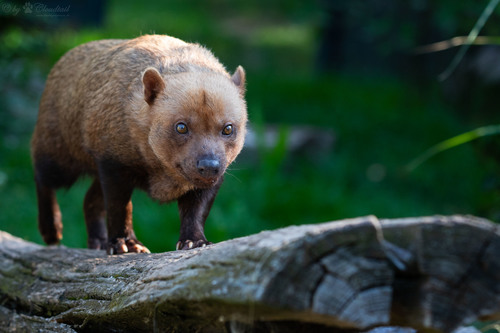
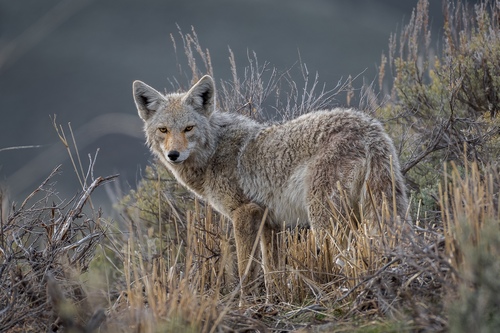
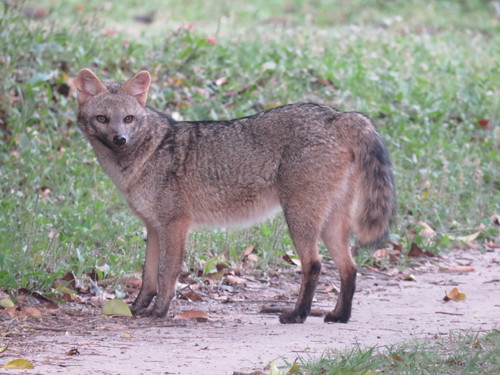
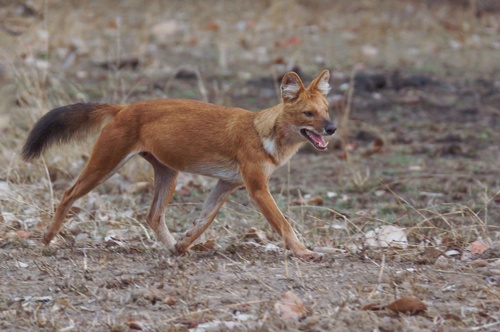
Other species in the family Canidae
Sources
Conservation status, range description and population estimate come from the IUCN Red List assessment for Vulpes vulpes. Countries are derived from that range description, not from a mapped country list. Last refreshed on .
The distribution map is drawn from the IUCN Red List spatial data compiled in 2016. IUCN (International Union for Conservation of Nature)