
Platypus
Ornithorhynchus anatinus
Red List assessment
Near Threatenedon the IUCN Red List
- EXExtinct
- EWExtinct in the Wild
- CRCritically Endangered
- ENEndangered
- VUVulnerable
- NTNear Threatened
- LCLeast Concern
The Platypus is recorded in 2 countries across Europe and Oceania. The IUCN Red List assesses the Platypus as Near Threatened. Estimated at 30,000-300,000 mature individuals with a declining trend, though precise population size is difficult to determine due to the species' elusive nature.
- Family
- Ornithorhynchidae
- Order
- Monotremata
- Genus
- Ornithorhynchus
- Countries recorded
- 2
- Continents
- Europe and Oceania
- Red List category
- Near Threatened
- Data updated
- August 9, 2026
What is the Platypus?
The platypus is one of only five living monotreme species and the sole living representative of its family, laying eggs despite being a mammal. It inhabits freshwater rivers and streams along eastern Australia and Tasmania. Remarkable for its duck-like bill, venomous spurs in males, and electroreception abilities, it represents a unique evolutionary lineage that diverged from other mammals over 150 million years ago.
Where does the Platypus live?
Eastern Australia, including Queensland, New South Wales, Victoria, and Tasmania
Endemic to eastern Australia, ranging from far north Queensland through New South Wales and Victoria to Tasmania, with an introduced population on Kangaroo Island in South Australia.
Altitude and depth
Sea level to approximately 1200m altitude in river systems; forages in water depths typically less than 5 meters.
Seasonal movements
Breeding season occurs typically from August to October (winter-spring), with reduced activity in colder months; no true hibernation but activity levels decrease in winter.
Habitat of the Platypus
Freshwater rivers, streams, and lakes with vegetated banks suitable for burrowing; requires clear, slow-flowing water with abundant invertebrate prey and stable banks for nesting burrows.
Adaptations to its environment
Electroreceptors in the bill detect electrical fields from prey movement underwater, compensating for closed eyes and ears while submerged; dense waterproof fur and webbed feet aid swimming, while males possess venomous ankle spurs for defense.
Conservation status and numbers
Near Threatened (NT) according to IUCN, reflecting ongoing population declines due to habitat degradation, drought, and fragmentation, though not yet meeting criteria for a more severe threat category.
Estimated population
Estimated at 30,000-300,000 mature individuals with a declining trend, though precise population size is difficult to determine due to the species' elusive nature.
What threatens the Platypus?
Habitat destruction from land clearing and dam construction, water pollution, drought and reduced river flows linked to climate change, entanglement in fishing gear and litter, and predation by introduced foxes and dogs.
Diseases and parasites
Susceptible to a fungal disease called mucormycosis (particularly in Tasmania) and various parasites including platypus-specific leeches and nematodes.
What is being done to protect it?
Protected under Australian federal and state legislation; monitored through citizen science programs like the Australian Platypus Conservation Initiative; captive breeding and research programs exist at institutions like Taronga Zoo and Healesville Sanctuary.
Recommended actions
Protect and restore riparian habitats, mitigate drought impacts through water management, reduce litter and fishing net entanglement risks, and expand population monitoring across its range.
What the Platypus looks like
Dense, waterproof brown fur covers a streamlined body; features a broad, flat rubbery bill, webbed feet, and a flattened beaver-like tail used for fat storage and swimming propulsion.
Size
Body length 40-60 cm including tail; males are generally larger than females.
Weight
Males typically weigh 1-2.4 kg, females 0.7-1.6 kg.
Distinctive features
The combination of a duck-like bill, egg-laying reproduction, venomous spurs, and electroreception makes it visually and biologically unmistakable among mammals.
Differences between males and females
Males are larger than females and possess venomous spurs on their hind legs used in territorial combat, which females lack as adults.
Behaviour and diet of the Platypus
Largely solitary and territorial, with minimal social interaction outside of breeding season; individuals maintain separate burrows and foraging territories.
When it is active
Primarily nocturnal and crepuscular, foraging actively at dawn, dusk, and throughout the night while resting in burrows during the day.
Diet
Carnivorous, feeding mainly on aquatic invertebrates including insect larvae, freshwater shrimp, worms, and small crustaceans found on riverbeds.
How it feeds and hunts
Forages by diving and sweeping its bill through sediment, using electroreception to detect prey's faint electrical signals since eyes, ears, and nostrils close underwater.
Communication
Limited vocalization; communication relies mainly on tactile cues, scent marking of territories, and possibly electroreceptive signaling during interactions.
Interactions with other species
Few natural predators exist, though snakes, birds of prey, and introduced foxes may occasionally take platypuses; competes with other aquatic species for invertebrate prey resources.
Role in its ecosystem
Serves as an indicator species for freshwater ecosystem health, and as a mid-level predator helps regulate aquatic invertebrate populations in its river habitats.
Reproduction and lifecycle
Breeding occurs once yearly, typically August-October; after mating, females lay 1-3 leathery eggs which incubate for about 10 days in a specially constructed burrow.
Raising the young
Females alone care for the eggs and young, incubating eggs against their body and nursing hatchlings with milk secreted through skin patches (lacking teats) for approximately 3-4 months.
Maturity and lifespan
Reaches sexual maturity around 2 years of age; lifespan in the wild is typically 11-17 years, with some individuals in captivity living over 20 years.
Taxonomy and naming of the Platypus
Classification
Class Mammalia > Order Monotremata > Family Ornithorhynchidae > Genus Ornithorhynchus > Species Ornithorhynchus anatinus
Scientific synonyms
Platypus anatinus (original 1799 naming by Shaw); Ornithorhynchus paradoxus (Blumenbach, 1800)
What research says
Recent studies
Recent studies have documented population declines linked to drought severity and identified biofluorescence under UV light in platypus fur, a previously unknown trait shared with some other mammals.
Genome and DNA
Possesses a unique genome with 52 chromosomes including 10 sex chromosomes (5X and 5Y in males), reflecting its distinct evolutionary lineage; genome sequenced in 2008 revealing mix of mammalian, reptilian, and avian genetic features.
Compared with similar species
Distinguished from its monotreme relatives, the echidnas, by its aquatic lifestyle, bill shape, and lack of spines; represents a more ancestral lineage among monotremes based on fossil and genetic evidence.
The Platypus and people
Male platypuses are among the few venomous mammals, delivering painful venom via ankle spurs; the species was initially thought to be a hoax when first described to European scientists due to its bizarre combination of features.
Where and how to see it
Best observed at dawn or dusk near quiet freshwater streams in eastern Australia, particularly in Tasmania or areas like the Eungella region in Queensland, using patience and minimal disturbance.
Risks to humans
Male platypus venom can cause severe pain, swelling, and temporary incapacitation in humans, though it is rarely life-threatening; otherwise poses no significant risk.
Human uses
Historically hunted for fur in the 19th and early 20th centuries; today valued mainly for ecotourism, scientific research, and as a national symbol of Australian biodiversity.
Myths and legends
Indigenous Australian folklore includes stories describing the platypus as a hybrid creature born from a union between a water rat and a duck, symbolizing its unique blended appearance.
Countries where the Platypus is recorded
The 2 countries named in the range description of its IUCN Red List assessment.
Questions about the Platypus
Where does the Platypus live?
The Platypus is recorded in Australia and United Kingdom across Europe and Oceania. These countries come from the range description of its IUCN Red List assessment, and they are what place the species on the interactive map.
Is the Platypus endangered?
The IUCN Red List assesses the Platypus as Near Threatened. The species does not qualify as threatened today, but it is close to the thresholds and likely to cross them soon. It is the category that most often changes at the next assessment.
How many are left in the wild?
Estimated at 30,000-300,000 mature individuals with a declining trend, though precise population size is difficult to determine due to the species' elusive nature. This figure comes from the species assessment on the IUCN Red List; population estimates for wild mammals are ranges, not counts, and are revised at each assessment.
What habitat does the Platypus live in?
Freshwater rivers, streams, and lakes with vegetated banks suitable for burrowing; requires clear, slow-flowing water with abundant invertebrate prey and stable banks for nesting burrows.
What is the scientific name of the Platypus?
The Platypus is Ornithorhynchus anatinus, in the family Ornithorhynchidae, order Monotremata.
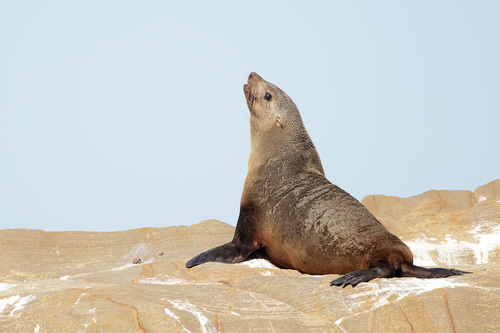
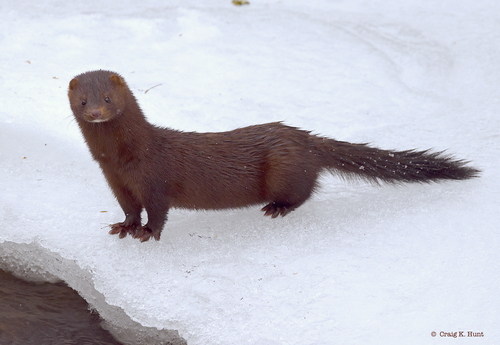
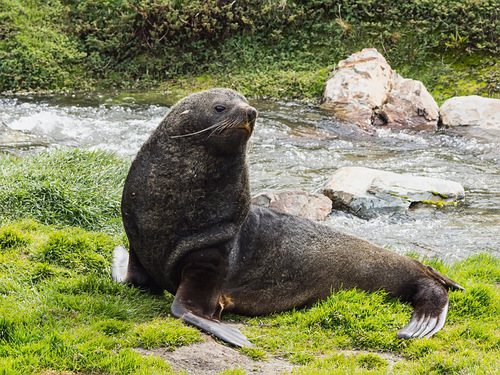
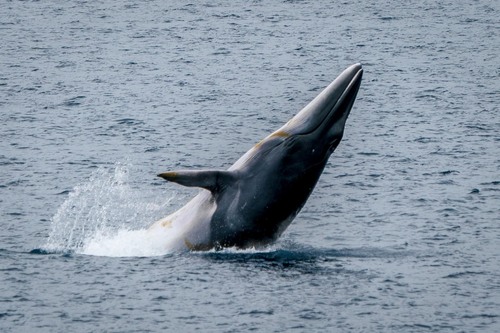
Species that share its range

Sources
Conservation status, range description and population estimate come from the IUCN Red List assessment for Ornithorhynchus anatinus. Countries are derived from that range description, not from a mapped country list. Last refreshed on .
The distribution map is drawn from the IUCN Red List spatial data compiled in 2008. IUCN (International Union for Conservation of Nature)