
Palawan Pencil-tailed Tree Mouse
Chiropodomys calamianensis
Red List assessment
Data Deficienton the IUCN Red List
- EXExtinct
- EWExtinct in the Wild
- CRCritically Endangered
- ENEndangered
- VUVulnerable
- NTNear Threatened
- LCLeast Concern
Data Deficient has no position on the scale above — it records the absence of an assessment, not a degree of risk.
The Palawan Pencil-tailed Tree Mouse is recorded in one country, Philippines across Asia. The IUCN Red List records the Palawan Pencil-tailed Tree Mouse as Data Deficient. Unknown; no reliable population estimates exist due to the species' Data Deficient status and limited field research.
- Family
- Muridae
- Order
- Rodentia
- Genus
- Chiropodomys
- Countries recorded
- 1
- Continents
- Asia
- Red List category
- Data Deficient
- Data updated
- August 9, 2026
What is the Palawan Pencil-tailed Tree Mouse?
The Palawan Pencil-tailed Tree Mouse is a small arboreal rodent endemic to the Calamian Islands in the Philippines, most notably Busuanga and Culion. It belongs to the distinctive genus Chiropodomys, known for their slender, mouse-like bodies and long, tapering tails resembling pencils. Its isolation on a small island group makes it a notable example of insular endemism in Southeast Asian rodent fauna. Very little is known about its biology due to its restricted range and lack of dedicated field studies.
Where does the Palawan Pencil-tailed Tree Mouse live?
Calamian Islands, Palawan Province, Philippines
Endemic to the Calamian Islands group, part of Palawan Province, Philippines, including islands such as Busuanga and Culion.
Altitude and depth
Likely lowland habitats, roughly 0-500m, though precise altitudinal range is undocumented.
Habitat of the Palawan Pencil-tailed Tree Mouse
Presumed to inhabit lowland tropical forest, forest edges, and possibly bamboo thickets, similar to other Chiropodomys species which favor wooded and shrubby habitats.
Adaptations to its environment
Like other pencil-tailed tree mice, it likely possesses a long prehensile-like tail and flexible digits adapted for climbing trees, bamboo, and shrubs in its forest habitat. Small body size may aid in navigating narrow branches and dense vegetation.
Conservation status and numbers
Listed as Data Deficient (DD) by the IUCN due to insufficient information on population size, distribution, and ecological requirements to assess its conservation status accurately.
Estimated population
Unknown; no reliable population estimates exist due to the species' Data Deficient status and limited field research.
What threatens the Palawan Pencil-tailed Tree Mouse?
Habitat loss from deforestation, logging, and agricultural conversion on the Calamian Islands are presumed threats, though specific data on population impacts is lacking.
What is being done to protect it?
No species-specific conservation programs are known; general forest protection measures in Palawan's protected areas may incidentally benefit this species.
Recommended actions
Field surveys to assess population status and distribution, habitat protection within the Calamian Islands, and taxonomic/ecological research are priority actions.
What the Palawan Pencil-tailed Tree Mouse looks like
Presumably has soft brownish or grayish fur on the back with paler underparts, a pointed snout, large eyes suited for nocturnal activity, and a long, thin tail, following the general pattern of the genus.
Size
Estimated body length of 6-8 cm with a tail of similar or greater length, based on typical measurements for the genus Chiropodomys.
Weight
Likely weighs between 10-20 grams, consistent with other small Chiropodomys species.
Distinctive features
Distinguished from related Chiropodomys species primarily through subtle cranial and dental morphological differences, as well as its restricted island endemism to the Calamian group.
Behaviour and diet of the Palawan Pencil-tailed Tree Mouse
Likely solitary or living in small family groups, as is typical for many small arboreal murid rodents, though specific social behavior data is unavailable.
When it is active
Presumed nocturnal, consistent with other Chiropodomys species that are active at night and rest in tree hollows or dense foliage during the day.
Diet
Likely omnivorous, feeding on fruits, seeds, and possibly insects, similar to dietary habits observed in related Chiropodomys species.
Communication
Likely uses vocalizations, scent marking, and tactile communication typical of small nocturnal rodents, though no specific studies exist for this species.
Interactions with other species
Likely predated upon by small carnivores, owls, and snakes present in Palawan forests; specific interspecific relationships are undocumented.
Role in its ecosystem
Probably plays a role in seed dispersal and possibly insect population control within its forest habitat, contributing to local ecosystem dynamics.
Reproduction and lifecycle
No specific data available; related Chiropodomys species typically have short gestation periods and small litters of a few young.
Raising the young
Presumed maternal care similar to other small rodents, with females nursing and protecting young in nests until weaning, though specific behavior is undocumented for this species.
Maturity and lifespan
Unknown; likely reaches sexual maturity within a few months and has a short lifespan of 1-3 years, consistent with small murid rodents.
Taxonomy and naming of the Palawan Pencil-tailed Tree Mouse
Classification
Class Mammalia > Order Rodentia > Family Muridae > Genus Chiropodomys > Species Chiropodomys calamianensis
Scientific synonyms
Sometimes historically classified under a broader concept of Chiropodomys gliroides before being recognized as a distinct island endemic species.
What research says
Recent studies
No significant recent scientific studies focused specifically on this species have been documented; it remains poorly studied.
Compared with similar species
Similar to other Chiropodomys species such as Chiropodomys gliroides but distinguished by its restricted endemic range to the Calamian Islands and subtle morphological differences.
The Palawan Pencil-tailed Tree Mouse and people
This tiny tree mouse is one of the least-studied mammals in the Philippines, and its entire known range is limited to a small cluster of islands. Its genus name 'Chiropodomys' reflects its hand-like feet adapted for climbing.
Where and how to see it
Due to its rarity and lack of documented sightings, there are no established locations or times recommended for observing this species in the wild; forest reserves in Busuanga or Culion at night may offer the best chance.
Risks to humans
No notable risk to humans.
Countries where the Palawan Pencil-tailed Tree Mouse is recorded
The 1 countries named in the range description of its IUCN Red List assessment.
Questions about the Palawan Pencil-tailed Tree Mouse
Where does the Palawan Pencil-tailed Tree Mouse live?
The Palawan Pencil-tailed Tree Mouse is recorded in Philippines across Asia. These countries come from the range description of its IUCN Red List assessment, and they are what place the species on the interactive map.
Is the Palawan Pencil-tailed Tree Mouse endangered?
The IUCN Red List assesses the Palawan Pencil-tailed Tree Mouse as Data Deficient. There is not enough information to judge the risk of extinction, usually because the species is rarely seen or has never been surveyed. It is not a reassuring category: several species were Data Deficient right up to the point they were found to be Critically Endangered.
How many are left in the wild?
Unknown; no reliable population estimates exist due to the species' Data Deficient status and limited field research. This figure comes from the species assessment on the IUCN Red List; population estimates for wild mammals are ranges, not counts, and are revised at each assessment.
What habitat does the Palawan Pencil-tailed Tree Mouse live in?
Presumed to inhabit lowland tropical forest, forest edges, and possibly bamboo thickets, similar to other Chiropodomys species which favor wooded and shrubby habitats.
What is the scientific name of the Palawan Pencil-tailed Tree Mouse?
The Palawan Pencil-tailed Tree Mouse is Chiropodomys calamianensis, in the family Muridae, order Rodentia.
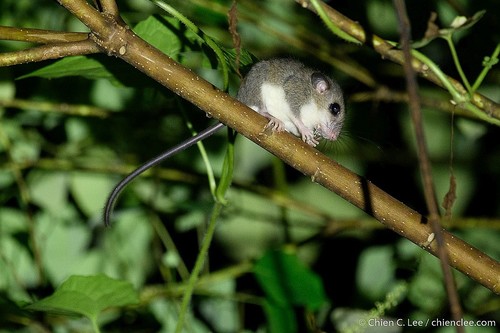
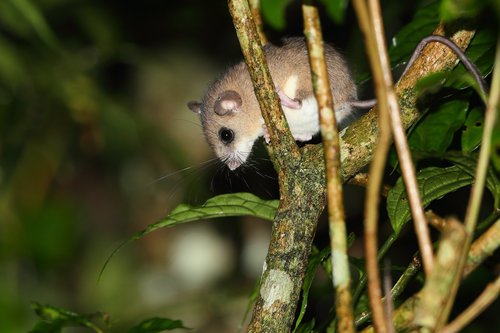
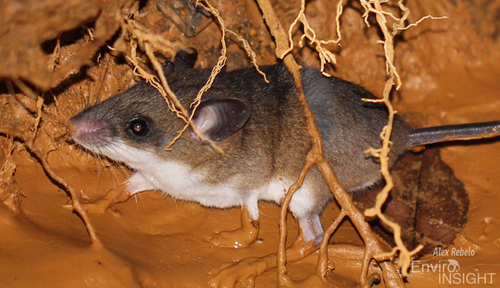
Other species in the genus Chiropodomys

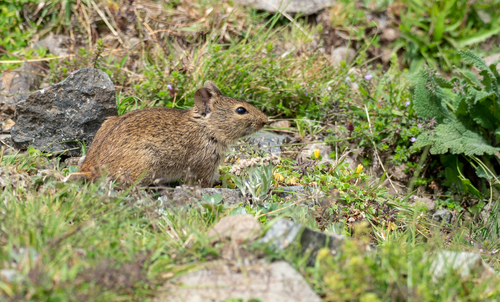
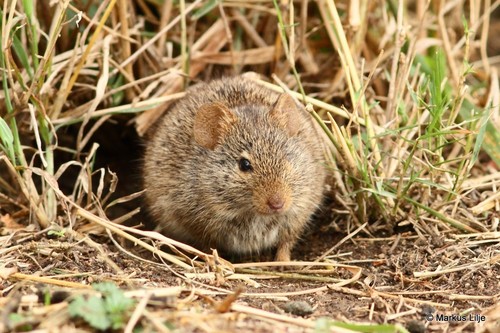
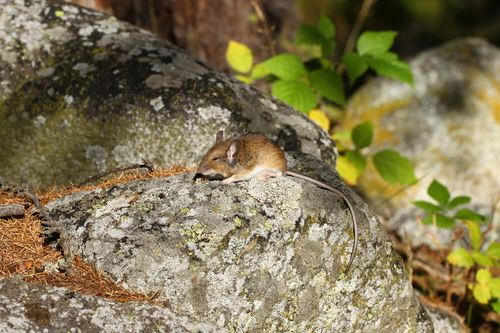
Other species in the family Muridae
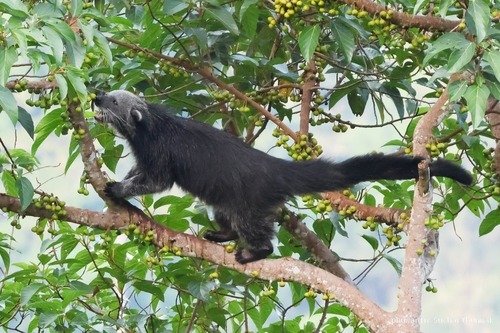
Species that share its range
Sources
Conservation status, range description and population estimate come from the IUCN Red List assessment for Chiropodomys calamianensis. Countries are derived from that range description, not from a mapped country list. Last refreshed on .
The distribution map is drawn from the IUCN Red List spatial data compiled in 2008. IUCN (International Union for Conservation of Nature)