
Nelson's Antelope Squirrel
Ammospermophilus nelsoni
Red List assessment
Endangeredon the IUCN Red List
- EXExtinct
- EWExtinct in the Wild
- CRCritically Endangered
- ENEndangered
- VUVulnerable
- NTNear Threatened
- LCLeast Concern
The Nelson's Antelope Squirrel is recorded in one country, United States across North America. The IUCN Red List assesses the Nelson's Antelope Squirrel as Endangered. Estimated at fewer than 5,000 individuals globally, with some assessments suggesting as few as 2,000–3,000 mature adults across highly fragmented subpopulations.
- Family
- Sciuridae
- Order
- Rodentia
- Genus
- Ammospermophilus
- Countries recorded
- 1
- Continents
- North America
- Red List category
- Endangered
- Data updated
- August 9, 2026
What is the Nelson's Antelope Squirrel?
Nelson's Antelope Squirrel is a small, highly endangered ground squirrel entirely endemic to the arid scrublands and alkali sinks of the southern San Joaquin Valley in central California. It is considered one of the most geographically restricted and threatened mammals in North America, with its native habitat reduced by over 90% due to agricultural conversion. Like all members of the genus Ammospermophilus, it is recognized by its characteristic habit of running with its tail arched over its back, flashing the white underside. It plays a significant ecological role as a seed disperser, insectivore, and prey base for numerous raptors and carnivores in its semi-arid ecosystem.
Where does the Nelson's Antelope Squirrel live?
Endemic to the San Joaquin Valley, California, USA — primarily Kern, Kings, Tulare, Fresno, and San Luis Obispo counties
Strictly endemic to the San Joaquin Valley of California, USA. The core range is centered in Kern County, with fragmented populations extending north into Kings, Tulare, and Fresno counties and westward into eastern San Luis Obispo County. The historical range has been dramatically reduced by agricultural conversion to less than 10% of its pre-European-settlement extent.
Altitude and depth
Primarily found at low elevations between approximately 60 and 500 meters above sea level, confined to the valley floor, basin margins, and lower foothill alluvial fans.
Seasonal movements
Active year-round and does not hibernate, which is exceptional among ground squirrel species. During peak summer heat, individuals shift activity to early morning and late afternoon, retreating to underground burrows during midday. Breeding activity surges in late winter and early spring.
Habitat of the Nelson's Antelope Squirrel
Occupies alkali sink scrub, saltbush (Atriplex spp.) scrub, annual grasslands, and semi-arid shrublands characterized by sparse, low-growing vegetation. Strongly prefers loose, sandy, or alkaline soils on the valley floor and lower alluvial fans that are suitable for burrowing. Avoids dense vegetation and is highly sensitive to habitat degradation from invasive annual grasses.
Adaptations to its environment
Physiologically adapted to extreme heat and aridity; can tolerate ambient temperatures exceeding 40°C by panting, pressing its ventral surface against cooler soil, and using burrows as thermal refuges. Largely independent of free water sources, deriving most hydration from metabolic water produced during digestion of seeds and vegetation. The tail-flagging behavior may serve simultaneously as a thermoregulatory display, a predator-warning signal, and a social communicator.
Conservation status and numbers
Listed as Endangered (EN) on the IUCN Red List. Also protected as Threatened under both the U.S. Endangered Species Act (ESA) and the California Endangered Species Act (CESA). The status reflects a catastrophic reduction in range and population size driven by habitat conversion, ongoing fragmentation, and the small size and isolation of remaining subpopulations.
Estimated population
Estimated at fewer than 5,000 individuals globally, with some assessments suggesting as few as 2,000–3,000 mature adults across highly fragmented subpopulations. The overall population trend is declining due to continued habitat loss.
What threatens the Nelson's Antelope Squirrel?
The dominant threat is large-scale conversion of native alkali scrub to irrigated agriculture (cotton, grains, row crops, orchards), which has eliminated the vast majority of suitable habitat. Secondary threats include oil and gas extraction infrastructure, urban and suburban development, road construction, altered hydrology from water diversion, invasion of non-native annual grasses that degrade native scrub structure, and predation by raptors, coyotes, and domestic or feral cats in fragmented landscapes.
Diseases and parasites
Highly susceptible to sylvatic plague (caused by Yersinia pestis), which can cause catastrophic mortality events in already small populations. Hosts various ectoparasites including fleas (which serve as plague vectors), ticks, and mites, as well as internal helminths typical of sciurid rodents.
What is being done to protect it?
Protected under the U.S. ESA and California ESA, with designated critical habitat and official recovery plans developed by the U.S. Fish and Wildlife Service. The Carrizo Plain National Monument and adjacent Bureau of Land Management (BLM) lands provide the most significant protected habitat. Conservation easements negotiated with private landowners and efforts by The Nature Conservancy help protect additional parcels of native scrub.
Recommended actions
Priority actions include protecting and restoring native alkali and saltbush scrub habitats, creating wildlife corridors to reconnect isolated subpopulations, actively managing and controlling invasive annual grasses, enforcing critical habitat protections under the ESA, conducting sustained population and genetic diversity monitoring, and evaluating translocation or genetic rescue strategies for the most isolated subpopulations.
What the Nelson's Antelope Squirrel looks like
Dorsal pelage is cinnamon-buff to grayish-brown, with a single prominent white to pale buff stripe running along each flank from shoulder to rump — a diagnostic feature of all Ammospermophilus species. The underparts are whitish to pale buff. The tail has a white underside that is conspicuously displayed when carried arched over the back. The face is pointed with large, dark eyes adapted for acute vision and small, rounded ears.
Size
Head-and-body length approximately 14–17 cm; tail length 6–9 cm; total length roughly 20–26 cm. A small, compact, ground-dwelling squirrel.
Weight
Adults typically weigh between 100 and 170 grams. Sexual size dimorphism is minimal, with males averaging marginally larger than females.
Distinctive features
Distinguished from the closely related White-tailed Antelope Squirrel (A. leucurus) by its larger body size, warmer cinnamon dorsal coloration, and exclusive confinement to the San Joaquin Valley. Unlike many other California ground squirrels (e.g., Otospermophilus beecheyi), it lacks dorsal spots or mottling and bears the characteristic single white flank stripe.
Differences between males and females
Sexual dimorphism is minimal; males are slightly larger than females on average but the two sexes are essentially identical in coloration and body proportions.
Behaviour and diet of the Nelson's Antelope Squirrel
Semi-social; individuals maintain personal burrow systems and overlapping home ranges. Not highly colonial in the manner of prairie dogs, but tolerates proximity to conspecifics in high-quality habitat. Social interactions include chasing rivals, vocalizing, and scent-marking territory boundaries.
When it is active
Strictly diurnal. Peak activity occurs in the morning and late afternoon, with a midday retreat to burrows during summer heat. Unlike many ground squirrels, it remains surface-active throughout winter, foraging on mild days even in January and February.
Diet
Omnivorous. The diet includes seeds of native shrubs and grasses (particularly saltbush Atriplex spp.), green vegetation (leaves, stems, forbs), arthropods (insects, beetles), and occasionally small vertebrates or carrion. Seeds are frequently transported in cheek pouches for storage in burrow larders, with caching behavior intensifying before summer drought.
How it feeds and hunts
Forages opportunistically on the ground surface, using keen eyesight and olfaction to locate seeds, invertebrates, and plant material. Insects and small arthropods are seized with a rapid pounce. Cached food is gathered by repeated trips from the burrow, filling cheek pouches before returning to store provisions underground.
Communication
Produces sharp, high-pitched chirping alarm calls upon detecting aerial or terrestrial predators, alerting nearby conspecifics. Scent marking via facial glands, urine, and feces is used to signal reproductive status and territory. Tail-flagging, in which the white underside is conspicuously displayed while running, functions as both an alarm signal and a possible social communication tool.
Interactions with other species
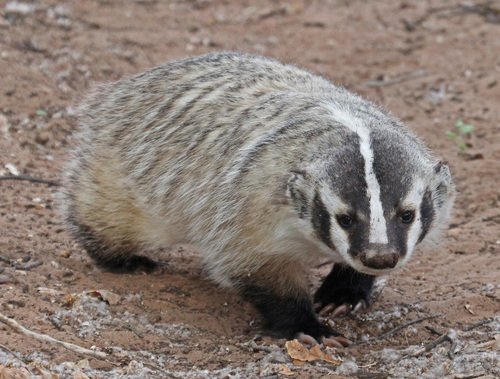
Predated upon by a range of species including red-tailed hawks, ferruginous hawks, American kestrels, barn owls, coyotes, San Joaquin kit foxes, badgers, western rattlesnakes, and domestic or feral cats. Competes for food and burrow sites with other rodents such as Heermann's kangaroo rats (Dipodomys heermanni) and California ground squirrels. As a food cacher, it contributes modestly to seed dispersal of native plants.
Role in its ecosystem
Serves as a critical prey species for multiple threatened and endangered San Joaquin Valley predators, including the San Joaquin kit fox (Vulpes macrotis mutica) and ferruginous hawk (Buteo regalis). Its burrowing activity aerates soil and creates microhabitat used by other small fauna. It contributes to nutrient cycling through seed caching and insectivory.
Reproduction and lifecycle
Breeding occurs in late winter to early spring, typically February through March. Gestation lasts approximately 26–30 days. Females produce a single litter per year, with litter sizes ranging from 5 to 12 pups, averaging 7–9. Births typically occur between March and early May.
Raising the young
Young are born altricial — naked, eyes closed, and helpless — and are reared exclusively by the female in an underground nest chamber. Pups open their eyes at approximately 3–4 weeks and are weaned at around 5–6 weeks of age. Juveniles begin to emerge and forage independently by mid-summer and disperse from the natal territory before autumn.
Maturity and lifespan
Reaches sexual maturity at approximately 10–12 months of age. Typical lifespan in the wild is 2–4 years, limited by predation, drought, and disease. Captive lifespans are not well documented as no significant captive population exists.
Taxonomy and naming of the Nelson's Antelope Squirrel
Classification
Mammalia > Rodentia > Sciuridae > Ammospermophilus > Ammospermophilus nelsoni
Scientific synonyms
Originally described as Spermophilus nelsoni Merriam, 1893; also listed as Citellus nelsoni in older taxonomic literature before reclassification into the genus Ammospermophilus.
What research says
Recent studies
Recent population genetic analyses have documented severely reduced genetic diversity and high inter-population differentiation among Nelson's Antelope Squirrel subpopulations, highlighting the urgency of establishing connectivity corridors. Habitat suitability modeling studies have been conducted to identify priority parcels for acquisition and restoration within the remaining range in the San Joaquin Valley.
Genome and DNA
The genus Ammospermophilus is generally reported to have a diploid chromosome number in the range typical of ground squirrels; specific karyological data for A. nelsoni is limited. No comprehensive whole-genome sequencing study has been published specifically for this species to date.
Compared with similar species
Most closely related to the White-tailed Antelope Squirrel (Ammospermophilus leucurus), which is broadly distributed across the Mojave, Great Basin, and Sonoran deserts but is far less endangered. A. nelsoni is larger and more cinnamon in color than A. leucurus. Harris's Antelope Squirrel (A. harrisii) of the Arizona-Sonoran Desert is comparable in habits but differs in range and coloration. All Ammospermophilus species share the distinctive white flank stripe and tail-flagging behavior, which sets them apart from the larger, spotted Otospermophilus ground squirrels.
The Nelson's Antelope Squirrel and people
Nelson's Antelope Squirrel is named in honor of Edward William Nelson, a celebrated 19th-century American naturalist and explorer. Despite no access to standing water in its arid habitat, this squirrel can remain fully hydrated solely through the metabolic water produced by digesting its food — a remarkable physiological feat. It is also one of the very few ground squirrel species in North America that does not hibernate, remaining active even on mild winter days when temperatures drop near freezing.
Where and how to see it
The best location to observe Nelson's Antelope Squirrel is the Carrizo Plain National Monument in San Luis Obispo County, California, particularly in the saltbush scrub and alkali grassland habitats near Soda Lake. Spring (March through May) offers the highest probability of sightings, when animals are most active foraging and raising young. Quiet, slow movement on foot through suitable open scrubland, particularly during morning hours, maximizes chances of observation.
Risks to humans
No notable risk to humans under normal circumstances. It may bite defensively if handled. As with all wild rodents in plague-endemic areas of California, there is a theoretical risk of flea-borne transmission of Yersinia pestis; avoiding direct contact with wild rodents and their burrows is advised.
Countries where the Nelson's Antelope Squirrel is recorded
The 1 countries named in the range description of its IUCN Red List assessment.
Questions about the Nelson's Antelope Squirrel
Where does the Nelson's Antelope Squirrel live?
The Nelson's Antelope Squirrel is recorded in United States across North America. These countries come from the range description of its IUCN Red List assessment, and they are what place the species on the interactive map.
Is the Nelson's Antelope Squirrel endangered?
Yes. The IUCN Red List assesses the Nelson's Antelope Squirrel as Endangered, one of the three threatened categories. The species faces a very high risk of extinction in the wild — a step below Critically Endangered, but still on a trajectory that ends badly without intervention.
How many are left in the wild?
Estimated at fewer than 5,000 individuals globally, with some assessments suggesting as few as 2,000–3,000 mature adults across highly fragmented subpopulations. This figure comes from the species assessment on the IUCN Red List; population estimates for wild mammals are ranges, not counts, and are revised at each assessment.
What habitat does the Nelson's Antelope Squirrel live in?
Occupies alkali sink scrub, saltbush (Atriplex spp.) scrub, annual grasslands, and semi-arid shrublands characterized by sparse, low-growing vegetation.
What is the scientific name of the Nelson's Antelope Squirrel?
The Nelson's Antelope Squirrel is Ammospermophilus nelsoni, in the family Sciuridae, order Rodentia.
Other species in the genus Ammospermophilus
Other species in the family Sciuridae
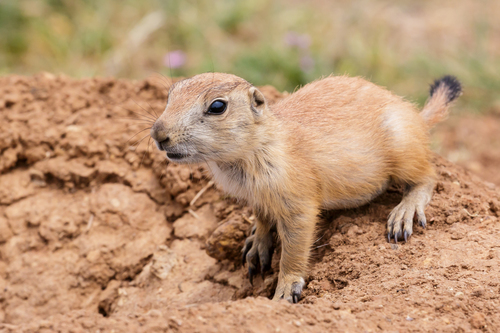
Species that share its range
Sources
Conservation status, range description and population estimate come from the IUCN Red List assessment for Ammospermophilus nelsoni. Countries are derived from that range description, not from a mapped country list. Last refreshed on .
The distribution map is drawn from the IUCN Red List spatial data compiled in 2017. IUCN SSC Small Mammal Specialist Group