
Iberian Wild Goat
Capra pyrenaica
Red List assessment
Least Concernon the IUCN Red List
- EXExtinct
- EWExtinct in the Wild
- CRCritically Endangered
- ENEndangered
- VUVulnerable
- NTNear Threatened
- LCLeast Concern
The Iberian Wild Goat is recorded in 2 countries across Europe. The IUCN Red List assesses the Iberian Wild Goat as Least Concern. Approximately 50,000-80,000 individuals across Spain, with populations generally stable or increasing in most protected areas; the Portuguese population remains very small (a few dozen individuals).
- Family
- Bovidae
- Order
- Artiodactyla
- Genus
- Capra
- Countries recorded
- 2
- Continents
- Europe
- Red List category
- Least Concern
- Data updated
- August 9, 2026
What is the Iberian Wild Goat?
The Iberian Wild Goat is a robust mountain-dwelling ungulate endemic to the Iberian Peninsula, known for its impressive backward-curving horns in males and remarkable climbing agility on steep rocky terrain. It has become a conservation success story, recovering from near extinction in the 20th century through effective protection and habitat management. This species plays an important ecological role in Iberian mountain ecosystems and is a popular target for trophy hunting and wildlife tourism.
Where does the Iberian Wild Goat live?
Spain and Portugal, primarily in mountainous regions of the Iberian Peninsula
Endemic to the Iberian Peninsula, found in scattered mountain ranges across Spain including Sierra Nevada, Sierra de Gredos, Sierra de Cazorla, and other sierras; a small reintroduced population exists in northern Portugal near the Peneda-Gerês National Park.
Altitude and depth
200-3400 meters, with populations concentrated between 1000-2500m in most mountain ranges
Seasonal movements
Seasonal altitudinal movements occur, with goats moving to lower elevations in winter to avoid heavy snow and returning to higher pastures in summer; rutting season peaks in November-December.
Habitat of the Iberian Wild Goat
Rocky mountainous terrain, cliffs, and steep slopes at various elevations, including Mediterranean scrubland, coniferous forests, and alpine meadows above the treeline. Prefers areas with rugged, inaccessible terrain that provides refuge from predators.
Adaptations to its environment
Exceptional climbing ability with specialized hooves that have a hard outer rim and soft center for grip on rocky surfaces; thick winter coat for insulation in harsh mountain conditions; excellent balance and agility allow navigation of near-vertical cliff faces to escape predators.
Conservation status and numbers
Least Concern (LC) according to IUCN, reflecting a remarkable recovery from severe population declines in the early 20th century; populations have been stable or increasing in recent decades due to effective conservation management and hunting regulations.
Estimated population
Approximately 50,000-80,000 individuals across Spain, with populations generally stable or increasing in most protected areas; the Portuguese population remains very small (a few dozen individuals).
What threatens the Iberian Wild Goat?
Historical threats included overhunting and habitat loss; current concerns include disease outbreaks (particularly sarcoptic mange), competition with domestic livestock, occasional poaching, and potential impacts of climate change on alpine habitats.
Diseases and parasites
Susceptible to sarcoptic mange (caused by Sarcoptes scabiei), which has caused significant population declines in some areas; also affected by various internal parasites and occasionally bluetongue virus and other livestock-transmitted diseases.
What is being done to protect it?
Protected under Spanish and EU wildlife law; managed through national parks and hunting reserves with controlled trophy hunting programs that fund conservation; successful reintroduction programs have restored populations to former range areas including Portugal.
Recommended actions
Continued disease surveillance and management, particularly for sarcoptic mange outbreaks; genetic diversity monitoring across isolated subpopulations; maintaining habitat connectivity between mountain ranges; sustainable hunting quota management.
What the Iberian Wild Goat looks like
Coat color varies seasonally and by subspecies, typically brown to grayish with darker markings on legs, face, and dorsal stripe; males develop striking long horns that curve backward and outward in a lyre shape, while females have much smaller, straighter horns.
Size
Body length 100-140 cm, shoulder height 65-75 cm for males, slightly smaller for females
Weight
Males: 30-80 kg; Females: 25-45 kg, with males significantly larger and heavier
Distinctive features
Distinguished from other Capra species by horn shape (more open, less tightly curled than Alpine ibex), smaller body size, and specific coat coloration patterns that vary between the two extant subspecies.
Differences between males and females
Pronounced sexual dimorphism: males are notably larger with massive horns reaching up to 100cm in length, dark facial and body markings, and a prominent beard; females have much smaller, thinner horns rarely exceeding 20-25cm and lighter coloration.
Behaviour and diet of the Iberian Wild Goat
Forms sex-segregated groups outside of breeding season, with females and young in nursery groups of 5-20 individuals, while males form smaller bachelor groups or remain solitary; groups merge during the autumn rutting season.
When it is active
Primarily diurnal, with peak activity during early morning and late afternoon; rests during the hottest part of the day in shaded or sheltered rocky areas.
Diet
Herbivorous grazer and browser, feeding on grasses, herbs, shrubs, and tree bark depending on season and availability; diet shifts to include more woody vegetation in winter when herbaceous plants are scarce.
Communication
Communicates through vocalizations including bleats and snorts, especially between mothers and kids; visual displays and body postures are important during male dominance contests; scent marking may play a role in territorial and reproductive behavior.
Interactions with other species
Natural predators include wolves and occasionally golden eagles preying on young kids; competes with domestic livestock (sheep, goats) for grazing resources in shared mountain habitats; interactions with other wild ungulates like Iberian red deer are generally neutral.
Role in its ecosystem
Plays a role in shaping mountain vegetation through grazing and browsing pressure, potentially influencing plant community composition; serves as a prey species supporting predator populations, and its grazing helps maintain open habitat structures beneficial to other species.
Reproduction and lifecycle
Rutting season occurs November to December, with dominant males competing for access to females; gestation lasts approximately 150-165 days, with births occurring in May-June, typically producing a single kid though twins occasionally occur.
Raising the young
Females provide sole parental care, nursing kids for 3-4 months while teaching them climbing skills and predator avoidance; kids can follow their mothers within hours of birth and become increasingly independent by 6 months of age.
Maturity and lifespan
Sexual maturity reached at 2-3 years for females and 4-5 years for males (though full breeding success often delayed until later due to competition); lifespan averages 10-15 years in the wild, up to 20 years in captivity.
Taxonomy and naming of the Iberian Wild Goat
Classification
Class Mammalia > Order Artiodactyla > Family Bovidae > Genus Capra > Species Capra pyrenaica
Subspecies
Two extant subspecies: Capra pyrenaica hispanica (southeastern Spain, Sierra Nevada and surrounding ranges) and Capra pyrenaica victoriae (central Spain, Gredos mountains). Two subspecies are extinct: C. p. pyrenaica (Pyrenees, extinct 2000) and C. p. lusitanica (Portugal/Galicia, extinct early 20th century).
Scientific synonyms
Capra hispanica, Capra ibex hispanica (formerly considered a subspecies of Alpine ibex by some authors)
What research says
Recent studies
Recent research has focused on disease dynamics, particularly sarcoptic mange transmission and immune response; genomic studies are examining genetic diversity and adaptive potential across fragmented populations to inform conservation strategies.
Genome and DNA
Diploid chromosome number 2n=60; genetic studies have revealed distinct genetic lineages corresponding to the different subspecies, useful for conservation management and understanding population history.
Compared with similar species
Closely related to the Alpine ibex (Capra ibex) but distinguished by smaller body size, different horn morphology (more divergent, less tightly coiled), and geographic isolation; also comparable to other Capra species like the Nubian ibex, though the Iberian species is endemic to a much more restricted range.
The Iberian Wild Goat and people
The Pyrenean subspecies (bucardo) became extinct in 2000, but scientists attempted to clone it in 2003 using preserved cells, creating the first de-extinction event in history (though the clone died shortly after birth from lung defects). Iberian Wild Goats can navigate near-vertical cliff faces with remarkable precision, using tiny footholds invisible to the human eye.
Where and how to see it
Best observed in protected areas like Sierra Nevada National Park, Sierra de Gredos, or Cazorla Natural Park during early morning or late afternoon hours; autumn rutting season (November) offers dramatic viewing opportunities as males compete for dominance.
Risks to humans
No notable risk to humans; generally shy and avoids human contact, though males can become aggressive during rutting season if approached too closely.
Human uses
Historically hunted for meat and hides; currently valuable for regulated trophy hunting programs that generate significant revenue for conservation; also important for ecotourism and wildlife photography in Spanish national parks.
Myths and legends
The Iberian ibex has cultural significance in Spanish folklore and is often associated with mountain wilderness and resilience; it appears in regional heraldry and has become a symbol of successful wildlife conservation in Spain.
Countries where the Iberian Wild Goat is recorded
The 2 countries named in the range description of its IUCN Red List assessment.
Questions about the Iberian Wild Goat
Where does the Iberian Wild Goat live?
The Iberian Wild Goat is recorded in Portugal and Spain across Europe. These countries come from the range description of its IUCN Red List assessment, and they are what place the species on the interactive map.
Is the Iberian Wild Goat endangered?
The IUCN Red List assesses the Iberian Wild Goat as Least Concern. The species is widespread and abundant enough not to qualify for any threatened category. It does not mean the species is safe forever, only that nothing in the current data raises an alarm.
How many are left in the wild?
Approximately 50,000-80,000 individuals across Spain, with populations generally stable or increasing in most protected areas; the Portuguese population remains very small (a few dozen individuals). This figure comes from the species assessment on the IUCN Red List; population estimates for wild mammals are ranges, not counts, and are revised at each assessment.
What habitat does the Iberian Wild Goat live in?
Rocky mountainous terrain, cliffs, and steep slopes at various elevations, including Mediterranean scrubland, coniferous forests, and alpine meadows above the treeline.
What is the scientific name of the Iberian Wild Goat?
The Iberian Wild Goat is Capra pyrenaica, in the family Bovidae, order Artiodactyla.
Other species in the genus Capra
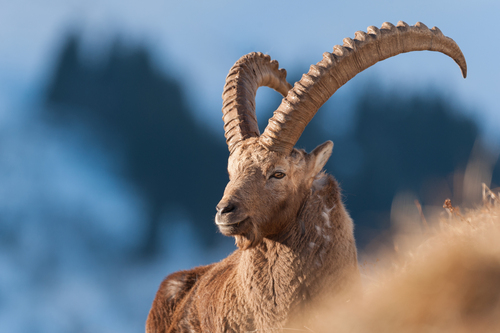
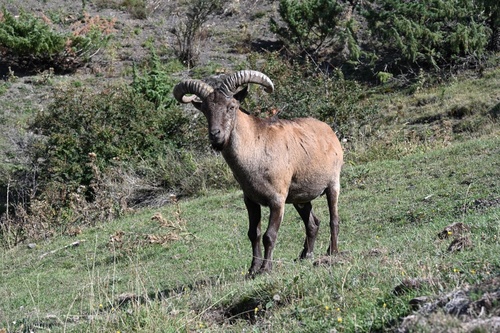
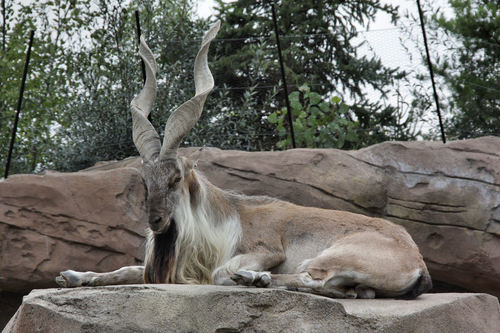
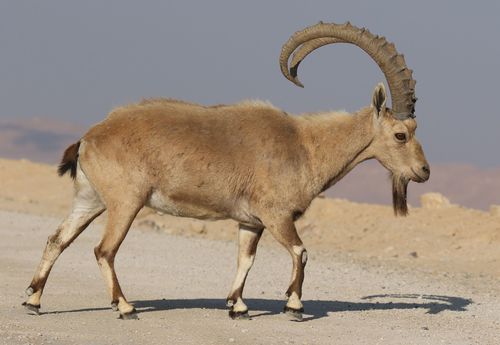
Other species in the family Bovidae
Sources
Conservation status, range description and population estimate come from the IUCN Red List assessment for Capra pyrenaica. Countries are derived from that range description, not from a mapped country list. Last refreshed on .
The distribution map is drawn from the IUCN Red List spatial data compiled in 2024. IUCN (International Union for Conservation of Nature)