
Walia Ibex
Capra walie
Red List assessment
Vulnerableon the IUCN Red List
- EXExtinct
- EWExtinct in the Wild
- CRCritically Endangered
- ENEndangered
- VUVulnerable
- NTNear Threatened
- LCLeast Concern
The Walia Ibex is recorded in one country, Ethiopia across Africa. The IUCN Red List assesses the Walia Ibex as Vulnerable. Approximately 500-1000 individuals, with a generally increasing trend due to conservation efforts, though numbers remain low and geographically confined.
- Family
- Bovidae
- Order
- Artiodactyla
- Genus
- Capra
- Countries recorded
- 1
- Continents
- Africa
- Red List category
- Vulnerable
- Data updated
- August 9, 2026
What is the Walia Ibex?
The Walia Ibex is a wild goat endemic to the Simien Mountains of northern Ethiopia, found nowhere else on Earth. It is one of the rarest goat species in the world, adapted to steep cliffs and rugged mountain terrain. Its large curved horns and specialized climbing ability make it a remarkable example of mountain ungulate evolution. The species is a flagship animal for Simien Mountains National Park, a UNESCO World Heritage Site.
Where does the Walia Ibex live?
Ethiopia (Simien Mountains)
Restricted entirely to the Simien Mountains National Park and surrounding escarpments in the Amhara Region of northern Ethiopia. This is the only place in the world where the species naturally occurs.
Altitude and depth
2500-4500 meters
Seasonal movements
No long-distance migration, but animals may shift between higher and lower cliff areas seasonally in response to rainfall and vegetation availability.
Habitat of the Walia Ibex
Inhabits steep, rocky cliffs, montane grasslands, and Afro-alpine vegetation zones with escarpments providing escape terrain from predators. Prefers areas with sparse vegetation on precipitous slopes above 2500m elevation.
Adaptations to its environment
Possesses strong, agile legs and specialized hooves for gripping steep rocky surfaces and cliff faces, allowing escape from predators. Thick coat provides insulation against cold high-altitude temperatures and strong winds typical of Afro-alpine environments.
Conservation status and numbers
Classified as Vulnerable (VU) by the IUCN; historically was Critically Endangered/Endangered after population crashed to under 200 individuals in the 1960s-1990s due to hunting and habitat loss. Conservation efforts have led to population recovery, improving its status though it remains at risk due to its extremely restricted range.
Estimated population
Approximately 500-1000 individuals, with a generally increasing trend due to conservation efforts, though numbers remain low and geographically confined.
What threatens the Walia Ibex?
Habitat loss and degradation from livestock grazing competition, human encroachment and agriculture, poaching, and potential disease transmission from domestic livestock. Its single, small geographic range makes it highly vulnerable to any localized catastrophe.
Diseases and parasites
Susceptible to diseases transmissible from domestic livestock, including parasitic infections and potentially contagious caprine diseases, which pose a conservation concern given close contact with grazing livestock.
What is being done to protect it?
Protected within Simien Mountains National Park, a UNESCO World Heritage Site with anti-poaching patrols and habitat management programs. International conservation organizations and the Ethiopian Wildlife Conservation Authority support monitoring and community engagement initiatives.
Recommended actions
Continued strict anti-poaching enforcement, reduction of livestock grazing pressure within the park, community-based conservation incentives, and genetic monitoring to safeguard against inbreeding in this small population.
What the Walia Ibex looks like
Coat is grayish-brown with a lighter underside, and males often display a dark stripe down the back and dark markings on the legs. Males possess large, thick, backward-curving ridged horns that can exceed 1 meter in length, while females have much shorter, thinner horns.
Size
Shoulder height approximately 75-100 cm; body length around 120-140 cm.
Weight
Males typically weigh 80-125 kg; females are smaller, weighing around 40-55 kg.
Distinctive features
Distinguished from other Capra species by its uniquely large, heavily ridged horns in males and its exclusive adaptation to the specific escarpment habitat of the Simien Mountains. It is more heavily built than the closely related Nubian ibex.
Differences between males and females
Pronounced sexual dimorphism: males are considerably larger and heavier with massive curved horns, while females are smaller with short, slender horns and lighter body coloration.
Behaviour and diet of the Walia Ibex
Lives in small herds typically segregated by sex outside of breeding season; males may be solitary or form small bachelor groups while females and young form nursery groups. Herd sizes are generally small, from a few individuals to around 20.
When it is active
Primarily diurnal, being most active during early morning and late afternoon, resting during the hottest parts of the day on rocky ledges.
Diet
Herbivorous, feeding on grasses, herbs, shrubs, and lichens found on the cliffs and adjacent grasslands. Diet varies seasonally based on available vegetation in the Afro-alpine and montane zones.
Communication
Communicates through visual displays such as horn presentations and posturing, especially between competing males. Scent marking and vocalizations such as snorts or bleats are also used, particularly between mothers and young.
Interactions with other species
Natural predators include leopards and potentially golden jackals targeting young or weak individuals; humans and domestic livestock represent significant sources of competition and disturbance. Shares habitat with other endemic Simien wildlife such as the Gelada baboon and Ethiopian wolf.
Role in its ecosystem
As a grazer and browser, the Walia Ibex plays a role in shaping vegetation structure on the escarpments of the Simien Mountains. It serves as a prey source for large carnivores and is a key indicator species for the health of this unique Afro-alpine ecosystem.
Reproduction and lifecycle
Breeding season occurs mainly during the dry season, with males competing for access to females through horn-clashing contests. Gestation lasts approximately 150-165 days, typically resulting in a single kid, occasionally twins.
Raising the young
Females provide sole parental care, nursing and protecting the kid on secluded cliff ledges for the first weeks of life to avoid predators. Kids become increasingly independent over several months but may stay near the mother's group into their first year.
Maturity and lifespan
Sexual maturity is typically reached around 1.5-2 years of age. Lifespan in the wild is estimated at around 10-15 years.
Taxonomy and naming of the Walia Ibex
Classification
Mammalia > Artiodactyla > Bovidae > Capra > Capra walie
Scientific synonyms
Sometimes classified as a subspecies of Capra ibex (Capra ibex walie)
What research says
Recent studies
Recent research has focused on population genetics to assess genetic diversity and inbreeding risk given the small, isolated population, as well as GPS-collar studies to better understand ranging behavior within Simien Mountains National Park.
Compared with similar species
Closely related to the Nubian ibex (Capra nubiana) and Alpine ibex (Capra ibex), but is more robustly built with proportionally larger horns; some taxonomists consider it a subspecies of Capra ibex rather than a distinct species.
The Walia Ibex and people
The Walia Ibex is found in only one place on Earth, making it one of the most geographically restricted wild goat species. Its population once dropped below 200 individuals, making it one of the rarest large mammals in Africa before conservation efforts helped it recover.
Where and how to see it
Best observed within Simien Mountains National Park, particularly near the Chenek and Sankaber areas, during early morning or late afternoon hours when the animals are most active. Guided treks with local park rangers increase chances of sighting due to their knowledge of ibex locations along the escarpments.
Risks to humans
No notable risk to humans.
Human uses
Historically hunted for meat and horns by local communities before strict protection measures were implemented; today it serves primarily as an important ecotourism attraction supporting local economies through park visitation.
Myths and legends
The Walia Ibex holds cultural significance for local Ethiopian communities as a symbol of the rugged Simien highlands, though it is not associated with widespread mythological narratives outside the region.
Countries where the Walia Ibex is recorded
The 1 countries named in the range description of its IUCN Red List assessment.
Questions about the Walia Ibex
Where does the Walia Ibex live?
The Walia Ibex is recorded in Ethiopia across Africa. These countries come from the range description of its IUCN Red List assessment, and they are what place the species on the interactive map.
Is the Walia Ibex endangered?
Yes. The IUCN Red List assesses the Walia Ibex as Vulnerable, one of the three threatened categories. The species faces a high risk of extinction in the wild. It is the first of the three threatened categories: numbers are falling, the range is shrinking, or the population is small enough that a single bad event could do lasting damage.
How many are left in the wild?
Approximately 500-1000 individuals, with a generally increasing trend due to conservation efforts, though numbers remain low and geographically confined. This figure comes from the species assessment on the IUCN Red List; population estimates for wild mammals are ranges, not counts, and are revised at each assessment.
What habitat does the Walia Ibex live in?
Inhabits steep, rocky cliffs, montane grasslands, and Afro-alpine vegetation zones with escarpments providing escape terrain from predators.
What is the scientific name of the Walia Ibex?
The Walia Ibex is Capra walie, in the family Bovidae, order Artiodactyla.
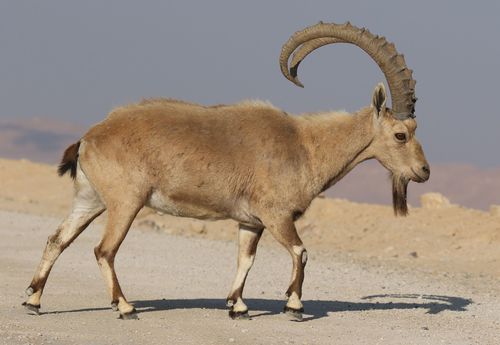
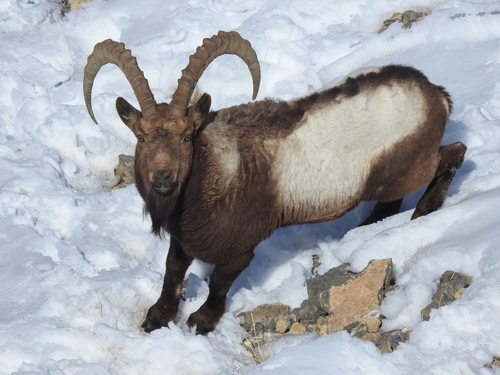
Other species in the genus Capra
Other species in the family Bovidae
Sources
Conservation status, range description and population estimate come from the IUCN Red List assessment for Capra walie. Countries are derived from that range description, not from a mapped country list. Last refreshed on .
The distribution map is drawn from the IUCN Red List spatial data compiled in 2026. Belayneh Abebe