
Cinnamon Antechinus
Antechinus leo
Red List assessment
Least Concernon the IUCN Red List
- EXExtinct
- EWExtinct in the Wild
- CRCritically Endangered
- ENEndangered
- VUVulnerable
- NTNear Threatened
- LCLeast Concern
The Cinnamon Antechinus is recorded in one country, Australia across Oceania. The IUCN Red List assesses the Cinnamon Antechinus as Least Concern. No precise global population estimate is available.
- Family
- Dasyuridae
- Order
- Dasyuromorphia
- Genus
- Antechinus
- Countries recorded
- 1
- Continents
- Oceania
- Red List category
- Least Concern
- Data updated
- August 9, 2026
What is the Cinnamon Antechinus?
The Cinnamon Antechinus (Antechinus leo) is a small, carnivorous marsupial endemic to the tropical rainforests and vine thickets of Cape York Peninsula, Queensland, Australia. First formally described by Van Dyck in 1980, it is named for its distinctive warm cinnamon-rufous dorsal coloration. Like all members of its genus, males undergo semelparity — a striking phenomenon in which the entire male cohort dies shortly after an intense, synchronized mating period. It represents a key insectivorous component of its restricted and highly biodiverse rainforest ecosystem.
Where does the Cinnamon Antechinus live?
Cape York Peninsula, far north Queensland, Australia
Endemic to Australia, with a distribution restricted to the northern Cape York Peninsula in far north Queensland. Its core range is centered on the Iron Range area, including Kutini-Payamu (Iron Range) National Park and surrounding intact rainforest patches, representing one of the most geographically limited ranges of any Antechinus species.
Altitude and depth
Primarily a lowland species, occurring from near sea level up to approximately 400–600 m altitude within the rainforest zones of Cape York Peninsula.
Seasonal movements
Breeding is highly synchronized and occurs once per year, typically between July and August. Following the mating period, all males in the population die simultaneously in a predictable annual collapse, leaving only females and dependent young. This creates a strongly seasonal, single-cohort population structure each year.
Habitat of the Cinnamon Antechinus
The Cinnamon Antechinus inhabits tropical rainforest, monsoon forest, and dense vine thickets characteristic of Cape York Peninsula. It favors structurally complex environments with abundant leaf litter, fallen logs, rocky outcrops, and dense understorey vegetation that provide foraging substrates and shelter. It has also been recorded in gallery forests along watercourses adjacent to primary rainforest.
Adaptations to its environment
The species possesses a pointed, elongate snout and agile, slender body well suited to hunting invertebrates among dense leaf litter and vegetation. Its semelparous reproductive strategy — in which testosterone-fueled corticosteroid surges during the mating season suppress the immune system, causing rapid male die-off — concentrates all male reproductive effort into one brief window, maximizing fertilization success. Its warm cinnamon-rufous fur may provide camouflage in the dappled light of the rainforest floor.
Conservation status and numbers
Least Concern (LC) on the IUCN Red List. Although the species has a geographically restricted range, it is considered relatively common within its suitable habitat and does not currently meet threshold criteria for a threatened category. Its limited and fragmented distribution nonetheless renders it potentially sensitive to future environmental disturbance.
Estimated population
No precise global population estimate is available. The species is considered moderately common within its restricted range; population trend is presumed stable under current conditions, though localized declines linked to feral predator pressure and habitat alteration are possible.
What threatens the Cinnamon Antechinus?
Primary threats include loss and degradation of rainforest and vine thicket habitat through land clearing, altered fire regimes, and invasive weeds. Predation by feral cats is considered a significant ongoing threat across Cape York Peninsula. Long-term climate change poses a growing risk through shifts in rainfall seasonality and the potential contraction of suitable rainforest habitat.
Diseases and parasites
No parasites or diseases have been extensively documented specifically for this species. Like other small dasyurids, it is likely host to gastrointestinal nematodes, ectoparasites such as mites and ticks, and potentially vulnerable to pathogens introduced by feral animals or other vectors.
What is being done to protect it?
The core of the species' range falls within Kutini-Payamu (Iron Range) National Park, which provides significant statutory habitat protection. The species is protected under the Queensland Nature Conservation Act and the Australian Environment Protection and Biodiversity Conservation (EPBC) Act. Feral animal management programs within national parks on Cape York provide indirect benefits.
Recommended actions
Priority actions include strengthening and expanding rainforest reserves on Cape York Peninsula, implementing targeted feral cat control programs, monitoring population trends through systematic survey programs, and conducting research into the impacts of climate change on habitat suitability and prey availability.
What the Cinnamon Antechinus looks like
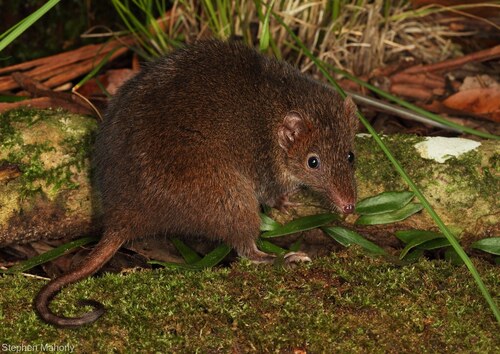
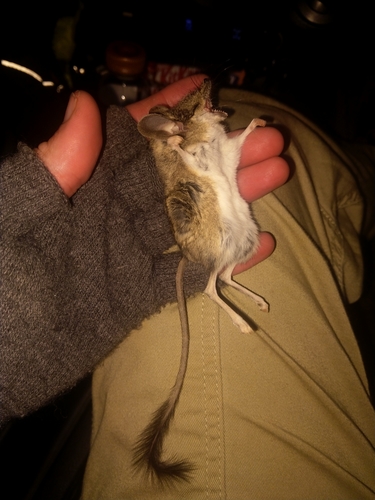
The dorsal fur is a warm, vivid cinnamon to rufous-orange, most intense on the head, shoulders, and flanks. The underparts are paler, ranging from cream to light buff. The face is sharply pointed with large, prominent dark eyes adapted for nocturnal vision, and the slender tail is sparsely furred.
Size
Head-body length ranges from approximately 80 to 115 mm in adults; tail length is approximately 90–110 mm, roughly equal to or slightly shorter than head-body length. Males are appreciably larger than females.
Weight
Males typically weigh 40–65 g; females typically 25–40 g, reflecting moderate sexual size dimorphism consistent with other antechinuses.
Distinctive features
Distinguished from other antechinuses by its strongly rufous-cinnamon dorsal coloration and its unique restriction to Cape York Peninsula rainforests. It is more vividly and uniformly orange-rufous than the Fawn Antechinus (A. bellus) and is geographically isolated from the Yellow-footed Antechinus (A. flavipes), which is found further south and has more contrasting two-toned coloration.
Differences between males and females
Males are noticeably larger and heavier than females. No significant coloration differences exist between sexes, though post-mating males may appear visibly emaciated and disheveled in the days before death due to immunosuppression and glucocorticoid-driven tissue breakdown.
Behaviour and diet of the Cinnamon Antechinus
Generally solitary outside of the breeding season, with individuals maintaining overlapping home ranges. During the annual mating period, males become highly active and aggressive, traveling extensively to locate and compete for receptive females.
When it is active
Primarily nocturnal, emerging after dark to forage through leaf litter, low vegetation, and along fallen logs. During daylight hours, individuals shelter in tree hollows, dense vegetation tangles, rock crevices, or beneath bark.
Diet
Diet is carnivorous and insectivorous, comprising primarily arthropods such as beetles, cockroaches, spiders, centipedes, and other invertebrates. Small vertebrates, including lizards and frogs, may be taken opportunistically when encountered.
How it feeds and hunts
Forages actively and rapidly through leaf litter, dense undergrowth, and along horizontal surfaces, relying on acute olfaction and hearing to detect prey. It immobilizes prey with swift, powerful bites delivered by its sharp, pointed teeth.
Communication
Communicates primarily through scent marking using secretions from sternal and cloacal glands, particularly important during the competitive mating season. Vocalizations include soft squeaks, hisses, and chattering sounds used in agonistic and reproductive contexts. Direct physical posturing and contact occur during male–male competition.
Interactions with other species
Natural predators include Rufous Owls (Ninox rufa), large pythons, monitor lizards (goannas), and quolls (Dasyurus species); introduced feral cats represent an additional significant predation pressure. It likely competes with other small insectivorous marsupials and native rodents for invertebrate prey within the rainforest.
Role in its ecosystem
Functions as a mid-trophic insectivore within the Cape York rainforest ecosystem, contributing to the regulation of invertebrate prey populations. As a habitat specialist, its presence serves as an indicator of intact, high-quality tropical rainforest.
Reproduction and lifecycle
Mating occurs in a concentrated burst once per year, typically during July–August. After a gestation period of approximately 28–33 days, females give birth to up to 10 tiny, altricial young that attach to teats within a shallow, poorly developed pouch. Young remain attached for approximately 5–6 weeks before being left in a nest.
Raising the young
All parental care is provided exclusively by the female, as males die after mating. The mother initially carries young on her teats, then leaves them in a leaf-lined nest while she forages to support lactation. Young are weaned at approximately 90–100 days and reach independence before the onset of the next breeding season.
Maturity and lifespan
Sexual maturity is reached at approximately 10–11 months, with all individuals breeding for the first time in their first year. Males have a maximum lifespan of approximately 11 months, dying after a single mating season. Females may survive for up to 2–3 years and can potentially breed in two or even three successive seasons.
Taxonomy and naming of the Cinnamon Antechinus
Classification
Mammalia > Dasyuromorphia > Dasyuridae > Antechinus > Antechinus leo
What research says
Recent studies
A major molecular and morphological revision of the genus Antechinus between 2012 and 2016 (Baker, Mutton, and Van Dyck) substantially reorganized the genus, describing multiple new species and refining species boundaries; A. leo was retained as a valid species throughout these revisions. Ongoing ecological surveys of Cape York Peninsula continue to refine our understanding of its distribution and habitat requirements.
Genome and DNA
No published karyotype or genome-level study specific to Antechinus leo is currently available. Molecular phylogenetic studies of the broader Antechinus genus, particularly those by Baker et al. (2012–2016), revealed extensive cryptic diversity and led to the formal description of nine new species, while confirming A. leo as a valid and distinct species.
Compared with similar species
Antechinus leo is one of the most range-restricted members of its genus and is distinguished from all congeners by its combination of vivid cinnamon coloration and Cape York distribution. The Fawn Antechinus (A. bellus) of northern NT and Queensland is paler and more greyish-fawn. All Antechinus species share the remarkable semelparous male die-off strategy, which sets the genus apart from virtually all other mammals.
The Cinnamon Antechinus and people
All males in a Cinnamon Antechinus population die simultaneously after a frantic two-week mating season, during which corticosteroid levels rise so dramatically that the immune system collapses and organs fail — a sacrifice evolution has maintained because it maximizes the number of offspring each male sires. During the mating frenzy, individual males have been recorded copulating for up to 14 hours in a single session. The Iron Range rainforest where this species lives is one of Australia's most biodiverse regions, with close biogeographic links to New Guinea, making the Cinnamon Antechinus a neighbor to species found nowhere else on the continent.
Where and how to see it
The best location to observe the Cinnamon Antechinus is within Kutini-Payamu (Iron Range) National Park on Cape York Peninsula, Queensland. Spotlighting at night along rainforest tracks and near rocky creek edges during the dry season (May–September) offers the best chance of encountering this species. Patience and silence are essential, as individuals are swift and quickly retreat into dense cover when disturbed.
Risks to humans
No notable risk to humans. The Cinnamon Antechinus may bite defensively if handled, but its small size makes this of no medical significance.
Countries where the Cinnamon Antechinus is recorded
The 1 countries named in the range description of its IUCN Red List assessment.
Questions about the Cinnamon Antechinus
Where does the Cinnamon Antechinus live?
The Cinnamon Antechinus is recorded in Australia across Oceania. These countries come from the range description of its IUCN Red List assessment, and they are what place the species on the interactive map.
Is the Cinnamon Antechinus endangered?
The IUCN Red List assesses the Cinnamon Antechinus as Least Concern. The species is widespread and abundant enough not to qualify for any threatened category. It does not mean the species is safe forever, only that nothing in the current data raises an alarm.
How many are left in the wild?
No precise global population estimate is available. This figure comes from the species assessment on the IUCN Red List; population estimates for wild mammals are ranges, not counts, and are revised at each assessment.
What habitat does the Cinnamon Antechinus live in?
The Cinnamon Antechinus inhabits tropical rainforest, monsoon forest, and dense vine thickets characteristic of Cape York Peninsula.
What is the scientific name of the Cinnamon Antechinus?
The Cinnamon Antechinus is Antechinus leo, in the family Dasyuridae, order Dasyuromorphia.
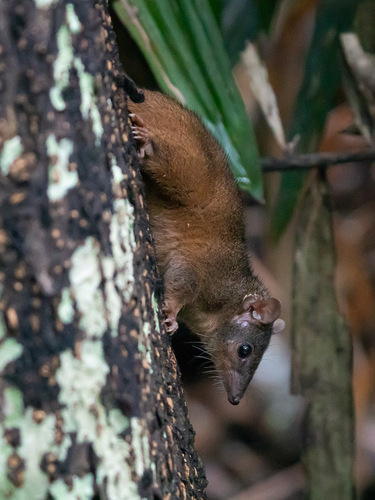
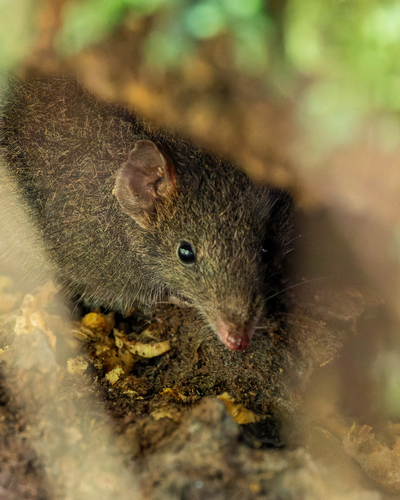
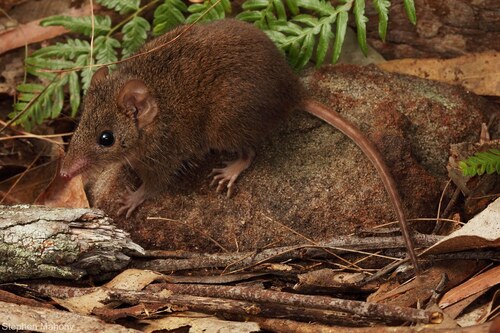
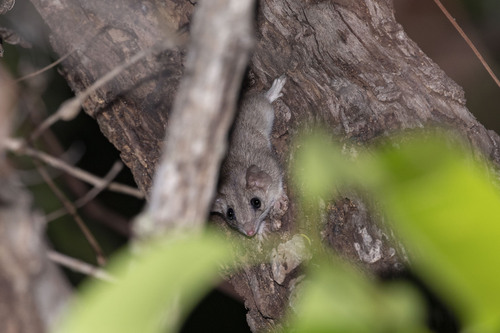
Other species in the genus Antechinus

Other species in the family Dasyuridae

Sources
Conservation status, range description and population estimate come from the IUCN Red List assessment for Antechinus leo. Countries are derived from that range description, not from a mapped country list. Last refreshed on .
The distribution map is drawn from the IUCN Red List spatial data compiled in 2008. IUCN (International Union for Conservation of Nature)